Birth | The histories give this as the year of Luosheng's birth; the month, day and birthplace are unrecorded.
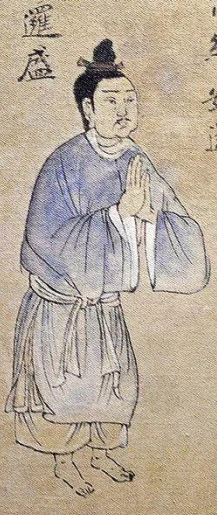
唐朝(六诏并立时期)
historical figure
Luo Sheng
逻盛
The Chinese source cache identifies this person as a historical figure associated with Chinese history. This entry preserves the source-backed identity and records the available chronology without adding unsupported claims.
唐朝(六诏并立时期)Tang Dynasty
PROFILE
The Chinese source cache identifies this person as a historical figure associated with Chinese history. This entry preserves the source-backed identity and records the available chronology without adding unsupported claims.
- Chinese name
- Luosheng
- Period
- Chinese history
- Date of Birth
- 635 CE(9th year of the Zhenguan era, Tang)
- Date of Death
- 712 CE(1st year of the Xiantian era, Tang)
- Role
- historical figure
LIFE TIMELINE
Mission to Tang | Mengxi Zhao attacked Mengshe Zhao and Xinuluo sent Luosheng to Tang for aid; according to the encyclopedic record the Tang court appointed him prefect of Weizhou and the Yaozhou commander Li Yi was ordered to relieve him.
Accession | After Xinuluo died, Luosheng inherited the leadership of Mengshe Zhao; the starting year of his reign rests on another account and on that account's record.
Death | Luosheng died of illness in Chang'an; the text of another account and a further account record that his son Shengluopi succeeded him.
BIOGRAPHY
Biography
Family and Early Years
Both other accounts list Xinuluo as Luosheng's father. The histories record that Luosheng was born in 635; no reliable record of the exact day or place of his birth survives. Tang-era histories place the Mengshe Zhao and its leaders within the political pattern of the southwest, where six zhao stood side by side, and describe the Nanzhao people as belonging to the Wuman. The surviving material contains no further detail of Luosheng's early years.
Seeking Help from the Tang
In 654 (5th year of the Yonghui era, Tang) the Mengjun Zhao attacked the Mengshe Zhao. One account and another record that Xinuluo sent Luosheng into Tang territory to ask for protection, that Emperor Gaozong appointed him governor of Weizhou and that the commander of Yaozhou, Li Yi, then came to the rescue. The surviving encyclopedic material does not say whether the appointment carried direct authority over the internal affairs of the Mengshe Zhao, so no inference is drawn from it about the exact relation of rule between the Tang and the Mengshe Zhao.
Inheriting the Mengshe Zhao and Relations with the Tang
Two accounts both give 674 (1st year of the Shangyuan era, Tang) as the year of Xinuluo's death and Luosheng's accession, and record that Luosheng travelled to the Tang court several times during his reign. One account also says in summary that the other zhao and the Heman were then influenced by Tibetan power while the Mengshe Zhao maintained continuous intercourse with the Tang court; the other account does not develop this comparison, so the content is given only as a supplementary record.
Names and Variant Genealogies
The "Account of the Southern Barbarians" in the Old Book of Tang says that "Xinuluo begot Luosheng", records that Luosheng went to court during the reign of Wu Zetian and received a brocade robe and a gold belt, and places his death around 713 (early in the Kaiyuan era of Tang), with Sheng Luopi as his successor. The genealogy in the New Book of Tang instead reads "Xinuluo begot Luosheng Yan, and Luosheng Yan begot Yan Ge", records that Yan Ge died between 713 and 741 (during the Kaiyuan era of Tang) and that his younger brother Sheng Luopi succeeded. The two books differ over the names and the order of succession. Another account preserves the variant that Luosheng and Luosheng Yan were two different men, while a further account lists Luosheng Yan as an alternative name of Luosheng. The available material is not enough to remove this divergence; the entry is written under the name Luosheng and does not force the names of the different histories into an undisputed genealogy.
Later Years and After His Death
The main text of one account and another both record that Luosheng died of illness at Chang'an in 712 (1st year of the Xiantian era, Tang) and that his son Sheng Luopi succeeded him. The Old Book of Tang places his death around 713 (early in the Kaiyuan era) without giving an exact Gregorian year. The two records do not fully agree, and the entry adopts 712 from the main text of the account that gives it.
Major Activities
Political and institutional context
The cached record places Luo Sheng within the institutions and conflicts of Chinese history.
Source-based record
Personal Relations
- Relationships are recorded from the cached source text and should be read together with the related entries listed below.
Historical Assessment
The relevant chapters of the Old Book of Tang and the New Book of Tang record chiefly the line of Nanzhao kings, their visits to court and their dealings with the Tang court, and leave no systematic appraisal of Luosheng's own government. The surviving material can confirm that he took part in a request for help, received an appointment from the Tang court and went to court several times; on his concrete administration, military rule and long-term influence the material is not sufficient for a more detailed judgement.
FIGURES ASSOCIATED WITH THIS DYNASTY
Bibliography
Bibliographic information is not yet available for this entry.