Tanglong Coup
Served as a cavalry commandant in the Wanqi guard, joined Li Longji to eliminate Empress Wei, and was promoted to senior guard rank.
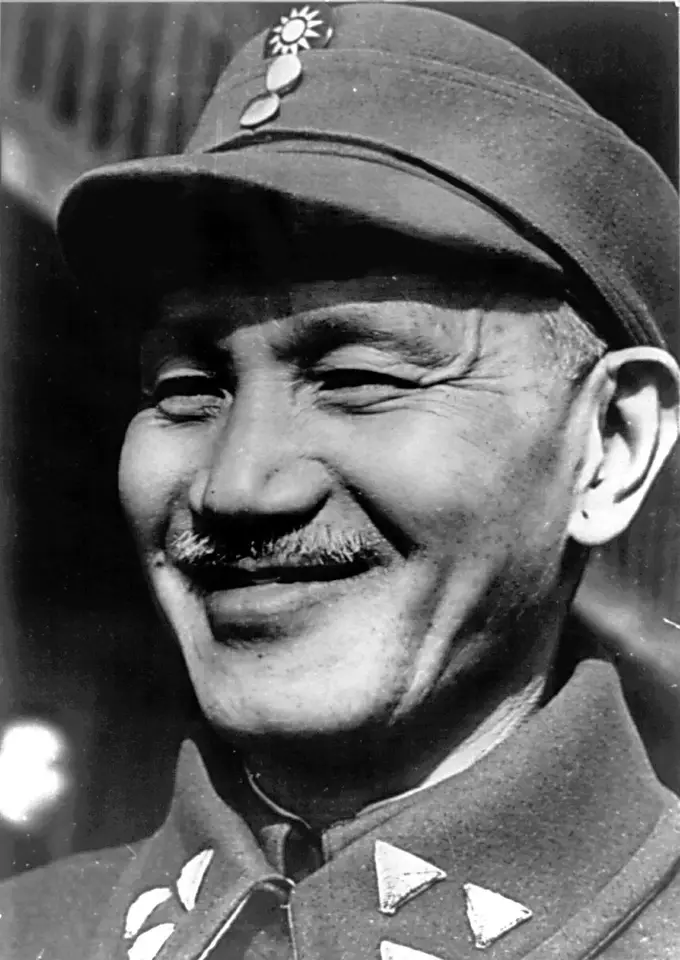
陈玄礼
Chen Xuanli (陈玄礼, ?–760) was a prominent Tang Dynasty military commander and long-serving leader of the imperial guards during the reigns of Emperor Xuanzong and Emperor Suzong. During the Jinglong era of Emperor Zhongzong, Chen served as a garrison commandant in the Wanqi (Ten Thousand Cavaliers) imperial guards. In 710, he actively participated in the Tanglong Coup led by Li Longji (the future Emperor Xuanzong) and Princess…
Chen Xuanli (陈玄礼, ?–760) was a prominent Tang Dynasty military commander and long-serving leader of the imperial guards during the reigns of Emperor Xuanzong and Emperor Suzong. During the Jinglong era of Emperor Zhongzong, Chen served as a garrison commandant in the Wanqi (Ten Thousand Cavaliers) imperial guards. In 710, he actively participated in the Tanglong Coup led by Li Longji (the future Emperor Xuanzong) and Princess Taiping, leading troops into the imperial palaces to purge the faction of Empress Wei and Princess Anle, thereby laying the military foundation for Xuanzong's rise to power. Following Xuanzong's ascension, Chen won the absolute trust of the monarch and was entrusted with command of the elite Northern Army guards, serving as the Grand General of the Dragon Martial Guard for more than four decades. Characterized by strict discipline, integrity, and simplicity, he strictly enforced palace guard regulations and boldly admonished the emperor against improper private outings and undisciplined excursions. When the catastrophic An Lushan Rebellion erupted in 755, Chen personally commanded the imperial bodyguard escorting Xuanzong on his westward flight to Sichuan in 756. At the Mawei Courier Station, facing demoralized and starving troops on the verge of total collapse, Chen orchestrated and led the Mawei Mutiny. The rebellious soldiers executed the hated Prime Minister Yang Guozhong and his clique, and pressured the emperor to order the suicide of Noble Consort Yang (Yang Guifei). After quelling the troop unrest, Chen bowed before Xuanzong to accept punishment for unauthorized executions, yet reaffirmed his steadfast loyalty and safely escorted the monarch across the perilous mountain passes to Chengdu. After returning to Chang'an, he was enfeoffed as the Duke of Cai. Later marginalized by the rising court eunuch Li Fuguo, Chen retired and passed away shortly thereafter. His decisive intervention at Mawei and unswerving personal fidelity were lauded by poets such as Du Fu and official dynastic historians.
Served as a cavalry commandant in the Wanqi guard, joined Li Longji to eliminate Empress Wei, and was promoted to senior guard rank.
Earned Emperor Xuanzong's deep trust and took charge of the elite Dragon Martial Guard, maintaining strict palace vigilance.
Firmly remonstrated against Xuanzong's unplanned visits to private mansions and unannounced nighttime outings outside the palaces.
An Lushan rebelled in Fanyang; deeply resenting Prime Minister Yang Guozhong's misrule, Chen contemplated removing him in the capital.
Escorted the imperial entourage west toward Sichuan; led the mutiny at Mawei Station to execute Yang Guozhong and force the death of Noble Consort Yang.
Accompanied Xuanzong into Chengdu and collaborated with local officials to suppress the armed revolt of Guo Qianren.
Escorted the Retired Emperor Xuanzong back to Chang'an; enfeoffed as the Duke of Cai with three hundred households of revenue.
Stripped of duty following political pressure from eunuch Li Fuguo, retiring to private life and dying of illness shortly after.
Chen Xuanli entered military service in the imperial capital during the mid-Tang period. In the late Jinglong era of Emperor Zhongzong, he served as a garrison commandant in the Wanqi elite imperial guard division. Following Emperor Zhongzong's sudden death in 710, Empress Wei and Princess Anle sought to monopolize imperial authority and establish female autocracy, precipitating intense political friction. Li Longji, the Prince of Linzi, secretly recruited trusted guard officers including Ge Fushun and Chen Xuanli to mount a preemptive counterstrike. Chen Xuanli recognized the growing threat to the dynastic order and pledged his loyal troops to the enterprise.
On the night of July 21, 710, the Tanglong Coup commenced. Leading heavily armed cavalry, Chen Xuanli breached the Xuanwu Gate and stormed the inner palaces in concert with Li Longji's core force. The conspirators systematically eliminated the commanding officers of Empress Wei's faction, executed the Empress and Princess Anle, and purged their extended political network. The coup restored Li Dan (Emperor Ruizong) to the throne and established Li Longji as crown prince. Chen's decisive battlefield performance established his standing as one of the premier guard commanders of the Tang realm.
When Li Longji ascended the throne as Emperor Xuanzong, he restructured the northern palace garrison into the Left and Right Dragon Martial Guards. Known for his solemn demeanor and unyielding loyalty, Chen Xuanli was elevated to Grand General of the Dragon Martial Guard, placing the innermost perimeter of imperial security under his sole direction. Throughout the four decades of the Kaiyuan and Tianbao eras, Chen governed the guardsmen with remarkable discipline and personal thrift, refusing to seek favor with imperial concubines, civilian ministers, or influential palace eunuchs.
During the later Tianbao era, Xuanzong indulged heavily in luxuries alongside Noble Consort Yang and her influential relatives. On one occasion, the monarch prepared to conduct an informal, unannounced visit to the private estate of the Duchess of Guo (Yang Guifei's elder sister). Chen Xuanli immediately blocked the excursion, admonishing that the sovereign must never depart palace gates without an officially proclaimed imperial decree. Xuanzong recognized the propriety of his words and abandoned the journey. On another occasion during the Lantern Festival at Huaqing Palace, Xuanzong attempted a late-night stroll into the open fields. Chen warned that open terrain lacked security preparations, insisting that if the emperor wished to wander at night, he should return within the fortified walls of the capital. Xuanzong yielded to his steadfast guardian.
In late 755, the regional military commissioner An Lushan rebelled at Fanyang, plunging northern China into chaos. Rebel armies swept across Luoyang and crushed imperial defenses at Tongguan. In July 756, with Chang'an in immediate peril, Xuanzong hastily fled toward Sichuan with an entourage of imperial relatives, high officials, and imperial guards under Chen Xuanli's command. En route, resentment against Prime Minister Yang Guozhong reached an explosive climax, as both soldiers and populace held him directly responsible for provoking the rebellion and squandering the frontier defense.
On July 15, 756, the weary entourage arrived at Mawei Courier Station in Xingping. The soldiers were starving, exhausted, and destitute of supplies, while rumors spread that Yang Guozhong was contemplating betrayal. Chen Xuanli recognized that unless immediate justice was visited upon the reviled minister, the entire guard corps would disintegrate into uncontrollable violence against the emperor himself. Chen secretly coordinated with the eunuch Li Fuguo and the crown prince Li Heng to align on action.
When Tibetan envoys intercepted Yang Guozhong outside the courier station gate to lodge food complaints, Chen's cavalrymen shouted that Yang was colluding with foreign enemies. The mutineers charged forward, hacked Yang Guozhong to pieces, severed his head, and impaled it upon a spear at the station gate. The furious soldiers proceeded to execute Yang Guozhong's son Yang Xuan and the Censor-in-Chief Wei Fangjin.
Despite Yang Guozhong's demise, the mutineers continued to surround the courier station with drawn weapons. When Xuanzong personally emerged to order the guardsmen back to their ranks, they refused to disperse. Chen Xuanli boldly addressed the throne, warning that although the traitor Yang was dead, his sister Yang Guifei remained in attendance upon the emperor; the troops feared eventual retribution and would not advance until the root of the faction was severed. With eunuch Gao Lishi reinforcing the reality of the crisis, Xuanzong tearfully complied, ordering Yang Guifei to be strangled in the station's Buddhist hall. After her body was displayed to verify her death, Chen Xuanli and the soldiers removed their armor, prostrated themselves, and begged pardon for exceeding their authority in defense of the dynasty. Xuanzong pardoned and comforted them, thereby restoring command and averting total regicide.
Following the resolution at Mawei, Crown Prince Li Heng parted company to march northward to Lingwu, where he ascended the throne as Emperor Suzong. Meanwhile, Chen Xuanli remained faithful to Emperor Xuanzong, commanding the diminished loyalist escort through the treacherous mountain passes and gallery roads into Sichuan. Overcoming physical privations and bandit ambushes, Chen ensured Xuanzong's safe arrival in Chengdu.
During their residence in Chengdu, local military adventurers led by Guo Qianren observed the weakness of the central government and launched an armed rebellion aimed at plundering the temporary imperial residence. Chen Xuanli swiftly mobilized the palace guards, formed an operational alliance with the governor of Shu Commandery, Li Huan, and launched a coordinated counteroffensive. The rebel forces were decisively crushed, securing the perimeter of the sovereign and consolidating political authority in the southwest.
In 757, imperial forces under Emperor Suzong recaptured Chang'an and Luoyang, and an official mission was dispatched to escort the Retired Emperor Xuanzong back to the capital. Chen Xuanli once again led the protective vanguard, safely delivering Xuanzong to the Xingqing Palace. In recognition of half a century of devotion and his heroic conduct during the western flight, Chen was elevated to the prestigious rank of Tejin and enfeoffed as the Duke of Cai, receiving three hundred households in fief revenue.
Aware of the sensitive political rift between the retired sovereign and Emperor Suzong's court, Chen voluntarily relinquished active operational command of the northern imperial guards, confining his duties solely to personal security at Xuanzong's residence. However, in the autumn of 760, the ascendant eunuch Li Fuguo forcibly relocated Xuanzong to the western Taiji Palace to sever his external contacts. In the ensuing purge of Xuanzong's veteran attendants, Chen Xuanli was forcibly retired from imperial service. Deeply grief-stricken by the mistreatment of his long-time master, the veteran commander fell ill and died shortly afterward.
Chen Xuanli's calculated management of the Mawei Mutiny was a pivotal turning point in saving the Tang imperial house from destruction during the opening phase of the An Lushan Rebellion. When the collapse of the central passes left the escaping court at the mercy of famished and mutinous soldiers, chaos threatened to end in regicide and total state dissolution.
Chen channeled the destructive fury of the army toward the true architect of the disaster, Yang Guozhong, orchestrating the liquidation of the prime minister's corrupt clique. By securing the execution of Noble Consort Yang, he addressed the army's deepest grievances while preventing unchecked massacre. Most critically, Chen maintained supreme institutional self-control: once the objectives were accomplished, he immediately relinquished offensive posture, disarmed before his monarch, and accepted royal authority, thereby preserving the dynasty's legitimacy and providing precious respite for national restoration.
Spanning the period from the Tanglong Coup in 710 to his forced retirement in 760, Chen Xuanli safeguarded the inner chambers of the Tang Empire for fifty consecutive years. Operating within a high-stakes imperial center plagued by factional intrigues, female court contenders, and expanding eunuch networks, Chen stood apart through steadfast personal integrity and austere military discipline.
He consistently declined political alliances, refused private overtures, and did not hesitate to counsel the reigning emperor against unconstitutional conduct. Even when the dynastic mantle shifted to the young Emperor Suzong at Lingwu, Chen chose the honorable path of escorting the vulnerable, deposed monarch into exile. His lifelong dedication exemplified the highest ideals of martial honor and unswerving fealty in classical Chinese statecraft.
Chen Xuanli witnessed the dramatic arc of the Tang Dynasty from its Kaiyuan golden age to the trauma of the An Lushan Rebellion, receiving enduring praise from both contemporaries and later historians for his integrity and composure in national crises.
The renowned Tang poet Du Fu celebrated Chen's patriotic valor in his monumental historical poem Journey to the North: "Mighty was General Chen, who raised the battle-ax in loyal righteous wrath; but for your resolute stand, the state itself would scarcely have survived."
The New Book of Tang praised him succinctly in its official appraisal: "He regulated himself through simplicity, uprightness, and profound sincerity," highlighting his refusal to compromise personal honor for political expediency.
The Song dynasty institutional encyclopedia Cefu Yuangui similarly recorded: "Chen Xuanli was ever recognized for his steadfast loyalty and righteousness," celebrating a commander who steered the imperial guards with unblemished rectitude through the most dangerous tempest of the imperial era.
FIGURES ASSOCIATED WITH THIS DYNASTY