Birth in Shandong
Born on the sixteenth day of the fourth lunar month in Manjing Village (later renamed Pujiazhuang), Zichuan County, Jinan Prefecture.
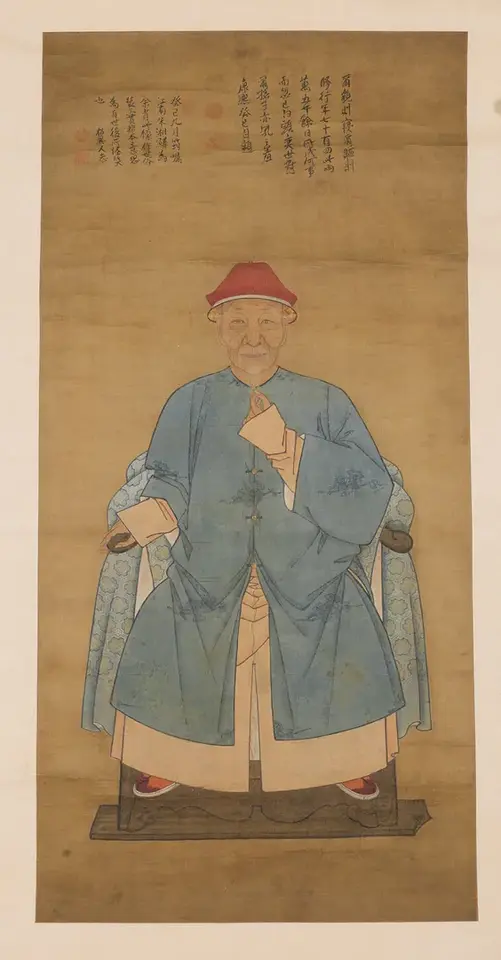
蒲松龄
Pu Songling (蒲松龄, 1640–1715), courtesy name Liuxian (留仙) or Jianchen (剑臣), pseudonym Liuquan Jushi (柳泉居士), and respectfully known as Liaozhai Xiansheng (聊斋先生), was a native of Zichuan County, Jinan Prefecture, Shandong Province (modern Zichuan District, Zibo City). He stands as a towering master of Qing Dynasty literature, short fiction, poetry, and folk opera, representing the ultimate culmination and artistic zenith of…
Pu Songling (蒲松龄, 1640–1715), courtesy name Liuxian (留仙) or Jianchen (剑臣), pseudonym Liuquan Jushi (柳泉居士), and respectfully known as Liaozhai Xiansheng (聊斋先生), was a native of Zichuan County, Jinan Prefecture, Shandong Province (modern Zichuan District, Zibo City). He stands as a towering master of Qing Dynasty literature, short fiction, poetry, and folk opera, representing the ultimate culmination and artistic zenith of classical Chinese supernatural and wonder tales. Born into a modest scholarly-merchant family, Pu demonstrated extraordinary literary talent in his youth, securing first place across all three tiers (county, prefecture, and circuit) of the preliminary civil examinations at age nineteen to attain the status of government student (xiucai), earning the lavish praise of Shandong Education Commissioner Shi Runzhang and winning early renown across regional intellectual circles. Despite his brilliant early debut, Pu suffered severe and persistent frustration in the higher imperial examinations, repeatedly failing the provincial triennial exams across five decades before receiving an honorary tribute student (suigongsheng) title at the advanced age of seventy-two. To survive the grinding poverty of his daily life, Pu worked as a village tutor for over four decades, serving briefly as an administrative secretary to magistrate Sun Hui in Baoying and Gaoyou in Jiangsu, and later spending thirty years as resident tutor for the prestigious Bi family in Xipu, Zichuan. These decades spent at the grassroots level, coupled with his firsthand experience of official corruption, examination absurdities, and social hypocrisy, forged his acute critical realism and profound sympathy for the oppressed. Pouring his lifelong creative energy into collecting folklore and popular legends, Pu synthesized the supernatural traditions of Six Dynasties zhiguai and Tang Dynasty chuanqi into his immortal masterpiece, Strange Tales from a Chinese Studio (Liaozhai Zhiyi), comprising nearly five hundred tales. Employing fox spirits, ghosts, immortals, and demons as allegories for mortal society, the work boldly exposed the cruelty of feudal autocracy, mercilessly satirized corrupt magistrates and oppressive gentry, ridiculed incompetent examination examiners, and passionately celebrated authentic romantic love that defied rigid social conventions. Beyond Liaozhai Zhiyi, Pu produced extensive poetry, essays, fourteen vernacular folk musical operas (liqu), and pragmatic manuals on agriculture and medicine, including Nongsang Jing and Yaosui Shu, cementing an enduring legacy in world literature.
Born on the sixteenth day of the fourth lunar month in Manjing Village (later renamed Pujiazhuang), Zichuan County, Jinan Prefecture.
Placed first in county, prefectural, and circuit preliminary exams at age nineteen to become a licentiate, praised by Education Commissioner Shi Runzhang.
Failed the provincial autumn examinations in Jinan, inaugurating a painful five-decade cycle of examination setbacks.
Traveled south to serve as private secretary to fellow townsman Sun Hui, magistrate of Baoying and Gaoyou, observing rural distress and administrative malfeasance.
Resigned from secretarial duties due to distaste for official sycophancy, returning to Zichuan to pursue rural teaching and creative writing.
Toured Mount Lao with senior scholars Gao Heng and Tang Menglai; failed the provincial examinations again that autumn.
Appointed resident family tutor at the prestigious estate of Bi Jiyou in Xipu, gaining library access and stabilizing his draft of Liaozhai Zhiyi.
Literary leader Wang Shizhen read the manuscript of Liaozhai Zhiyi, writing an admiring seven-character quatrain and extensive critical annotations.
Formally concluded thirty continuous years of teaching at the Bi family academy, returning home to Pujiazhuang to spend his final years.
Conferred the status of tribute student (suigongsheng) at age seventy-two, ending his lifelong entanglement with civil exam ambitions.
Passed away peacefully while seated quietly by the window in his Liaozhai study on the twenty-second day of the first lunar month at age seventy-six.
Pu Songling was born on the sixteenth day of the fourth lunar month in 1640 (the thirteenth year of the Chongzhen reign in the late Ming Dynasty) in Manjing Village, east of Zichuan County, Jinan Prefecture, Shandong Province. The Pu clan had settled in Zichuan in the early Ming dynasty, maintaining a tradition of Confucian learning and producing candidates who attained imperial degrees. His father, Pu Pan, studied for the examinations in his youth and was widely respected for his erudition, but after repeated examination failures during the turbulent collapse of the Ming, he abandoned scholarly pursuits to engage in commerce. Through shrewd management, Pu Pan accumulated substantial family wealth, earning a reputation as a prosperous gentleman of independent means. Following the Qing conquest, Pu Pan pinned his thwarted scholarly ambitions onto his sons, directing Pu Songling and his brothers to apply themselves diligently to Confucian classics from early childhood.
Ranking third among four brothers, Pu Songling received rigorous instruction at home. Naturally gifted, possessing total recall and disciplined concentration, he won his father's deep affection and careful guidance. In 1658 (the fifteenth year of the Shunzhi reign), nineteen-year-old Pu sat for the preliminary civil examinations for the first time. Demonstrating profound mastery of classical prose style and independent intellectual vision, he achieved the remarkable feat of finishing first across all three sequential examinations at the county, prefectural, and circuit levels, successfully entering the government school as a licentiate. The prominent poet Shi Runzhang, who then served as education commissioner of Shandong, was astounded by Pu's exam essay, noting in his official commentary that Pu's writing discarded all empty affectation and brought human character vividly to life. Winning triple first place at age nineteen brought the young scholar sweeping acclaim throughout the province, and his intellectual peers anticipated a rapid rise to the highest imperial ranks.
In 1659, the jubilant young scholar co-founded the Yingzhong Poetry Society in Zichuan with close friends Zhang Duqing and Li Yaochen, gathering regularly to critique literature and compose verses over wine. Soon after, upon the invitation of fellow townsman Li Ximei, Pu moved into the Li family study to dedicate himself to intensive research across the Confucian classics, dynastic histories, unrecorded wild histories, and popular legends. At that moment, regional intellectuals widely assumed that this precocious talent would swiftly pass the triennial provincial examinations and secure the jinshi degree.
However, the reality of the imperial examination system proved far harsher than Pu could have foreseen. In 1660, twenty-year-old Pu traveled confidently to the provincial capital of Jinan to sit for the autumn provincial examinations, only to suffer an unexpected failure. While this setback did not immediately dampen his ambitions, his return to the examinations in 1663 met with identical disappointment. Confronted with the increasingly rigid, mechanical eight-legged essay format and the mediocrity of examination graders, Pu began to experience the bitter humiliation and systemic helplessness shared by lower-class scholars.
Simultaneously, severe domestic crises overtook the Pu household. Devastated by the warfare of the Ming-Qing transition and crushed by extortionate taxes, the family fortunes rapidly deteriorated after his father retired from commercial ventures. With numerous children born to multiple wives and concubines, bitter disputes over property erupted among the wives of Pu's elder brothers once they married. In 1664, to halt domestic strife, Pu Pan was compelled to divide the household estate. Manipulated by selfish and domineering sisters-in-law, the partition was egregiously unfair. Pu Songling and his wife, Lady Liu, were allocated merely three dilapidated rooms on an eastern farmstead and twenty mu of barren, drought-prone land. At the time of separation, the couple lacked even basic kitchenware and grain stores, plunging their small household into desperate destitution.
Faced with a leaking mud hut and hungry infant children, Pu had to confront the harsh demands of physical survival. Lady Liu proved a devoted and resilient partner, spinning yarn, weaving cloth, and gathering wild greens to supplement their meals without uttering a word of complaint. To secure basic sustenance for his household, Pu abandoned full-time scholarly isolation in 1665 and embarked on what would become a four-decade career as a rural private tutor. He traveled to the households of Wang Yongyin in Wangcun and Wang Guanzheng in Fengquan, teaching village children in exchange for meager rations of grain and small stipends. In the exhausting intervals between teaching duties and poverty, Pu continued reading by the dim light of soybean-oil lamps to prepare for upcoming examinations, gaining an unvarnished understanding of social hypocrisy and familial coldness.
In August 1670, thirty-year-old Pu received a rare opportunity to travel far from home. His fellow townsman and close friend Sun Hui, having passed the metropolitan examinations, was appointed magistrate of Baoying County in Yangzhou Prefecture, Jiangsu, and was subsequently appointed acting prefectural magistrate of Gaoyou. Knowing Pu's refined literary skill and administrative acumen, Sun sent a warm invitation asking Pu to serve as his private secretary (mubin), handling correspondence, drafting official memorials, and compiling judicial records.
Bidding farewell to his wife and children, Pu traveled southward by canal boat via Qingjiangpu to the Baoying county magistrate office. During his year and a half of secretarial service in the lower Yangtze waterways, Pu transitioned from an cloistered scholar into an active observer of grassroots bureaucracy. He assisted Sun Hui in processing grain tax collection, hearing civil lawsuits, and organizing flood relief and bandit suppression, composing numerous official proclamations preserved in his Hexuan Bizha.
While serving in Baoying, Pu was tasked by Sun Hui with overseeing the compilation and revision of sections of the Baoying County Gazetteer, for which he composed prefaces and hydraulic treatises. By day he handled dense bureaucratic dockets in court chambers, while by night he examined accumulated case files, developing an acute understanding of how grassroots clerks manipulated legal loopholes to extort commoners. Furthermore, his southern journey exposed him directly to catastrophic social crises. At the time, devastating floods breached the Yellow River and Grand Canal dikes, submerging entire villages and leaving thousands destitute; yet the imperial government relentlessly enforced tax collection quotas, sending brutal bailiffs to seize peasants' meager belongings and forcing families into starvation, flight, and the sale of children.
Observing the predatory greed and servility of Qing officialdom, Pu was overwhelmed with compassion for the suffering peasantry. He composed numerous searing realistic poems, including Song on Demanding Grain and Fleeing Famine, voicing outrage against an extortionate administrative system. Disillusioned with the shallow flattery and moral compromise demanded of secretarial retainers, Pu declined Sun Hui's persistent offers of continued employment. In the autumn of 1671, he resigned and returned to Zichuan, carrying with him firsthand insights into bureaucratic rot that would become the foundational life experience behind the anti-tyrannical themes of Strange Tales from a Chinese Studio.
Upon returning to his native county, Pu resumed his career as a village tutor. In 1672, he joined senior scholars Gao Heng and Tang Menglai on an excursion to Mount Lao on the Shandong peninsula, admiring ancient Daoist sanctuaries and coastal landscapes while composing descriptive travel essays. Yet practical hardship and academic failure continued to shadow him; in the autumn of 1675, he sat for the provincial examinations for the fourth time and was again rejected.
In the spring of 1679, a major turning point occurred in Pu's career. Through a friend's recommendation, he was engaged as private tutor at the prestigious manor of the Bi family in Xipu Village, Zichuan. The Bi clan was the most distinguished aristocratic house in the county: Bi Jiyou's father, Bi Ziyan, had served as Minister of Revenue under the Ming, and Bi Jiyou himself had served as Right Transmission Commissioner under the Qing. Both Bi Jiyou and his descendants treated Pu with profound respect, providing him with a serene, spacious study called the Chaoran Hall, complete with an extensive family library. The generous and regular stipend from the Bi family shielded Pu from the chronic famine and instability of his earlier years, allowing him to tutor the Bi children with peace of mind while dedicating his nights to literary composition.
From 1679 to 1709, Pu served as resident tutor at the Bi estate for thirty continuous years, dedicating his mature intellectual energies to this scholarly sanctuary. At Chaoran Hall, he not only guided multiple Bi family disciples to success in imperial examinations, but also poured his soul into compiling supernatural tales and drafting classical fiction under the solitary lamp.
Popular tradition recounts that Pu established a tea stall beneath willows near the Liuquan spring in his village, offering free tea and tobacco to traveling merchants and passersby in exchange for local ghost stories and wonder tales. He combined these oral accounts with classical allusions, transforming his frustration with worldly injustice into a dazzling realm of foxes, ghosts, and spirits. In the autumn of 1679, he penned his famous Author's Preface to Liaozhai, articulating his sorrowful artistic purpose and announcing the initial completion of Strange Tales from a Chinese Studio.
During his decades at the Bi estate, Pu enjoyed access to the family's vast collection of rare dynastic records, unofficial histories, and local monographs. Bi Jiyou's son, Bi Shengkuan, who was also an enthusiastic lover of literature, formed a deep intellectual friendship with Pu. Within this rich library, Pu immersed himself in earlier supernatural fiction, drawing inspiration from Six Dynasties zhiguai works like Soushen Ji and Tang Dynasty chuanqi like Li Hun Ji and The Story of Liu Yi, refining their thematic depth while pioneering an entirely original narrative voice.
As Strange Tales from a Chinese Studio took shape, Pu's literary brilliance attracted the attention of leading national literary figures. In the spring of 1687, the towering poet and Minister of Justice Wang Shizhen returned to his ancestral home in Xincheng, Shandong. Having heard of Pu's reputation, Wang borrowed and read the handwritten manuscript of Liaozhai Zhiyi. Deeply moved by its extraordinary imagination and prose artistry, Wang declared it a masterpiece of transcendent genius, inscribing an admiring seven-character quatrain on the manuscript that praised the author's choice to abandon worldly speech in favor of ghostly songs.
Wang was so captivated by the work that he annotated it extensively in vermilion ink and offered to purchase the complete manuscript or assist in funding its woodblock publication. Treasuring his life's labor, Pu politely declined to surrender the copyright, but Wang's prestigious endorsement caused the manuscript to circulate widely among high-ranking scholars and literary elites, who eagerly copied the text by hand. Close friend Zhu Xiang spent months hand-transcribing the entire work, ensuring its widespread fame across China decades before it was officially printed.
Beyond Liaozhai Zhiyi, Pu demonstrated immense creative versatility at Chaoran Hall. He authored thousands of classical essays, regulated poems, and lyric verses, compiled into Liaozhai Wenji, Liaozhai Shiji, and Liaozhai Ciji, the latter preserving one hundred and nineteen lyric poems of remarkable emotional depth. His classical essays, such as nine imperial memorial drafts, displayed sophisticated political analysis. During his tenure as provincial surveillance commissioner of Shandong, Yu Chenglong visited Pu personally to express his respect for Pu's integrity and scholarship.
Recognizing that unlettered rural folk could not read classical prose, Pu utilized local Zichuan vernacular dialect and popular folk melodies to compose fourteen extensive musical performance works (liqu), such as The Wall Account and The Mother-in-Law and Daughter-in-Law. These lively works exposed family abuse, neglect of elderly parents, and domestic conflicts, achieving immense popularity across northern rural communities and establishing Pu as a pioneering innovator in Chinese vernacular dramatic literature. Furthermore, Pu authored practical manuals to aid his community: in 1688 he compiled the Pu Clan Genealogy; he wrote the agricultural treatise Nongsang Jing, detailing dry-farming techniques, sericulture, and soil management; and he composed the medical manual Yaosui Shu to provide accessible herbal remedies and debunk superstitious sorcery.
Despite his monumental artistic achievements, Pu remained a victim of the rigid examination bureaucracy. In 1687, at age forty-eight, he sat for the provincial examinations in Jinan. Swept up in creative momentum, his writing inadvertently crossed the prescribed margin lines on the test paper, prompting the examiners to disqualify him for a technical infraction. In 1690, at age fifty, he attempted the examination for the sixth time and suffered another defeat, leading him to abandon all hopes of bureaucratic advancement.
In the late autumn of 1709, at age seventy, Pu concluded his thirty years of service at the Bi estate. The Bi family held a banquet to bid him a sorrowful farewell. Returning to his modest ancestral cottage in Pujiazhuang, the aging scholar ended forty-five years of teaching to enjoy a peaceful retirement surrounded by his grandchildren. In 1711, at age seventy-two, Pu was officially designated a tribute student (suigongsheng) based on his senior licentiate status, sponsored by the provincial education commissioner. This hollow degree, awarded after more than half a century of waiting, served as a poignant historical irony for a literary master whose renown already surpassed that of high court officials.
In his final years, Pu continued to edit Liaozhai Zhiyi and organize his writings. In 1713, a local portraitist painted a vivid silk likeness of the seventy-four-year-old scholar, for which Pu composed a self-mocking inscription expressing his detached amusement at aging and his carefree spirit.
In 1714, his lifelong companion Lady Liu passed away, dealing him a severe emotional blow. On the twenty-second day of the first lunar month in 1715, seventy-six-year-old Pu Songling sat calmly beside the window of his Liaozhai study, passing away peacefully in serene contemplation. The master who spent his life crafting the supernatural to illuminate the mortal world was laid to rest in the ancestral cemetery east of Pujiazhuang, leaving behind an immortal monument in world literature.
Pu Songling's most celebrated historical achievement was the creation of Strange Tales from a Chinese Studio (Liaozhai Zhiyi), the crowning summit of classical Chinese supernatural fiction. Encompassing nearly five hundred short stories, the collection synthesized the narrative strengths of Six Dynasties zhiguai and Tang chuanqi, achieving unprecedented heights in thematic depth, psychological insight, and narrative sophistication. By employing wild imaginative allegories featuring fox spirits, ghosts, and flower fairies endowed with complex human emotions and social consciousness, Pu constructed a multidimensional aesthetic realm that permanently established his place among the world's greatest literary masters.
The collection achieved a magnificent fusion of literary styles. Pu combined the concise, dignified diction of classical Han historical prose with the lively, evocative expressions of northern vernacular speech, creating a distinctive style known as the "Liaozhai prose." His depictions of spirits and mortals alike are psychologically vivid and emotionally compelling, using supernatural motifs to capture human reality and delivering extraordinary emotional impact.
Through Strange Tales from a Chinese Studio, Pu delivered a devastating critique of the cruelty and corruption of the Qing ruling elite. In classic stories such as The Cricket, Xi Fangping, Dreaming of Wolves, and The Maiden Mei, he examined systemic social injustice, revealing how imperial extravagance crushed the peasantry. In The Cricket, an ordinary family is destroyed because of the court's insatiable demand for fighting crickets, demonstrating how the trivial whims of an emperor directly threatened human lives.
In Dreaming of Wolves, Pu created an eerie allegory where government yamens are occupied by savage wolves preying on human flesh, unmasking officials as predatory beasts devourers of common people. In Xi Fangping, the protagonist journeys to the underworld to seek justice for his wronged father, only to suffer gruesome tortures at the hands of venal demonic magistrates who protect each other through systemic bribery. These stories functioned as sharp scalpels piercing the illusion of imperial prosperity, radiating deep humanistic compassion for the lower classes.
Drawing from five decades of personal torment within the civil examination halls, Pu mounted an incisive and witty satire against the imperial examination regime. Stories such as The Scholar of Literature, Yu Qu'e, Jia Fengzhi, Wang Zi'an, and The Examination Ministry laid bare the corruption of examiners and the degradation of true scholarly talent.
In The Scholar of Literature, Pu introduced a blind Buddhist monk who evaluated essays by smell: the monk vomited upon smelling genuine literary masterpieces while praising wretched eight-legged essays, highlighting how incompetent examiners favored mediocrity over genius. In Wang Zi'an, he depicted the psychological torment of candidates, identifying seven humiliating states of mind that reduced candidates to caged birds and trembling prisoners, pronouncing an unyielding historical verdict on an examination system that stifled creativity and degraded the human spirit.
Pu poured immense warmth into depicting young lovers who defied rigid feudal proprieties in pursuit of emotional autonomy. In tales such as Yingning, A Bao, Hongyu, Xiangyu, Qingfeng, and Liancheng, his supernatural heroines are depicted as intelligent, radiant, and courageous women who reject arranged marriages and social stratification, demonstrating selfless loyalty to their partners.
The laughing fox-maiden Yingning symbolized uncorrupted natural innocence rebelling against rigid decorum; Sun Zichu's devotion in A Bao, transforming into a parrot to reach his beloved, celebrated spiritual fidelity that transcended mortality; and the mutual affinity between Qiao Sheng and Liancheng in Liancheng illustrated a pure communion of souls that bridged social divides. These idealized portraits celebrated individual freedom and female agency, anticipating modern humanist values.
Beyond classical prose, Pu made enduring contributions to popular performance literature. Utilizing the local dialect and folk song tunes of Zichuan, he composed fourteen extensive vernacular musical works (liqu), including The Wall Account, The Compassion Song, and The Mother-in-Law and Daughter-in-Law.
Drawing directly from the everyday realities of northern rural villages, these performance pieces employed lively and humorous language to address domestic abuse, the neglect of aging parents, and ethical decay within village clans. By providing moral enlightenment through entertaining vernacular musical drama, these works circulated across northern communities for centuries, greatly enriching Chinese popular performing arts.
Throughout his life, Pu maintained a pragmatic commitment to social welfare. During his years at the Bi estate, he compiled the agricultural manual Nongsang Jing, tailored to the dry-farming environment of northern China, detailing seed selection, seedling cultivation, soil enrichment, sericulture, and pest prevention, creating a valuable historical record of Qing agricultural technology.
Additionally, he authored the medical manual Yaosui Shu, synthesizing practical herbal remedies for common epidemics, pediatric ailments, and rural illnesses to help villagers avoid exploitation by superstitious charlatans. He also produced household manuals such as Jiazheng Neibian and Shengshen Yulu, demonstrating his dedication to practical science, moral cultivation, and grassroots welfare.
FIGURES ASSOCIATED WITH THIS DYNASTY