Lineage of Letters
Born into a prestigious scholar-gentry house in Zhangzhu Town, Yixing; demonstrated early passion for military strategy.
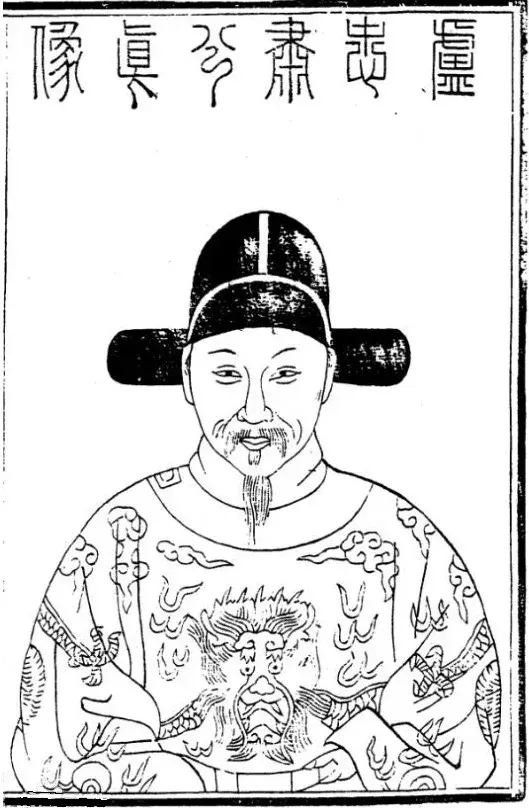
卢象升
Lu Xiangsheng (卢象升, 1600–1639), courtesy name Jiandou (建斗), art name Jiutai (九台), was a native of Zhangzhu Town, Yixing County, Changzhou Prefecture, South Zhili. He was an eminent statesman, supreme military strategist, anti-Qing commander, and celebrated martyr of the late Ming dynasty. Born into an esteemed scholarly gentry lineage claiming descent from the Tang poet Lu Zhaolin, Lu obtained his jinshi degree in 1622 and…
Lu Xiangsheng (卢象升, 1600–1639), courtesy name Jiandou (建斗), art name Jiutai (九台), was a native of Zhangzhu Town, Yixing County, Changzhou Prefecture, South Zhili. He was an eminent statesman, supreme military strategist, anti-Qing commander, and celebrated martyr of the late Ming dynasty. Born into an esteemed scholarly gentry lineage claiming descent from the Tang poet Lu Zhaolin, Lu obtained his jinshi degree in 1622 and began his career as a secretary in the Ministry of Revenue and Prefect of Daming. Despite his pale, ascetic countenance, he possessed extraordinary physical strength and an innate genius for grand strategy. In 1629, during the Jisi Incident when Later Jin forces raided the metropolitan region, Lu mobilized thousands of local volunteers to relieve the capital, subsequently founding the legendary Tianxiong Army (Tianxiong Jun). Formed along strict clan and communal kinship lines across Daming, Guangping, and Shunde, the force achieved unmatched battlefield cohesion. Campaigning across northern and central China, Lu repeatedly routed peasant rebel hosts under Gao Yingxiang and Li Zicheng, becoming so feared for his iron discipline and battlefield valor that rebels nicknamed him "Yama Lu." In 1634, he was elevated to Supreme Commander of Xuan-Da and Shanxi, where he reclaimed three hundred thousand mu of border military colonies and modernized defensive redoubts. In late 1638, Qing armies under Dorgon breached the Great Wall in a massive multi-pronged raid. Appointed Minister of War and Supreme Commander of all relief forces with imperial sword in hand, Lu advocated uncompromising resistance. However, Senior Grand Secretary Yang Sichang and supervising eunuch Gao Qiqian favored secret appeasement and sabotaged his campaign. They redirected the elite Guanning cavalry to Gao Qiqian's camp while starving Lu's remaining five thousand exhausted provincial infantry of food and ammunition. Encircled at Jia Zhuang in Julu by overwhelming Qing Eight Banners forces on January 15, 1639, Lu rejected surrender and led his men in desperate hand-to-hand combat while Gao Qiqian passively watched from fifty li away. After cutting down dozens of enemy warriors, Lu was slain with four arrows and three blade wounds at the age of thirty-nine. Posthumously revered as a symbol of supreme dynastic fidelity, he was honored with the posthumous title Zhonglie by the Southern Ming and Zhongsu by the Qing dynasty.
Born into a prestigious scholar-gentry house in Zhangzhu Town, Yixing; demonstrated early passion for military strategy.
Passed the imperial palace examination as a second-class jinshi, entering administrative service in the Ministry of War.
Appointed Secretary in the Ministry of Revenue to supervise the strategic canal granaries at Linqing, repeatedly receiving top performance marks.
Promoted to Prefect of Daming; categorically refused to participate in the erection of Wei Zhongxian's living shrines.
Raised loyalist volunteer brigades during the Jisi Incident, instituting the renowned clan-based Tianxiong Army.
Promoted to Surveillance Vice Commissioner; led the Tianxiong Army to rout peasant rebels at Shahe and Lengquan.
Appointed Governor of Yunyang; submitted the celebrated "Ten Governance Proposals" and held the Han River against rebel crossings.
Named Supreme Commander of Seven Provinces; routed Gao Yingxiang and Li Zicheng at the Battle of Chuzhou.
Promoted to Vice Minister of War and Supreme Commander of Xuan-Da; established massive military agro-colonies.
Entrusted with supreme command of imperial relief armies against invading Qing forces; undermined and isolated by Yang Sichang.
Encircled with five thousand troops at Jia Zhuang in Julu; died heroically in hand-to-hand combat at the age of thirty-nine.
Lu Xiangsheng was born on April 16, 1600 (the 4th day of the 3rd month of the 28th year of the Wanli era), at Suoqian Bridge in Zhangzhu Town, Yixing County, Changzhou Prefecture. His family traced its distant lineage to Lu Zhaolin, the famed poet of the Early Tang period. During the Southern Song dynasty, his ancestor Lu Zhan served as magistrate of Yixing and settled at Mingling, establishing the prominent "Mingling Lu lineage." His grandfather, Lu Lizhi, attained the provincial juren degree and served with distinction as magistrate of Yifeng and Nankang, remembered for his incorruptibility; his father, Lu Guobin, was a respected local scholar who enforced strict familial probity. Although Lu Xiangsheng possessed a slender build and fair complexion, he had unique anatomical bone structure in his forearms and extraordinary physical strength, capable of wielding massive warblades and heavy draw-weight longbows with remarkable grace.
Unlike contemporary literati who immersed themselves entirely in decorative examination rhetoric, Lu concentrated his intellectual energy on the comprehensive analysis of classical histories, military treatises, strategic topography, and state finances. Whenever reading chronicles of the Tang loyalist Zhang Xun defending Suiyang or Song commander Yue Fei resisting Jurchen invasions, he would strike the table and declare to companions: "If a gentleman can emulate such men in life, sacrificing himself for the dynastic realm, what regret could there be!" In 1621, at the age of twenty-two, he placed 29th in the Southern Zhili provincial examinations; the following year, he earned his jinshi degree, ranking 25th in the second class, and was assigned to practical observation within the Ministry of War.
In February 1624, Lu commenced active administrative service as a secretary in the Guizhou Bureau of the Ministry of Revenue. In August, he was dispatched to supervise the vital imperial grain reserves at Linqing along the Grand Canal. At the time, eunuch dictator Wei Zhongxian held absolute court dominance, and officials across the empire clamored to enroll as his adoptive clients. Lu preserved impeccable moral independence, barring all private solicitations. Over his three years managing the Linqing depot, he stamped out corruption among canal transport guilds, accumulated several thousand taels in surplus grain reserves, and recovered thirty-one thousand taels in back taxes, earning the highest evaluation rating from the Ministry of Revenue.
In March 1627, Lu was promoted to vice director in the Shanxi Bureau while retaining his post at Linqing. Later that month, he was granted concurrent rank as vice surveillance commissioner of Shandong and formally appointed Prefect of Daming, assuming office in June. When Grand Coordinator Li Jingbai sought to curry favor with Wei Zhongxian by building living shrines across the province and invited Lu to attend and sign the dedication monument, Lu flatly refused, proclaiming: "A local magistrate has no business meddling in living shrines!" In Daming, he adopted the classical maxims of "Clarity, Prudence, and Diligence," handling administrative litigation by day and reviewing criminal files by night. Amid intense military levies triggered by the Liaodong wars, he shielded the local peasantry from arbitrary extortion, restoring civic tranquility and earning the enduring affection of the regional populace.
In the winter of 1629, Later Jin ruler Hong Taiji bypassed the Shanhai Pass, smashed through the Great Wall at Xifengkou, and marched his cavalry directly before the walls of Beijing, igniting the Jisi Incident. Hearing of the capital's peril, Prefect Lu wept aloud, depleted his personal fortune to raise volunteers, and assembled several thousand elite militiamen within days, leading them to the capital's defense. Deeply moved by his valor, the Chongzhen Emperor promoted Lu in 1630 to military defense vice commissioner for the Daming Circuit.
Evaluating the systemic collapse of hereditary garrison troops (weisuo), Lu resolved to create a brand-new provincial military establishment bound together by organic communal and kinship solidarity. Recruiting hearty frontiersmen from Daming, Guangping, and Shunde, he organized units comprised exclusively of fathers, sons, brothers, and village neighbors, establishing an unshakeable bond: if one soldier fell, the entire unit rushed to his rescue; if one fled, his native clan bore permanent dishonor. This force was christened the Tianxiong Army (Tianxiong Jun). Lu lived in complete parity with his soldiers, sharing coarse grain, abstaining from fur coats in sub-zero winters, and declining sunshades in summer. He imposed iron discipline: any soldier who plundered civilian property was executed on the spot. The Tianxiong Army rapidly emerged as the most formidable and disciplined shock force in northern China.
In 1633, roving peasant armies flooded eastward from Shanxi into Hebei and Henan, descending from the Western Hills to menace Zhengding. Lu mobilized the Tianxiong Army, riding through the night from Daming to intercept the rebels at Shahe and Lengquan. Charging at the head of a hundred crack horsemen, Lu personally slew the rebel vanguard commander and severed hundreds of enemy heads, repelling the threat to the metropolitan hinterland. As the rebel columns retreated south across the Yellow River, Lu was promoted to surveillance commissioner, pursuing them relentlessly into Linxian and Xiuwu, delivering Henan and Zhangde prefectures from destruction.
In the spring of 1634, rebel armies under Li Zicheng, Gao Yingxiang, and Zhang Xianzhong swept into Huguang, capturing six county seats within Yunyang Prefecture and threatening the mountainous intersection of Shaanxi, Huguang, and Sichuan. Recognizing Lu's exceptional talent, the Chongzhen Emperor appointed the thirty-four-year-old commander as Right Assistant Censor-in-chief and Governor of Yunyang.
Upon arrival, Lu surveyed the terrain and presented his celebrated "Ten Proposals for Yunyang": restoring agrarian production, organizing standing strike garrisons, deploying reconnaissance networks, strengthening cliffside bastions, instituting local mutual-guarantee security, upgrading courier postal relays, stockpiling emergency grain reserves, establishing cross-jurisdictional mutual defense, mobilizing mountain hunters, and manufacturing advanced firearms. Championing a doctrine of military quality over quantity, Lu argued passionately that small bodies of elite troops were vastly superior to unwieldy mobs of conscripted rabble. Enforcing rigorous training in mounted archery and musketry, Lu stationed units at key river crossings, trapping rebel divisions at Mount Datong and Wujiuba, capturing rebel leader "Sweeper King," and pacifying tens of thousands of insurgents.
In January 1635, rebel divisions held the famous Xingyang Conference and launched a surprise raid eastward, sacking Fengyang and desecrating the ancestral imperial tombs of the Ming dynasty. Devastated, the Chongzhen Emperor donned mourning garments and promoted Lu to Vice Minister of War and Right Assistant Censor-in-chief, investing him as Supreme Commander of Seven Provinces (Zhili, Henan, Shandong, Shaanxi, Huguang, Sichuan, and Shanxi) with absolute authority to direct military operations across the empire.
Hearing that Gao Yingxiang and Li Zicheng were besieging Chuzhou, just fifty miles from Nanjing, Lu marched the Tianxiong Army several hundred miles from Xishaohe to relieve the city. Outside the walls of Chuzhou and Guanshan, Lu deployed Guanning cavalry under Zu Kuan on the flanks while personally leading the central infantry assault. Brandishing his warblade on horseback, Lu roared: "Whoever retreats shall lose his head!" The Tianxiong infantry fell upon the enemy with unmatched ferocity. The battle raged from dawn to dusk, resulting in the slaughter of over three thousand rebel shock troops, choking the Chu River with corpses and breaking the main rebel concentration.
Following the victory at Chuzhou, Lu pursued the retreating rebel columns to Nanyang, ordering his commanders to encircle Li Zicheng along the Han River. However, northern Guanning cavalry struggled in mountainous terrain, and mutinous detachments under Wang Jinzhong began deserting. Lu restored discipline by executing mutineers, reorganizing his lines, and engaging the rebels in dozens of running battles across Queshan, Yichuan, and Lushi. Terrified by the sight of Lu's white armor and fluttering banners, rebel fighters referred to him in dread as "Yama Lu." In the spring of 1636, collaborating with Shaanxi Governor Sun Chuanting, Lu helped trap and capture rebel general Gao Yingxiang at Heishuiyu, dealing a crushing blow to the rebel cause.
In May 1636, having established the Qing dynasty in Shenyang, Hong Taiji dispatched Prince Ajige with one hundred thousand cavalry through the Great Wall passes in the Bingzi Incident, ravaging Changping and threatening Beijing. Summonsed to relieve the capital, Lu rode through the night with elite cavalry, encamping at Changping and mounting counter-strikes against retreating Manchu columns. Acknowledging the incompetence of previous northern commanders, the court appointed Lu as Vice Minister of War and Supreme Commander of Xuanfu, Datong, and Shanxi.
Taking command of the decaying Xuan-Da frontier, Lu addressed chronic troop wage arrears and collapsed border fortifications with remarkable vision. Rejecting additional tax levies on the populace, he instituted extensive military agro-colonies (juntun). Lu personally inspected border wilderness, stripping off his robes to guide the plow and encourage cultivation among the troops. Under his supervision, thirty thousand mu of abandoned frontier wasteland were reclaimed within two years, yielding over two hundred thousand shi of stored grain and saving the state vast transit expenses. Simultaneously, he renovated dozens of strategic mountain redoubts and trained border garrisons in heavy artillery tactics.
In May 1638, Lu received news that his father, Lu Guobin, had passed away on his return journey from visiting the frontier camp. Stricken with grief, Lu submitted seven consecutive memorials pleading to observe traditional three-year filial mourning. However, the Chongzhen Emperor adamantly refused his resignation, commanding him to remain at his post under imperial dispensation (duoqing).
Around this time, Senior Grand Secretary Yang Sichang and supervising eunuch Gao Qiqian initiated covert negotiations with the Qing court, seeking to buy peace through territorial concessions and silver subsidies. When Qing emissaries delivered letters to Xuan-Da testing the waters for an accord, Lu rejected the overtures, memorializing the throne with unyielding conviction: "Other nomadic tribes may perhaps be pacified through diplomacy, but the eastern barbarians harbor predatory ambitions; they are our mortal enemies and under no circumstances should we sue for peace!" Lu's stance infuriated Yang Sichang and Gao Qiqian, who resolved to destroy the principled general.
In late 1638, frustrated by the stalled negotiations, Hong Taiji launched a massive dual-pronged invasion led by Prince Dorgon and Prince Dodo. Breaching the Great Wall at Qiangzilukou and Qingshanguan, Eight Banners columns swept into Zhili, encircling the capital and raiding into Shandong. Desperate, the Chongzhen Emperor promoted Lu to Minister of War, Right Censor-in-chief, and Supreme Commander of all provincial relief forces, bestowing upon him the imperial sword of state.
However, supreme political authority rested with Grand Secretary Yang Sichang. Determined to eliminate his rival, Yang conspired with eunuch supervisor Gao Qiqian to sabotage Lu's army. Citing metropolitan defense requirements, Yang assigned the entirety of the crack Guanning cavalry—tens of thousands of veteran horsemen—to Gao Qiqian, leaving Lu with fewer than twenty thousand exhausted, ill-equipped regional infantry from Xuanfu and Datong. Worse still, Yang ordered provincial granaries along the march to withhold supplies, forcing Lu's soldiers to march through the bitter winter without rations or winter clothing.
Aware of the trap, Lu resolved to sacrifice his life for the empire, advancing from Shunde to Jia Zhuang in Julu. In early January 1639, Dorgon concentrated tens of thousands of Eight Banners cavalry to encircle Lu's remaining five thousand men. Out of food and ammunition, Lu's soldiers ate snow to survive. Lu dispatched urgent couriers to Gao Qiqian, whose army of tens of thousands lay encamped at Jize, just fifty li away. The roar of Qing artillery was audible from Gao's camp, yet the eunuch barred his gates and refused to move.
On January 15, 1639 (the 11th day of the 12th month), Qing forces launched an all-out assault against the camp at Jia Zhuang. Donning white armor over his mourning garments, Lu climbed the earthworks and rallied his men, who wept and swore to fight to the death. Directing artillery until the last cannonball was spent and every arrow loosed, Lu drew his sword and led dozens of retainers in a desperate charge into the enemy ranks. He cut down dozens of hostile warriors in hand-to-hand combat. Wounded by four arrows and slashed across his face by three blade cuts, Lu finally collapsed in the snow, dying heroically at the age of thirty-nine. His loyal lieutenant, Yang Lukai, threw his body over Lu's corpse to shield it from desecration, absorbing dozens of arrows before perishing beside him. The five thousand warriors of the Tianxiong Army fought to the last man, refusing all quarters.
Following the battle, Gao Qiqian fled south in panic, abandoning Shunde and Guangping to the invaders. Anxious to conceal his complicity, Yang Sichang spread rumors that Lu had fled or that his fate was uncertain, ordering provincial authorities to withhold funeral honors. He sent touring censors three times to inspect Lu's corpse in the frozen mud of Julu. Despite the bitter winter, Lu's face appeared lifelike, his mortal wounds clearly visible, yet his coffin was prevented from burial for months while his family was harassed by officials.
In 1640, following the disastrous defeat and suicide of Yang Sichang in Xiangyang, the Chongzhen Emperor finally recognized the magnitude of the injustice, issuing an imperial decree fully rehabilitating Lu's memory. Under the Southern Ming Hongguang court, he was posthumously granted the titles of Grand Tutor to the Crown Prince and Minister of War, with the posthumous name Zhonglie, and an imperial memorial shrine was constructed in his honor at Zhangzhu Town. In 1776, the Qianlong Emperor of the Qing dynasty formally enrolled Lu in the Imperial Records of Dynastic Martyrs, praising him as a loyal and valiant servant and conferring the posthumous name Zhongsu. His unyielding moral courage and battlefield martyrdom remain legendary in Chinese martial history.
Lu Xiangsheng's primary contribution to late Ming military history lay in the creation and operational deployment of the Tianxiong Army. Confronted with the structural breakdown of the Ming dynasty's hereditary garrison system (weisuo) and the pervasive cowardice of mercenarily recruited irregulars, Lu pioneered an operational model founded on localized, kin-based social solidarity. By recruiting soldiers from the contiguous prefectures of Daming, Guangping, and Shunde and ensuring that relatives and neighbors were enrolled within the same fighting squads, he established a profound psychological imperative: individual cowardice brought permanent shame upon one's entire ancestral village, while battlefield self-sacrifice was universally honored.
Lu reinforced this communal solidarity through absolute personal equity. Despite holding senior ministerial rank, his daily routine matched that of an ordinary foot soldier. In severe downpours or heavy snowstorms, he declined umbrella awnings and bamboo rain-hats; in sub-zero winters, he refused sheepskin coats, and in blistering summers, he prohibited hand fans. He adhered strictly to the rule that he would never consume a meal until every enlisted soldier in the ranks had been fed. When rations ran dry, he shared parched grain directly from his own bowl with frontline infantry. On the battlefield, he spearheaded cavalry charges mounted on a white steed and clad in plain armor, frequently sustaining arrow wounds without breaking stride. The Tianxiong Army became celebrated for its absolute refusal to loot civilian households, earning a reputation as the most disciplined and effective loyalist fighting force in the empire.
During his tenure as Supreme Commander of Xuan-Da and Shanxi, Lu displayed exceptional administrative statesmanship in frontier economics and border defense. The northern border garrisons of Datong and Xuanfu had suffered from multi-year salary arrears, leaving fortifications crumbling and soldiers deserting en masse. Rather than imposing additional fiscal burdens upon the exhausted peasantry of the interior through increased tax surcharges, Lu championed the principle of military self-sufficiency through extensive frontier agro-colonization (juntun).
Conducting personal surveys across the desolate northern borderlands, Lu identified vast tracts of arable land that had been abandoned due to nomadic raids. He mobilized regional garrisons and attracted displaced refugees to reclaim these border fields, personally guiding the plow to inspire the troops. By establishing clear logistical incentives and setting a moderate grain return rate of twenty percent, he transformed the regional economy. In less than two years, the Xuan-Da sector reclaimed three hundred thousand mu of arable land, stockpiling 240,000 shi of reserve grain. This dramatic economic turnaround broke the garrisons' perpetual dependence on inland grain transport, lowered logistical expenditures, and provided a resilient foundation for northern border defense.
Lu Xiangsheng's enduring historical legacy resides in his incorruptible patriotism and his ultimate sacrifice at Jia Zhuang. Throughout the multi-decade crisis of the Ming-Qing transition, the imperial court was deeply fractured between advocates of resistance and factions favoring appeasement. Compromise politicians such as Yang Sichang and Gao Qiqian sought temporary security through the surrender of dynastic territory and financial tribute. Conversely, Lu stood immovable, embodying the conviction that not a single inch of ancestral territory should be surrendered to foreign invaders, repeatedly repudiating deceptive peace overtures from the Qing high command.
In the fateful defense of Jia Zhuang in Julu, Lu found himself cut off from grain supplies, abandoned by allied relief armies, and surrounded by overwhelming Eight Banners hosts. Despite the hopelessness of his situation, he rejected any thought of surrender. Stripping off his warm garments in the bitter cold and donning plain white armor over his mourning attire, he rallied five thousand starving soldiers to fight to the end. He directed artillery fire until his ammunition was exhausted, subsequently leading his retainers in hand-to-hand combat until he collapsed from four arrow wounds and three blade cuts. His subordinate officer Yang Lukai threw his body across the fallen commander, dying beside him under a barrage of arrows. Lu's martyrdom exemplified the highest ideals of dynastic fidelity, earning the profound respect of both his contemporaries and posterity.
FIGURES ASSOCIATED WITH THIS DYNASTY