Birth in Panyu
Born on the 18th day of the 8th lunar month in Longdaowei, Panyu, Guangdong.
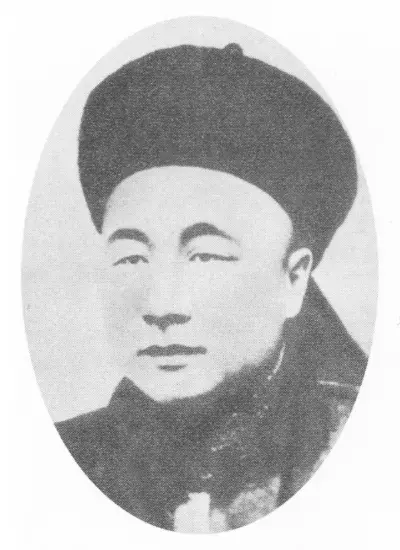
1849 CE–1894 CE
邓世昌 (Deng Shichang)
Deng Shichang (邓世昌, 1849–1894), original name Yongjian (永坚) and courtesy name Zhengqing (正卿), was a native of Longdaowei in Panyu County, Guangzhou Prefecture, Guangdong (modern Haizhu District, Guangzhou). He was a distinguished patriotic naval commander of the late Qing Beiyang Fleet, captain of the protected cruiser Zhiyuan, and an immortal national hero of modern Chinese maritime defense. Born into a merchant family…
Deng Shichang (邓世昌, 1849–1894), original name Yongjian (永坚) and courtesy name Zhengqing (正卿), was a native of Longdaowei in Panyu County, Guangzhou Prefecture, Guangdong (modern Haizhu District, Guangzhou). He was a distinguished patriotic naval commander of the late Qing Beiyang Fleet, captain of the protected cruiser Zhiyuan, and an immortal national hero of modern Chinese maritime defense. Born into a merchant family engaged in the tea trade, Deng passed the entrance examinations in 1867 to join the inaugural navigation class of the newly founded Fuzhou Naval Academy. Excelling in modern engineering, astronomy, navigation, and mathematics, he graduated with highest honors, subsequently serving as captain of the gunboats Haidongyun and Zhenwei. In 1880, as Viceroy Li Hongzhang established the Beiyang Fleet, Deng Shichang was transferred north, captaining the gunboat Zhennan and the cruiser Yangwei. In 1887, he led naval crews to Great Britain to take delivery of the modern protected cruisers Zhiyuan and Jingyuan. Navigating across the Atlantic, Mediterranean, Red Sea, and Indian Ocean through treacherous storms, he brought the warships safely to China, assuming command as captain of the Zhiyuan. Renowned for strict discipline and fluent in English naval terminology, Deng maintained rigorous gunnery standards and earned the profound loyalty of his sailors. In 1894, the First Sino-Japanese War broke out. On September 17 (18th day of the 8th lunar month), the Beiyang Fleet encountered the main Japanese Combined Fleet off the mouth of the Yalu River, precipitating the monumental Battle of the Yalu River (Yellow Sea). When the flagship Dingyuan suffered severe damage and lost signaling capacity, Deng Shichang hoisted command pennants and drove the Zhiyuan forward to draw enemy fire away from the flagship, enduring concentrated broadsides from modern Japanese cruisers including the Yoshino and Takachiho. By mid-afternoon, heavily damaged, listing thirty degrees, and running out of ammunition, Deng ordered maximum engine speed and steered directly to ram the Japanese vanguard flagship Yoshino to perish together with the enemy. During this charge, the Zhiyuan was struck by an enemy torpedo beneath the waterline, causing an internal explosion that sank the cruiser. Cast into the sea, Deng resolutely pushed away a lifebuoy offered by a sailor, and when his faithful dog swam to pull him upward, he held the animal under the waves, deliberately drowning himself with his ship at age forty-five. The Guangxu Emperor mourned him deeply, posthumously elevating him to Grand Guardian of the Heir Apparent, granting the posthumous title Zhuangjie, and composing a famous memorial couplet. Deng Shichang's supreme heroism remains an enduring monument to Chinese national defense against foreign aggression.
Born on the 18th day of the 8th lunar month in Longdaowei, Panyu, Guangdong.
Admitted to the first navigation class of the Fuzhou Naval Academy, studying modern naval science.
Boarded the training vessel Jianwei for long-distance voyages; graduated with distinction.
Patrolled Penghu and Keelung aboard the Chenhang during Japanese aggression against Taiwan.
Recruited by Li Hongzhang to join the nascent Beiyang Fleet, captaining the gunboat Zhennan.
Traveled to Newcastle to take delivery of the cruisers Chaoyong and Yangwei, captaining the Yangwei.
Commanded the Yangwei escorting Wu Changqing's troops to Korea during the Imo Incident.
Dispatched to Britain and Germany to receive four cruisers, returning to become captain of the Zhiyuan.
Beiyang Fleet officially founded; appointed Vice Brigade Commander of the Central Division.
Inspected by Viceroy Li Hongzhang; commended for superior gunnery and awarded a special silver medal.
Commanded the Zhiyuan escorting reinforcement armies landing at the Yalu River mouth.
Rammed the enemy flagship Yoshino in the Battle of the Yalu River, dying heroically on September 17.
Guangxu Emperor posthumously conferred the title Grand Guardian of the Heir Apparent and the title Zhuangjie.
Deng Shichang was born in Longdaowei, Panyu County, Guangzhou Prefecture, Guangdong (modern Haizhu District, Guangzhou). His father, Deng Huanzhuang, was an enterprising merchant who established successful tea trading firms in Guangzhou and Shanghai. In his early childhood, Deng studied classical Confucian texts in a traditional family academy in Guangzhou. As his father expanded business operations to Shanghai, the young Deng accompanied him, living in the concessions where he witnessed Western steam gunboats dominating Chinese waters. This experience convinced him that national survival depended upon modern naval construction and seafaring mastery.
In 1867, Zuo Zongtang and Imperial Commissioner Shen Baozhen established the Fuzhou Naval Academy at Mawei, publicly recruiting talented youths across China to learn modern naval engineering and navigation. The eighteen-year-old Deng Shichang sat for the rigorous examinations, earning admission to the inaugural navigation division of the Front Academy through exceptional classical literacy and mechanical intuition.
At the academy, Deng studied a comprehensive modern curriculum under French and British naval instructors, encompassing navigation, nautical astronomy, mathematics, naval gunnery, and English. Demonstrating unyielding diligence, he consistently achieved top marks. In 1871, he graduated with highest honors and boarded the training vessel Jianwei for extensive sea voyages along the Chinese coast and outward to the Bonin Islands. Impressed by his technical command and calm temperament, Shen Baozhen commended him as an exemplary naval officer of immense promise.
Following graduation, Deng Shichang was assigned as first officer aboard the transport Chenhang, soon promoted to captain of the gunboat Haidongyun. In 1874, the Meiji Japanese government launched an expedition against southern Taiwan under the pretext of the Mudan Incident, creating a major coastal crisis. Imperial Commissioner Shen Baozhen dispatched Deng Shichang aboard the Chenhang to patrol Keelung and the Penghu Islands, escorting reinforcement troops and ordnance across the Taiwan Strait. Deng patrolled day and night with vigilance, helping deter Japanese advances and earning promotion to lieutenant.
Subsequently, Deng was appointed captain of the gunboat Zhenwei. Operating in the East and South China Seas, he led multiple successful anti-piracy sweeps off Fujian and Guangdong, protecting domestic and international shipping routes and receiving the imperial peacock feather and promotion to senior captain. In 1879, Viceroy of Zhili and Beiyang Commissioner Li Hongzhang began developing the Beiyang Fleet, sending China Merchants Steam Navigation Company manager Ma Jianzhong to inspect and recruit naval talents across southern squadrons.
Ma Jianzhong was deeply impressed by Deng Shichang's navigational expertise, disciplined demeanor, and fluent English, strongly recommending him to Li Hongzhang. Li immediately transferred Deng north to join the nascent Beiyang Fleet, appointing him captain of the coastal gunboat Zhennan. During this formative period, Deng participated actively in harbor surveying, coastal battery placement, and tactical gunnery training, quickly becoming a respected pillar of the northern squadron.
In the winter of 1880, the protected cruisers Chaoyong and Yangwei, built for the Qing dynasty by the Armstrong Whitworth shipyard in Newcastle upon Tyne, were completed. Viceroy Li Hongzhang selected Fleet Commander Ding Ruchang to lead over two hundred naval personnel to Great Britain to take delivery of the vessels, designating Deng Shichang captain of the Yangwei. This marked the first overseas voyage by modern Chinese naval crews to receive major warships from Western shipyards.
Arriving in England, Deng organized intensive onboard instruction, quickly familiarizing his crew with the cruisers' engines, torpedo systems, and Armstrong rifled guns, earning admiration from British shipbuilders. In August 1881, Ding Ruchang and Deng Shichang set sail for China. Navigating across the Atlantic, Mediterranean, Suez Canal, Red Sea, and Indian Ocean through severe gales, they brought the warships safely to Daku without loss of life or vessel damage, saving the Qing treasury tens of thousands of taels in foreign pilot fees.
In July 1882, the Imo Incident erupted in Seoul, and Japanese forces prepared to intervene in Korean affairs. Acting decisively, Viceroy Zhang Shusheng and Li Hongzhang dispatched Ding Ruchang and Deng Shichang with the Chaoyong and Yangwei to escort General Wu Changqing's three thousand Huai Army troops across the Yellow Sea to Incheon. Deng navigated the Yangwei into Incheon harbor ahead of foreign vessels, positioning his guns to secure landing beaches and enabling Chinese forces to suppress the mutiny swiftly. For this decisive service, the throne granted Deng the rank of major and the Manchu martial title Boyong Baturu ("Hero of Resolute Valor").
In the spring of 1887, four advanced cruisers commissioned from the Armstrong yard in Britain (Zhiyuan and Jingyuan) and the AG Vulcan yard in Germany (Jingyuan and Laiyuan) were completed. Li Hongzhang selected Deng Shichang, Ye Zugui, Lin Yongsheng, and Qiu Baoren to lead four hundred crewmen to Europe. Deng was appointed captain of the protected cruiser Zhiyuan.
Displacing 2,300 tons with a top speed of 18.5 knots, the Zhiyuan was one of the fastest cruisers in East Asian waters. During final trials in Britain, Deng rigorously inspected boiler rooms and hull plating, identifying subtle mechanical defects that British engineers corrected. During the return voyage, the four cruisers maintained tight formation across the Mediterranean and Indian Ocean, arriving safely at Daku in November 1887. The Zhiyuan was officially integrated into the Beiyang Fleet as its primary strike cruiser.
In October 1888, the Beiyang Fleet was formally inaugurated at Liugong Island, Weihaiwei, under the Regulations of the Beiyang Fleet. For his distinguished professionalism and unbending rectitude, Deng Shichang was appointed Vice Brigade Commander of the Central Division and captain of the Zhiyuan. Deng ran a strictly disciplined ship, conducting all training drills in English and maintaining intensive gunnery exercises. Living frugally, he eschewed factional socializing and luxurious dinners, earning the deep respect and affection of his seamen.
In July 1894, Japanese naval units attacked Chinese transports off Fengdao, initiating the First Sino-Japanese War. Outraged by this unprovoked aggression, Deng Shichang made a solemn vow to his crew: "Should misfortune strike, I swear to sink alongside the Japanese ships!" On September 16, the main Beiyang Fleet escorted twelve battalions of reinforcement infantry to the mouth of the Yalu River, completing landings safely. At noon on September 17, while returning to base, the Beiyang Fleet encountered the twelve warships of the Japanese Combined Fleet off Dadonggou, triggering the epic Battle of the Yalu River.
At the onset of combat, an enemy shell struck the bridge of the flagship Dingyuan, severely wounding Admiral Ding Ruchang and destroying the signal halyards, depriving the fleet of central direction. The Japanese Flying Squadron, comprising four fast cruisers—Yoshino, Takachiho, Akitsushima, and Naniwa—concentrated overwhelming quick-firing gun broadsides against the Dingyuan and Zhenyuan. Recognizing the mortal danger to the flagship, Deng Shichang ordered the Zhiyuan to hoist command pennants and charge ahead of the Dingyuan, drawing the full weight of enemy fire upon his cruiser.
The Japanese cruisers turned their concentrated batteries upon the Zhiyuan. Struck repeatedly by heavy shells, the cruiser caught fire, her water-line armor was perforated, and the hull listed thirty degrees to starboard as compartments flooded. By 3:30 p.m., the Zhiyuan's main gun ammunition was exhausted, leaving gunners to respond only with light Hotchkiss guns and rifles. Standing firm on the flying bridge, Deng observed the Japanese vanguard flagship Yoshino maneuvering recklessly. He shouted to his crew: "The enemy relies entirely on the Yoshino; if we sink her, it will break their arrogance and secure our victory!"
Deng ordered the engine room to ring full speed ahead, steering the burning, heavily listing cruiser at top speed to ram the Yoshino. Terrified by this suicidal charge, the Yoshino's crew reversed engines in panic, firing wild broadsides and launching torpedoes. As the Zhiyuan closed within several hundred meters, an enemy shell detonated her submerged torpedo tube, triggering a catastrophic internal explosion.
The Zhiyuan sank beneath smoke and waves, with over two hundred crew members perishing. Cast into the raging Yellow Sea, Deng was offered a lifebuoy by his orderly Liu Zhong, but Deng pushed it away, refusing to survive his ship. When his loyal dog "Taiyang" swam through the waves and gripped his braided queue and sleeve to drag him toward the surface, Deng pressed the animal under the water, deliberately sinking into the depths to complete his martyrdom at age forty-five.
The news of Deng Shichang's heroic martyrdom evoked profound grief and reverence throughout China. The Guangxu Emperor was deeply moved, issuing an imperial decree commending Deng: "Leading the vanguard into the enemy line, he struck hard at hostile vessels; cast into the sea, he refused to live alone, voluntarily casting himself into the depths. His loyalty and valor were his true nature, making his death supremely heroic."
The emperor posthumously elevated Deng to Grand Guardian of the Heir Apparent, granted the posthumous title Zhuangjie ("Heroic and Pure"), bestowed three thousand silver taels upon his mother, and funded the construction of dedicated shrines in Weihaiwei, Panyu, and his ancestral home.
Overcome with sorrow, the Guangxu Emperor personally composed a famous memorial couplet that was remembered for generations: "On this day the realm sheds bitter tears in vain; in you alone resides the pride and majesty of our navy." Memorial odes and banners poured in from Chinese communities worldwide, honoring a commander whose supreme sacrifice became an immortal beacon of modern patriotic defense.
Deng Shichang's admission to the inaugural navigation class of the Fuzhou Naval Academy in 1867 formed the intellectual foundation of his naval career. As modern China's first Western-style naval institution, the academy's curriculum was modeled directly on Royal Navy academies, conducting all technical instruction in English and French.
During five years of intensive training, Deng mastered celestial navigation, spherical trigonometry, hydrographic surveying, steam propulsion, and naval gunnery ballistics. During offshore practical training voyages, he proved to be the most technically reliable and composed helmsman in his class. His graduation and subsequent promotion to warship captain marked the emergence of China's first generation of professional, modern naval commanders.
Between 1880 and 1887, Deng Shichang twice traveled to Europe to take delivery of modern cruisers from the Armstrong yard in Britain and the Vulcan yard in Germany, serving as a pioneer of transoceanic navigation for the Chinese navy.
During the 1887 mission to receive the Zhiyuan, Jingyuan, Jingyuan, and Laiyuan, Deng served as a core leader of the four-hundred-man contingent. He inspected shipyard construction daily, pointing out design nuances to British engineers. Navigating the four-cruiser flotilla through the Atlantic, Mediterranean, Red Sea, and Indian Ocean without foreign pilots, the squadron arrived at Daku in flawless condition, refuting foreign assertions that Chinese crews could not handle modern warships and providing irreplaceable transoceanic operational experience for the Beiyang Fleet.
The Battle of the Yalu River on September 17, 1894, was the first fleet-level clash between armored steamships in modern naval history. At the crisis of the engagement, Deng Shichang executed an audacious ramming attack against the Japanese cruiser Yoshino, creating one of the most heroic chapters in modern naval annals.
With the flagship Dingyuan's communications shattered, the fleet faced destruction by the Japanese Flying Squadron. Deng advanced his single cruiser to shield the flagship, drawing the concentrated fire of four Japanese cruisers. When the burning, water-logged Zhiyuan expended her last heavy shells, Deng made the supreme decision to ram the enemy's fastest and most lethal warship at maximum speed.
This charge threw the Japanese formation into panic and broke their encirclement. Although the Zhiyuan was destroyed by a torpedo detonation before impact, Deng's charge demonstrated incomparable fighting spirit, striking terror into the enemy fleet.
Deng Shichang's deliberate choice to drown alongside his cruiser reflected the highest moral code of both traditional Confucian statecraft and modern naval honor. Thrust into the frigid waters of the Yellow Sea, he pushed away lifebuoys offered by surviving seamen, declaring that he could never survive when his ship and crew were lost.
When his faithful dog swam to his side, gripping his sleeve with its teeth to hold him above the waves, Deng tearfully pressed the animal beneath the water, sinking into the deep together with his vessel. Deng's sacrifice set the supreme spiritual standard for modern Chinese naval officers, exemplifying the eternal principle of perishing with one's ship in defense of the motherland.
The Guangxu Emperor composed a memorial couplet: "On this day the realm sheds bitter tears in vain; in you alone resides the pride and majesty of our navy."
The Draft History of Qing (Qing Shi Gao, Volume 460, Biography 247) records: "Deng Shichang was resolute and tactically gifted, commanding his troops with skill. In the Battle of the Yellow Sea, the Zhiyuan stood directly in the enemy's path; Shichang fought with supreme heroism, and when his ammunition was spent, he refused to escape, offering his life for the nation. His heroic spirit was enough to awe foreign nations and shine brightly through the ages!"
Viceroy Li Hongzhang stated in his official memorial: "Captain Deng Shichang was skilled in both attack and defense, showing consistent loyalty throughout his service. In the open sea engagement, he led the attack against superior numbers; when his artillery was exhausted, he steered his vessel to ram the enemy flagship, refusing to flee. Pulled from the sea, he plunged back into the waves to perish, demonstrating an innate valor that made his death supremely heroic!"
Admiral Sa Zhenbing, Navy Minister of the Republic of China, recalled: "Brother Zhengqing was noble, frank, and just, treating state affairs as his own and his sailors as his children. On the day of naval combat, he acted without hesitation, his courage touching the clouds, establishing an eternal model for our navy!"
Scholar Liang Qichao observed in Biographies of Eight Great Chinese Figures: "Lord Deng Zhuangjie was the shield of the state and the soul of the sea. Amid the towering waves of Dadonggou, he stood alone against a mighty foe, resolutely ramming the enemy without fear of death. Though full victory was denied, his majestic spirit fills the cosmos, immortal for eternity!"
FIGURES ASSOCIATED WITH THIS DYNASTY