刘丽川
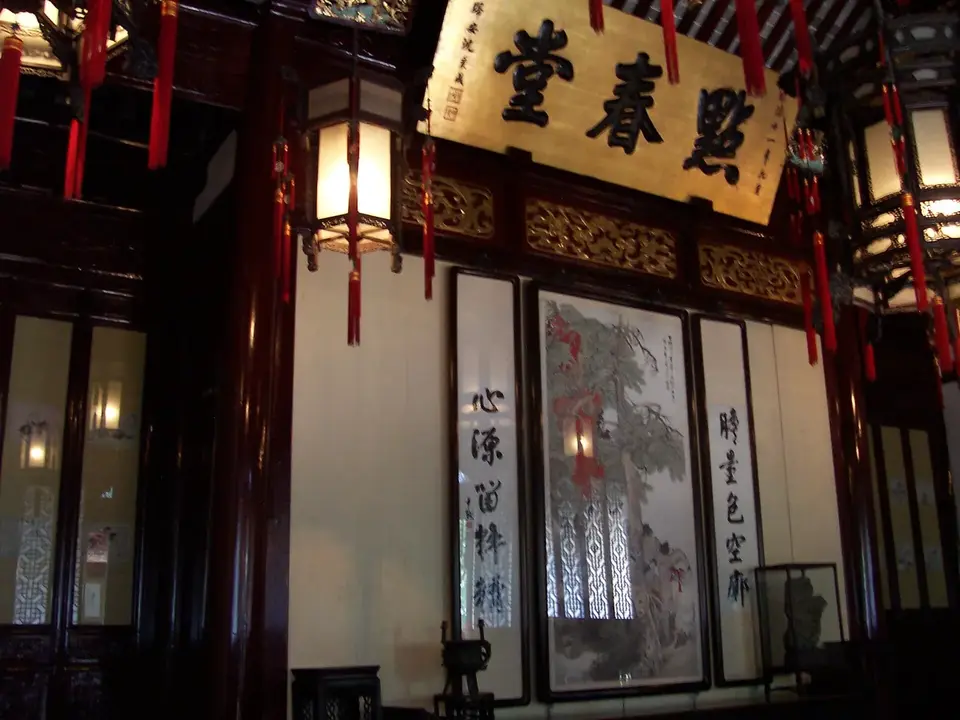
Historic architecture / site (Liu Lichuan)
Image creditsYuqi Qiao · CC BY-SA 3.0Image source

Supreme Leader and Commander of the Shanghai Small Swords Society UprisingLeader of the Heaven and Earth Society

Liu Lichuan (刘丽川)

刘丽川

Liu Lichuan (刘丽川) (1820–1855), a native of Xijiao Village in Xiangshan County, Guangdong (modern Dayong Town, Zhongshan, Guangdong), was the supreme leader and commander of the Shanghai Small Swords Society Uprising during the late Qing Dynasty. Trained in traditional martial arts and bone-setting medicine, he was proficient in English and worked in silk and tea trading firms as an interpreter and comprador in his youth. In…

Qing Dynasty (清朝)

PROFILE

Liu Lichuan (刘丽川) (1820–1855), a native of Xijiao Village in Xiangshan County, Guangdong (modern Dayong Town, Zhongshan, Guangdong), was the supreme leader and commander of the Shanghai Small Swords Society Uprising during the late Qing Dynasty. Trained in traditional martial arts and bone-setting medicine, he was proficient in English and worked in silk and tea trading firms as an interpreter and comprador in his youth. In 1845, he joined the Triad Society (a branch of the Heaven and Earth Society) in Hong Kong. Relocating to Shanghai in 1849, he founded the Guangzhou-Zhaoqing Guildhall, uniting Guangdong boatmen, sailors, and manual laborers, and was acclaimed supreme leader of the regional Small Swords Society. In the autumn of 1853, inspired by the Taiping Heavenly Kingdom's conquest of Nanjing, Liu Lichuan allied with rebel leaders Zhou Lichun, Chen Alin, Xu Yao, and Zhou Xiuying to launch the Shanghai Small Swords Society Uprising on September 7. The rebels stormed the county government offices, executed Magistrate Yuan Zude, captured Circuit Intendant Wu Jianzhang, and seized neighboring county seats including Jiading, Baoshan, Nanhui, and Chuansha. Proclaiming the title "Generalissimo of Military and Civil Governance and Pacification of the Great Ming State" and later declaring allegiance to the Taiping Heavenly Kingdom, he led an armed struggle against Qing imperial forces and Western colonial encroachment. Besieged by imperial armies and naval forces of Britain and France, Liu Lichuan held walled Shanghai for seventeen months. On February 17, 1855, running out of ammunition and provisions, he led a nocturnal breakout from the city, falling in hand-to-hand combat near Hongqiao at the age of thirty-five.

Dynasty
Qing Dynasty (清朝)
Date of Birth
1820 (25th year of the Jiaqing era, Qing Dynasty)
Date of Death
February 17, 1855 (1st day of the 1st lunar month, 5th year of the Xianfeng era)
Age at Death
35
Ancestral Home
Xijiao Village, Xiangshan County, Guangzhou Prefecture, Guangdong (modern Dayong Town, Zhongshan, Guangdong)
Highest Office and Title
Generalissimo of Military and Civil Governance and Pacification of the Great Ming State, Generalissimo of the Taiping Heavenly Kingdom
Primary Offices
Supreme Leader of the Shanghai Small Swords Society Uprising, Director of the Guangzhou-Zhaoqing Guildhall
Identity
Supreme Leader and Commander of the Shanghai Small Swords Society Uprising, Leader of the Heaven and Earth Society

LIFE TIMELINE

Relationship graph

BIOGRAPHY

Chronology

  • 1820 (25th year of the Jiaqing era) | Birth in Guangdong | Born into an affluent agricultural family in Xijiao Village, Xiangshan County.
  • 1845 (25th year of the Daoquang era) | Joining the Triads | Initiated into the Hongmen Triad Society in Hong Kong, organizing mutual aid and anti-Qing networks.
  • 1849 (29th year of the Daoquang era) | Arrival in Shanghai | Moved to Shanghai to engage in tea and silk commerce, co-founding the Guangzhou-Zhaoqing Guildhall.
  • 1852 (2nd year of the Xianfeng era) | Supreme Leadership | Unified fragmented secret society lodges in Shanghai, rising to the supreme leadership of the Small Swords Society.
  • 1853 (3rd year of the Xianfeng era) | Storming Shanghai | On September 7, raided the execution ground to rescue condemned comrades, seized the county yamen, and proclaimed himself Generalissimo.
  • 1853 (3rd year of the Xianfeng era) | Allegiance to the Taiping | Replaced Ming symbols with allegiance to the Taiping Heavenly Kingdom, dispatching emissaries to Tianjing for coordinated operations.
  • 1854 (4th year of the Xianfeng era) | Prolonged Defense | Resisted siege operations directed by Imperial Commissioner Xu Naizhao and Jiangsu Governor Ji-er-hang-a.
  • 1854 (4th year of the Xianfeng era) | Defying Foreign Intervention | Fought off joint operations by British and French forces, who breached neutrality to blockade and bombard the walled city.
  • 1855 (5th year of the Xianfeng era) | Death in Breakout | Led a breakout attempt on Chinese New Year's Eve; intercepted by Qing cavalry near Hongqiao, he fell in combat at age thirty-five.

Biography

Early Life in Guangdong and Hongmen Initiation

Liu Lichuan was born in 1820 into an affluent family in Xijiao Village, Xiangshan County, Guangdong. His family managed farming and commercial operations. Endowed with a bold, generous temperament, he trained extensively in traditional martial arts from boyhood, mastering quarterstaffs, broadswords, and traditional bone-setting traumatology. In the wake of the Opium War, five treaty ports were opened, disrupting southern maritime economies. Liu sought employment as an assistant in tea warehouses and silk shops throughout Guangzhou and the Pearl River Delta. Interacting with foreign merchants and missionaries, he acquired spoken English and familiarity with Western mercantile routines.

In 1845, the twenty-five-year-old Liu moved to the newly colonized territory of British Hong Kong. To resist colonial police exactions and build mutual aid networks among migrant laborers, he joined the Hongmen Triad Society (Sanhehui), a prominent regional branch of the Heaven and Earth Society (Tiandihui). His integrity, martial proficiency, and medical skills earned him high respect among lower-class laborers, elevating him to a lodge leader. Late that year, when British colonial authorities outlawed triad societies under diplomatic pressure from the Qing government, Liu relocated his activities to seek broader opportunities.

Commercial Expansion and the Guangzhou-Zhaoqing Guildhall

In 1849, Liu sailed north to Shanghai, which was developing rapidly as China's premier treaty port. Following its opening, thousands of boatmen, transport coolies, dockworkers, and artisans from Guangdong, Fujian, Chaozhou, and Ningbo converged along the Huangpu River. These migrant workers suffered extortion from Qing magistrates, abusive treatment under extraterritoriality from foreign consuls, and hostility from local syndicates.

Leveraging his commercial savings and fluency in English, Liu served as an interpreter and comprador for foreign trading houses while establishing deep influence among southern migrants. He mobilized prominent merchants from his native province to establish the famous Guangzhou-Zhaoqing Guildhall, assuming the directorship. The guildhall served not only as a hostel, medical clinic, and relief center for migrants from Xiangshan, Guangzhou, and Zhaoqing, but also as an underground headquarters for labor organizing. In 1852, Liu collaborated with Fujian merchant Li Shaoqing and sailor leader Chen Alin to unite fragmented Fujian and Guangdong secret society branches into the Shanghai Small Swords Society, electing Liu as its supreme commander. Carrying small knives as secret recognition tokens, members spread across docks, artisan shops, and local garrison ranks, pledging to overthrow Qing rule and aid the oppressed.

The Autumn Uprising and Capture of the City

In the spring of 1853, the Taiping Heavenly Kingdom captured Nanjing, establishing its capital at Tianjing and dispatching armies on northern and western expeditions. Qing authority in Jiangnan trembled. In Shanghai, Circuit Intendant Wu Jianzhang used the pretext of hunting down secret societies to torture local citizens and aggressively suppress rent resistance in Qingpu, sentencing Small Swords Society leaders Pan Qixiang and Xu Yao to death.

Confronted with annihilation, Liu resolved to launch an armed insurrection. On the morning of September 7, 1853 (the fifth day of the eighth lunar month), Qing authorities prepared to execute Pan Qixiang outside the North Gate. Liu coordinated several thousand rebels from the Tiandihui branches of Qingpu, Jiading, and Shanghai, including leaders Zhou Lichun, Chen Alin, and female warrior Zhou Xiuying. Disguised as execution spectators with red headbands and concealed daggers, the rebels struck on Liu's signal, decapitated the executioners, and liberated the prisoners. The insurgent army then surged into the walled city, storming the county offices and executing County Magistrate Yuan Zude.

The rebels subsequently besieged the circuit yamen, capturing Circuit Intendant and Maritime Customs Superintendent Wu Jianzhang. Because Wu was a fellow native of Xiangshan, Liu spared his life out of kinship, confining him under guard in the Guangzhou-Zhaoqing Guildhall (Wu later escaped over the city walls with assistance from American missionary Matthew Tyson Yates). The uprising ignited regional revolts; peasant forces seized Jiading, Baoshan, Nanhui, Chuansha, and Qingpu, swelling the rebel ranks beyond ten thousand fighters. The assembly proclaimed Liu "Generalissimo of Military and Civil Governance and Pacification of the Great Ming State." Liu established administrative departments, abolished extortionate grain taxes, and opened granaries to feed starving citizens.

Allegiance to Tianjing and the Seventeen-Month Siege

Demonstrating political foresight, Liu abandoned parochial secret society titles and aligned with the Taiping Heavenly Kingdom, declaring himself "Generalissimo of Military and Civil Governance and Pacification of the Taiping Heavenly Kingdom," minting "Taiping Tongbao" bronze coinage, and implementing social equality. In October, he dispatched Pan Qixiang and Li Xianyu across enemy lines to Tianjing, submitting formal memorials of fealty to Hong Xiuquan and Yang Xiuqing to request regular Taiping troops to take over Shanghai. Unfortunately, Taiping leaders, blinded by religious dogma, rejected the alliance, denouncing the Small Swords Society's traditional folk and ancestral worship as pagan idolatry. This failure to dispatch reinforcements lost the Taiping their greatest opportunity to secure Shanghai.

Despite the rejection, Liu stood firm with his garrison. From late 1853 through 1854, the Qing government mobilized over twenty thousand troops under Imperial Commissioner Xiang Rong, Xu Naizhao, and Jiangsu Governor Ji-er-hang-a, constructing concentric siege encampments outside the walls. Under Liu and Chen Alin's command, the defenders launched daring nocturnal sorties, repeatedly destroying Qing forward entrenchments, killing imperial generals Wang Fu and Huang Fuqing, and repelling dozens of assaults against the North and West Gates.

Foreign Aggression and Death at Hongqiao

As the siege dragged on, British and French authorities discarded their professed neutrality. Frustrated by the Small Swords Society's refusal to cede customs jurisdiction or concede extraterritorial privileges, Western commanders colluded openly with Qing Governor Ji-er-hang-a. In November 1854, French Rear Admiral Laguerre mobilized warships including the Colbert and Jeanne d'Arc to blockade the Huangpu River, cutting off all maritime food supplies, while erecting siege batteries in the French Concession to bombard the city's northern fortifications.

Despite devastating artillery barrages, famine, and exhaustion, the garrison held. On January 6, 1855, over four hundred French marines accompanied Qing troops in a coordinated assault against breaches in the North Gate. Drawing his broadsword, Liu personally led a countercharge into the breach, engaging in fierce hand-to-hand combat, slaying several French assault troops, and repulsing the joint assault. However, after months of total blockade, starvation gripped the city, forcing defenders to subsist on horsemeat, bark, and sparrows.

On Chinese New Year's Eve (February 17, 1855), Qing sappers detonated thousands of pounds of gunpowder beneath the northern city walls, collapsing over two hundred feet of stone battlements. Imperial infantry poured into the breaches, igniting brutal urban combat. Recognizing that the city was lost, Liu ordered a general breakout. Leading several hundred elite retainers and vanguard fighters, he hacked through the West Gate, attempting to escape westward toward Qingpu and Lake Tai to link with guerrilla forces. Imperial cavalry under Brigadier General Hu Songlin and Vice Commander Xiang Kui pursued relentlessly. Surrounded near an irrigation well at Hongqiao, Liu's detachment was overwhelmed. Suffering multiple wounds and refusing to surrender, Liu fell fighting after being struck by bullets, dying for his cause at the age of thirty-five.
Major Achievements

Commanding the Shanghai Small Swords Society Uprising

The Shanghai Small Swords Society Uprising was the most renowned anti-Qing and anti-colonial urban insurrection in a modern treaty port. Utilizing the fraternal ideology of the Heaven and Earth Society, Liu Lichuan organized disenfranchised maritime workers, coolies, and displaced artisans into a disciplined fighting force. With audacity, the uprising overthrew Qing authority in Shanghai, China's greatest commercial metropolis. By curbing grain price speculation, remitting customs duties, and ending feudal bureaucratic monopolies, the uprising dealt a severe blow to Qing rule in the Yangtze Delta, serving as a critical strategic diversion that aided the consolidation of the Taiping Heavenly Kingdom in Nanjing.

Seventeen Months of Urban Defense against Imperialist Coalition

Throughout the seventeen-month defense of Shanghai, Liu exhibited extraordinary military leadership and anti-colonial resolve. Facing numerically superior Green Standard armies and modern naval armaments deployed by Britain and France, Liu sustained the defense through the dedicated support of urban civilians, enforcing discipline and protecting municipal order. The fierce hand-to-hand combat at the North Gate against French marines marked one of the earliest instances of Chinese urban commoners directly resisting Western military invasion with arms, standing as an enduring symbol in modern Chinese resistance history.

Personal Relationships

  • Key Insurgent Comrades: Chen Alin (Deputy Commander and Generalissimo of the Left Wing, leader of the Fujian faction), Zhou Lichun (leader of the Qingpu Tiandihui), Zhou Xiuying (heroine of the uprising and daughter of Zhou Lichun), Pan Qixiang (early leader rescued by Liu from the execution ground), Xu Yao (leader of the Jiading Tiandihui).
  • Qing Imperial Officials: Wu Jianzhang (Shanghai Circuit Intendant, fellow Xiangshan native captured and subsequently escaped), Yuan Zude (Shanghai County Magistrate killed during the assault), Ji-er-hang-a (Governor of Jiangsu who coordinated the siege with French forces).
  • Foreign Military Figures: Admiral Laguerre (Commander of the French Far East Naval Division who directed the bombardment of Shanghai), Matthew Tyson Yates (American Southern Baptist missionary who facilitated Wu Jianzhang's escape).
  • Sovereign Alignment: Hong Xiuquan (Heavenly King of the Taiping Heavenly Kingdom, whom Liu recognized as sovereign, though regular Taiping troops never arrived).

Historical Evaluation

  • Qing Memorial by Jiangsu Governor Ji-er-hang-a: "The rebel leader Liu Lichuan was arrogant beyond measure, falsely claiming the title of Generalissimo, seizing Shanghai, and assembling bandit gangs from Guangdong and Fujian to devastate the region... Now slain at Hongqiao with his severed head displayed on the walls, the maritime frontier is at last pacified." (Veritable Records of Wenzong)
  • Modern Historical Assessment: Liu Lichuan was an outstanding grassroots revolutionary and national hero who emerged during the severe social crises following the Opium War. Demonstrating remarkable organizational vision, he transformed an overseas brotherhood into a powerful armed movement directly combating domestic autocracy and foreign colonial encroachment. Throughout the prolonged defense of Shanghai, he remained steadfast in the face of insurmountable odds, refusing capitulation and falling on the battlefield. His heroic struggle delivered a powerful blow against feudal oppression, cementing his legacy in the modern Chinese quest for national independence and popular liberation.

Related Entries

  • Taiping Rebellion
  • Shanghai Small Swords Society Uprising
  • Hong Xiuquan
  • Heaven and Earth Society
  • Wu Jianzhang

FIGURES ASSOCIATED WITH THIS DYNASTY

Bibliography

  • Qingshi Gao (Draft History of Qing), Volume 396, Biography 183, Biography of Ji-er-hang-a
  • Qing Shilu (Veritable Records of the Qing), Veritable Records of Emperor Wenzong
  • Modern Chinese History: The Taiping Rebellion and the Small Swords Society, by Fan Wenlan
  • Gazetteer of Xiangshan County (Tongzhi Edition)