Birth
Chen Yuyi was born into a prominent scholar-official lineage in Luoyang.
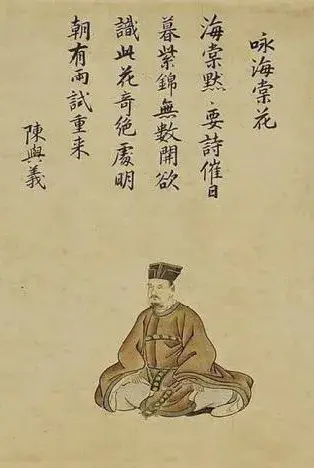
陈与义
Chen Yuyi (陈与义, 1090–1139), courtesy name Qufei, art name Jianzhai, was a native of Luoyang (洛阳), Henan Province. He was an eminent statesman, patriotic poet, and lyricist spanning the late Northern Song and early Southern Song. Celebrated alongside Huang Tingjian and Chen Shidao as one of the Three Patriarchs of the Jiangxi poetry movement, he attained the jinshi degree with highest honors in 1113 and held posts including…
Chen Yuyi (陈与义, 1090–1139), courtesy name Qufei, art name Jianzhai, was a native of Luoyang (洛阳), Henan Province. He was an eminent statesman, patriotic poet, and lyricist spanning the late Northern Song and early Southern Song. Celebrated alongside Huang Tingjian and Chen Shidao as one of the Three Patriarchs of the Jiangxi poetry movement, he attained the jinshi degree with highest honors in 1113 and held posts including Erudite of the Imperial Academy and Seal Official. Following the Jingkang Incident and the fall of the Northern Song, Chen Yuyi endured harrowing southward exile across Hubei, Hunan, Guangdong, and Fujian. This wartime dislocation transformed his poetic style from youthful elegance into profound, melancholic realism modeled on Du Fu. Under Emperor Gaozong, he served successively as Secretariat Drafter, Vice Minister of Personnel, and Hanlin Academician. In 1137, he was elevated to Vice Grand Councilor, helping direct national defense and strategic diplomacy. Renowned for his moral fortitude and unbending probity, he retired as Academician of the Zizheng Hall and passed away at age fifty, leaving the influential collection Jianzhai ji.
Chen Yuyi was born into a prominent scholar-official lineage in Luoyang.
Graduated first class in the Imperial University examination, appointed Gentleman-litterateur and Professor in Kaide.
Mourned his mother in Ruzhou, befriending prefect Ge Shengzhong, who recommended him as Imperial Academy Erudite.
Promoted to Seal Official, but swiftly demoted due to court slander to oversee the wine tax in Chenliu.
Following the fall of Kaifeng to the Jin forces, escaped southward across Xianghan, Hunan, and the southern passes.
Reached the temporary capital at Lin'an; appointed Secretariat Drafter and later Vice Minister of Personnel.
Accompanied the emperor to Pingjiang; appointed Hanlin Academician and Drafter of Imperial Edicts in the eleventh month.
Appointed Vice Grand Councilor in the first month; accompanied the imperial procession to Jiankang to oversee military policy.
Resigned due to illness, appointed Academician of the Zizheng Hall and Prefect of Huzhou, later supervisor of Dongxiao Abbey.
Passed away at his residence on January 1, 1139 at age fifty.
Chen Yuyi was born in 1090 in Luoyang. His ancestors originated in Jingzhao before his great-grandfather Chen Xiliang relocated the clan to Luoyang. Exceptionally gifted from childhood, Chen Yuyi composed sophisticated classical essays as a youth, gaining widespread acclaim among contemporaries who deferred to his literary brilliance. In 1113, he achieved first place in the Imperial University examination under Emperor Huizong, receiving appointment as Gentleman-litterateur and Professor of Kaide Prefecture.
In 1120, Chen Yuyi returned to Ruzhou to observe the required mourning period following his mother's death. There he formed a close friendship with the prefect Ge Shengzhong. Following the mourning period, Ge Shengzhong recommended him to court, leading to his appointment as Imperial Academy Erudite and subsequent promotion to Seal Official. However, court rivals engineered his demotion, reassigning him to manage the local wine tax in Chenliu. Chen Yuyi accepted the setback with equanimity, finding solace in nature and poetry.
In 1127, Jurchen Jin forces captured Bianjing, carrying off emperors Huizong and Qinzong and ending the Northern Song. Zhao Gou (Emperor Gaozong) proclaimed the Southern Song dynasty and retreated south. In Chenliu, Chen Yuyi was uprooted by the invasion and joined the massive exodus of displaced refugees fleeing into central and southern China.
Over the next four years, Chen Yuyi wandered through Hubei, Hunan, Guangdong, and Fujian, enduring profound physical hardship and separation. Confronting the ruin of his homeland and the plight of the common people, his poetry underwent a decisive evolution. Climbing the Yueyang Tower overlooking Lake Dongting, he composed monumental verses including Ascending Yueyang Tower, shedding the ornamental lightness of his youth in favor of the austere historical gravitas characteristic of Du Fu.
In the summer of 1131, Chen Yuyi arrived at the temporary southern capital in Lin'an Prefecture. Emperor Gaozong, well aware of his literary and administrative reputation, granted him an immediate audience. Impressed by his clear counsel on state reorganization, the emperor appointed him Secretariat Drafter and Vice Minister of Personnel. He subsequently served as Auxiliary Academician of the Huiyou Hall and Prefect of Huzhou, before being recalled as Palace Remonstrant.
As Palace Remonstrant, Chen Yuyi exercised rigorous scrutiny over imperial edicts and bureaucratic appointments, earning wide praise for his judicious remonstrance. Factional opponents briefly had him reassigned to oversee Taiping Abbey in Jiangzhou, but Emperor Gaozong recalled him as Secretariat Drafter and Auxiliary Hanlin Academician. In 1136, during the imperial progress to Pingjiang, Gaozong elevated him to Hanlin Academician and Drafter of Imperial Edicts, treating him as his primary literary and political confidant.
In the first month of 1137, Chen Yuyi was appointed Vice Grand Councilor, formally entering the supreme executive leadership of the Southern Song court. In this role, he prioritized administrative discipline and moral rectitude, seeking to consolidate dynastic authority. In the third month, he accompanied Emperor Gaozong to Jiankang (modern Nanjing) to supervise border defenses.
During strategic debates over recovering the central plains, Chancellor Zhao Ding advocated an immediate offensive, warning that hesitation would forfeit historical opportunity. Emperor Gaozong countered that recovering the imperial coffins and captive royals required diplomatic negotiations. Chen Yuyi provided balanced, pragmatic counsel, asserting that while successful diplomacy was preferable to warfare, failure remained a constant risk, meaning military readiness could never be abandoned in favor of peace talks alone.
Throughout his official life, Chen Yuyi was noted for his grave, dignified demeanor and unyielding inner resolve. Although courteous, he never compromised his integrity. When recommending scholars to court, he never spoke of his patronage to anyone, winning immense admiration from the scholar-official class.
In 1138, worn down by illness, Chen Yuyi submitted multiple petitions for retirement. Emperor Gaozong appointed him Academician of the Zizheng Hall and Prefect of Huzhou, later allowing him to supervise Dongxiao Abbey near Lin'an for convalescence. On January 1, 1139 (the twenty-ninth day of the eleventh lunar month of Shaoxing 8), Chen Yuyi passed away at age fifty. Emperor Gaozong mourned his loss, suspending court audiences and awarding him posthumous honors.
Chen Yuyi's foremost cultural legacy lies in his poetic achievements. Recognized as one of the Three Patriarchs of the Jiangxi poetry movement alongside Huang Tingjian and Chen Shidao, he fundamentally redirected the course of Song dynasty verse. The Southern Song theorist Yan Yu dedicated a specific section of Canglang's Discussions of Poetry to the "Chen Jianzhai style."
While his early poetry reflected the wit and clarity of Su Shi and Huang Tingjian, his post-1127 verse embraced Du Fu's tragic realism and acoustic grandeur. Masterpieces such as Grieving for Spring, North Wind, and Ascending Yueyang Tower chronicled the national disaster with profound historical resonance, earning acclaim as a living poetic history of the dynastic transition.
In addition to shi poetry, Chen Yuyi was an accomplished lyricist, leaving behind over twenty surviving ci poems. His famous lyric to the tune Lin Jiang Xian, reflecting on youthful drinking on the Wuqiao bridge and the transient nature of human glory, is considered a timeless masterpiece of nostalgic contemplation.
Deeply versed in Buddhist thought, approximately one-sixth of his poetic corpus incorporates Chan Buddhist concepts. In his later years, he seamlessly integrated contemplative stillness and spiritual clarity into his verse, uniting rigorous social realism with transcendent philosophical depth.
In his political career, Chen Yuyi exemplified the ideal Confucian scholar-statesman. Managing imperial decrees as Secretariat Drafter and Hanlin Academician, his prose was acclaimed for classical elegance and precision.
As Palace Remonstrant and Vice Grand Councilor, he fearlessly rejected inappropriate decrees and advanced worthy, unheralded scholars. Navigating the treacherous politics of war and peace during the early Southern Song, he maintained steadfast loyalty and moral rectitude, helping anchor the fledgling dynastic administration.
FIGURES ASSOCIATED WITH THIS DYNASTY