Birth in Longxi
Born into a respected literary household along the northern riverbank of Longxi, Zhangzhou.
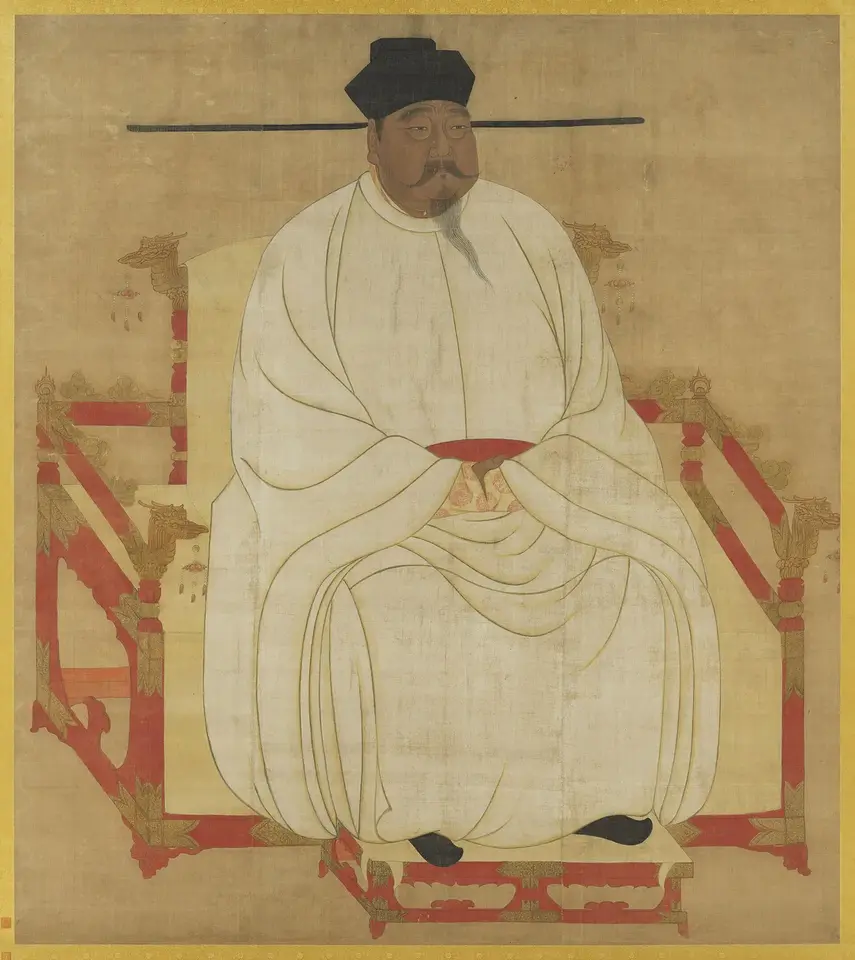
陈淳
Chen Chun (1159–1223), courtesy name Anqing, art name Beixi, known reverently to scholars as Master Beixi (Beixi Xiansheng), was a towering Southern Song Neo-Confucian thinker, philosopher, and the preeminent direct disciple of Zhu Xi's twilight years. Originating from a scholarly lineage along the Beixi River in Longxi, Zhangzhou, Fujian, Chen initially pursued imperial civil service studies before abandoning competitive…
Chen Chun (1159–1223), courtesy name Anqing, art name Beixi, known reverently to scholars as Master Beixi (Beixi Xiansheng), was a towering Southern Song Neo-Confucian thinker, philosopher, and the preeminent direct disciple of Zhu Xi's twilight years. Originating from a scholarly lineage along the Beixi River in Longxi, Zhangzhou, Fujian, Chen initially pursued imperial civil service studies before abandoning competitive examinations to investigate the learning of the mind and human nature. In 1190, when Zhu Xi served as Prefect of Zhangzhou, the thirty-two-year-old Chen became his devoted student, receiving instruction on the investigative methodology of The Great Learning and the moral foundations of Elementary Learning. In the winter of 1199, amidst the political persecution of the Qingyuan Partisan Ban against Neo-Confucianism, Chen braved intense winter storms to travel to Kaoting in Jianyang, attending Zhu Xi's sickbed to master the deepest metaphysical subtleties of the school. Zhu Xi wept with gratitude, praising him: "In gaining this man, our Dao has won immense merit!" Chen Chun dedicated his life to standardizing, clarifying, and defending Zhu Xi's philosophy. Confronting the rival doctrines of Lu Jiuyuan's intuitionist School of the Mind (Xinxue) and the utilitarian statecraft of Chen Liang and Ye Shi, Chen conducted influential lectures in Yanling and Zhangzhou to refute deviations from Confucian orthodoxy. His lectures were meticulously transcribed by his disciple Wang Jun into the milestone philosophical lexicon Terms Explained by Master Beixi (Beixi Ziyi, also titled Meanings of the Four Books). By providing rigorous, accessible, and systematic definitions for twenty-six foundational Neo-Confucian concepts (such as Mandate, Nature, Mind, Principle, Vital Force, Sincerity, Reverence, and Ren), the work became universally acclaimed across East Asia as the definitive philosophical dictionary and introductory guide to Cheng-Zhu Neo-Confucianism. In 1218, he received the honorary title of Gentleman for Meritorious Service and Registrar of Anxi County, passing away peacefully in 1223 at sixty-five.
Born into a respected literary household along the northern riverbank of Longxi, Zhangzhou.
Abandoned civil examination curricula after reading Zhou Dunyi and the Cheng brothers' Reflections on Things at Hand (Jinsi Lu).
Traveled to study under Zhu Xi when the latter governed Zhangzhou, receiving intensive personal guidance on self-cultivation.
Braved the political dangers of the "False Learning" ban to attend Zhu Xi's bedside at Kaoting, receiving the transmission of the school.
Mourned Zhu Xi deeply upon his death, observing three years of spiritual mourning and vowing to protect orthodox learning.
Authored Meanings of the Four Books and Lectures at Yanling, gaining widespread intellectual renown across Fujian and Zhejiang.
Disciple Wang Jun recorded and compiled Chen's lectures into Beixi Ziyi (2 fascicles, 26 categories), establishing the Neo-Confucian lexicon.
Conferred the rank of Gentleman for Meritorious Service and appointed Registrar of Anxi County; delayed departure due to chronic illness.
Passed away peacefully at his Longxi study on May 22 at sixty-five; disciples privately conferred the posthumous title "Master Wenjie."
Chen Chun was born in 1159 in Longxi County, Zhangzhou Prefecture, Fujian, during the reign of Emperor Gaozong of Southern Song. His family resided along the pristine waters of the Beixi River, maintaining a tranquil agrarian estate with deep literary traditions.
Gifted with an acute intellect and retentive memory, Chen originally studied examination prose in obedience to his parents' expectations. However, as his intellectual maturity grew, Chen became thoroughly disillusioned with the superficiality of examination compositions, which rewarded rote memorization, flowery rhetoric, and opportunistic careerism rather than genuine moral self-cultivation.
During the Chunxi era, Chen encountered Reflections on Things at Hand (Jinsi Lu), compiled by Zhu Xi and Lü Zuqian. Reading the profound metaphysical discussions of Zhou Dunyi, Zhang Zai, Cheng Hao, and Cheng Yi regarding cosmic origins, universal principle, and moral agency, Chen felt an awakening: "To be born as a human between Heaven and Earth, one must first comprehend human relations and pursue ultimate principle. How can one exhaust life in the chase for transient wealth and bureaucratic prestige!"
Thereafter, Chen closed his doors to trivial society, dedicating himself to the Four Books and Five Classics with the aspiration of attaining sagehood.
In 1190 (the first year of the Shaoxi era), the revered Neo-Confucian master Zhu Xi was appointed Prefect of Zhangzhou. Zhu Xi immediately instituted moral reforms, standardizing agricultural boundaries, eliminating superstitious shrines, and revitalizing local academies.
Overjoyed by Zhu Xi's arrival, the thirty-two-year-old Chen presented his private philosophical notes to the master. Impressed by Chen's earnest demeanor and intellectual sharpness, Zhu Xi gave him direct counsel: "Learning prizes grasping the root; never leap over steps prematurely. One must first nurture moral nature through Elementary Learning (Xiaoxue), then penetrate to exhaustive investigation of principle through The Great Learning (Daxue), testing every insight against daily practice."
During Zhu Xi's half-year tenure in Zhangzhou, Chen attended his morning and evening seminars, resolving difficult classical points. After Zhu Xi departed, master and disciple maintained an active correspondence, with Zhu Xi noting in letters to friends: "Chen Anqing's learning is unadulterated and his temperament upright; few youths in our Min region can match him."
In 1199, court dictator Han Tuozhou launched the harsh Qingyuan Partisan Purge, branding Zhu Xi's teachings as subversive "False Learning" (weixue), barring his students from public office and driving many into hiding. Meanwhile, the seventy-year-old Zhu Xi lay mortally ill in his thatched lodge at Kaoting in Jianyang.
Disregarding his personal safety and political surveillance, the forty-one-year-old Chen Chun walked hundreds of miles over snowbound mountain trails to Jianyang. For several weeks, Chen attended Zhu Xi's sickbed day and night, engaging in comprehensive debates over ultimate concepts including the Supreme Ultimate (taiji), Principle and Vital Force (li-qi), and the unity of knowledge and action.
Zhu Xi observed that Chen had not only fully absorbed his philosophy but had developed acute independent insights to resolve theoretical discrepancies. Deeply moved, Zhu Xi wept with gratitude before his assembled disciples: "In gaining this man, our Dao has won immense merit!"
In April 1200, Zhu Xi passed away. Chen Chun observed three years of heart mourning (xinsang) at his Beixi hermitage, grieving for his teacher and vowing to preserve his intellectual legacy.
Following Zhu Xi's demise, the Neo-Confucian movement faced severe fragmentation. Externally, imperial bans persisted; internally, Zhu Xi's followers drifted into eclectic compromises, with some succumbing to Buddhist Chan escapism and others adopting Lu Jiuyuan's intuitionist School of the Mind (Xinxue), which rejected classical scholarship in favor of subjective introspection. Simultaneously, the utilitarian schools of Chen Liang and Ye Shi criticized Neo-Confucianism as impractical scholasticism.
Confronting this crisis, Chen assumed the mantle of orthodox guardian. In his lectures at the Yanling Academy in Zhejiang and throughout Minnan, he delivered his famous Lectures at Yanling (Yanling Jiangyi), warning: "The essence of Neo-Confucianism lies in investigating things to penetrate reality. If one abandons canonical texts and moral duties to indulge in isolated inward contemplation, that is Chan Buddhism, not Confucianism!"
With unbending logical precision and thorough textual citation, Chen exposed Lu's mind-philosophy as disguised Buddhist quietism and demolished utilitarian doctrines as unprincipled opportunism, successfully preserving the intellectual supremacy of Zhu Xi's system.
Between 1216 and 1219, Chen conducted daily philosophical seminars at Zhishan and Ziyang academies in Zhangzhou, drawing hundreds of scholar-disciples.
His foremost disciple, Wang Jun, transcribed Chen's analytical definitions of key philosophical concepts, editing them into the immortal two-fascicle work Terms Explained by Master Beixi (Beixi Ziyi).
The book analyzed twenty-six foundational categories: Mandate, Nature, Mind, Feelings, Capacity, Will, Intention, Humaneness-Righteousness-Propriety-Wisdom, Loyalty-Good Faith, Reciprocity, The Single Thread, Sincerity, Reverence, Dao, Principle, Virtue, The Supreme Ultimate, Centrality-Harmony, The Mean, Ritual and Music, Expediency, Righteousness-Profit, Ghosts and Spirits, and Buddhism-Daoism.
For each term, Chen traced historical etymology, elucidated Zhu Xi's mature commentaries, and resolved long-standing conceptual ambiguities. Upon publication, Beixi Ziyi spread across East Asia, becoming an indispensable textbook for Neo-Confucian students in China, Joseon Korea, and Tokugawa Japan for the next seven centuries.
In 1218, following the lifting of the Neo-Confucian ban, Emperor Ningzong issued an edict granting Chen Chun the honorary rank of Gentleman for Meritorious Service (Digonglang) and appointing him Registrar of Anxi County.
Indifferent to late-life official honors, Chen declined to assume his post, preferring to spend his remaining days teaching from his sickbed despite debilitating arthritis.
On May 22, 1223, Chen Chun passed away peacefully at his Beixi study at sixty-five. Disciples and local scholars wept at his passing, privately bestowing upon him the posthumous title of "Master Wenjie" (Wenjie Xiansheng). In the Yuan dynasty, imperial edicts formally enshrined him among the venerated Confucian scholars in the National Temple of Confucius.
Chen Chun's preeminent achievement in Chinese intellectual history was the creation of the first comprehensive, analytical dictionary of Neo-Confucian philosophical categories: Terms Explained by Master Beixi (Beixi Ziyi).
While the Northern Song masters and Zhu Xi created a vast philosophical framework, their insights were scattered across thousands of letters, conversational records, and classical commentaries, resulting in frequent misunderstandings among students.
Through Beixi Ziyi, Chen deployed exceptional logical clarity to establish standard definitions for twenty-six primary concepts. He clarified that "Mandate is principle flowing naturally from Heaven; Nature is principle individualized within humans." He delineated the relationship between Mind, Nature, and Feelings: "The Mind is the spiritual master; Nature is the principle inherent within the Mind; Feelings are Nature set in motion by external contact."
By transforming fragmented oral teachings into an objective, logically rigorous taxonomy, Chen established a standardized philosophical language that secured the pedagogical dominance of Cheng-Zhu Neo-Confucianism across East Asia.
During the ideological battles of the mid-Southern Song, Chen served as the most resolute defender of Zhu Xi's orthodoxy.
Against Lu Jiuyuan's School of the Mind, which advocated intuitive enlightenment without textual study, Chen argued that bypassing the classics opened the door to undisciplined Buddhist subjectivism, leading scholars to neglect ethical duties and statecraft.
Against the utilitarian thinkers Chen Liang and Ye Shi, who judged truth by political success, Chen maintained that pragmatic action must be anchored in universal moral principles (yi), rejecting unprincipled Realpolitik. His critiques preserved the moral and epistemological integrity of the Confucian tradition.
Far from being a rigid dogmatist, Chen made original contributions to Confucian epistemology, resolving the tension between knowledge (zhi) and action (xing).
Refuting the simplistic interpretation that Zhu Xi's doctrine of "knowledge preceding action" meant separating the two, Chen formulated the dynamic thesis in Yanling Jiangyi that knowledge and action are inseparable: "Knowledge and action are fundamentally one single endeavor, not two distinct entities. As knowledge becomes clearer, action advances further; as action becomes more vigorous, knowledge becomes ever more refined."
This dialectical formulation reconciled moral cognition with physical practice, directly anticipating Wang Yangming's doctrine of the "Unity of Knowledge and Action" (Zhi Xing He Yi) and Wang Fuzhi's philosophical theories.
Chen Chun's lifelong educational ministry elevated Zhangzhou into a preeminent center of Southern Song intellectual life.
Teaching for three decades as a private scholar, he implemented community compacts (xiangyue), reformed ancestral clan rites, and eliminated harmful customary vices such as female infanticide and frivolous litigation.
Under his guidance, southern Fujian earned renown as "The Zou and Lu of the Seacoast" (Haibin Zou Lu), producing generations of scholars who carried Zhu Xi's philosophy into national prominence.
FIGURES ASSOCIATED WITH THIS DYNASTY