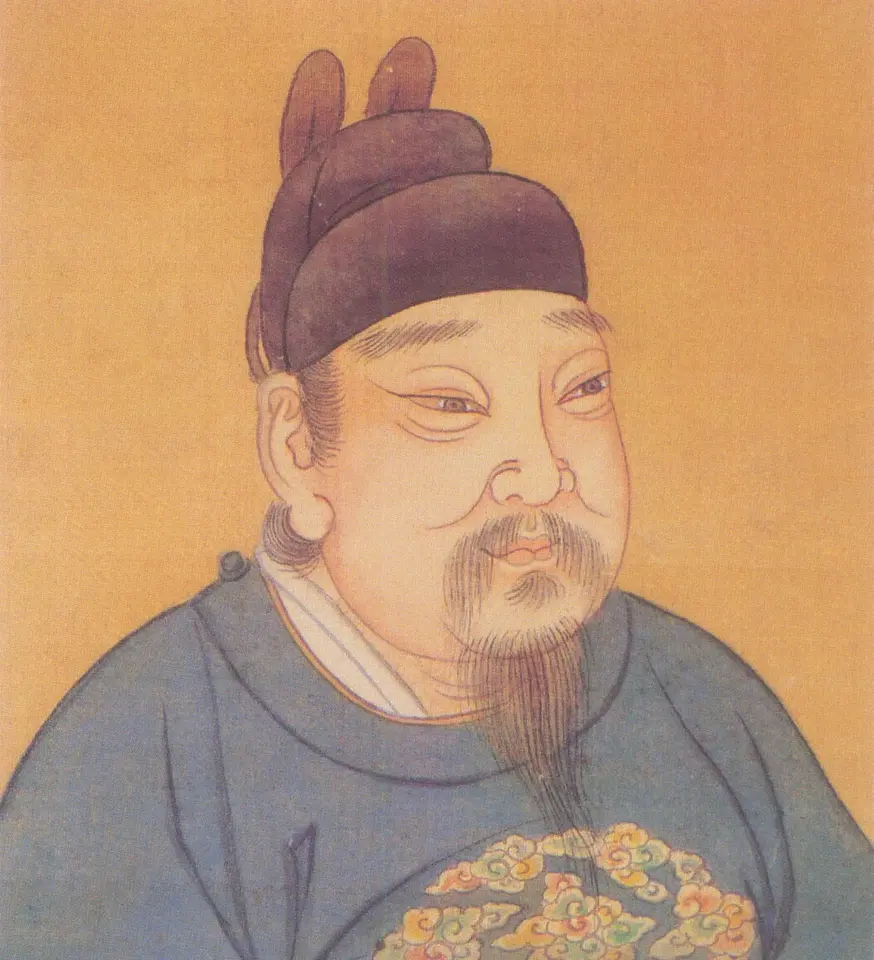
PROFILE
Chai Zhongxing (柴中行, 1175–1237), courtesy name Yu Zhi, art name Nanxi Xiansheng, posthumous name Xian, was an eminent Neo-Confucian philosopher, incorruptible high-ranking statesman, and celebrated scholar of the Southern Song dynasty from Yugan, Raozhou. He was a thirteenth-generation descendant of Emperor Shizong (Chai Rong) of the Later Zhou dynasty. He lived from 1175 to 1237 during the reigns of Emperor Xiaozong and Emperor Lizong, passing away at the age of sixty-three, posthumously honored as Duke of Xin and granted the posthumous title Xian.
Chai achieved his jinshi degree in 1190 at the youthful age of sixteen, receiving appointment as Military Judicial Investigator of Fuzhou. During the Qingyuan era, dictatorial minister Han Tuozhou proscribed Cheng-Zhu Neo-Confucianism as "false learning" (weixue), ordering all examination candidates to sign declarations disavowing the school. Chai resolutely refused, famously writing on his paper: "I have read Cheng Yi's writings since childhood to achieve metropolitan graduation; if you deem them false, I decline to be examined." His fearless defiance stunned the capital. Under Emperor Ningzong and Emperor Lizong, Chai served in regional administrations in Jiangzhou, Guangxi, Zhaozhou, and Guangzhou, abolishing oppressive poll taxes, relieving famines, and strengthening border defenses against Jurchen forces. Following Emperor Lizong's accession, Chai was recalled to the central court, rising to Minister of War, Minister of Personnel, and Academician of the Baomo Pavilion. Chai governed with legendary rectitude, championing Confucian orthodoxy, appointing upright scholars, and advocating active frontier defense. His surviving writings are collected in Nanxi Wenji.
- Courtesy Name
- Yu Zhi
- Art Name
- Nanxi Xiansheng
- Posthumous Name
- Xian (献)
- Dynasty
- Southern Song
- Ancestral Home
- Yugan, Raozhou (modern Nanxi Township, Wannian County, Jiangxi Province)
- Date of Birth
- 1175 (Chunxi 2, Song Xiaozong)
- Date of Death
- 1237 (Jiaxi 1, Song Lizong)
- Age at Death
- 63
- Primary Identity
- Neo-Confucian philosopher, upright minister, scholar-official
- Highest Office
- Minister of War, Minister of Personnel, Academician of the Baomo Pavilion, Grand Master for Thorough Service
BIOGRAPHY
Chronology
- 1175 (Chunxi 2) | Birth in Nanxi | Born into an illustrious lineage in Yugan, Raozhou, descended from the Later Zhou imperial house, studying the classics from youth.
- 1190 (Shaoxi 1) | Jinshi Degree | Passed the imperial examinations at age sixteen, appointed Military Judicial Investigator of Fuzhou.
- 1196 (Qingyuan 2) | Defiance of the Anti-Doctrinal Ban | Refused to sign the anti-Neo-Confucian declaration mandated by Han Tuozhou, walking out of the examinations.
- 1205 (Kaixi 1) | Governance in Zhaozhou | Acted as prefect of Zhaozhou, abolishing the oppressive poll tax, reducing grain surcharges, and relieving famine victims.
- 1210 (Jiading 3) | Defense of Guangzhou | Appointed Prefect of Guangzhou along the Huai River frontier, constructing border fortifications and deterring Jurchen raids.
- 1224 (Baoqing 1) | Elevation to Central Ministry | Summoned to the central court under Emperor Lizong, serving as Vice Minister of Personnel and Minister of War.
- 1234 (Duanping 1) | Academician of Baomo Pavilion | Appointed Academician of the Baomo Pavilion and Prefect of Jianning, subsequently retiring to Nanxi to lecture.
- 1237 (Jiaxi 1) | Demise at Nanxi | Passed away peacefully at his native home at age sixty-three, posthumously honored as Duke of Xin with the posthumous title Xian.
Biography
Royal Descent and Precocious Examination Success
Chai Zhongxing hailed from an illustrious lineage in Nanxi, Yugan County, Raozhou Prefecture. He was a thirteenth-generation descendant of Emperor Shizong (Chai Rong) of the Later Zhou dynasty. Following the founding of the Song dynasty, Emperor Taizu treated the Chai lineage with great honor, conferring hereditary noble titles and estates. Chai displayed exceptional moral gravity from childhood, dedicating himself to the Neo-Confucian doctrines of Cheng Hao and Cheng Yi.
In 1190, at the remarkably youthful age of sixteen, Chai passed the imperial examinations with distinction, earning his jinshi degree. His initial appointment was as Military Judicial Investigator of Fuzhou. In Fuzhou, Chai handled military judicial cases and logistics with impartial efficiency, displaying early administrative maturity.
Defiance Against the False Learning Proscription
During the early Qingyuan reign of Emperor Ningzong, Grand Councilor Han Tuozhou launched the Qingyuan Factional Ban to purge political rivals such as Zhao Ruyu and Zhu Xi. Han Tuozhou proscribed Cheng-Zhu Neo-Confucianism as "false learning," banning its books and stripping practitioners of examination and promotional eligibility.
The fiscal commission issued strict directives requiring all officials taking selection examinations to sign written affidavits confirming that they had never studied Neo-Confucianism. While many opportunists complied, Chai was filled with moral outrage. Taking up a brush, he inscribed bold characters across the official registry: "I have read Cheng Yi's writings since childhood to achieve metropolitan graduation; if you deem them false, I decline to be examined." He threw down his brush and walked away. The incident electrified the literati class; Han Tuozhou's partisans retaliated by revoking his eligibility, yet Chai's moral courage earned him the boundless respect of the scholar-official community.
Chai was demoted to teach in Jiangzhou. Following his mother's death, he resigned office and observed the full three-year mourning period in a simple hut beside her grave. Upon resuming office, he was appointed to the Guangxi fiscal commission. When a senior military commander sought his literary assistance and privately suggested referring to the prime minister as "Imperial Benefactor," Chai replied indignantly: "As a great commander serving the emperor, to refer privately to a chancellor as benefactor is a deep shame! Do not soil me!" The commander retreated in embarrassment.
Regional Administration in Lingnan and Frontier Defense
While serving in Guangxi, Chai concurrently administered Zhaozhou Prefecture. Zhaozhou suffered from an oppressive poll tax that drove impoverished families into ruin. Upon arrival, Chai boldly abolished the poll tax, reduced grain surcharges, and distributed public granaries to save the starving. Later, commissioned to inspect regional circuits across Guangxi, he traveled on foot through remote tribal settlements to investigate popular suffering, redressing abuses on the spot.
In 1210, Chai was appointed Prefect of Guangzhou along the Huai River, a critical forward military post opposing Jurchen Jin forces. Chai restored dilapidated ramparts, dug defensive moats, reorganized border beacons, and recruited local militia for agricultural defense. Under his disciplined command, Guangzhou was transformed into an impregnable bulwark, causing Jurchen raiding parties to bypass the territory.
Central Leadership and Neo-Confucian Promotion
Following the accession of Emperor Lizong, the court eliminated the corrupt practices of previous administrations and established Cheng-Zhu Neo-Confucianism as orthodox state learning. Aware of Chai's heroic defense of the doctrine during the party ban, Emperor Lizong summoned him to central office. Chai served successively as Junior Lord of the Court of the Imperial Treasury, Vice Minister of Works, Chief Minister of the Court of Judicial Review, Vice Minister of Personnel, and Minister of War.
At court, Chai conducted himself with ancient ministerial dignity. He submitted memorials advising Emperor Lizong to cultivate personal virtue and eliminate court favoritism. While supervising the Ministry of Personnel, he enforced strict merit evaluations, promoting honest Neo-Confucian scholars while barring corrupt opportunists. In 1234, Chai was appointed Academician of the Baomo Pavilion and Prefect of Jianning. Understanding the wisdom of retirement, he repeatedly petitioned to retire to Nanxi, founding the Nanxi Academy where he taught until his death.
In the fourth month of 1237, Chai passed away peacefully at his home at the age of sixty-three. Emperor Lizong grieved deeply, conferring the posthumous title Xian and elevating him to Duke of Xin.
Major Achievements
Defending Cheng-Zhu Orthodoxy During the Qingyuan Ban
Chai Zhongxing's most celebrated historic achievement was his courageous defense of Cheng-Zhu Neo-Confucianism during the height of Han Tuozhou's political persecution.
Risking his bureaucratic career and personal liberty, Chai refused to sign the anti-doctrinal affidavit, famously asserting his lifelong dedication to Cheng Yi's philosophy. His defiance struck a decisive blow against autocratic efforts to suppress moral philosophy, serving as a beacon of intellectual freedom that preserved the core integrity of the Confucian tradition.
Incorruptible Leadership as Minister of War and Personnel
During his tenure overseeing the Ministry of War and Ministry of Personnel under Emperor Lizong, Chai demonstrated exemplary statecraft. Far from remaining an impractical theorist, he reformed military logistics along the Huai River and restored bureaucratic discipline.
He purged unqualified cronies from military commands, reformed promotional procedures, and ensured that competent, incorruptible scholars were elevated to key administrative posts. Emperor Lizong praised him as an indispensable pillar of the dynastic state.
Benevolent Welfare Governance Across Regional Prefectures
Throughout his regional postings, Chai was revered as a compassionate administrator. In Zhaozhou, he abolished the destructive poll tax and opened public granaries; in Guangzhou, he strengthened frontier fortifications, deterring foreign incursions; and as judicial intendant in Jiangxi, he redressed hundreds of wrongful convictions. His administrative record proved that Neo-Confucian principles could produce tangible public welfare.
Disseminating Yiluo Learning and Authoring Nanxi Ji
Following his retirement to Nanxi in Yugan, Chai focused upon scholarship and writing. At Nanxi Academy, he systematically lectured on the philosophy of the Cheng brothers and Zhu Xi, attracting students from across the realm.
His extensive writings were compiled by disciples into the celebrated Nanxi Wenji (Collected Works of Nanxi). The collection preserves valuable treatises on Neo-Confucian philosophical transmission, the Qingyuan proscriptions, and Huainan frontier military defense, recognized as an indispensable classical source for studying Song intellectual history.
Epistemology of Moral Practice and Orthodoxy Transmission
In philosophy, Chai championed practical moral action, resisting the tendency of later scholars to reduce Neo-Confucianism to sterile metaphysical debate. He vigorously promoted the unity of knowledge and action (zhi xing he yi).
Chai maintained that Heavenly Principle is not an esoteric abstraction, but resides in everyday human relations and active civic governance. He exhorted disciples to plumb the principles of things by investigating the classics while addressing the practical hardships of the people, firmly rooting Yiluo Neo-Confucianism in the soil of moral action.
Lecturing at Nanxi Academy and Fostering Jiangyou Talents
In his final years, Chai poured his vitality into educating future generations at the Nanxi Academy. Endowing student lands to support impoverished scholars, he established rigorous academy regulations and moral curricula.
Leading students on field excursions to study agrarian canals, village compacts, and popular livelihood, Chai cultivated a generation of scholars possessing unyielding moral backbone and practical administrative competence, supplying an enduring core of dedicated civil leaders for late Southern Song governance.
Personal Relationships
- Royal Ancestor: Chai Rong, Emperor Shizong of the Later Zhou dynasty, of whom Chai was a thirteenth-generation descendant.
- Doctrinal Master: Cheng Yi, Northern Song Neo-Confucian philosopher whose teachings Chai defended at risk of his life.
- Philosophical Precursor: Zhu Xi, paramount Neo-Confucian master whose orthodoxy Chai championed.
- Political Nemesis: Han Tuozhou, autocratic grand councilor who launched the anti-Neo-Confucian proscription.
- Imperial Patron: Emperor Lizong of Song, who elevated Chai to high ministerial office and conferred the posthumous title Xian.
Historical Evaluation
- Song Shi: Chai Zhongxing possessed expansive vision and unyielding moral resolve; living with independent purity from youth, he carried himself at court with the noble dignity of ancient ministers.
- Siku Quanshu Zongmu Tiyao: When Han Tuozhou banned the true doctrine, Chai Zhongxing mounted an uncompromising protest without regard for personal danger; his magnificent integrity illuminated a thousand years.
- Houcun Xiansheng Daquanji by Liu Kezhuang: Master Nanxi possessed upright virtue and stood as a paramount authority of his age; confronting the catastrophe of the party ban, he acted with utter selflessness.
Related Entries
- [[Chai Rong]]
- [[Cheng-Zhu Neo-Confucianism]]
- [[Qingyuan False Learning Ban]]
- [[Emperor Lizong of Song]]
- [[Han Tuozhou]]