Birth | Born into the household of the Khongirad noble Anchen.
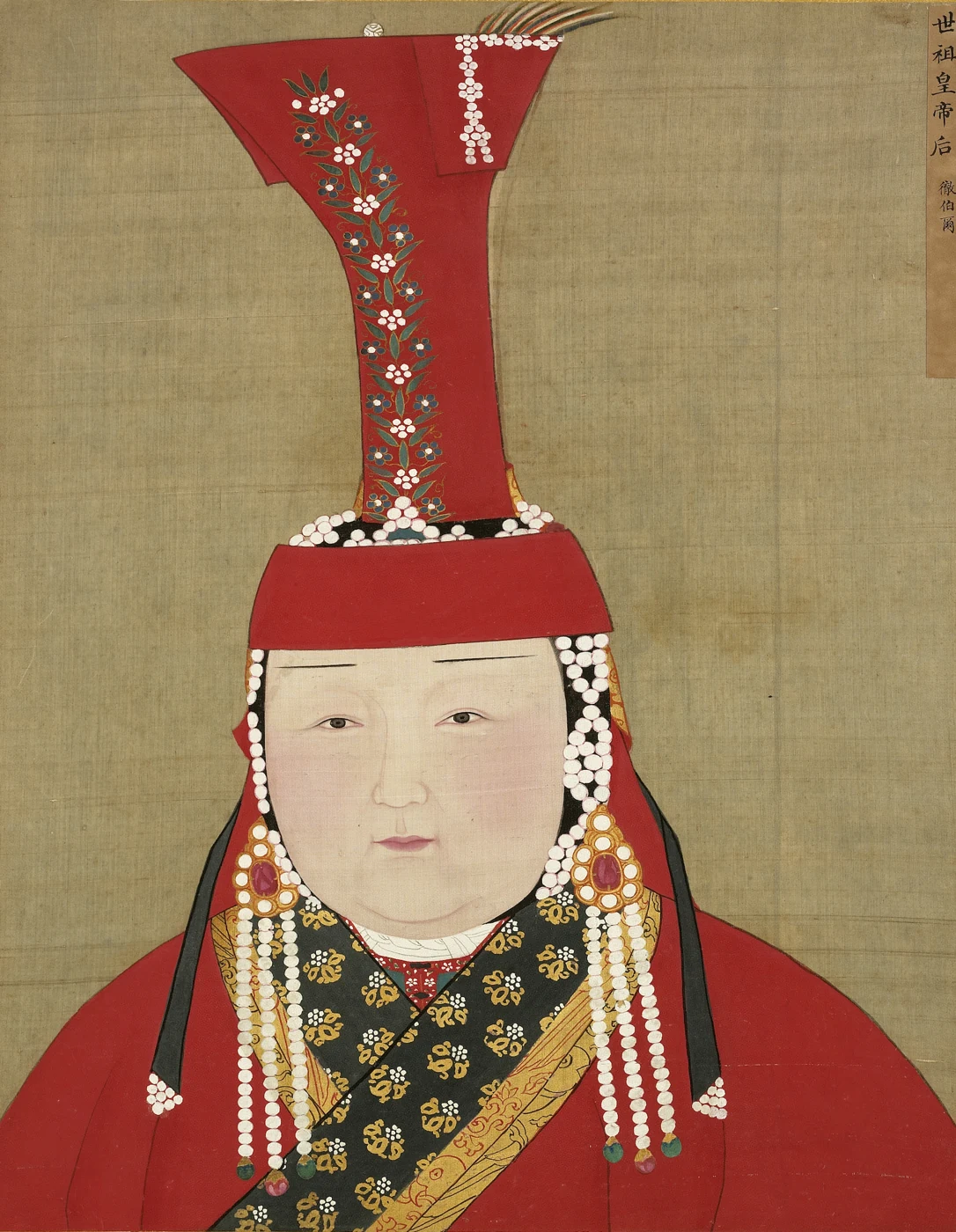
1227 CE–1281 CE
Empress
Khongirad Chabi
弘吉剌·察必
Empress Chabi (d. 1281), of the Khongirad clan, personal name Chabi, was a daughter of Anchen, Prince of Jining Zhongwu, and an empress of Kublai Khan, Emperor Shizu of the Yuan Dynasty. She served at Kublai Khan’s side while he was still a prince and was his most favored wife. She bore Zhenjin, later Crown Prince and posthumously Emperor Yuzong of Yuan. Chabi was formally established as empress in 1262, the third year of the…
1227 CE–1281 CEYuan Dynasty
PROFILE
Empress Chabi (d. 1281), of the Khongirad clan, personal name Chabi, was a daughter of Anchen, Prince of Jining Zhongwu, and an empress of Kublai Khan, Emperor Shizu of the Yuan Dynasty. She served at Kublai Khan’s side while he was still a prince and was his most favored wife. She bore Zhenjin, later Crown Prince and posthumously Emperor Yuzong of Yuan. Chabi was formally established as empress in 1262, the third year of the Zhongtong era. In 1273, the tenth year of the Zhiyuan era, she received the imperial seal and investiture and was granted the honorific title “Empress Zhenyi Zhaosheng Shuntian Ruiwen Guangying.” She died in 1281, the eighteenth year of the Zhiyuan era. In 1294, the thirty-first year of Zhiyuan, Emperor Chengzong of Yuan posthumously honored her as “Empress Zhaorui Shunsheng” and enshrined her with Emperor Shizu. Chabi was known for keen intelligence, an ability to understand political circumstances, personal frugality, and skill in remonstrance. She made repeated corrective interventions during the early formation of Yuan institutions and was an important companion and assistant in Kublai Khan’s political life.
- Other name
- Empress Chabi
- Period
- Yuan
- Date of Birth
- Not recorded in historical sources
- Date of Death
- 1281
- Dynasty/State
- Yuan Dynasty
- Identity
- Empress
- Ethnicity/Group
- Mongols
- Clan
- Khongirad clan
- Ancestral origin
- Not recorded in historical sources
- Place of birth
- Not recorded in historical sources
- Tenure as empress
- Not recorded in historical sources
- Posthumous name
- Not recorded in historical sources
- Major significance
- Empress of Kublai Khan; participated in military and political decision-making and offered many recommendations during the establishment of Yuan institutions.
LIFE TIMELINE
About age thirty-two | While Kublai Khan campaigned against the Southern Song and crossed the Yangtze to besiege Ezhou, Möngke died at Hezhou. From the rear, Chabi frustrated plans by supporters of Ariq Böke to mobilize troops and secretly urged Kublai Khan to return quickly.
About age thirty-three | Kublai Khan took the position of Great Khan; Chabi became empress, although she was formally invested in the third year of Zhongtong.
About age thirty-five | Formally established as empress.
About age forty-six | Received the empress’s seal and investiture and was granted the honorific title “Empress Zhenyi Zhaosheng Shuntian Ruiwen Guangying.”
About age forty-nine | After Yuan conquered the Southern Song, the young Emperor Gong of Song, Zhao Xian, attended court at Shangdu. Chabi alone was not joyful and said that “no state has ever lasted a thousand years”; she treated Empress Dowager Quan of Song generously.
About age fifty-four | Died.
Thirteen years after death | Emperor Chengzong of Yuan posthumously honored her as “Empress Zhaorui Shunsheng” and enshrined her with Emperor Shizu.
BIOGRAPHY
Biography
Family Background and Early Life
Chabi came from the Khongirad clan and was a daughter of Anchen, Prince of Jining Zhongwu. The Khongirad were a prominent people of the Mongolian steppe and had maintained marriage ties with the family of Genghis Khan for generations. Anchen was one of the Khongirad leaders, received princely rank for his service, and held an honored position during the Mongol period. Chabi’s mother was Hazhen, who was invested as Princess Consort of Jining.
Historical sources do not record Chabi’s year of birth; the account places it approximately in the late 1220s to early 1230s. She was said to have been beautiful, with the New History of Yuan describing her as “very beautiful.” She served at Kublai Khan’s side before his accession and was the most favored among his wives and consorts. She bore Kublai Khan’s eldest son Zhenjin, who was later established as Crown Prince and posthumously honored as Emperor Yuzong of Yuan.
The Princely Household and the Struggle for the Throne
In 1259, the ninth year of Emperor Xianzong, Kublai Khan was campaigning against the Southern Song under orders from his elder brother Möngke, crossed the Yangtze, and besieged Ezhou. Möngke died at Hezhou, in present-day Hechuan, Chongqing, before the news had been publicly announced. Kublai Khan’s younger brother Ariq Böke remained at Karakorum, the former Mongol capital. His supporters, including Alandar, urged him to proclaim himself Great Khan and used the relay-post system to mobilize forces north of the mountains, bringing them to within little more than one hundred li of Kublai Khan’s base at Kaiping.
When Chabi learned of this emergency, she sent someone to challenge Alandar: “Mobilizing troops is a grave matter. Zhenjin, the great-grandson of Taizu, is here—do you not know this?” Alandar was discouraged and his actions were checked. Ariq Böke then sent Toli to administer Yanjing, present-day Beijing, and mobilize militia. Chabi again secretly dispatched a messenger to Kublai Khan, urging him to withdraw his army and return north quickly. These decisive actions gave Kublai Khan valuable time to return and contend for the khanship, helping make his accession possible.
Investiture as Empress
In 1262, the third year of the Zhongtong era, Chabi was formally established as empress. In 1273, the tenth year of the Zhiyuan era, in the third month according to one account and the tenth month according to another, Kublai Khan presented her with the empress’s seal and investiture and granted her the honorific title “Empress Zhenyi Zhaosheng Shuntian Ruiwen Guangying.” According to the New History of Yuan, Yuan investiture rites for empresses began with Chabi.
Assistance in Government and Remonstrance
Chabi was intelligent by nature and adept at recognizing political circumstances. During the early establishment of the Yuan Dynasty, when institutions were still being formed, she frequently corrected and advised Kublai Khan and was said to have contributed significantly.
On one occasion, officials of the keshig requested that farmland near the capital be turned into horse pasture, and Kublai Khan had already approved the request. Chabi wished to remonstrate. When Grand Preceptor Liu Bingzhong was with the emperor, she deliberately reproached him: “You are an intelligent adviser among the Han Chinese, and the emperor listens to you. Why did you not remonstrate? When the capital was first established, turning farmland into pasture might still have been understandable. Now every household has its settled livelihood; how can it be proper to seize farmland again?” Kublai Khan remained silent, and the proposal to convert the farmland into pasture was abandoned.
Hanlin Academician Wang Silian once lectured Kublai Khan on the Comprehensive Mirror in Aid of Governance. When he reached the story in which Emperor Taizong of Tang was angry with Wei Zheng and Empress Zhangsun appeared in formal court dress to congratulate the emperor for having a worthy minister, Kublai Khan ordered a palace official to bring Wang Silian before Chabi’s apartments to repeat the lesson. Chabi responded, “This is indeed beneficial to imperial virtue. When there are similar passages, you should present them at the proper time.” Accounts cite episodes such as this as examples of her wisdom and understanding.
Frugality and Personal Conduct
Chabi was frugal by nature and did not favor luxury. She once drew one outer and one inner length of silk from the Court of Imperial Treasury. Kublai Khan told her, “These are resources required by the army and the state, not private property. How can the empress draw on them at will?” Thereafter Chabi personally led palace women in textile work. She processed silk from old bowstrings and wove it into cloth for clothing, said to be as tough and fine as expensive silks. When the Xuanzhui Yuan discarded sheepskins from the forelegs, she collected and stitched them into carpets. Contemporaries praised her as frugal and disciplined and as wasting nothing.
Chabi was also credited with creating two influential garments. Mongol hats had originally lacked a front brim. When Kublai Khan complained that sunlight dazzled him while hunting, Chabi added a brim to the hat; Kublai Khan was delighted, and the form became standard. She also made a new type of upper garment, shorter in front and twice as long in back, without a conventional overlapping lapel, collar, or sleeves, and tied with two bands. It was called a bijia, was convenient for riding and archery, and became fashionable at the time.
Reflection after the Conquest of the Southern Song
In 1276, the thirteenth year of the Zhiyuan era, Yuan armies captured Lin’an, the capital of the Southern Song. Emperor Gong of Song, Zhao Xian, was captured and appeared at court in Shangdu. Kublai Khan held a great banquet for his ministers, and everyone was pleased except Chabi, who remained silent. Kublai Khan asked her why she alone was unhappy when Jiangnan had been pacified and future wars seemed unnecessary. Chabi knelt and replied, “I have heard that since ancient times there has never been a state lasting a thousand years. If in the future our descendants can avoid becoming rulers of a fallen dynasty like the Song emperor, that would be fortunate indeed.”
Kublai Khan displayed treasures from the Song imperial storehouses in the palace court and summoned Chabi to view them. She looked once and then left. When Kublai Khan sent a eunuch to ask what she wanted, she replied that the Song emperors had accumulated these objects for their descendants, yet their descendants had failed to preserve them and everything had fallen to Yuan; how could she bear to take even one item?
After Empress Dowager Quan of Song was brought as a captive to Dadu, she found the northern environment difficult. Chabi repeatedly asked that she be allowed to return to Jiangnan, but Kublai Khan refused, reasoning that rumors might endanger the whole family if they returned and that it was safer to support them in the capital. Chabi thereafter treated Empress Dowager Quan even more generously.
Patronage of Buddhism and Temple Building
Buddhism was strongly favored in the Yuan period, and imperial consorts also participated in Buddhist patronage. Chabi established the prominent Great Protector of the State Renwang Temple in Dadu and donated part of her own property to its construction. Offices including a general administration, supervisory office, and management office were established to administer the temple estates. The temple’s later development was supported by Dagi, Empress Zhaoxian Yuansheng of Emperor Shunzong.
Death and Posthumous Honors
Chabi died on 20 March 1281, the twenty-ninth day of the second month in the eighteenth year of the Zhiyuan era. In the fourth month of 1294, the thirty-first year of Zhiyuan, her grandson Temür ascended the throne as Emperor Chengzong of Yuan. In the fifth month of that year, Chabi was posthumously honored as “Empress Zhaorui Shunsheng” and enshrined with Emperor Shizu. The account states that she was the only one of Kublai Khan’s wives to have a spirit tablet in the Imperial Ancestral Temple.
Major Activities
Political Activity
Chabi played a crucial role at a decisive moment in Kublai Khan’s struggle for the throne. After Möngke died in 1259, supporters of Ariq Böke planned military mobilization. Chabi, remaining in the rear, challenged Alandar by pointing out that Zhenjin, a great-grandson of Taizu, was present, weakening his resolve. She then secretly urged Kublai Khan to return quickly, helping bring about his northward return and accession. The History of Yuan summarized her role by saying that in the early government of the state she provided correction and support from Kublai Khan’s side and contributed substantially.
Remonstrance and Correction
Chabi was skilled at remonstrating indirectly with Kublai Khan. Her opposition to the proposal by keshig officials to turn farmland into horse pasture is a well-known example of her efforts to protect agricultural land after the Yuan capital had been established. By expressing her objections through a deliberate rebuke of Liu Bingzhong, she induced Kublai Khan to withdraw the proposal. Her interest in the story of Empress Zhangsun in the Comprehensive Mirror in Aid of Governance also illustrates her use of historical precedent in political counsel.
Frugality and Craftsmanship
Chabi was known for frugality. She led palace women in weaving old bowstring silk into cloth and stitched discarded sheepskins into carpets, allowing little to go to waste. She was also credited with adding a front brim to the Mongol hat and creating the bijia garment, contributions said to have had a lasting effect on Mongol dress culture.
Generous Treatment of the Song Imperial House
After Yuan conquered the Southern Song, Chabi did not rejoice at the young Emperor Gong’s appearance at court and instead warned that no state lasts a thousand years. She refused treasures from the Song storehouses and repeatedly requested that Empress Dowager Quan be allowed to return to Jiangnan. Although this request was denied, Chabi thereafter treated Quan with particular generosity.
Buddhist Patronage
Chabi’s establishment of the Great Protector of the State Renwang Temple in Dadu was a significant episode in Yuan court patronage of Buddhism. She contributed private property to its construction and created administrative offices to manage its estates, contributing to the institutional relationship between the Yuan imperial house and Buddhism.
Personal Relations
- Father: Anchen, Prince of Jining Zhongwu.
- Mother: Hazhen, Princess Consort of Jining.
- Brothers: Ochin, who married Princess Yesubuhua, a daughter of Tolui, Emperor Ruizong of Yuan; and Sorqodu.
- Husband: Kublai Khan, Emperor Shizu of Yuan.
- Son: Zhenjin, Crown Prince and posthumously Emperor Yuzong of Yuan.
- Grandsons: Gammala, posthumously Emperor Xianzong of Yuan; Darmabala, posthumously Emperor Shunzong of Yuan; and Temür, Emperor Chengzong of Yuan.
- Kublai Khan, Emperor Shizu of Yuan: husband and ruler; Chabi was an important assistant in his political life.
- Temür, Emperor Chengzong of Yuan: grandson who posthumously honored Chabi as Empress Zhaorui Shunsheng after his accession.
- Liu Bingzhong: Grand Preceptor; Chabi once used a deliberate rebuke of him as a way to remonstrate with Kublai Khan.
- Wang Silian: Hanlin Academician who repeated before Chabi a lecture from the Comprehensive Mirror in Aid of Governance.
- Ariq Böke: Kublai Khan’s younger brother; Chabi frustrated a military plan by his supporters.
- Alandar: supporter of Ariq Böke whose resolve was weakened after Chabi challenged him.
- Empress Dowager Quan of Song: Southern Song captive whom Chabi treated generously.
Historical Assessment
Yuan Period / Contemporary Record
- The “Biography of Empresses” in the History of Yuan described Chabi as intelligent and sensitive to political circumstances and stated that in the early administration of the state she provided correction and support at Kublai Khan’s side and contributed materially.
- The “Biography of Empresses” in the New History of Yuan described her as “very beautiful,” “benevolent and intelligent, remonstrating according to circumstances and greatly benefiting government,” and “frugal by nature.”
- The posthumous investiture issued under Emperor Chengzong praised her as possessing great virtue, properly occupying the position corresponding to Heaven, strengthening domestic governance, and upholding the great human relationships. It also specifically praised her judgment during the withdrawal from Ezhou and her assistance in Kublai Khan’s accession at Shangdu.
Ming and Qing Periods
- Ming historians generally followed the assessment in the History of Yuan, emphasizing Chabi’s contribution in “correcting and assisting” Kublai Khan.
- Qing works such as the Continuation of the Comprehensive Mirror in Aid of Governance recorded her opposition to converting farmland into pasture and her generous treatment of the Song imperial house, presenting her as a model virtuous empress.
- Qing scholars also noted her role in creating the bijia and other clothing forms and treated these accounts as valuable evidence for Mongol customs.
Modern Period
- Modern historians of the Yuan often assess Chabi from the perspective of political history, emphasizing her crucial role in Kublai Khan’s struggle for the throne and the direct influence she exercised at a turning point in Mongol-Yuan politics.
- Social historians focus on her frugality and clothing innovations, viewing these details as evidence of everyday life in the Mongol court and of women’s role in material culture.
- Women’s-history scholarship treats Chabi as a representative example of Mongol women’s political participation while emphasizing that her participation remained primarily advisory and supportive and did not break the traditional gender framework.
FIGURES ASSOCIATED WITH THIS DYNASTY
Bibliography
- History of Yuan, vol. 114, “Biographies, Part One: Empresses, Part One.”
- New History of Yuan, vol. 104, “Biographies, Part One: Empresses.”