Aristocratic Birth
Born on the twenty-fourth day of the ninth lunar month into a prominent scholar-official clan in Quanjiao, Anhui; born to Wu Wenyen and later adopted by Wu Linqi.
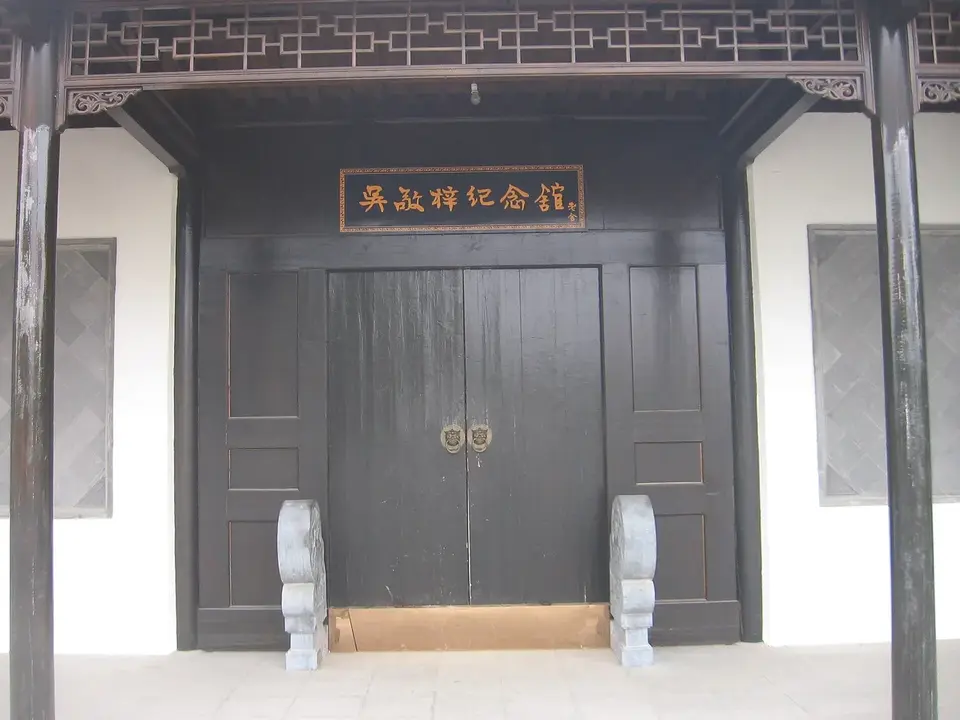
吴敬梓
Wu Jingzi (吴敬梓, 1701–1754), courtesy name Minxuan (敏轩) or Wenmu (文木), pseudonym Limin (粒民), and in later years styling himself Wenmu Laoren (文木老人) or Qinhuai Yuke (秦淮寓客), was a native of Quanjiao County, Chuzhou Prefecture, Anhui Province (modern Quanjiao County, Chuzhou City). He was a towering literary master, novelist, and poet of the Qing Dynasty, revered as the founder and supreme master of Chinese classical realistic…
Wu Jingzi (吴敬梓, 1701–1754), courtesy name Minxuan (敏轩) or Wenmu (文木), pseudonym Limin (粒民), and in later years styling himself Wenmu Laoren (文木老人) or Qinhuai Yuke (秦淮寓客), was a native of Quanjiao County, Chuzhou Prefecture, Anhui Province (modern Quanjiao County, Chuzhou City). He was a towering literary master, novelist, and poet of the Qing Dynasty, revered as the founder and supreme master of Chinese classical realistic satirical fiction. Wu was born into an illustrious bureaucratic lineage that had produced generations of high-ranking ministers, censors, and provincial governors under the Shunzhi and Kangxi reigns, representing one of the preeminent aristocratic clans in the lower Yangtze and Huai River regions. Demonstrating precocious intellect, Wu attained the status of government student (xiucai) at age eighteen. However, having been adopted into the senior household branch to inherit its substantial ancestral estate, he was subjected to fierce jealousy and relentless litigation from envious clan relatives, exposing him early in life to the cruelty of intra-clan greed and social hypocrisy. Gifted with an untamed, generous nature that despised bourgeois avarice and moralistic dogma, Wu sought release through bohemian extravagance and patronage of traveling artists, exhausting tens of thousands of silver taels of family wealth within a decade. In 1733, having liquidated his ancestral holdings, he permanently relocated his household to the banks of the Qinhuai River in Nanjing, abandoning civil examination ambitions to live as an unranked literatus. During his residence in Nanjing, Anhui Provincial Governor Zhao Guolin recommended Wu to sit for the prestigious Boxue Hongci special imperial examination in 1736; Wu feigned illness and resolutely declined to attend. Surviving in grinding poverty where food ran out for days and he resorted to midnight city walks in winter to warm his feet, Wu maintained fierce intellectual independence. Over a decade of devoted composition, he completed the fifty-six-chapter masterpiece The Scholars (Rulin Waishi). Employing trenchant realistic satire and pure vernacular prose, the novel unmasked the spiritual degradation wrought by the civil examination system and the moral bankruptcy of late imperial scholar-officials, creating immortal archetypes such as Fan Jin, Zhou Jin, and Yan Jiansheng. He also authored Wenmu Shanfang Ji and Wenmu Shanfang Shishuo, securing an enduring monument in world literature.
Born on the twenty-fourth day of the ninth lunar month into a prominent scholar-official clan in Quanjiao, Anhui; born to Wu Wenyen and later adopted by Wu Linqi.
Passed preliminary examinations to become a government student (xiucai) in Quanjiao at age eighteen, earning praise from senior local scholars.
Adoptive father Wu Linqi passed away while serving as education director in Ganyu; Wu returned to inherit substantial ancestral property, triggering bitter clan disputes.
Disillusioned by clan strife and academic superficiality, spent lavishly to support eccentric scholars and artists, resulting in rapid family decline and social ostracism.
Sold the remainder of his ancestral lands and house in Quanjiao to move his family to the Qinhuai riverside in Nanjing, styling himself the Qinhuai Sojourner.
Recommended for the Boxue Hongci examination by Anhui Governor Zhao Guolin; feigned illness and adamantly refused to travel to the capital.
Commenced concentrated composition of the full-length satirical masterpiece The Scholars in his modest Nanjing residence.
Completed the final draft of The Scholars after ten years of continuous labor, circulating it in manuscript form among close literary confidants.
Completed the classical philological and critical treatise Wenmu Shanfang Shishuo, demonstrating independent classical scholarship on the Classic of Poetry.
Traveled to Yangzhou in Jiangsu; passed away abruptly from illness in a travelers lodge on the twenty-eighth day of the tenth lunar month; buried by friends at Yuhuatai in Nanjing.
Wu Jingzi was born on the twenty-fourth day of the ninth lunar month in 1701 (the fortieth year of the Kangxi reign) into an illustrious bureaucratic lineage in Quanjiao County, Chuzhou Prefecture, Anhui Province. The Quanjiao Wu clan traced its origins to Dong'ou (modern Wenzhou, Zhejiang), having migrated to Luhe near Jiangning after meritorious service during the Jingnan Campaign of the early Ming, before establishing roots in Quanjiao. Under the Qing dynasty, the family flourished into a preeminent scholar-official dynasty: Wu's great-grandfather Wu Guolong served as Supervising Censor of the Office of Scrutiny for Rites under the Shunzhi Emperor; his grandfather's generation included Wu Sheng, who held office as Right Vice Minister of Personnel and Left Vice Censor-in-Chief; and his grand-uncle Wu Bing served as Reader-in-Waiting in the Hanlin Academy, Governor of Hubei, and Chief Examiner of the Metropolitan Examinations. Throughout the High Kangxi era, the Wu clan held immense prestige and administrative influence across southern and central China.
Wu was originally the biological son of Wu Wenyen. Because his eldest paternal uncle, Wu Linqi (a tribute student under Kangxi who served as county education director in Ganyu), had no male heir, Wu was formally adopted in childhood into the senior lineage branch to continue its ancestral line and preserve its vast estates. Although this adoption legally designated him as the sole heir to the senior branch's prime lands, urban mansions, and ancestral wealth, it simultaneously provoked deep resentment and jealousy among collateral clan branches. Growing up under the hostile gaze of resentful relatives, young Wu developed an early, acute sensitivity to the hypocrisy, greed, and ruthless maneuvering that lurked beneath aristocratic decorum.
His adoptive father, Wu Linqi, maintained strict, unbending disciplinary standards, believing that mastery of the eight-legged examination essay was the sole legitimate path to honor the ancestors. He forced Wu to devote his days to memorizing the Four Books, Five Classics, and standard examination model essays. Yet naturally imaginative and passionate, Wu developed an aversion to rigid examination dogma, turning instead to poetry, lyric song, and musical theater, even studying vocal meter and melody secretly from traveling performers. In 1713, when Wu was thirteen, his biological mother Lady Jin passed away; bereft of maternal affection, the grieving youth grew increasingly introspective and fiercely independent, taking refuge in classical poetry and free thought.
In 1718 (the fifty-seventh year of the Kangxi reign), eighteen-year-old Wu sat for the local civil examinations. Possessing profound literary command and an agile intellect, he passed smoothly, entering the Quanjiao county academy as a government student (xiucai). His brilliant performance earned high praise from local gentry elders, who anticipated that he would rapidly follow his ancestors into the highest echelons of imperial service. In 1720, twenty-year-old Wu married Lady Tao, the second daughter of renowned local scholar Tao Qinli, enjoying a brief interval of domestic peace and intellectual companionship.
However, in 1723 (the first year of the Yongzheng reign), adoptive father Wu Linqi died while serving as education director in Ganyu, Jiangsu. This event shattered the stability of Wu's life. Returning home to mourn, twenty-three-year-old Wu inherited the vast properties and liquid assets of the senior branch. The transfer of this fortune ignited open warfare within the extended clan. Uncles and cousins from collateral branches seized upon Wu's youth and gentle demeanor, fabricating financial claims regarding ancestral sacrifice lands and demanding shares of the estate.
During the ensuing years of destructive litigation, elder relatives colluded with corrupt local yamen clerks to extort, intimidate, and harass Wu. He watched senior elders, who publicly preached Confucian benevolence and filial piety, turn into rapacious predators the moment wealth was contested. Brothers and cousins engaged in vicious betrayals for petty financial gain. This traumatic intra-clan feud shattered Wu's faith in patriarchal clan ethics and dogmatic Confucian rituals, instilling in him a permanent loathing for the moral hypocrisy that characterized late imperial gentry society.
In response to the hostility and deceit of his clan, the proud and nonconformist young scholar chose a path of radical rebellion. Refusing to engage in petty squabbling or grovel before local officials, he channeled his resentment into lavish, uninhibited generosity and bohemian living. Opening private residences in Quanjiao, Wu hosted banquet tables where any passing scholar, swordsman, itinerant performer, or blind musician was treated as an honored guest and showered with money upon departure.
During these years of reckless indulgence, Wu associated freely with eccentric outcasts from all strata of society. By day he galloped across countryside plains and composed verses over wine; by night he gathered actors and musicians to perform operas until dawn, distributing gifts without restraint. Conservative local gentry viewed him as a ruined degenerate and a clan disgrace, subjecting him to relentless gossip and mockery. Indifferent to social approval, Wu squandered his vast inherited fortune of tens of thousands of silver taels within less than a decade. Amidst financial collapse, his wife Lady Tao passed away from illness, after which he remarried Lady Ye.
By 1733 (the eleventh year of the Yongzheng reign), thirty-three-year-old Wu was completely bankrupt and pursued by creditors. Concluding that his native county offered no remaining dignity or peace, he made a resolute break with his clan and homeland. Selling off the final remnants of his ancestral estate, Wu placed his wife and young sons aboard a boat on the Chu River, crossed the Yangtze, and relocated permanently to Nanjing. He rented modest quarters near the Taoye Ferry on the Qinhuai River, styling himself the "Qinhuai Sojourner" and commencing twenty-one years of life as an unranked, bohemian writer in the ancient southern capital.
Settling in Nanjing freed Wu from the suffocating atmosphere of his ancestral clan. Nanjing's historical heritage as a six-dynasties capital, its vibrant urban culture, and the bohemian milieu of the Qinhuai waterways offered him immense intellectual and personal freedom. Here he established lasting friendships with other independent literati living in the city, including Cheng Jinfang, Shang Pan, Fan Ji, and Jin Zhaoyan. Together they formed literary salons, climbed Yuhuatai, visited scenic ruins, and used poetry to vent historical grief and personal disillusionment.
In 1736 (the first year of the Qianlong reign), the Qing court decreed the convening of the prestigious Boxue Hongci special examination, ordering provincial governors to recommend eminent scholars living in rustic retirement. Anhui Governor Zhao Guolin, who admired Wu's sweeping erudition, placed Wu at the top of the provincial nomination list, urging him to travel to Beijing where high office awaited. Facing an opportunity that ordinary scholars spent lifetimes seeking, the thirty-six-year-old writer demonstrated exceptional resolve. Having seen through bureaucratic corruption and imperial autocracy, Wu took to his bed, feigned serious illness, drank openly to feign madness, and adamantly refused the recommendation.
Wu's refusal astonished southern intellectual circles and permanently severed his connection to bureaucratic advancement. From that moment, he committed himself to life as a proud commoner. To honor forgotten virtuous figures, Wu, Cheng Jinfang, and others organized a campaign in 1738 to restore the Shrine of Ancient Worthies at Yuhuatai in Nanjing, honoring over two hundred and thirty historical southern luminaries. Wu personally drafted the commemorative inscription and sacrificial prayers, expressing his longing for ancient moral nobility and uncorrupted virtue.
Following his refusal of the imperial examination, Wu's financial situation deteriorated precipitously. Because he was naturally indifferent to practical management, what little savings remained from his move quickly vanished, plunging his household into extreme poverty. In his later years along the Qinhuai River, Wu lived in a leaking, ramshackle cottage, often running out of rice for days on end and relying on pawning clothing, advance payments from booksellers, and small gifts from friends like Cheng Jinfang.
Yet grinding material distress could not extinguish his generous spirit and intellectual vitality. A famous anecdote illustrates his bohemian humor: on bitter winter nights in Nanjing, lacking charcoal for heating and blankets for warmth, Wu would invite Cheng Jinfang, Shang Pan, and other companions to walk through knee-deep snow, rapidly circling the city walls for miles while chanting poetry and laughing aloud until dawn broke and their feet were thoroughly warm. Wu humorously termed this ritual "warming the feet." His defiance and warmth in the face of destitution became legendary in Chinese literary lore.
Within this impoverished Qinhuai cottage, Wu poured a decade of creative fire into composing his full-length satirical novel The Scholars (Rulin Waishi). Drawing from his personal experience, he transmuted the squalid property disputes of Quanjiao, the venality of magistrates, the mental derangement of civil exam candidates, and the superficial posturing of Nanjing salons into vivid artistic archetypes. As he revised and transcribed chapters, he was frequently moved to tears of anger and grief. Around 1749, the fifty-six-chapter masterpiece was completed, circulating in handwritten copies among his literary circle, where readers marveled at its genius and wept over its pathos.
Simultaneously, Wu pursued advanced scholarship in Confucian classics and poetry. In 1750, he completed the seven-volume treatise Wenmu Shanfang Shishuo, providing independent philological and literary commentary on the Classic of Poetry. He firmly rejected the moralizing dogmatism of Han and Song commentators who forced political allegories onto love poetry, pioneering an aesthetic and human-centered reading of ancient verse that fused philological rigor with humanist critique.
In the late autumn of 1754, Wu traveled to Yangzhou upon the invitation of his friend Liu Qi. As a vital hub on the Grand Canal, Yangzhou was a bustling metropolis where wealthy salt merchants patronized poets and dramatists. Wu was warmly welcomed by local literati, touring scenic pavilions and composing verses. His devoted younger friend Cheng Jinfang was also sojourning in Yangzhou; the two enjoyed long reunions, boating along the canals and discussing literature.
On the twenty-eighth day of the tenth lunar month, Wu attended an evening banquet aboard a riverboat hosted by friends and the imperial salt commissioner of Huai'an. Returning to his lodging that night, he was seized by severe chest and abdominal pain, followed by a violent chill. His chronic ailments flared fatally, and the fifty-four-year-old literary giant passed away abruptly in his travelers lodge.
At his death, Wu possessed no savings, leaving behind only scattered books and unfinished manuscripts, without funds for a coffin. Upon hearing the news, Cheng Jinfang rushed to the lodge in tears, generously providing the full expenses for the funeral. Cheng hired a boat to transport Wu's coffin back to Nanjing, burying him beside the serene wooded ridges of Yuhuatai south of the city. In his Biography of Master Wenmu, Cheng praised Wu's filial integrity, unyielding noble character, and generous soul, concluding that Wu's immortal writings would endure through the ages. Resting beneath Yuhuatai, Wu left humanity an enduring literary monument.
Wu Jingzi's crowning historical achievement was the creation of The Scholars (Rulin Waishi), the ultimate pinnacle of classical Chinese realistic satirical fiction. In world satirical literature, The Scholars stands shoulder-to-shoulder with Cervantes' Don Quixote, Gogol's Dead Souls, and Swift's Gulliver's Travels. Spanning fifty-six chapters, the work discarded the conventional formulas of supernatural fantasy, romantic melodrama, or heroic outlaw sagas, focusing for the first time on the realistic lives, psychological dilemmas, and moral decay of ordinary intellectuals, marking the full maturity of Chinese vernacular realism.
Through piercing realistic analysis, Wu mounted a comprehensive critique of the imperial civil examination system that had shackled Chinese intellectuals for centuries. In celebrated episodes such as "Fan Jin Passes the Examination" and "Zhou Jin Strikes the Examination Board," he portrayed the physical degradation and loss of human dignity endured by impoverished scholars pursuing degrees. Fifty-four-year-old Fan Jin's sudden descent into madness upon hearing of his examination success exposed how the eight-legged examination system transformed healthy individuals into slavish worshippers of official rank; similarly, sixty-year-old candidate Zhou Jin's despair, beating his head against the examination hall walls and rolling in agony, stands as an eternal indictment of the human toll exacted by imperial examinations.
Wu demonstrated peerless satirical art in constructing an expansive gallery of intellectuals, officials, and gentry archetypes. Featuring nearly two hundred characters across all social strata, the novel introduced the miser Yan Jiansheng, who refused to die until a second lamp wick was extinguished; the corrupt bully Yan Gongsheng; hypocritical intellectual frauds such as Kuang Chaoren and Yang Zhizhong; and dogmatic moralists like Wang Yuhui, who urged his own daughter to starve herself to death to preserve widowhood chastity. Alongside these negative figures, Wu lovingly portrayed idealized independent men of integrity such as Wang Mian, Du Shaoqing, and Zhuang Shaoguang, who rejected imperial patronage to preserve moral autonomy, establishing rich, multidimensional characterizations.
Wu made groundbreaking contributions to the aesthetics of long-form fiction. He departed from traditional narrative plots that relied on a single protagonist or continuous storyline, inventing an episodic, interconnected mosaic structure where dozens of colorful characters enter and exit like travelers passing along a road, linked seamlessly by social encounters. In satirical technique, Wu practiced restrained, dignified mockery without crude insult, relying on subtle contrasts between pretense and reality to let foolishness expose itself, establishing the highest aesthetic standard of classical Chinese satire.
Beyond satirical fiction, Wu attained distinction in classical philology and poetry. His seven-volume Wenmu Shanfang Shishuo offered original critical exegesis of the Classic of Poetry, rejecting rigid moralistic commentaries in favor of aesthetic and emotional authenticity. His surviving poetic anthology, Wenmu Shanfang Ji, preserved over one hundred and thirty poems and essays such as Scenes of Jinling, blending the tragic depth of Du Fu with the untrammeled lyricism of Li Bai, providing a profound poetic testament to his humanistic spirit and cementing his place as an all-round master of letters.
FIGURES ASSOCIATED WITH THIS DYNASTY