Life and Career
Noble Lineage and Early Acclaim as a Prodigy
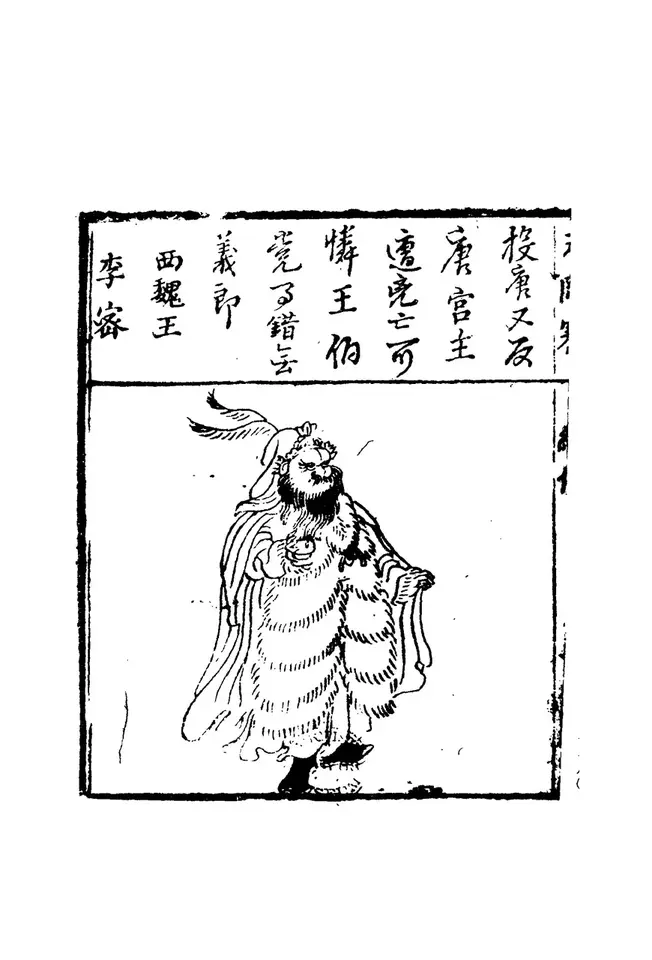
Li Mi traced his ancestry to Xiangping in Liaodong Commandery. His forebear was Li Bi, one of the Eight Pillars of State under the Western Wei and Grand Preceptor of the Northern Zhou. Through the Sui and early Tang dynasties, the clan resided in the capital Chang'an, producing high ministers and distinguished scholars. His father, Li Kuan, served as a county magistrate and amassed a private library containing tens of thousands of scrolls. Endowed with extraordinary memory and analytical acumen from childhood, Li Mi could recite thousands of words daily and quickly mastered classical literature. In 728, when he was just seven years old, reports of his precocious intellect reached the imperial palace.
Emperor Xuanzong was playing chess with high ministers Zhang Yue and Zhang Jiuling in the inner palace when he summoned the young boy for an audience. Wishing to test his mental agility, Zhang Jiuling proposed a four-line riddle describing the rules of chess: square like righteousness, round like wisdom, moving like talent, and still like fulfilled intent. Without a moment of hesitation, the seven-year-old Li Mi countered: square like a board, round like a piece, moving like living stones, and still like dead stones. The response not only adhered strictly to the poetic structure but also displayed a profound grasp of sacrifice, life, and death in the game. Stunned by the boy's genius, Zhang Jiuling caressed his head and congratulated the emperor on discovering a future pillar of the empire. Xuanzong had the child brought into the inner palace to receive gifts from Consort Yang and imperial courtiers, and issued a special decree commanding the Imperial Academy to oversee his classical education.
Several years later, when Zhang Jiuling had risen to Chancellor, Li Mi was a frequent guest at the prime ministerial mansion. One day, Zhang lamented aloud while reviewing appointments that the upright Yan Tingzhi was too abrasive, whereas the smooth Xiao Cheng was agreeable and polite. Overhearing the remark, Li Mi stepped forward and sternly cautioned the senior statesman that having risen to high office through moral rectitude, it ill became him to prefer superficial flattery over honest counsel. Greatly shaken and ashamed, Zhang Jiuling straightened his robes, bowed in apology, and formally addressed Li Mi as his young mentor, establishing a renowned lifelong friendship.
Taoist Retreat and Early Court Service
Despite his early fame, Li Mi eschewed the conventional pursuit of civil service examinations. As he matured, he immersed himself in the Laozi, the Zhuangzi, cosmological changes, and Taoist breath-control techniques. Sensing the moral decay and bureaucratic complacency creeping into Xuanzong's later reign under the authoritarian chancellor Li Linfu, Li Mi resolved to withdraw from worldly society. He spent his early twenties roaming the sacred mountains of Mount Song, Mount Shaoshi, Mount Hua, and the Zhongnan range.
During these years of reclusion, Li Mi studied under prominent Taoist masters, including Sima Chengzhen and Wu Yun. Recognizing his combination of transcendent detachment and practical strategic brilliance, these masters instructed him in Taoist internal alchemy and governance philosophies. Clad in coarse hemp robes, Li Mi dwelled in mountain caves, gathering herbs and refining his intellect. He successfully integrated Taoist principles of non-contention and yielding with Confucian ideals of benevolent statecraft, forming a unique philosophy that blended philosophical reclusion with pragmatic statesmanship.
In 751, amid military setbacks in the southwest and growing border tensions, Emperor Xuanzong recalled the former child prodigy. Li Mi submitted a lengthy memorial titled Discussion of Strategic Retribution, analyzing frontier defenses and warning against the growing military imbalance between the border military commissioners and the imperial center. Impressed by his insight, Xuanzong appointed him Academician Awaiting Orders and directed him to advise Crown Prince Li Heng in the Eastern Palace. Li Heng developed profound respect for Li Mi's wisdom and moral clarity, treating him as a trusted mentor.
However, Li Mi's uncompromising integrity soon provoked court hostility. Following Li Linfu's death, Yang Guozhong monopolized power while General An Lushan actively plotted treason on the northern frontier. Deeply troubled, Li Mi composed satirical verses exposing bureaucratic corruption and the perfidy of border commanders. Infuriated by the satire, Yang Guozhong accused Li Mi of seditious intent. Recognizing that remaining in Chang'an would invite destruction, Li Mi pleaded illness, resigned his office, and retreated into mountain seclusion at Yingyang.
Joining the Imperial Colors at Lingwu
In November 755, An Lushan launched his massive rebellion from Fanyang. The following summer, Tongguan Pass collapsed, Xuanzong fled to Sichuan, and Crown Prince Li Heng proceeded to Lingwu, where he proclaimed himself Emperor Suzong. Facing a shattered empire with only a few thousand demoralized troops, Suzong urgently needed a brilliant strategist to rebuild the imperial cause. Remembering his trusted adviser from the Eastern Palace, Suzong dispatched couriers with urgent decrees to summon Li Mi from his mountain hermitage.
Li Mi set out immediately, traversing northern wastelands to reach Lingwu. Overjoyed to see Li Mi arrive in his flowing white robes, Suzong took his hands and wept, declaring that his arrival ensured the salvation of the dynasty.
Suzong immediately offered to appoint Li Mi Chancellor. However, Li Mi declined formal ministerial rank, explaining that accepting high office would entangle him in administrative bureaucracy and court rivalries, whereas serving as a private counselor would allow him to provide unconstrained strategic advice. Suzong respected his decision, granting him the nominal post of Army Supervisor under Prince Li Chu while entrusting him with supreme authority over military strategy and personnel appointments. At Lingwu, Li Mi shared the emperor's carriage and imperial tent. Whenever the court traveled, spectators marveled at the sight of the emperor in imperial yellow seated beside the scholar in plain white Taoist robes, giving rise to the popular description of the emperor in yellow and the chancellor in white.
During preparations for the counter-offensive, Suzong favored his bold and energetic second son, Prince of Jianning Li Tan, intending to name him Supreme Commander of the Imperial Armed Forces. Li Mi intervened decisively in secret, arguing that while Li Tan possessed exceptional martial talent, Prince of Guangping Li Chu was the eldest son and heir apparent. If Li Tan were granted supreme military command and achieved historic victories, it would inevitably create lethal succession rivalries reminiscent of the Xuanwu Gate Incident between Taizong and Prince Jiancheng. Convinced by Li Mi's foresight, Suzong retracted the decision and appointed Prince Li Chu Supreme Commander, preventing a succession schism within the imperial family.
Strategic Vision and Counter-Offensive Planning
With imperial forces assembled at Lingwu and Fengxiang, Suzong was eager to stage an immediate march on the occupied capitals of Chang'an and Luoyang. Li Mi strongly opposed a premature frontal assault, proposing instead a comprehensive strategy of northern encirclement and strategic exhaustion.
Li Mi analyzed that the rebel troops consisted of elite northern frontier cavalry who thrived on rapid offensive strikes. Having looted vast riches from the capitals, their frontline commanders were complacent, while their home base at Fanyang was lightly defended. Li Mi argued that direct frontal assaults on fortified capitals would result in heavy casualties without destroying the rebel power base. He proposed deploying General Li Guangbi through the Jingxing Pass to threaten northern Hebei, while General Guo Ziyi advanced from the northern frontier to pin down rebel reinforcements. Meanwhile, the main imperial army would maintain defensive lines at Fengxiang, refusing decisive battle. By forcing the rebels to shuttle frantically between defending Fanyang and holding the capitals, their forces would be exhausted within a year. Once spring arrived, elite imperial cavalry could sweep into Fanyang, severing the rebels from their homeland and causing their central garrisons to collapse without prolonged siege warfare.
Suzong initially embraced this grand strategy and dispatched Guo Ziyi and Li Guangbi to coordinate actions in Hebei. However, by the spring of 757, eager to claim immediate victory and having secured allied Uyghur cavalry, Suzong disregarded Li Mi's advice to strike Fanyang first and launched a direct offensive on Chang'an. Although Chang'an and Luoyang were successfully liberated, the surviving rebel armies retreated into northern Henan and Hebei, resulting in years of protracted conflict at Xiangzhou and prolonging the rebellion until 763, exactly as Li Mi had predicted.
Mediating Dynastic Conflicts and Reclusion at Mount Heng
While formulating military strategy, Li Mi repeatedly deployed his moral authority to protect the imperial family from destructive internecine bloodletting.
Suzong doted upon Consort Zhang (later Empress Zhang) and the ambitious eunuch Li Fuguo. Feeling threatened by the imperial princes, Consort Zhang fabricated treasonous charges against Prince of Jianning Li Tan, prompting the enraged emperor to execute his own son. Consort Zhang and Li Fuguo next conspired against Crown Prince Li Chu, seeking to install Zhang's infant son as imperial heir. Terrified, Prince Li Chu lived in daily dread of execution.
Deeply grieved by Li Tan's death and determined to stop further tragedy, Li Mi sought an opportunity to advise Suzong. He recounted the historical precedent of Emperor Gaozu of Han attempting to disinherit Crown Prince Liu Ying for the son of Lady Qi, and recited the verses of the Yellow Terrace Melon, a poignant poem written by Prince Li Xian before his forced suicide under Empress Wu Zetian: "Pick the melons on the terrace once, twice, and thrice, until only the bare vines remain." Weeping before the throne, Li Mi declared that if the emperor listened to palace slander and harmed the Crown Prince, the dynasty would fall and Suzong would face his imperial ancestors in shame. Deeply shaken, Suzong wept in remorse, embraced Li Mi, and permanently affirmed Li Chu's position as crown prince.
Furthermore, on the eve of recapturing Chang'an, Suzong planned to exhume and burn the corpse of former Chancellor Li Linfu out of deep-seated hatred for his past persecutions. Li Mi dissuaded the emperor, pointing out that exhuming corpses would portray the court as vindictive and alienate surrendered rebel officers. More critically, Emperor Xuanzong was still living in Sichuan; desecrating the memory of Xuanzong's longest-serving chancellor would imply that the new court condemned Xuanzong's governance, making the retired emperor fearful of returning to the capital. Realizing the profound wisdom of this counsel, Suzong abandoned the plan, allowing Xuanzong to return peacefully to Chang'an.
In the autumn of 757, following the liberation of both capitals, imperial officials competed for aristocratic titles and rewards, while Li Fuguo increasingly resented Li Mi's pervasive influence. Fully aware that extraordinary merit invited suspicion, Li Mi knelt before Suzong and requested permission to return to the mountains, reminding the emperor of their prior agreement that once the capitals were restored, he would be permitted to resume his life as a hermit. When Suzong insisted on conferring noble ranks, Li Mi playfully requested only that he be allowed to rest his head on the emperor's knee for a brief nap. Suzong tearfully agreed. Following this symbolic gesture of intimacy, Li Mi bade farewell to the court. Suzong built him a three-room retreat beneath Yanxia Peak on Mount Heng, granted him a third-rank official stipend, and bestowed purple Taoist robes. Li Mi withdrew deep into Mount Heng, where he lived in seclusion for years.
Recalled by Emperor Daizong and Administrative Service
In 762, Emperor Suzong passed away, and Crown Prince Li Chu ascended the throne as Emperor Daizong. Remembering Li Mi's crucial role in saving his life, Daizong immediately dispatched an imperial delegation to Mount Heng to summon him back to the capital.
Upon Li Mi's arrival, Daizong housed him in the Penglai Palace library. Seeing his emaciated frame after years of Taoist fasting, the emperor insisted on his secularization, ordering palace attendants to serve him meat broth, arranging his marriage to a daughter of a prominent Shuofang general, and appointing him Hanlin Academician.
However, Chancellor Yuan Zai wielded tyrannical authority over the bureaucracy and deeply feared that Li Mi's close bond with the throne would cost him the chancellorship. Sensing Yuan Zai's hostility, Li Mi prudently requested a provincial assignment to avoid court factionalism. Daizong appointed him Prefect of Lizhou and later Prefect of Changzhou. In Changzhou, Li Mi confronted widespread famine caused by floods and droughts. He distributed grain reserves, punished price-gouging merchants, reformed agricultural taxes to relieve smallholders, and constructed numerous irrigation reservoirs. His benevolent administration restored regional agriculture and earned him the enduring love of the local populace.
Governing Hangzhou and Constructing the Six Wells
In 781, Li Mi was appointed Prefect of Hangzhou. Located near the mouth of the Qiantang River, Hangzhou suffered from severe saline groundwater infiltration, rendering city wells brackish and undrinkable. The lack of potable water caused widespread illness, hindered urban growth, and forced many residents to abandon the settlement.
Determined to eliminate this public health crisis, Li Mi conducted hydrological surveys and identified West Lake as an abundant source of freshwater flowing from surrounding mountain springs. Because the lake surface sat slightly higher than the city floor, he devised an engineering plan to divert lake water through subterranean conduits into the urban center.
Li Mi mobilized thousands of laborers to construct intake sluices along the eastern shore of West Lake and laid miles of subterranean pipelines using interlocking terracotta tiles and hollowed camphor wood trunks. By utilizing gravity flow, freshwater was channeled across the city into six newly constructed deep cisterns: Xiangguo Well, West Well, Jinniu Well, Baigui Well, Fang Well, and Xiaofang Well. Known collectively as the Six Wells of West Lake, these reservoirs provided an uninterrupted supply of pure drinking water to the entire urban population. This transformative infrastructure project spurred commercial and demographic expansion, establishing the municipal foundation that enabled Hangzhou to flourish as the premier metropolis of southeastern China. For centuries, grateful citizens honored Li Mi as a founding guardian of the city.
Stabilizing Shan-Guo and Securing Imperial Logistics
In 783, the Jingyuan Mutiny erupted. Rebellious frontier troops seized Chang'an, forcing Emperor Dezong to flee to Fengtian. Rebel general Zhu Ci declared himself emperor in the capital, while regional warlords Li Huaiguang and Li Xilie rose in open revolt. Facing imminent collapse at his temporary court in Liangzhou, Dezong summoned Li Mi and appointed him Surveillance Commissioner of Shan-Guo and Prefect of Shanzhou.
The Shan-Guo region, guarding the passes between the Yellow River and Mount Xiao, constituted the sole logistical corridor connecting Guanzhong with the grain-producing regions of the Huai and Yangtze River valleys. Prior to Li Mi's arrival, the garrison had mutinied and murdered the previous commissioner, Zhang Yi. The troops were leaderless and mutinous, while rebel commander Li Xilie dispatched heavy cavalry to capture the mountain passes.
Arriving at the city walls in a solitary carriage without an armed escort, Li Mi demonstrated astonishing courage. He entered the garrison headquarters alone, assembled the mutinous officers, and read an imperial pardon, declaring that the murder of Zhang Yi was the treason of a few instigators and that the rank-and-file were forgiven. He distributed accumulated wages, tended to the sick and wounded, and restored military cohesion. He then swiftly arrested and executed more than ten conspirators who were covertly colluding with Li Xilie, completely re-establishing military discipline.
Li Mi then inspected the defenses, reinforced the fortified mountain outposts, and successfully repelled the onslaught of Li Xilie's cavalry. More importantly, with the imperial court and armies in Guanzhong facing severe starvation, Li Mi directed the construction of mountain pack-mule routes bypassing treacherous rapids along the Yellow River gorge at the Sanmenxia rapids. He established transit granaries, mobilized boatmen, and coordinated salt revenues from Hedong to subsidize transport costs. Under his supervision, millions of bushels of southern grain passed safely through the gorges to Guanzhong, resolving the imperial food crisis and securing the logistical foundation for the recapture of Chang'an.
Ascension to the Chancellorship and Preservation of the Crown Prince
In July 787, in recognition of his extraordinary record of civil and military achievements across four decades, Emperor Dezong recalled Li Mi to the capital and appointed him Vice Director of the Secretariat and Joint Manager of Affairs with the Secretariat-Chancellery, elevating him to Marquis of Yexian. At the age of sixty-six, Li Mi formally assumed the premiership.
Upon his appointment, Dezong received Li Mi in private audience and graciously suggested an agreement: that Li Mi would not use his new power to exact revenge for the decades of mistreatment he had endured. Li Mi bowed and replied that he bore no personal grudges, as those who had slandered him, such as Li Fuguo and Yuan Zai, had already met their downfalls. However, Li Mi proposed a reciprocal pact, urging the emperor to protect loyal merit ministers and refrain from executing imperial princes based on unverified suspicions. Dezong readily assented.
Nevertheless, scarred by the trauma of the Jingyuan Mutiny, Dezong had grown deeply paranoid. Within months, the court was rocked by scandal involving Princess Gaoguo, a daughter of Emperor Suzong whose daughter was married to Crown Prince Li Song. Accused of licentious conduct and employing sorcery, the princess was imprisoned, and Dezong suspected Crown Prince Li Song of conspiring in high treason. Late one night, Dezong summoned Li Mi alone to the Yanying Hall and furiously revealed his intention to depose the crown prince and execute him, intending to name Prince of Shu Li Yi as heir.
Recognizing that purging the crown prince would trigger catastrophic court purges and invite provincial rebellions, Li Mi threw himself onto the steps of the throne and wept bitterly. He passionately argued that Crown Prince Li Song was universally recognized for his filial devotion and moral integrity, and that the crimes of Princess Gaoguo could not be imputed to the prince. When Dezong angrily threatened Li Mi and his entire clan with execution for treasonous insubordination, Li Mi raised his head and declared that he had pledged his life to the dynasty since the days of Emperor Suzong and cared nothing for his own survival. He asked Dezong if he had forgotten the tragedy of Prince Li Tan, whose wrongful execution haunted Emperor Suzong until his dying day. Li Mi offered his own life and the lives of his hundred clan members as collateral for the crown prince's loyalty, challenging the emperor to behead him on the spot rather than sign an order of execution.
Moved by Li Mi's tearful defiance and absolute loyalty, Dezong's rage gave way to grief. Weeping, the emperor stepped down from the dais, lifted Li Mi from the floor, and pledged never again to speak of deposing the crown prince. Through his courage and moral resolve, Li Mi saved the future Emperor Shunzong and preserved the dynastic succession.
Protection of Merit Generals and Frontier Stability
Li Mi also deployed his political skill to shield the military commanders who had saved the empire. Generals Li Sheng and Ma Sui, having crushed Zhu Ci's rebellion and reclaimed Chang'an, enjoyed immense popularity. However, Dezong suspected their military authority, and jealous courtiers repeatedly accused them of harboring seditious ambitions.
Li Mi warned Dezong against destroying the empire's greatest defenders, pointing out that if commanders who had restored the throne were executed on frivolous charges, no soldier would ever fight for the dynasty again. To resolve the tension, Li Mi proposed a compromise: elevating Li Sheng and Ma Sui to the supreme honorary ranks of the Three Excellencies (Grand Preceptor and Grand Commandant) and granting them luxurious residences in Chang'an, while quietly transferring operational command to dependable subordinates. Relieved of their commands without losing honor, the generals retired peacefully, averting military mutiny.
When courtiers accused Han Huang, the governor controlling southeastern financial shipments, of fortifying Nanjing to rebel, Dezong prepared to launch a punitive military campaign. Li Mi once again pledged his own life to guarantee Han Huang's innocence, explaining that the fortifications were intended to resist pirate incursions. Li Mi wrote a personal letter to Han Huang, who immediately sent his son to serve as an imperial hostage and accelerated grain deliveries. Dezong rewarded Han Huang, dispelling mutual suspicions between the court and the southern provinces.
Final Years and Death
Throughout 788 and early 789, Li Mi labored incessantly to restore state finances and frontier defense. He reformed the tax collection system, requiring all provincial tributary gifts to be processed through the state treasury rather than the emperor's private accounts, thereby curbing irregular exactions. He also introduced military agricultural colonies along the northwest frontier to gradually revive self-sustaining local garrisons.
Decades of relentless toil took a devastating toll on Li Mi's health. In February 789, he fell gravely ill. Even from his sickbed, he submitted secret memorials urging the emperor to maintain the anti-Tibetan alliances and reduce tax burdens on the common people. On April 1, 789 (the 2nd day of the 3rd month of the 5th year of Zhenyuan), Li Mi passed away peacefully in his Chang'an residence at the age of sixty-eight.
Emperor Dezong was grief-stricken and suspended court audiences for three days, posthumously conferring the high office of Grand Tutor to the Crown Prince. Integrating Confucian righteousness, legalist administrative competence, and Taoist spiritual detachment, Li Mi stands as one of the most legendary chancellors in imperial Chinese history.
Key Achievements
The Grand Alliance Strategy Against the Tibetan Empire
Li Mi's most celebrated strategic triumph was the formulation and execution of the "Grand Alliance" (or Four Seas Alliance) in 788 to encircle and neutralize the Tibetan Empire.
Following the An Lushan Rebellion, Tibetan armies had seized the Hexi Corridor, severed communications with the Western Regions, and repeatedly invaded the Tang heartland, even briefly sacking Chang'an in 763. Dezong harbored bitter resentment toward the northern Uyghurs and viewed Nanzhao in the southwest as barbarian rebels. Upon becoming Chancellor, Li Mi recognized that the empire could not overcome Tibet alone and formulated his grand strategy: "Make peace with the Uyghurs in the north, establish alliance with Nanzhao in the south, and connect with the Abbasid Caliphate and India in the west; then Tibet will be trapped."
Under Li Mi's direction, Tang foreign policy achieved a historic transformation:
- Alliance with the Uyghurs: Li Mi negotiated the marriage of Princess Xian'an to the Uyghur Khagan, converting a hostile border threat into a powerful northern ally that launched coordinated offensives against Tibetan positions in Central Asia;
- Reconciliation with Nanzhao: Explaining that Nanzhao had submitted to Tibet only under duress, Li Mi opened secret negotiations with King Yimouxun, successfully enticing Nanzhao to defect from Tibet and rejoin the Tang tributary system, exposing Tibet's southern flank;
- Western Outreach: Tang envoys reached the Abbasid Caliphate and Indian kingdoms, encouraging western pressure against Tibetan expansion across the Pamir Mountains.
This grand diplomatic encirclement forced Tibet to disperse its armies across four distant frontiers, triggering catastrophic fiscal and demographic exhaustion that permanently dismantled its offensive threat against the Tang capital.
Master Strategy for the Suppression of An Lushan
At the outbreak of the An Lushan Rebellion, Li Mi formulated the strategic blueprint for the restoration of the dynasty. Recognizing that the rebel cavalry possessed tactical superiority in mobile field engagements but lacked strategic depth, Li Mi conceived the multi-front containment doctrine: pinning down rebel forces across northern Henan while threatening their home base at Fanyang. Although imperial impatience led to tactical deviations, Li Mi's logistical coordination and strategic positioning directly enabled the recovery of Chang'an and Luoyang in 757.
Hydrological Infrastructure: The Six Wells of Hangzhou
Li Mi's design of the Six Wells of West Lake represents a masterpiece of ancient Chinese municipal engineering. By analyzing topographical gradients and utilizing gravity-fed conduits of terracotta piping and hollowed camphor wood, he successfully channeled fresh lake water beneath saline strata into six urban cisterns. This infrastructure eliminated groundwater salinity, safeguarded public hygiene, and provided the urban water security necessary for Hangzhou to develop into a preeminent commercial center.
Financial and Logistical Reforms
During the post-rebellion fiscal crisis, Li Mi restructured state revenue and grain transport. Operating in the Shan-Guo sector, he bypassed hazardous Yellow River rapids by creating integrated water-land portage systems and transit granaries, minimizing grain loss during delivery to the capital. As Chancellor, he halted the proliferation of irregular provincial tributes, mandating that all local exactions be integrated into official treasury budgets to reduce predatory taxation.
Preserving Merit Commanders and Defusing Military Mutiny
Amid intense imperial paranoia toward military commanders, Li Mi pioneered mechanisms to transition victorious marshals from active commands into prestigious advisory roles. By promoting generals Li Sheng and Ma Sui to the Three Excellencies, he safeguarded their lives and secured imperial authority without provoking rebellion among border garrisons.
Bureaucratic Equilibrium and Inner Court Mediation
Serving across four reigns, Li Mi possessed a profound understanding of the rising power of palace eunuchs. Rather than instigating violent purges that would destabilize the regime, he maintained an equilibrium between the outer civil bureaucracy and inner court officials. By strictly limiting eunuch interference in legal administration while respecting their palace duties, he preserved administrative stability throughout the early Zhenyuan era.
Revival of Frontier Agricultural Garrisons
Addressing the collapse of the classic militia system (fubing), Li Mi instituted reformed agricultural military colonies along the northwestern perimeter. By granting border soldiers permanent farmlands in Lingwu, Fengxiang, and Binning, he established localized, self-sufficient garrisons that reduced reliance on costly grain transport from the south while curtailing the growth of private warlord armies.
Cultural Preservation and the Ye Hou Library
Beyond his political career, Li Mi was one of the greatest bibliophiles of the Tang Dynasty. He amassed an extraordinary collection of over thirty thousand scrolls spanning the classics, dynastic histories, philosophy, astronomy, and military treatises. Every volume was stamped with his famous red seal, "Ye Hou Family Book". Celebrated by poet Han Yu, Li Mi's meticulous preservation of ancient manuscripts rescued countless pre-Tang texts from the devastation of the An Lushan Rebellion, providing a vital bridge for the classical intellectual revival of the mid-Tang period.
Guardian of the Imperial Lineage
Li Mi served as an indispensable protector of dynastic continuity. Through his moral courage, he preserved Crown Prince Li Chu (Emperor Daizong) from the schemes of Empress Zhang, and later risked execution to save Crown Prince Li Song (Emperor Shunzong) from Emperor Dezong's wrongful suspicions. His steadfast defense of legitimate succession averted catastrophic civil wars and earned him historical renown as the savior of two generations of Tang sovereigns.
The Synthesis of Statecraft and Taoist Detachment
Li Mi exemplified the harmonious balance between Confucian public duty and Taoist spiritual detachment. In times of national disaster, he emerged from reclusion to deliver decisive strategic leadership; yet at the pinnacle of power and acclaim, he consistently spurned wealth and titles to return to the quietude of sacred mountains. Operating at the center of court intrigue across four imperial reigns, he retired with unblemished honor and high office, standing as an enduring model of moral and philosophical integrity.