Devotion to Empirical Science
Abandoned the civil service examinations, established a personal laboratory in Suzhou, and committed himself to astronomy, physics, and mechanics.
薄珏
Bo Jue (薄珏, fl. 1610–1640), courtesy name Zijue, was a native of Changzhou County, Suzhou Prefecture, South Zhili (modern Suzhou, Jiangsu Province). He was an outstanding mechanical engineer, instrument inventor, military technologist, and astronomer of the late Ming Dynasty, widely celebrated as a pioneer in combining optical instruments with artillery sighting systems. Born into an impoverished scholar family, Bo Jue…
Bo Jue (薄珏, fl. 1610–1640), courtesy name Zijue, was a native of Changzhou County, Suzhou Prefecture, South Zhili (modern Suzhou, Jiangsu Province). He was an outstanding mechanical engineer, instrument inventor, military technologist, and astronomer of the late Ming Dynasty, widely celebrated as a pioneer in combining optical instruments with artillery sighting systems. Born into an impoverished scholar family, Bo Jue initially studied Confucian Classics and entered the Jiaxing county school as a government student. Disillusioned by corrupt court politics and persistent civil examination failures, he abandoned bureaucratic ambitions to master astronomy, mathematics, mechanics, and experimental physics. Establishing a dedicated private laboratory and foundry at his residence in Suzhou, he conducted empirical experiments on metal casting, gear mechanics, and lens grinding. He constructed a sophisticated bronze armillary sphere (huntianyi) and authored pioneering treatises such as Huntianyi Tushuo (Illustrated Treatise on the Armillary Sphere) and Suwen Tianqing Xibei Zhi Wangbian (Refutation of the Fallacy that Heaven Tilts to the Northwest). During the reign of the Chongzhen Emperor, when rebel forces threatened the strategic stronghold of Anqing, Grand Coordinator Zhang Guowei enlisted Bo Jue to supervise the manufacture of defensive weaponry. At Anqing, Bo Jue designed advanced bronze cannons and pioneered the installation of custom-ground telescopes (qianlijing) onto cannon carriages, creating one of the world's earliest documented optical artillery sighting systems and dramatically enhancing targeting accuracy. He also engineered land mines, mechanical subterranean crossbows, amphibious firearms, and water-lifting machines. In the successful Defense of Anqing, his armaments routed the besieging forces and preserved the city. When Zhang Guowei recommended him for imperial appointment, Bo Jue declined official rank and retired to Suzhou, dedicating his remaining years to scholarship and engineering before dying in poverty. His technical breakthroughs exerted a profound influence on optical and mechanical manufacturing across the Suzhou region.
Abandoned the civil service examinations, established a personal laboratory in Suzhou, and committed himself to astronomy, physics, and mechanics.
Finished casting a high-precision bronze armillary sphere and composed Huntianyi Tushuo and Hanghai Cetian Fa.
Recruited by Grand Coordinator Zhang Guowei to reinforce Anqing against advancing rebel forces, taking charge of foundry and weapons fabrication.
Mounted custom-ground optical telescopes onto defensive bronze cannons, decimating rebel forces and securing the relief of Anqing.
Resisted official appointments recommended by Zhang Guowei, relinquishing potential bureaucratic honors to return to his home in Suzhou.
Completed Gewu Cedi Lun in Suzhou while living in destitution, passing away peacefully amid poverty.
Bo Jue was born into an impoverished intellectual family in Changzhou County, Suzhou Prefecture. Endowed with natural brilliance and unyielding curiosity, he devoured classical literature during his youth and achieved the status of government student (shengyuan) in Jiaxing.
However, Bo Jue's uncompromising candor and refusal to flatter patrons alienated examination evaluators, causing him to fail repeatedly at the provincial examinations. Observing the moral decline of the late Ming court and the paralysis of the imperial bureaucracy, he concluded that formulaic eight-legged essays could neither enrich the people nor defend the borders. He resolved to abandon Confucian examination studies to pursue practical natural philosophy, physics, mathematics, and mechanical arts.
To translate mathematical principles into tangible machines, Bo Jue established a private foundry and laboratory in his modest Suzhou residence. Lacking external patronage, he used his own meager resources to assemble anvils, furnaces, lathes, grinding wheels, and measuring scales. Working alongside artisans, he immersed himself in the metallurgy of copper and iron, the grinding of curved optical lenses, and the construction of interlocking gear systems.
Bo Jue applied rigorous evidentiary methods to natural philosophy, boldly confronting ancient cosmological doctrines that contradicted physical reality. Integrating Western astronomical knowledge introduced by Jesuit missionaries with traditional Chinese calendar traditions, he pursued systematic celestial observations.
During the early Chongzhen reign, Bo Jue independently designed and cast a bronze armillary sphere featuring precise celestial ring divisions. To elucidate its operational principles, he composed Huntianyi Tushuo, detailing the celestial coordinates of the ecliptic, equator, and lunar orbit.
Concurrently, Bo Jue challenged the ancient mythological assertion found in the Huangdi Neijing that "heaven tilts toward the northwest while earth is deficient in the southeast." In his celebrated essay Suwen Tianqing Xibei Zhi Wangbian, he employed spherical earth geometry and parallax principles to prove that celestial phenomena are relative to the terrestrial observer. He produced numerous treatises including Tianti Wuse Bian, Tianxing Beigao Nanxia Bian, Yinghuo Shouxin Lun, Hanghai Cetian Fa, and Gewu Cedi Lun, addressing atmospheric refraction, planetary orbits, and maritime celestial navigation.
In the middle of the Chongzhen reign, insurgent armies led by Zhang Xianzhong and Luo Rucai ravaged the mid-Yangtze provinces and advanced toward the prefecture of Anqing. Anqing's fortifications were dilapidated, its ordnance inadequate, and the local garrison was gripped with panic.
Zhang Guowei, the Grand Coordinator of Anqing and Luzhou, knew of Bo Jue's inventive genius and dispatched emissaries with urgent invitations, requesting that he assume full command of weapons production. Answering the call without hesitation, Bo Jue arrived at the frontline city.
Upon inspecting Anqing's defensive perimeter, Bo Jue established an emergency weapons foundry, working day and night to refine high-purity bronze. He oversaw the casting of heavy, pressure-resistant bronze cannons. Most remarkably, using his expertise in lens fabrication, Bo Jue hand-ground optical lenses to produce single-draw telescopes (qianlijing), attaching them directly onto the cannon mounts alongside calibrated metallic sight-lines.
In 1636, rebel forces encircled Anqing and launched wave assaults across pontoon bridges and siege ladders. Guided by Bo Jue, the garrison observers used the mounted telescopes to measure the distance and bearing of enemy commanders and charging cavalry. The cannons opened fire with devastating accuracy, shattering the enemy formations. Simultaneously, Bo Jue deployed concealed land mines and subterranean crossbows outside the moats, as well as amphibious fire-lances along the rivergates. The besiegers suffered catastrophic casualties and were completely repelled, preserving the city and its population.
Following the defense of Anqing, Grand Coordinator Zhang Guowei composed an enthusiastic victory memorial to the Chongzhen Emperor, extolling Bo Jue's pivotal contributions and earnestly petitioning the throne to award him an official commission in the Ministry of Works or Ministry of War to oversee national weapons production.
Yet Bo Jue displayed the detached integrity of a true natural philosopher. Aware that court factionalism was incurable and that bureaucratic intrigue would hinder his scientific research, he politely declined Zhang Guowei's recommendations. Once the siege was broken, he returned quietly to his ancestral home in Suzhou.
During his final years, Bo Jue lived in extreme frugality in Suzhou, never ceasing his technical investigations. In his humble cottage, he completed the draft of Gewu Cedi Lun and invented lightweight, highly efficient waterwheels to aid local irrigation. Uninterested in commercial gain, he endured mounting poverty and illness, ultimately passing away in his study.
Bo Jue's most celebrated innovation in global military history was the integration of optical telescopes onto artillery carriages, establishing one of the world's earliest functional optical sighting systems.
Prior to the 1630s, both traditional Chinese siege artillery and imported European ordnance relied on crude sight lines and the naked eye to estimate elevation and distance, resulting in poor accuracy against distant or moving targets. During the defense of Anqing, Bo Jue recognized the tactical value of combining optical magnification with ballistic trajectory calibration.
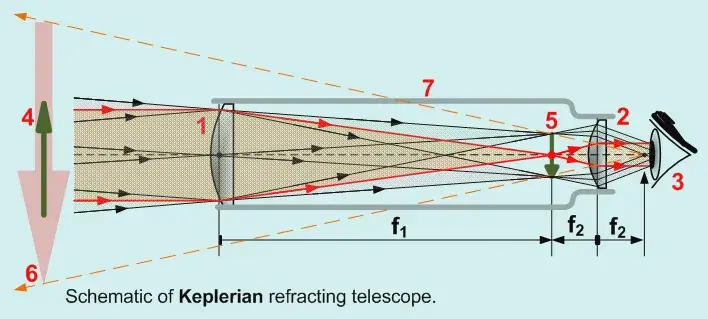
Mastering the laws of refraction, Bo Jue ground concave and convex lenses, fitted them into brass tubes, and engineered an adjustable metallic bracket on the cannon tube. Gunners looked through the telescope to observe distant formations and adjusted the cannon's elevation according to crosshair markers. This development preceded the widespread adoption of telescopic artillery sights in the West, dramatically improving firepower effectiveness.
During the siege of Anqing, Bo Jue engineered a comprehensive tactical weapons system that integrated land and aquatic defenses.
To counter enemy tunneling operations and nocturnal assaults, Bo Jue devised mechanical pressure-plate land mines and concealed mechanical crossbows. Buried along defensive berms and counterscarp trenches, these weapons detonated or discharged hundreds of iron bolts automatically whenever rebel forces stepped on the trip plates.
Along the riverfront, Bo Jue deployed amphibious fire-tubes that floated on buoyant wooden frames. These weapons could be discharged from behind defensive revetments to burn approaching enemy transports. Bo Jue's integrated weapons network transformed Anqing into an impenetrable bastion and served as a model for late Ming defensive engineering.
Bo Jue made major contributions to observational astronomy by casting high-precision bronze armillary spheres, reviving astronomical instrument fabrication outside the imperial Bureau of Astronomy.
His armillary sphere incorporated carefully graduated rings corresponding to the ecliptic, celestial equator, lunar path, and local horizon. It demonstrated the complex movements of the sun, moon, and five planets across the twenty-eight lunar lodges and allowed observers to pinpoint celestial coordinates through sighting tubes.
To assist navigators and astronomers, Bo Jue published Huntianyi Tushuo and Hanghai Cetian Fa, providing detailed assembly blueprints and introducing practical celestial navigation procedures that bridged academic astronomy with maritime piloting.
Bo Jue was a prominent representative of late Ming empirical rationalism, rejecting blind adherence to Confucian scholasticism in favor of direct physical experimentation.
In Suwen Tianqing Xibei Zhi Wangbian, he questioned traditional cosmological myths, demonstrating that the earth is a suspended sphere and that celestial motions are relative phenomena observed from a rotating coordinate frame. His conclusions harmonized remarkably with emerging early modern astronomical principles.
In his comprehensive treatise Gewu Cedi Lun, Bo Jue analyzed optical lens grinding, geometric triangulation, thermal expansion of metals, and mechanical lever balances. His research inspired the next generation of Suzhou optical pioneers, most notably Sun Yunqiu (author of Jingshi), cementing Jiangnan's leadership in precision manufacturing during the seventeenth century.
FIGURES ASSOCIATED WITH THIS DYNASTY