Birth in Shanyin
Born in Shanyin County, Shaoxing Prefecture, Zhejiang
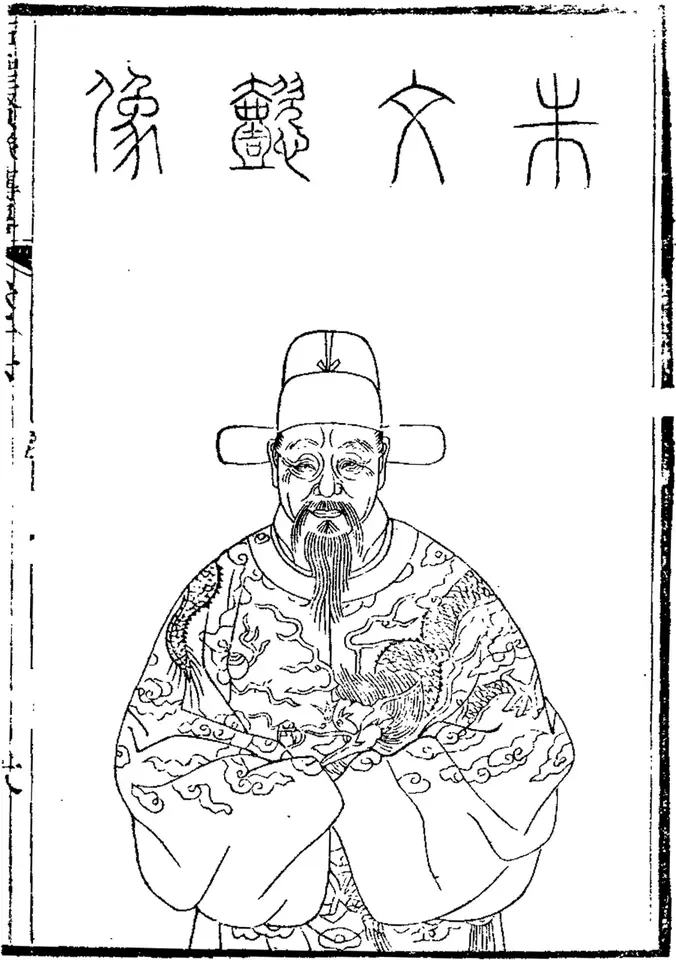
朱赓
Zhu Geng (朱赓, 1535–1608), courtesy name Shaoqin, art name Jinting, a native of Shanyin County in Shaoxing Prefecture, Zhejiang, was a Senior Grand Secretary during the Wanli reign of the Ming dynasty. Passing the imperial examination as a jinshi in 1568, he entered the Hanlin Academy and became a daily lecturer at the Classics Mat in 1578, where he used the historical lesson of the Northern Song "Flower-and-Rock Network" to…
Zhu Geng (朱赓, 1535–1608), courtesy name Shaoqin, art name Jinting, a native of Shanyin County in Shaoxing Prefecture, Zhejiang, was a Senior Grand Secretary during the Wanli reign of the Ming dynasty. Passing the imperial examination as a jinshi in 1568, he entered the Hanlin Academy and became a daily lecturer at the Classics Mat in 1578, where he used the historical lesson of the Northern Song "Flower-and-Rock Network" to warn the young Wanli Emperor against extravagance. Rising to Minister of Rites in 1587, he retired in 1588 to mourn his stepmother and lived in seclusion at Mount Dongwu in Shaoxing for thirteen years. In late 1601, the Wanli Emperor recalled him by special edict as Minister of Rites and Grand Secretary of the Eastern Hall. During the second "Seditious Book Case" of 1603, Zhu Geng restrained Senior Grand Secretary Shen Yiguan from implicating innocent court officials. When both Shen Yiguan and Shen Li retired in 1606, the seventy-two-year-old Zhu Geng became Senior Grand Secretary, serving as sole grand secretary until successfully securing the appointments of Yu Shenxing, Li Tingji, and Ye Xianggao in 1607. He repeatedly petitioned the reclusive Wanli Emperor to abolish the hated mine and commercial taxes, fill vacant ministerial posts, and release imprisoned remonstrators such as Cao Xuecheng. Beset in his final year by partisan impeachments from anti-Zhejiang censors, he died in office in the eleventh month of 1608 at the age of seventy-four, was posthumously promoted to Grand Guardian, and received the posthumous name Wenyi.
Born in Shanyin County, Shaoxing Prefecture, Zhejiang
Passed the imperial examination as a jinshi, was selected as a Hanlin Bachelor, and became a Hanlin Compiler in 1570
Selected as a daily lecturer to the Wanli Emperor; lectured on the History of Song to warn against imperial extravagance, and became head of the Hanlin Academy in 1581
Appointed Right and then Left Vice Minister of Rites, remonstrating against building the Dayushan Imperial Mausoleum on a scale exceeding the Zhaoling Mausoleum
After serving as Left Vice Minister of Personnel (1585), promoted to Minister of Rites and Chancellor of the Hanlin Academy
Returned home to mourn his stepmother and lived in quiet retirement at Mount Dongwu in Shaoxing for thirteen years
Recalled by special imperial edict as Minister of Rites and Grand Secretary of the Eastern Hall; assumed office in Beijing in 1602 and petitioned to abolish mine taxes
Promptly submitted an anonymous pamphlet thrown into his courtyard during the second "Seditious Book Case" and dissuaded Shen Yiguan from framing Shen Li and Guo Zhengyu
Became sole Senior Grand Secretary after the simultaneous retirement of Shen Yiguan and Shen Li; secured the release of Cao Xuecheng and the appointment of Ye Xianggao and Li Tingji to the cabinet in 1607
Died in Beijing on the 29th day of the 11th month at age seventy-four after repeated requests to retire were declined; posthumously named Grand Guardian and canonized as Wenyi
Zhu Geng was born in 1535 in Shanyin County, Shaoxing Prefecture, Zhejiang. Passing the metropolitan examination as a jinshi in 1568, he was chosen as a Hanlin Bachelor and appointed Compiler in 1570, participating in the compilation of the Veritable Records of the Jiajing and Longqing reigns.
In 1578, following the Wanli Emperor's marriage, Zhu Geng was appointed a daily lecturer at the Classics Mat. Observing that palace eunuchs were beginning to demand lavish textile quotas, he used his lectures on the History of Song to highlight how Emperor Huizong's "Flower-and-Rock Network" (Huashigang) provoked popular rebellion and ruined the Northern Song state. Appointed Left Mentor of the Left Secretariat of the Heir Apparent and head of the Hanlin Academy in 1581, he rose to Right Vice Minister of Rites in 1582 and Left Vice Minister in 1583, joining Minister Xu Xuemo in opposing plans to expand the Wanli Emperor's Dayushan mausoleum beyond the dimensions of his father's tomb. Promoted to Left Vice Minister of Personnel in 1585 and Minister of Rites in 1587, he retired in 1588 to mourn his stepmother and remained at Mount Dongwu in Shaoxing for thirteen years without seeking political advancement.
In the ninth month of 1601, remembering Zhu Geng's earlier lectures and long retirement, the Wanli Emperor bypassed the nominated candidates and issued a special edict appointing Zhu Geng Minister of Rites and Grand Secretary of the Eastern Hall alongside Shen Li. Arriving in Beijing in the fourth month of 1602, Zhu Geng immediately submitted a memorial urging the Emperor to abolish the hated mine and commercial tax eunuchs, process shelved memorials, fill vacant offices, and recall dismissed worthies.
In the eleventh month of 1603, the second "Seditious Book Case" (Yaoshu An) erupted when an anonymous pamphlet alleging a plot to replace Crown Prince Zhu Changluo was thrown into the courtyards of Zhu Geng and other high officials at night. Discovering the pamphlet at dawn, Zhu Geng calmly submitted it to the throne. When Senior Grand Secretary Shen Yiguan attempted to use the investigation to destroy his rivals Shen Li and Guo Zhengyu, Zhu Geng intervened forcefully to prevent a wide-ranging purge, ensuring that the case closed with the execution of the sole suspect Jiao Shengguang. In 1604, he was named Grand Guardian of the Heir Apparent and Grand Secretary of the Wenyuan Pavilion.
When both Shen Yiguan and Shen Li were dismissed in the seventh month of 1606, the seventy-two-year-old Zhu Geng became Senior Grand Secretary, advancing to Junior Guardian, Minister of Personnel, and Grand Secretary of the Wenhua Hall. For nearly a year he served alone in the cabinet while the reclusive Wanli Emperor left half of the empire's ministries and provincial governorships vacant.
Working tirelessly despite his advanced age, Zhu Geng submitted dozens of memorials urging the Emperor to expand the cabinet and fill nine-minister vacancies, leading in the fifth month of 1607 to the appointment of Yu Shenxing, Li Tingji, and Ye Xianggao as grand secretaries. Taking advantage of summer droughts and floods in 1607, he also persuaded the Emperor to release Supervising Secretary Cao Xuecheng, who had languished on death row for more than a decade for remonstrating with the throne, and blocked Sichuan Grand Coordinator Qiao Bixing from diverting provincial tax silver into the Emperor's privy purse. Because Zhu Geng hailed from Zhejiang like Shen Yiguan, however, anti-Zhejiang censors led by Song Tao, Wang Ruolin, and Zheng Zhenxian launched more than fifty impeachment memorials accusing him of factionalism during the 1607 censorial selections. Though Zhu Geng repeatedly begged to retire, the Wanli Emperor refused to let him go; he died in office on the twenty-ninth day of the eleventh month of 1608 at the age of seventy-four and was posthumously promoted to Grand Guardian with the posthumous name Wenyi.
FIGURES ASSOCIATED WITH THIS DYNASTY