Birth in Wenxi
Born on the second day of the fourth month in Yizhang Village, Wenxi County, Jiangzhou, Shanxi.
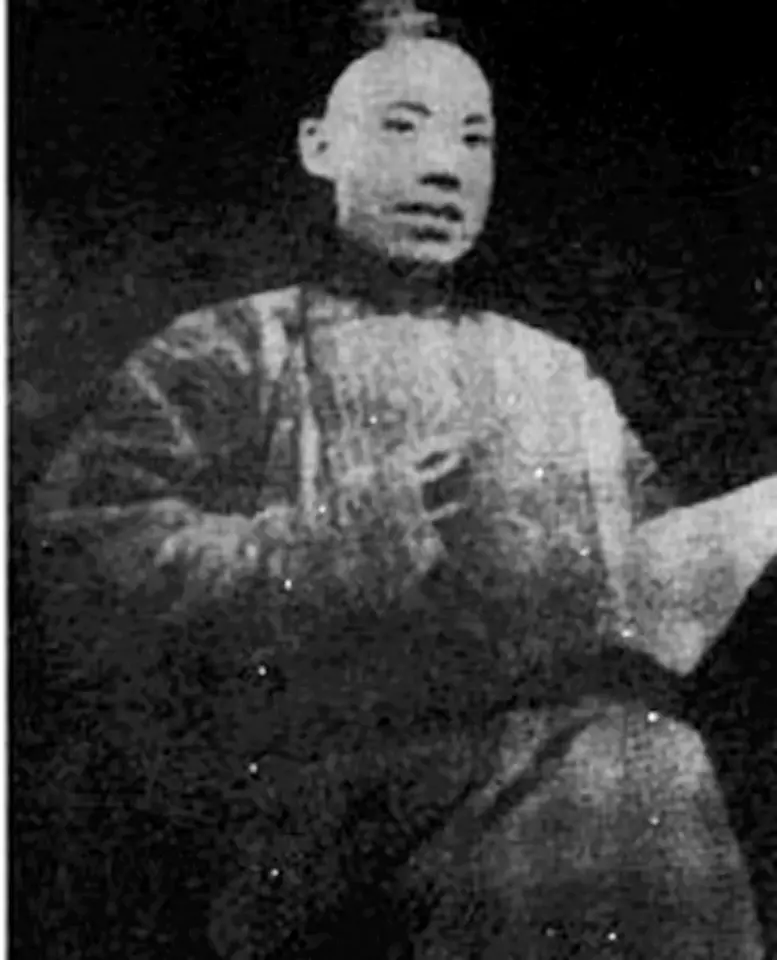
杨深秀
Yang Shenxiu (April 24, 1849 – September 28, 1898), original name Yuxiu, courtesy name Yicun, art name Naonaozi, was a native of Wenxi, Shanxi. He was a prominent late Qing reformist statesman, classicist scholar, and one of the immortal Six Gentlemen of the Hundred Days' Reform. In his youth, he devoted himself to evidential Han learning and the New Text (Jinwen) school of Confucian classics, particularly the *Gongyang…
Yang Shenxiu (April 24, 1849 – September 28, 1898), original name Yuxiu, courtesy name Yicun, art name Naonaozi, was a native of Wenxi, Shanxi. He was a prominent late Qing reformist statesman, classicist scholar, and one of the immortal Six Gentlemen of the Hundred Days' Reform. In his youth, he devoted himself to evidential Han learning and the New Text (Jinwen) school of Confucian classics, particularly the Gongyang Commentary to the Spring and Autumn Annals, while mastering Chinese and Western mathematics, cartography, and astronomy. In 1889, he attained the imperial jinshi degree and served as a Secretary and Director in the Ministry of Justice before being appointed Censor of the Shandong Circuit in late 1897. Driven by a lifelong mission to purify state administration and save China from imperialist partition, Yang threw himself into major administrative and intellectual reforms. During the catastrophic Northern Chinese Famine of 1877–1878, he abandoned imperial examinations to lead countywide relief efforts, saving nearly 140,000 lives. He drafted the Wenxi County Regulations for Equal Reduction of Corvee and Postal Burdens, eradicating abusive clerk surcharges. He modernized gazetteer compilation while editing the Wenxi County Gazetteers, introducing grid-based scientific maps and epigraphical treatises, and lectured at Chongxiu and Lingde Hall academies while co-authoring the Shanxi Provincial Gazetteer. During the Hundred Days' Reform in 1898, he co-founded the Guanxue Association, joined the Baoguo Association, and submitted landmark memorials urging Emperor Guangxu to define national reform policy, abolish eight-legged essays, send royal princes and students to Japan, and establish imperial translation bureaus. Following the Empress Dowager Cixi's coup d'état, he refused to flee and boldly demanded Cixi restore power to Guangxu, leading to his arrest and heroic execution at Caishikou at the age of forty-nine.
Born on the second day of the fourth month in Yizhang Village, Wenxi County, Jiangzhou, Shanxi.
Passed county examinations at age twelve, becoming an apprentice licentiate (fusheng) in Wenxi County School.
Passed the Shanxi provincial examination, obtaining the juren degree as the third-ranked candidate (jingkui).
Journeyed to Beijing for the metropolitan examination; though unplaced, remained in the capital to study Jinwen classical learning and mathematics.
Hurried home during the Dingwu Famine, abandoning examinations to coordinate countywide grain distribution that saved nearly 140,000 people.
Headed the revision of the Wenxi County Gazetteers, introducing grid cartography, epigraphical sections, and astronomical calculations.
Implemented corvee reduction regulations; invited by education commissioner Wang Renkan to head Taiyuan Chongxiu Academy and join the Provincial Gazetteer Bureau.
Advocated the complete abolition of abusive examination fees on newly enrolled students, inscribing the decree on stone at Wenxi Confucian Temple; became lecturer at Lingde Hall Academy.
Concluded editorial duties for the Shanxi Provincial Gazetteer and returned to Beijing to resume duties at the Ministry of Justice.
Passed the metropolitan and palace examinations, earning the jinshi degree and receiving appointment as Secretary in the Ministry of Justice, later rising to Department Director.
Appointed Censor of the Shandong Circuit in the twelfth month, dedicating his office to structural state reform and administrative probity.
Co-founded the Guanxue Association, petitioned for comprehensive institutional reforms, protested Cixi's coup, and was executed at Caishikou on September 28.
Yang Shenxiu was born on April 24, 1849, into an established agrarian and scholarly family in Yizhang Village, Wenxi County, Shanxi Province. Gifted with extraordinary memory and intellectual sharpness, he demonstrated an early appetite for historical texts and classical philosophy. In 1860, at the tender age of twelve, he passed the preliminary examinations and was admitted as an apprentice licentiate in the Wenxi County Confucian School, earning widespread renown across southern Shanxi.
In 1869, at twenty-one, Yang traveled to the provincial capital of Taiyuan to sit for the provincial civil service examination, passing as the third-ranked juren provincial graduate. Two years later, in 1871, he journeyed to Beijing to compete in the metropolitan examination. Although he did not place, he chose to remain in the imperial capital rather than chase immediate bureaucratic posts. He engaged renowned masters, immersing himself in evidential philology before shifting towards the New Text (Jinwen) classical school.
Yang became particularly captivated by the Gongyang Commentary to the Spring and Autumn Annals, embracing its doctrines of institutional evolution, institutional adaptation according to historical eras, and public service. Unlike many traditional scholars who disdained practical disciplines, Yang studied Chinese and Western mathematics, astronomical computation, and cartography. This dual mastery of classical statecraft and empirical science provided the intellectual underpinning for his future reform activism.
Between 1877 and 1878, Northern China suffered the catastrophic Dingwu Famine, in which unprecedented drought struck Shanxi, Henan, Shaanxi, Zhili, and Shandong provinces. Shanxi was the hardest hit due to its rugged mountainous terrain and disrupted transport routes. Shanxi Governor Zeng Guoquan reported that thousands of square miles had turned desolate, with five to six million starving people across the province.
Living in Beijing, Yang Shenxiu was devastated by reports of starvation and death in his homeland. In the spring of 1878, he renounced preparation for the imperial examinations, requested official leave, and rushed home to Wenxi. County Magistrate Chen Zuozhe warmly welcomed Yang, whose sterling moral reputation and bureaucratic standing made him an indispensable leader among local officials and gentry.
Yang worked tirelessly alongside Magistrate Chen, establishing rigorous registers to prevent corrupt clerks and local magnates from embezzling relief silver and grain. Over two agonizing years, Yang mobilized gentry donations totaling 21,900 taels of silver and oversaw twenty-three public distributions of food and funds. As recorded in the county gazetteer, relief was distributed to over 41,500 destitute villagers, successfully saving 15,810 households totaling 138,730 people from starvation.
Once the immediate famine subsided, Wenxi's surviving populace remained crushed under heavy postal courier service levies and arbitrary extractions imposed by sub-bureaucratic runners. Recognizing that peasant recovery required permanent structural relief, Yang partnered with local gentry members Pan Mengfeng and Li Runzhi to petition the county magistrate for an overhaul of the fiscal apparatus.
Drawing upon provincial rehabilitation guidelines, Yang drafted the Wenxi County Regulations for Equal Reduction of Corvee and Postal Burdens, comprising more than thirty rigorous clauses. The regulations capped all corvee charges at a fixed rate of two hundred copper cash per tael of silver land tax and transferred all collection and disbursement authority to publicly elected gentry managers. Implemented in autumn 1880, the reform coincided with a bumper harvest of wheat and autumn millet, dramatically reducing infant mortality and attracting displaced families back to their farms.
In 1879, Governor Zeng Guoquan ordered all Shanxi counties to compile updated local gazetteers. Magistrate Chen appointed Yang Shenxiu as chief editor of the Wenxi County Gazetteers. Over six months of intensive labor, Yang authored twelve comprehensive volumes, introducing three innovative organizational categories: Critical Deliberations (Zhizhen), Supplementary Compilations (Zhibu), and Biographical Continuations (Zhixu).
Yang brought empirical scientific rigor to local gazetteer production. In Zhibu, he created an Epigraphical Survey that authenticated ancient bronze and stone inscriptions against transmission histories, and an Astronomical Survey that replaced mythological celestial astrology with accurate astronomical coordinates and seasonal calculations. Furthermore, he abolished picturesque landscape drawings in favor of four quadrant maps drawn with compass bearings and a ten-li grid system, setting a pioneering standard for modern cartography in northern China.
In 1880, Shanxi Provincial Education Commissioner Wang Renkan invited Yang Shenxiu to Taiyuan to serve as Director of Chongxiu Academy. Founded in 1865, the academy assembled exceptional students from across the province. Yang introduced a dynamic curriculum that discouraged rote memorization and encouraged critical inquiry into political economy and administrative history.
When the reformist statesman Zhang Zidong assumed the governorship of Shanxi in 1882, Yang seized the opportunity to eliminate another deeply rooted abuse: the "tribunal fee" (gongtangli). This informal levy coerced newly passed county licentiates into funding examination stall repairs and paying gifts to clerical staff, driving many impoverished scholars into bankruptcy. Yang organized a formal petition to Magistrate Zhu Guangshou, securing provincial approval to permanently ban the levy. Hedong Circuit Intendant Jiang Renjing ordered the decree carved in stone, and Yang penned the commemorative essay Record on Using Public Silver to Replace the Tribunal Fee of Newly Admitted Licentiates, immortalizing the maxim that government exists solely to benefit the people.
In 1883, Zhang Zidong founded Lingde Hall Academy in Taiyuan, appointing Wang Xuan as headmaster and Yang Shenxiu, Yang Du, and Zhang Tiesheng as associate lecturers. Teaching the Classic of History through the lens of Gongyang statecraft, Yang captivated students with his penetrating political analyses, mentoring future luminaries such as Liu Fenxi and Liu Youfeng.
Simultaneously, Yang served in the Shanxi Provincial Gazetteer Bureau, where he was entrusted with authoring two of the most technically demanding sections of the Shanxi Provincial Gazetteer: the two-volume Astronomical Tables and the eight-volume Antiquities Survey in Volume 50. Yang synthesized modern astronomical surveys and verified historical capitals, mountain passes, and royal mausoleums from high antiquity through the Qing period, producing an authoritative masterwork praised across the empire.
In the winter of 1886, having completed his editorial assignments in Shanxi, Yang returned to Beijing to resume his post in the Ministry of Justice. In the spring of 1889, he competed in the metropolitan and palace examinations, passing with the jinshi degree and receiving appointment as Secretary in the Ministry of Justice, subsequently rising to Department Director.
During his years in the Ministry of Justice, Yang handled capital judicial appeals and revised criminal statutes with rigorous fairness. The crushing defeat of the Qing Empire in the First Sino-Japanese War of 1894–1895 and the humiliating Treaty of Shimonoseki shook Yang profoundly. Watching foreign powers scramble for concessions and naval bases, he realized that incremental fiscal adjustments were futile without fundamental structural renovation of the imperial state.
In December 1897, recognized for his profound scholarship and unbending integrity, Yang was appointed Censor of the Shandong Circuit. Entering the Censorate granted him direct access to the imperial throne. Embracing the ancestral duty to inspect and purify imperial governance, Yang resolved to wield his memorializing power to champion radical reform and awaken the sovereign.
In early 1898, Yang moved to the forefront of the burgeoning reform movement. In the first month of 1898, when Imperial Russia forcibly occupied Port Arthur and Dalian Bay, throwing the court into panic, Yang submitted a visionary memorial urging an alliance with Great Britain and Japan to establish an international balance of power against Russian expansionism. The court was stunned that a classical scholar possessed such acute understanding of global geopolitical dynamics.
In March 1898, Yang joined Censor Song Bolu in Beijing to found the Guanxue Association, rallying northern and northwestern scholars around practical statecraft. In April, he enrolled in Kang Youwei's Baoguo Association, aligning closely with leading reformist thinkers. On June 1, 1898 (the thirteenth day of the fourth month), Yang submitted his landmark Five Memorials on New Governance, urging Emperor Guangxu to issue a clear national policy declaration for institutional reform, which directly precipitated the Emperor's famous decree defining state policy ten days later.
Throughout the hundred-day period, Yang proved to be the most active and courageous censor. He demanded the immediate abolition of eight-legged examination essays and their replacement with modern statecraft essays on Chinese and Western political institutions. He proposed sending imperial clan princes abroad to inspect Japan's constitutional model, establishing translation bureaus for Western scientific and legal works, and conducting daily imperial audiences to interview capital officials and dismiss incompetent conservatives.
Yang clashed fiercely with reactionary ministers who sought to sabotage the reforms. When Minister of Rites Xu Yingkui suppressed reform memorials, Yang impeached him three times for obstructionism and treasonous negligence. When conservative gentry launched coordinated attacks against Hunan Governor Chen Baozhen for implementing regional industrial and educational modernizations, Yang vigorously defended Chen before the throne, safeguarding the Hunan reform experiment. When warned of danger by reactionary colleague Wen Ti, Yang defiantly responded that if imperial princes dared revolt, he would write the proclamation against them as Luo Binwang had against Empress Wu.
On September 21, 1898 (the sixth day of the eighth month), Empress Dowager Cixi staged a military coup d'état backed by Ronglu and conservative generals. Emperor Guangxu was confined in the Yingtai Pavilion, and arrest warrants were issued for leading reformers. While others urged Yang to disguise himself and flee to the foreign concessions, he refused to abandon his post, maintaining that as an imperial censor, he owed allegiance to the captive monarch and the realm.
On the following day, despite the reign of terror gripping Beijing, Yang drafted a final, uncompromising memorial to the throne. He demanded an explanation for Emperor Guangxu's detention and urged Cixi to immediately return governing authority to the emperor. On September 24, imperial guards surrounded his residence and took him into custody.
In the Ministry of Justice dungeons, Yang met his interrogators with absolute composure, refusing to renounce his reformist convictions. On September 28, 1898 (the thirteenth day of the eighth month), Yang Shenxiu was taken to the Caishikou execution ground outside the Xuanwu Gate alongside Tan Sitong, Yang Rui, Lin Xu, Liu Guangdi, and Kang Guangren. Standing tall before the executioner, Yang faced death with dignified tranquility at the age of forty-nine. His martyrdom sealed his reputation as one of the Six Gentlemen of 1898, whose sacrifice inspired generations of Chinese patriots in their struggle for national salvation.
The Dingwu Famine was one of the deadliest humanitarian disasters in modern Chinese history. Recognizing that starvation was aggravated by official corruption and administrative paralysis, Yang Shenxiu returned to Wenxi in 1878 to oversee emergency grain relief. He collaborated with Magistrate Chen Zuozhe to conduct direct village surveys, compiling household registers that eliminated fictitious entries and middleman extortion.
Over two rigorous years, Yang coordinated twenty-three separate distributions of silver and grain, distributing 21,900 taels of relief funds to over 41,500 registered famine victims. His methodical oversight preserved 15,810 households and saved nearly 140,000 lives across Wenxi County, earning him the enduring gratitude of generations of Shanxi families.
Following the famine, Wenxi was burdened by excessive courier service levies that threatened rural reconstruction. Yang organized local gentry and authored the Wenxi County Regulations for Equal Reduction of Corvee and Postal Burdens, comprising more than thirty articles. The regulations abolished all unauthorized fees, instituted a fixed cap of two hundred copper coins per tael of land tax, and transferred fiscal management to trusted village elders.
This fiscal reform permanently curtailed predatory clerical exactions. In the autumn of 1880, agricultural production recovered swiftly, with wheat yields reaching one shi per mu, newborn infant survival rates multiplying, and displaced farmers returning to cultivate abandoned fields, establishing a model for post-disaster fiscal rehabilitation in the late Qing.
Commissioned to update the Wenxi County Gazetteers in 1879, Yang Shenxiu rejected the flowery rhetoric and fabricated legends common in traditional local histories. He divided the work into twelve volumes across three innovative categories: Critical Deliberations, Supplementary Compilations, and Biographical Continuations.
In his Epigraphical Survey, Yang authenticated local stone stelae from the Zhou, Han, and Tang dynasties against standard histories, creating a new genre in local historiography. In his Astronomical Survey, he eliminated astrological omens in favor of scientific latitude and longitude measurements. He also replaced stylized artistic scenes with four precise maps constructed using compass bearings and a ten-li grid system, marking a critical transition toward modern scientific cartography in northern China.
During the Qing Dynasty, newly inducted county school students were subjected to the "tribunal fee" (gongtangli), an unauthorized levy extracted by corrupt clerks for examination stalls and gifts. Yang Shenxiu spearheaded a formal campaign to dismantle this institutionalized extortion in 1882, winning the backing of Magistrate Zhu Guangshou and Governor Zhang Zidong.
After securing imperial approval to eliminate the fees permanently, Yang composed the commemorative text Record on Using Public Silver to Replace the Tribunal Fee of Newly Admitted Licentiates, which was inscribed on a stone stele at the Wenxi Confucian Temple. His declaration that government exists solely to benefit the people revitalized academic morale and protected impoverished scholars throughout the region.
Invited to serve as an associate lecturer at the newly established Lingde Hall Academy in 1884, Yang Shenxiu helped transform Shanxi's premier academy into an incubator for progressive statecraft. Lecturing on the Classic of History, he interpreted ancient texts to address modern problems, encouraging students to master mathematics, physical geography, and institutional history.
Yang challenged students to break free from the constraints of eight-legged essays, cultivating reformist scholars such as Liu Fenxi, who became a famously honest civil servant, and Liu Youfeng, who authored the celebrated Jinci Gazetteer. His pedagogy created a vibrant intellectual network across Shanxi that supported modern political reform.
Between 1880 and 1886, Yang served in the Shanxi Provincial Gazetteer Bureau alongside Chief Editor Wang Xuan, taking responsibility for the two-volume Astronomical Tables and the eight-volume Antiquities Survey in Volume 50.
Yang incorporated Western astronomical data to chart the celestial coordinates of every prefecture and county in Shanxi, eliminating centuries of astrological superstition. In his antiquities survey, he critically assessed archaeological sites, ancient city walls, and monumental inscriptions across millennia of Shanxi history. His chapters, paired with Wang Xuan's administrative history, formed the intellectual cornerstone of the entire provincial gazetteer.
Upon entering the Censorate in 1897, Yang became an outspoken advocate for systemic institutional transformation. In his famous Five Memorials on New Governance submitted on June 1, 1898, he urged Emperor Guangxu to define national reform policy and proclaim China's commitment to modernization before the world.
Yang led the assault on the eight-legged essay, arguing that it paralyzed the intellectual vitality of the nation and produced officials incapable of confronting modern challenges. His proposals to replace formal essays with policy treatises on contemporary domestic and international statecraft were formally enacted by imperial decree during the Hundred Days' Reform.
Following Imperial Russia's seizure of Port Arthur and Dalian in early 1898, Yang Shenxiu broke with traditional isolationist dogmas by advocating a strategic alliance with Great Britain and Japan. He argued that China must leverage international power balances to check Russian territorial encroachment in Manchuria.
Recognizing the need for institutional learning, Yang petitioned the throne to formulate study-abroad regulations and send imperial princes and bannermen to Japan to observe constitutional monarchy and industrialization firsthand. He also proposed establishing an imperial translation bureau to translate Western legal, political, and scientific literature into Chinese, laying the groundwork for modern cross-cultural intellectual exchange.
During the Hundred Days' Reform, Yang utilized his censorate powers to safeguard the reform movement against reactionary sabotage. When Grand Minister Xu Yingkui deliberately suppressed reform memorials, Yang submitted three consecutive impeachments accusing him of treasonous obstructionism, compelling the Emperor to publicly rebuke the conservative faction.
Simultaneously, when conservative gentry launched vicious political attacks against Hunan Governor Chen Baozhen, who had made Hunan a model of regional reform, Yang submitted an impassioned defense to the throne. He detailed Chen's successes in establishing schools, constructing telegraph lines, and organizing local police, shielding China's foremost reformist governor from impeachment.
When the Empress Dowager Cixi launched her reactionary coup d'état on September 21, 1898, Yang Shenxiu refused to flee Beijing. Believing that a censor's duty required him to defend the legitimate sovereign and the cause of reform, he drafted a daring petition demanding Guangxu's restoration and Cixi's retirement from politics.
Arrested on September 24 and executed at Caishikou on September 28, Yang walked to his death with serene courage. His willingness to sacrifice his life for national modernization cemented his place in Chinese history as one of the Six Gentlemen of 1898, inspiring generations of modern Chinese revolutionaries and reformers.
FIGURES ASSOCIATED WITH THIS DYNASTY