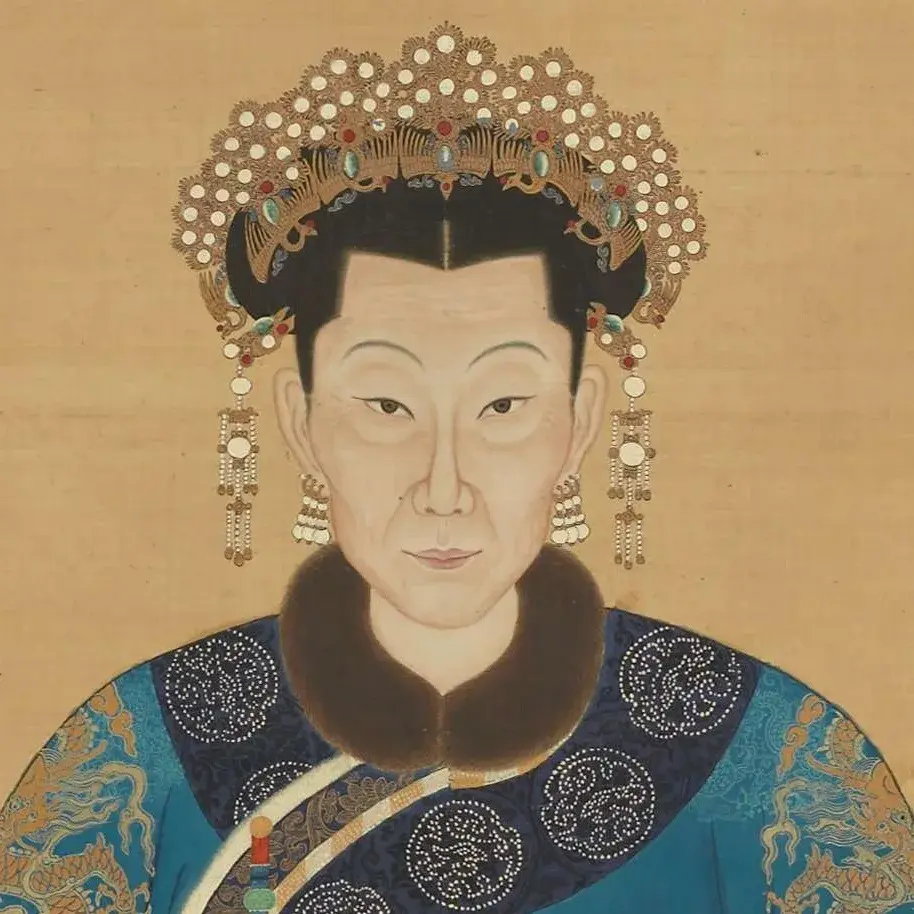
Life and Career
From Deshou Palace to the Eastern Palace
Noble Consort Huang was born in Lin'an during the reigns of Emperors Gaozong and Xiaozong of the Southern Song Dynasty. Her given name and precise clan origins are not preserved in official dynastic annals. According to the Song History and contemporary Song Dynasty miscellaneous memoirs, she initially entered the inner court as a serving lady in Deshou Palace, the retirement residence of Emperor Xiaozong. Possessing natural dignity, refined demeanor, and an obedient, mild temperament, Lady Huang was exceptionally cautious and never engaged in court intrigue, earning high regard among palace attendants. Delighted by her virtuous character, Emperor Xiaozong granted her the title Lady of Heyi Commandery.
During the Chunxi era, the third imperial son, Zhao Dun, Prince of Gong, was designated Crown Prince. His principal wife, Crown Princess Li Fengniang (daughter of Military Commissioner Li Dao), harbored an immensely arrogant, domineering, and jealous nature, having been emboldened by a physiognomer's early prediction that she was destined to become the mother of the realm. Within the Eastern Palace, Li Fengniang routinely subjected palace maids and attendants to severe floggings. Under her oppressive control, none of the court ladies dared attend to Prince Zhao Dun, leaving the prince in an atmosphere of intense psychological terror and isolation. Observing that the Crown Prince was deeply depressed and that his lineage remained frail, Emperor Xiaozong grew gravely concerned. To provide emotional comfort and ensure imperial progeny, Emperor Xiaozong issued a special decree around 1186, bestowing the gentle Lady of Heyi Commandery upon Prince Zhao Dun as a secondary consort.
Favor and Enfeoffment as Noble Consort
Lady Huang's arrival brought profound solace to Zhao Dun's constrained and melancholic existence. In sharp contrast to the harsh, abusive, and overbearing Crown Princess Li, Lady Huang displayed gentle consideration, graceful manners, and deep empathy for Zhao Dun's suffering. In her company, Zhao Dun found warmth, emotional security, and genuine intimacy, developing an intense and exclusive attachment to her.
In February 1189 (the sixteenth year of Chunxi), Emperor Xiaozong abdicated the throne, and Crown Prince Zhao Dun ascended as Emperor Guangzong. Li Fengniang was duly invested as Empress. Shortly after his accession, Emperor Guangzong promulgated an imperial edict elevating Lady Huang from Lady of Heyi Commandery directly to the preeminent status of Noble Consort, placing her at the head of all imperial concubines.
On May 7, 1190 (the second day of the fourth month of Shaoxi 1), in recognition of her steadfast companionship through years of hardship in the Eastern Palace, Emperor Guangzong bestowed exceptional honors upon her family. He conferred upon her mother, Lady Yang, the title Lady of Xin'an Commandery and subsequently granted the prestigious posthumous title Lady of Chengguo. For a secondary consort's maternal lineage to receive such lofty ranks was an extraordinary privilege under Song ceremonial statutes, reflecting Guangzong's supreme devotion to Lady Huang.
Suburb Sacrificial Vigil and Inner Palace Murder
However, the supreme favor bestowed upon Noble Consort Huang ignited the uncontrollable fury of Empress Li Fengniang. Having ascended to the pinnacle of imperial womanhood, Li's tyrannical behavior expanded unchecked. She terrorized the inner palaces, forbade the emperor from visiting other concubines, and viewed Noble Consort Huang as an intolerable obstacle that had to be eliminated.
In late autumn of 1191 (the second year of Shaoxi), news circulated within the palace that Noble Consort Huang had become pregnant. Fearing that the birth of another imperial prince would threaten the political standing of her own son, Crown Prince Zhao Kuo, Empress Li resolved to commit murder.
On December 14, 1191 (Shaoxi 2, eleventh month, xinwei day), the court prepared for the triennial suburban winter solstice sacrifice to Heaven. In accordance with ancestral dynastic rituals, Emperor Guangzong was required to leave the imperial palace on the eve of the winter solstice to reside in the Southern Suburb fasting palace, observing strict ritual purity and remaining isolated from the inner court.
Empress Li immediately exploited this vulnerable window. On the very afternoon Guangzong left the palace, Empress Li dispatched trusted eunuchs and ruthless palace attendants armed with heavy wooden cudgels into Noble Consort Huang's quarters. Before the frail and helpless consort could cry out or plead for mercy, she was brutally beaten to death under the empress's personal direction. Following the murder, Empress Li ordered her corpse hastily buried in an obscure palace courtyard and dispatched an urgent messenger to the sacrificial fasting palace, falsely claiming that Noble Consort Huang had succumbed to a sudden, fatal disease.
Imperial Madness and the Shaoxi Abdication
At dawn on the following day (December 15), Emperor Guangzong led the solemn sacrificial rites on the Southern Suburb altar. While the sacred ceremony was underway, dark clouds abruptly covered the sky, ferocious winds howled, and violent torrential rain battered the platform. The tens of towering ritual candles and incense burners dedicated to Heaven and Earth were instantly extinguished by the tempest. The ceremonial canopies collapsed, plunging the sacred precinct into pitch darkness and freezing chaos, forcing the abandonment of the imperial rites.
Still reeling from the terrifying omens of the failed ceremony, Guangzong returned to the imperial palace only to be confronted with the devastating news of his beloved consort's sudden death. Knowing that Huang had been in good health upon his departure, Guangzong aggressively interrogated palace eunuchs. When trembling servants revealed the horrifying truth that Noble Consort Huang had been savagely bludgeoned to death on the orders of Empress Li, the emperor suffered a complete psychological collapse.
The combined trauma of religious terror, the horrific murder of his beloved companion, and the realization that his violent wife was an unrepentant murderer utterly shattered Guangzong's fragile mind. He collapsed into convulsions, foaming at the mouth, and fell into irreversible psychiatric delirium and severe paranoia. The dynastic annals note that he was gripped by incurable madness. Guangzong lived in perpetual terror of Empress Li, losing all capacity for sovereign governance and ceding executive dominance to her faction.
Furthermore, Empress Li exploited Guangzong's madness to sever ties between the emperor and his retired father, Emperor Xiaozong, falsely alleging that Xiaozong plotted to depose him. The incapacitated Guangzong refused to pay filial respects at the Chonghua Palace for years. This failure of filial duty outraged the Confucian scholar-officials across the empire. When Emperor Xiaozong passed away in 1194, Guangzong was too paralyzed by fear and insanity to preside over the imperial funeral.
In July 1194 (the fifth year of Shaoxi), Grand Councilor Zhao Ruyu, Han Tuozhou, and Grand Empress Dowager Wu orchestrated the Shaoxi Internal Abdication, forcing Guangzong to surrender the throne and crowning Crown Prince Zhao Kuo as Emperor Ningzong. The violent death of a single palace consort had acted as a fateful catalyst, unhinging an emperor's mind and precipitating one of the most consequential dynastic crises of the Southern Song.