Life and Career
Early Rebellion and Youthful Prominence
Li Dingguo was born in 1621 in Yan'an Prefecture, Shaanxi Province, into an impoverished peasant family. During this period, northern Shaanxi suffered from consecutive years of devastating droughts and famines, coupled with exorbitant tax levies that left the populace destitute. In 1630, when large-scale peasant uprisings swept across Shaanxi, the ten-year-old Li Dingguo joined the insurgent army commanded by Zhang Xianzhong. Amidst relentless and brutal mobile warfare, Li Dingguo demonstrated extraordinary military aptitude, composure, and courage. Highly impressed by his character and bravery, Zhang Xianzhong adopted him as a foster son, gave him the name Zhang Dingguo, and personally oversaw his training.
In the insurgent camps, Li Dingguo applied himself diligently to martial arts, archery, horsemanship, and classical military treatises. In contrast to many contemporary rebel fighters, he was composed, modest, and strictly disciplined, refusing to plunder civilian communities. As the Daxi Army campaigned across Shaanxi, Shanxi, Henan, Hubei, and Sichuan, Li Dingguo frequently commanded the vanguard. His peerless personal valor and commanding presence on the battlefield earned him the widespread moniker "Little Yuchi" after the famous Tang general Yuchi Jingde, as well as the praise of being "A Match for Ten Thousand Men".
In February 1641, the Daxi Army was maneuvering in the middle Yangtze valley. Ming Supreme Commander Yang Sichang had stored vast quantities of silver bullion, war horses, weapons, and grain provisions within the fortified strategic hub of Xiangyang. Li Dingguo devised a bold infiltration plan. Leading twenty handpicked horsemen disguised as official imperial couriers carrying captured government tallies, Li Dingguo galloped directly to the city gates of Xiangyang under the cover of night. Once the garrison opened the gates, Li Dingguo and his men drew their sabers, cut down the guards, took control of the drawbridge, and set fires on the battlements. Zhang Xianzhong's main army rushed inside, captured Prince of Xiang Zhu Yiming, and seized the immense imperial stores, shaking the entire Ming administration.
In August 1644, Zhang Xianzhong took Chengdu and proclaimed the founding of the Daxi regime. As one of the core leaders, Li Dingguo was invested as General of Pacifying the West. He was assigned to pacify various prefectures across Sichuan and build civil administrations. In his jurisdictions, Li Dingguo prohibited extortion, protected farmland, and welcomed displaced refugees. In November 1646, Qing Prince Hooge led an elite Manchu force across the Qinling Mountains into northern Sichuan. In a surprise assault at Fenghuang Mountain in Xichong, Zhang Xianzhong was struck by an arrow and killed. In this supreme crisis, Li Dingguo, Sun Kewang, Liu Wenxiu, and Ai Nengqi gathered the scattered divisions at Shunqing, defeated Ming loyalist Zeng Ying, and secured a safe retreat to Qijiang south of Chongqing.
March into Yunnan and Securing the Base
At Qijiang and Zunyi, the four generals convened critical councils to decide their future direction. Sun Kewang proposed fleeing toward the coastal regions of Guangdong, where they could escape overseas if necessary. Li Dingguo firmly objected. He argued that the Qing invasion represented an existential threat to Chinese civilization and dress, and that with national survival at stake, the Daxi Army must set aside past hostilities with the Ming dynasty and adopt a policy of "Allying with Ming to Resist the Qing". His strategic vision was endorsed by Liu Wenxiu and Ai Nengqi, cementing the Daxi Army's historic transition into an anti-Qing resistance force.
In early 1647, the Daxi Army marched into Guizhou. Li Dingguo and his fellow commanders captured Guiyang, Dingfan, and Yongning, causing the Qing-leaning local administrators to flee or submit. Simultaneously, a violent tribal rebellion broke out in Yunnan led by Sha Dingzhou, an indigenous chieftain of Ami Prefecture, who plundered Kunming and forced the Ming Duke of Qianguo Mu Tianbo to flee to Chuxiong. Ming loyalist officials Yang Weizhi and Long Zaitian reached out to the Daxi Army for military intervention.
Seizing this critical opportunity, the Daxi Army advanced rapidly from Qujing to Kunming. Intimidated by the speed of their advance, Sha Dingzhou abandoned Kunming and fled southward. Li Dingguo entered the provincial capital without harming a single civilian. To eradicate the rebel faction, Li Dingguo and Liu Wenxiu mounted a coordinated campaign in southern Yunnan. In May 1647, General Ai Nengqi fell in an ambush in Dongchuan. Deeply grieved, Li Dingguo accelerated the offensive, stormed the mountain redoubts of Shazhai in August, captured Sha Dingzhou, and restored complete peace to Yunnan.
Following the pacification of Yunnan, Li Dingguo focused on rehabilitating the regional economy. He enforced strict military discipline, reduced tax burdens, and assisted displaced ethnic minority populations in returning to agriculture. Additionally, he formed and trained a specialized "War Elephant Corps" using local southwestern elephants, expanding his army into a formidable force of tens of thousands of disciplined troops. In 1650, through the diplomatic facilitation of Yang Weizhi, the Daxi Army formally recognized the Yongli Emperor Zhu Youlang. Li Dingguo was invested as Prince of Xining, marking the formal integration of the Daxi veteran army into the Southern Ming dynastic order.
Northern Expedition and Felling Two Princes
In May 1652, Li Dingguo was appointed field commander to launch a massive counteroffensive from Guizhou into Hunan and Guangxi with eighty thousand troops. The Qing commander holding Guangxi was the turncoat Ming general Kong Youde, titled Prince of Dingnan. Li Dingguo employed agile tactical maneuvers, taking Jingzhou and Yuanzhou, sweeping through western Hunan, and rapidly descending into northern Guangxi to capture Quanzhou and Xing'an, directly threatening Guilin's northern barrier, Yan Pass.
Yan Pass was a formidable defile bordered by vertical cliffs, heavily garrisoned by Kong Youde with artillery and elite cavalry. Li Dingguo conducted personal reconnaissance and devised a combined flanking and frontal assault. He sent hundreds of agile commandos with ropes to scale the steep precipices at night and position themselves behind Qing lines. At dawn, Li Dingguo launched the frontal assault, spearheading the charge with his armored War Elephant Corps. Terrified by the trumpeting giant beasts, the Qing warhorses panicked and threw the cavalry ranks into utter chaos. The cliff-top commandos simultaneously struck from the rear. The Qing forces suffered thousands of casualties, and Kong Youde barely escaped back into Guilin.
Li Dingguo immediately besieged Guilin, deploying siege towers and artillery bombardment. In July, Ming forces breached the eastern walls. Realizing his situation was hopeless, Kong Youde killed his concubine with his own hands and set fire to his palace, perishing in the flames. His son Kong Tingxun was captured and subsequently executed. Li Dingguo annihilated the primary Qing army in Guangxi, recaptured Liuzhou, Nanning, and Wuzhou, and achieved the full liberation of Guangxi Province.
Following the triumph at Guilin, Li Dingguo swept northward into Hunan, capturing Yongzhou and Hengzhou. The Qing imperial court was plunged into profound alarm. The Shunzhi Emperor appointed Prince of Jingjin Nikan, an experienced grandson of Nurhaci, as Grand Marshal of the Expedition to march south with over one hundred thousand elite Eight Banners troops. Arrogant and aggressive, Nikan boasted that he would crush the Southern Ming forces beside Dongting Lake.
In November 1652, Nikan approached Hengzhou. Knowing Nikan's reckless confidence, Li Dingguo prepared an elaborate ambush at Yanwuting north of the city. He led the vanguard personally, engaged Nikan briefly, and executed a feigned retreat into a wooded mountain gorge. Convinced that the Ming troops were fleeing, Nikan spurred his elite cavalry into the ravine, far ahead of his supporting infantry. Once the Eight Banners cavalry was trapped inside, Li Dingguo fired signal rockets, triggering ambushes from all surrounding ridges. Li Dingguo charged forward on horseback and personally cut down Prince Nikan amidst the raging melee. With their supreme commander slain, the Qing cavalry collapsed in stampede, suffering catastrophic casualties.
Within half a year, Li Dingguo had driven Kong Youde to suicide and slain Prince Nikan on the battlefield, an epic feat celebrated as "felling two renowned princes and recovering three thousand li of territory". In Beijing, the Shunzhi Emperor wept bitterly and convened court conferences to debate yielding the seven southwestern provinces to the Southern Ming. Renowned philosopher Huang Zongxi famously wrote in his chronicles: "Where imperial armies failed for years, Li Dingguo recovered Hunan in a single battle and felled a great prince in the next, causing the entire world to change color in awe!"
Campaign in Guangdong and Siege of Xinhui
Just as the path to central China appeared open, internal betrayal crippled the campaign. Sun Kewang, residing in Guiyang, grew intensely jealous of Li Dingguo's magnificent victories and unshakeable popularity. Viewing Li Dingguo as a threat to his supreme authority, Sun Kewang laid plans to seize his army. To preserve the anti-Qing cause and avoid civil strife, Li Dingguo made concessions, marching southward toward Nanning and Lianzhou to open a new theater in Guangdong.
Between 1653 and 1654, Li Dingguo campaigned in the Liangguang region. He sent envoys to Fujian to coordinate with Zheng Chenggong, proposing a synchronized amphibious convergence against Guangzhou to crush the Qing armies of Shang Kexi and Geng Jimao. Leading his land forces, Li Dingguo captured Lianzhou, Leizhou, Gaozhou, Zhaoqing, and Luoding, igniting widespread anti-Qing uprisings across western Guangdong.
In September 1654, Li Dingguo laid siege to Xinhui, the vital southwestern gateway to Guangzhou. Combining forces with local Ming generals Wang Xing and Chen Qice, his army numbered nearly two hundred thousand on paper. However, inside Xinhui, Qing commanders Zhang Yue and Fan Mengming mounted a desperate resistance. Li Dingguo's troops dug trenches and breached sections of the city walls, but the defenders fought fiercely to hold the gaps.
Critically, Zheng Chenggong's fleet failed to arrive on schedule at the Pearl River estuary due to logistical and strategic delays. Inside Xinhui, as food supplies vanished, the Qing garrison committed horrific atrocities, slaughtering tens of thousands of trapped civilians for rations. Meanwhile, pestilence and food shortages struck Li Dingguo's encampments. In December 1654, Shang Kexi and Geng Jimao led massive relief forces downriver from Guangzhou, subjecting the Ming forces to heavy artillery fire. Weakened by disease and casualties, Li Dingguo was forced to lift the siege and withdraw to Nanning, leaving his vision of taking Guangdong unfulfilled.
Quelling Internal Strife and Investiture as Prince of Jin
In 1656, severe political crises erupted within the Southern Ming court. The Yongli Emperor was held under virtual house arrest by Sun Kewang at Anlong in Guizhou. Sun Kewang had previously executed Grand Secretary Wu Zhenyu and seventeen other loyal ministers in the infamous "Eighteen Gentlemen Incident", openly aiming to usurp the throne. Desperate for salvation, the Yongli Emperor dispatched trusted emissaries with a secret decree written in blood to Li Dingguo, pleading for military rescue.
Deeply moved by the emperor's plight, Li Dingguo immediately led thousands of elite horsemen on a rapid forced march to Anlong. Breaching Sun Kewang's perimeter, he rescued the Yongli Emperor and his family, escorting them safely to Kunming. In gratitude for his unflinching loyalty, the Yongli Emperor formally invested Li Dingguo as Prince of Jin and entrusted him with supreme command over all armed forces throughout the empire.
Enraged by the loss of the monarch, Sun Kewang mobilized one hundred and forty thousand troops from Guizhou in August 1657 to attack Kunming under the pretext of punishing Li Dingguo. Facing an impending civil war, Li Dingguo advanced to Jiaoshui near Zhanyi with thirty thousand troops. Before the battle commenced, Li Dingguo rode to a high knoll, removed his helmet, and wept aloud to Sun Kewang's army: "We are all brothers from the Daxi Army who swore an oath to save our nation. Why must we turn our blades against one another for the benefit of the Tartars?"
Struck by Li Dingguo's magnanimity and moral rectitude, Sun Kewang's generals, including Bai Wenxuan, Ma Bao, and Feng Shuangli, turned their weapons against Sun Kewang, shouting: "The Prince of Jin is a man of virtue; we refuse to slay our own kin!" Sun Kewang's massive host collapsed instantly. Fleeing back to Guiyang, Sun Kewang took the treasonous step of surrendering to the Qing court in late 1657, handing over every tactical map, garrison record, and logistics route of the southwest to the Qing high command.
The Stand at Mopan Mountain and Passing in Mengla
Sun Kewang's defection dealt a fatal blow to the southwestern defense perimeter. In 1658, guided by Sun Kewang's intelligence, the Qing court deployed over two hundred thousand troops under Wu Sangui, Prince Doni, and Li Guohan in a three-pronged invasion. In January 1659, Guiyang and Kunming fell. Escorted by Ma Jixiang, the Yongli Emperor fled westward toward the border with Burma.
In February 1659, Wu Sangui's vanguard pressed toward the eastern banks of the Nu River. To protect the imperial retreat and delay the enemy, Li Dingguo prepared a desperate ambush at Mopan Mountain, a narrow defile in the Gaoligong range east of Tengchong. Dividing his six thousand veteran commandos into three tiers, Li Dingguo planned to trap and annihilate the Qing column once it entered the ravine. However, Lu Guisheng, a corrupt Southern Ming court official, deserted to the Qing camp and exposed the entire ambush plan to Wu Sangui.
Warned of the trap, Wu Sangui halted his column and unleashed heavy artillery into the dense forests. Though their surprise was ruined, Li Dingguo's men refused to surrender. They leaped from the trees and engaged the Eight Banners troops in savage hand-to-hand combat. Li Dingguo personally led the countercharges, cutting down eighteen high-ranking Qing officers, including Lieutenant-General Sarihuda, and driving the Qing vanguard back thirty li. However, having lost two-thirds of his men in the slaughter, Li Dingguo gathered his remaining survivors and retreated toward the frontier.
The Yongli Emperor fled across the border into Burma. Li Dingguo established a jungle redoubt in Mengla and Menggen along the border, mobilizing tribal chieftains and attempting repeatedly to rescue the emperor. In July 1661, a palace coup in Burma resulted in the Zunshu Massacre, where Burmese forces slaughtered the Ming retinue and confined the emperor. In early 1662, Wu Sangui marched into Burma and coerced the Burmese king to surrender the monarch. In April 1662, Wu Sangui strangled the Yongli Emperor with a bowstring in Kunming.
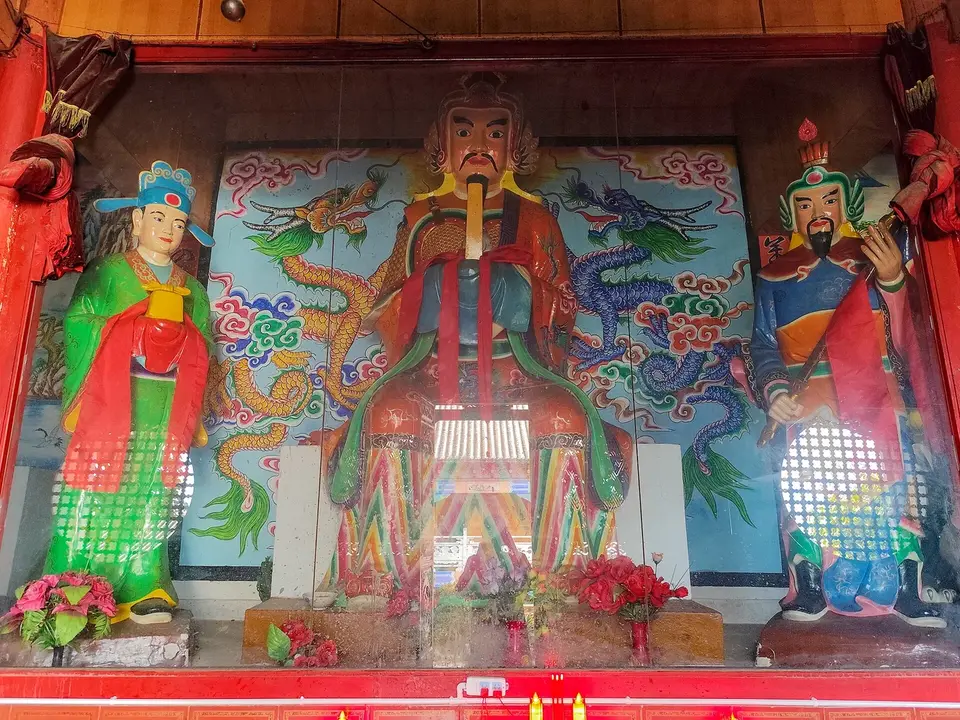
When news of the emperor's murder reached Mengla, Li Dingguo collapsed in tears. Facing northward, he wept until he spat blood, taking to his sickbed and refusing sustenance. On August 11, 1662 (27th day of the 6th month, 1st year of Kangxi), Li Dingguo passed away in his military camp at Mengla at the age of forty-two. On his deathbed, he grasped the hands of his son Li Sixing and his officers, leaving behind his immortal admonition: "Die in the barren frontier rather than surrender!" The ethnic minorities of Yunnan and Guizhou erected shrines to honor his memory, venerating him for centuries as a guardian deity.
Major Achievements
Nocturnal Infiltration of Xiangyang
In February 1641, Ming Supreme Commander Yang Sichang concentrated vast stores of grain, silver, and weapons within the heavily defended fortress of Xiangyang to sustain his counterinsurgency campaign. Operating in the Jingxiang basin, Zhang Xianzhong needed to seize this strategic hub to alter the course of the war. The twenty-year-old Li Dingguo stepped forward to undertake this hazardous assignment. Handpicking twenty daring horsemen fluent in northern dialects, he disguised them as imperial couriers bearing captured official credentials and arrived at Xiangyang's eastern gates under cover of darkness.
Convinced by the authentic tallies, the garrison opened the gates. At Li Dingguo's signal, the twenty riders drew their weapons, cut down the gatekeepers, secured the drawbridge, and set the watchtowers ablaze. Zhang Xianzhong's main strike force charged through the open gate, capturing Prince of Xiang Zhu Yiming and destroying the central Ming logistical depot. Li Dingguo's audacious nocturnal raid demonstrated supreme operational daring and established his reputation as a brilliant young commander.
Championing the Southern Ming Alliance
In the winter of 1646, following Zhang Xianzhong's sudden death in an ambush at Fenghuang Mountain, the surviving Daxi forces faced imminent dissolution. At this supreme crossroads, Li Dingguo demonstrated unmatched political foresight by insisting on an alliance with the Southern Ming. Against arguments favoring flight to maritime havens or continued factional warfare, Li Dingguo argued that the Qing imposition of the shaving order made resistance a shared civilizational duty, requiring the Daxi Army to unite with the Yongli court.
Li Dingguo's advocacy led directly to the Qijiang covenant among the four generals, preserving tens of thousands of seasoned troops and directing their march into Guizhou and Yunnan. Through his persistent efforts, the Daxi Army formally allied with the Yongli Emperor, transforming disparate resistance elements into a coordinated military front that sustained the southwestern anti-Qing resistance for over a decade.
Victory at Yan Pass and Destruction of Kong Youde
In June 1652, Li Dingguo launched his major counteroffensive into Guangxi with eighty thousand troops. Qing Prince of Dingnan Kong Youde held the northern entrance at Yan Pass, relying on steep cliffs, heavy artillery, and entrenched positions. After conducting personal reconnaissance, Li Dingguo devised an assault that combined cliffside scaling with an armored War Elephant Corps. Commandos scaled the vertical cliffs at night to infiltrate the rear, while war elephants charged the frontal defenses.
The sight and sound of the armored elephants terrified the Qing cavalry horses, throwing their lines into disarray, while the cliff-top commandos opened fire from behind. Li Dingguo's troops routed the Qing defenders, inflicting thousands of casualties. Kong Youde fled into Guilin, where Li Dingguo's besieging army breached the walls, driving Kong Youde to commit suicide by fire. The campaign annihilated the primary Qing army in Guangxi and liberated the entire province.
Ambush and Slaying of Prince Nikan at Hengzhou
Following the loss of Guilin, the Qing court dispatched Grand Marshal Prince Nikan with one hundred thousand Eight Banners cavalry to crush Li Dingguo. Exploiting Nikan's known arrogance and impetuousness, Li Dingguo laid an ambush in the wooded valley of Yanwuting north of Hengzhou. Li Dingguo led the vanguard himself, engaged the enemy briefly, and staged a disciplined retreat to draw Nikan's vanguard away from their main infantry.
Once the Eight Banners cavalry was trapped inside the narrow pass, Li Dingguo fired signal guns and closed the defile with barricades and elephant units. In the ferocious close-quarters melee, Li Dingguo charged forward on horseback and personally cut down Prince Nikan. The death of their royal commander provoked a panicked rout among the Qing cavalry. The slaying of a Qing imperial prince in combat stood as an unprecedented triumph in the history of the Ming-Qing wars.
Strategic Impact of Felling Two Princes
Within a single year, Li Dingguo drove Kong Youde to self-immolation and slew Prince Nikan on the battlefield, recovering three thousand li of territory across Hunan and Guangxi. Since the Manchu entry into China proper, the Eight Banners had never suffered the loss of a ruling prince on the battlefield. Li Dingguo's double victory sent shockwaves through the imperial court in Beijing, leading the Shunzhi Emperor to cancel imperial audiences and contemplate ceding southwestern China to the Southern Ming.
This massive offensive shattered the Qing plan for a swift conquest of southern China and re-energized anti-Qing resistance nationwide. Insurgent movements throughout the Yangtze valley and coastal provinces rose in coordination, while Zheng Chenggong expanded his maritime bases. Philosopher Huang Zongxi famously wrote that "the entire world changed color in awe", cementing Li Dingguo's stature as a legendary military strategist.
Resolving Civil Strife through Moral Persuasion
In autumn 1657, Sun Kewang mobilized one hundred and forty thousand troops from Guizhou to attack Kunming, driven by envy of Li Dingguo's renown. Confronted with a catastrophic civil conflict, Li Dingguo demonstrated immense restraint and moral leadership. Arraying thirty thousand troops at Jiaoshui near Zhanyi, he ordered his men to adopt a defensive posture and avoid shedding the blood of former comrades.
Before engagement, Li Dingguo rode to a knoll, removed his helmet, and delivered a tearful appeal reminding the opposing soldiers of their sacred oath to resist the Qing invader together. Moved by his sincerity and integrity, key generals such as Bai Wenxuan and Ma Bao turned their units against Sun Kewang, shouting that they would not harm the virtuous Prince of Jin. Sun Kewang's army disintegrated without a major battle, averting widespread internal slaughter and preserving the resistance army.
The Desperate Defense at Mopan Mountain
In February 1659, facing an overwhelming invasion by Qing forces under Wu Sangui and Prince Doni, Li Dingguo established a three-tiered ambush in the Gaoligong Mountains at Mopan Mountain. His objective was to hold the mountain pass, halt the Qing advance, and secure time for the Yongli Emperor and refugees to retreat. Although a deserter named Lu Guisheng betrayed the ambush, Li Dingguo adapted swiftly, leading his six thousand commandos out of the brush to engage the Qing vanguard in fierce hand-to-hand combat.
During hours of intense close-quarters fighting, Li Dingguo's troops inflicted heavy losses on the Qing, killing eighteen senior commanders, including Lieutenant-General Sarihuda, and forcing the vanguard back thirty li. Although Li Dingguo lost two-thirds of his men, the engagement inflicted such shock on the Qing army that their pursuit was halted for days, standing as one of the most heroic rearguard stands of the era.
Border Administration and Inter-Ethnic Harmony
During his years governing Yunnan and Guizhou, Li Dingguo demonstrated exceptional administrative talent and enlightened governance of ethnic minorities. He abolished abusive feudal extractions, protected the livelihood of Miao, Yi, Dai, and Bai communities, reduced heavy taxation, and respected indigenous customs and religions. He restored irrigation around Lake Dian, brought tens of thousands of mu into cultivation, and established regional schools to promote civilian education.
In his armed forces, Li Dingguo recruited tribal warriors and built a disciplined multi-ethnic army. The local populations viewed Li Dingguo with deep affection and gratitude. Even during his final desperate months in the border jungles, local Dai and Jingpo chieftains shared their meager supplies with his troops, and upon his death, they erected shrines to honor him for generations.
Integration of War Elephants and Infantry Tactics
Li Dingguo displayed notable tactical innovation by integrating war elephants with light infantry and firearms to counter the heavy cavalry of the Eight Banners in the rugged southwestern terrain. He assembled and trained a specialized elephant battalion, fitting the beasts with protective iron plate armor, howdah-mounted crossbows, and musketeers, while attaching heavy chains to their trunks.
During the battles of Yan Pass and Hengzhou, Li Dingguo used these elephant units to shatter the momentum of charging Qing cavalry. As the enemy horses panicked and threw their lines into disorder, Li Dingguo deployed flanking infantry armed with sabers and polearms to encircle and destroy the fragmented units. This tactical doctrine successfully neutralized the cavalry advantages of the Qing Eight Banners in mountainous environments.
Unflinching Loyalty and Deathbed Admonition
Throughout his career, Li Dingguo maintained unwavering loyalty to his nation and cause, placing public duty above personal ambition. From his origins as a peasant rebel fighting Ming oppression to his leadership in uniting with the Southern Ming against foreign conquest, and through his patient handling of Sun Kewang's jealousy, he never wavered in his commitment to national preservation.
Even when the Southern Ming court collapsed and all hope seemed lost, Li Dingguo refused to surrender to the Qing. Upon learning of the Yongli Emperor's execution, he chose death over submission, leaving his famous dying instruction: "Die in the barren frontier rather than surrender!" His unyielding spirit and steadfast patriotism have earned the enduring respect of historians and the Chinese people across centuries.