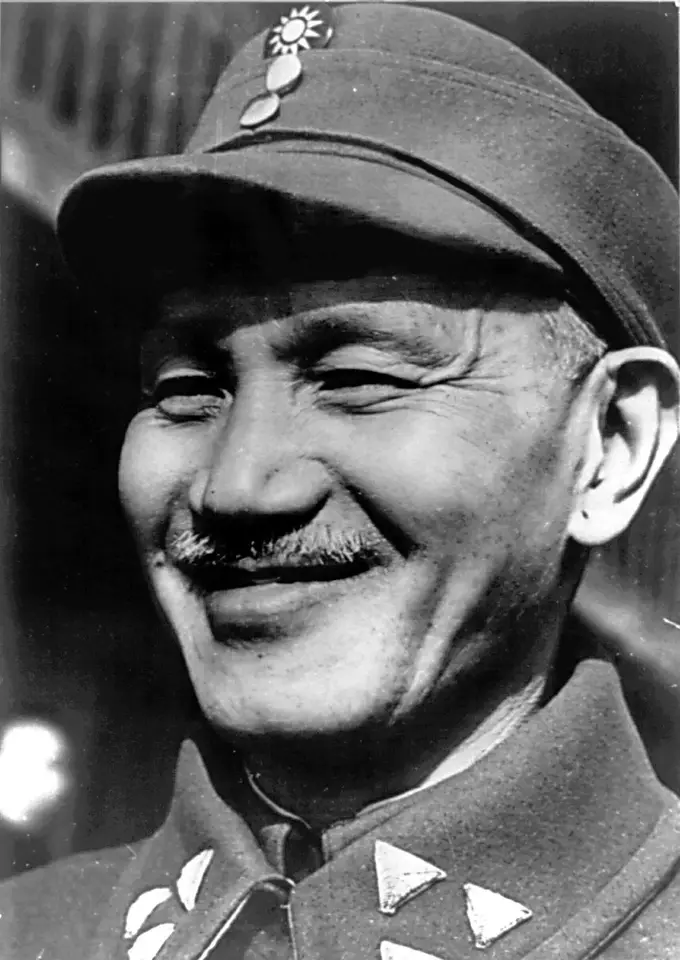
王景弘
Historical photograph of Wang Jinghong
Image creditsUnknown authorUnknown author, presumably U.S. Army personnel · Public domainImage source

Renowned Ming Dynasty maritime navigatordiplomatco-commander of the voyages to the Western Ocean (明代著名航海家、外交家、下西洋主要正使统帅)

Wang Jinghong (王景弘)

王景弘

Wang Jinghong (王景弘, 1369–1437), also known as Wang Guitong (王贵通), was a native of Xiangliao Village in Longyan County, Zhangzhou Prefecture, Fujian Province (present-day Xiangliao Village, Chishui Town, Zhangping City, Longyan, Fujian). He was an illustrious maritime admiral, diplomat, and military commander of the early Ming Dynasty during the Yongle and Xuande reigns, celebrated alongside Zheng He as the co-commander of the…

Ming Dynasty (明朝)

PROFILE

Wang Jinghong (王景弘, 1369–1437), also known as Wang Guitong (王贵通), was a native of Xiangliao Village in Longyan County, Zhangzhou Prefecture, Fujian Province (present-day Xiangliao Village, Chishui Town, Zhangping City, Longyan, Fujian). He was an illustrious maritime admiral, diplomat, and military commander of the early Ming Dynasty during the Yongle and Xuande reigns, celebrated alongside Zheng He as the co-commander of the Ming treasure fleets (collectively known as Zheng He's maritime expeditions). Entering the princely household of Zhu Di (the Prince of Yan) during the Hongwu era, Wang Jinghong distinguished himself in the Jingnan Campaign and earned the deep confidence of the newly enthroned Yongle Emperor. In 1405 (the third year of the Yongle era), Wang and Zheng He were appointed Grand Directors, commanding a massive armada of sixty-two ocean-going treasure galleons and over twenty-seven thousand personnel on their maiden voyage to the Western Ocean. Over the reigns of the Yongle, Hongxi, and Xuande emperors, Wang Jinghong co-commanded multiple overseas expeditions across more than thirty kingdoms in Southeast Asia, the Indian subcontinent, the Persian Gulf, and the East African littoral. Following Zheng He's death at Calicut in 1433 during the seventh expedition, Wang assumed sole supreme command, navigating the fleet safely back to China. In 1434, the Xuande Emperor commissioned Wang to lead an eighth independent overseas expedition to Sumatra. Appointed Grand Defender of Nanjing in his later years, he codified maritime charts into foundational texts including Fu Xiyang Shuicheng. In his honor, Jinghong Island in the Spratly archipelago was named after him.

Alias
Wang Guitong (王贵通)
Dynasty
Ming Dynasty (明朝)
Date of Birth
1369 (Hongwu 2, Ming Taizu)
Date of Death
1437 (Zhengtong 2, Ming Yingzong)
Age at Death
69
Native Place
Xiangliao, Jixian Li, Longyan County, Zhangzhou Prefecture, Fujian (福建漳州府龙岩县, present-day Zhangping City, Longyan, Fujian)
Highest Post & Noble Titles
Grand Director of the Treasure Fleets (正使太监), Grand Defender of Nanjing (南京守备太监)
Major Offices
Grand Director of the Treasure Fleets, Director of the Directorate of Palace Servants (内官监太监), Grand Defender of Nanjing
Identity
Renowned Ming Dynasty maritime navigator, diplomat, co-commander of the voyages to the Western Ocean (明代著名航海家、外交家、下西洋主要正使统帅)

LIFE TIMELINE

Relationship graph

BIOGRAPHY

Life and Career

Early Life and Service in the Princely Household

According to local gazetteers and ancestral land contracts, Wang Jinghong was born in 1369 (the second year of the Hongwu era) in Xiangliao Village, Longyan County, Zhangzhou Prefecture, Fujian. Born into an impoverished rural lineage, his family lacked the resources to support formal classical schooling. In his youth, Wang entered palace service as a eunuch and was assigned to the household of Zhu Di, the Prince of Yan, stationed at Beiping.

Within the princely mansion, Wang demonstrated discipline, mental acuity, and exceptional organizational talent. He received tutoring from scholars and religious advisors, including the prominent monk Yao Guangxiao, gaining comprehensive mastery of historical literature, practical acoustics, and coastal navigation. In 1399 (the first year of the Jianwen era), Zhu Di launched the Jingnan Campaign. Wang Jinghong campaigned alongside Zhu Di and Zheng He across northern China, Shandong, and the Huai River basin, displaying steadfast battlefield bravery. Following the capture of Nanjing in 1402 and Zhu Di's accession as the Yongle Emperor, Wang was elevated to senior rank within the inner palace bureaucracy.

Maiden Voyage and Eradication of Piracy

The Yongle Emperor resolved to project imperial glory and consolidate global tributary relations across the maritime world. Recognizing Fujian's maritime heritage and Wang Jinghong's linguistic fluency in southeastern coastal dialects and nautical lore, the emperor appointed Wang and Zheng He as joint Grand Directors (Zhengshi Taijian) of the imperial maritime voyages.

In June 1405 (the third year of the Yongle era), Wang Jinghong and Zheng He embarked from Liujiagang on their maiden expedition to the Western Ocean, commanding sixty-two massive treasure ships manned by 27,800 officers, mariners, and diplomats. The armada traversed the South China Sea, visiting Champa, Siam, Java, and Sumatra. Off the waters of Palembang (Old Port), the notorious pirate chieftain Chen Zuyi plotted a deceptive ambush against the treasure fleet. Wang Jinghong and Zheng He coordinated a tactical envelopment, utilizing fire attacks and boarding actions to destroy the pirate squadron, slaying thousands of buccaneers and capturing Chen Zuyi alive for execution in Nanjing. The fleet navigated through the Strait of Malacca, visiting Ceylon, Cochin, and Calicut, returning triumphantly in September 1407, accompanied by diplomatic missions bearing foreign tribute.

Trans-Indian Ocean Expeditions and Diplomatic Architecture

In September 1407, Wang Jinghong and Zheng He embarked on their second expedition to repatriate foreign envoys. Anchoring at Ceylon, they presented gifts at the Buddhist temple and erected the trilingual Galle Inscription, written in Chinese, Tamil, and Persian, exemplifying mutual respect among civilizations. In September 1409, during their third voyage, Wang Jinghong identified the strategic geography of Malacca. With the consent of King Parameswara, the fleet constructed a fortified base encompassing storehouses, palisades, and workshops, creating an indispensable replenishment harbor connecting the Indian and Pacific oceans. When King Alakeshvara of Ceylon launched an ambush against the retreating fleet, Wang helped organize an audacious counterstrike that captured the hostile monarch and secured regional sea lanes.

Between 1413 and 1422, Wang Jinghong participated in expanding voyages into the Arabian Sea and East Africa. During the fourth voyage in 1413, the fleet reached Hormuz in the Persian Gulf, and the king of Sumatra dispatched his brother to accompany Wang's fleet to Beijing. In the fifth (1417) and sixth (1421) expeditions, Wang commanded squadrons across the Arabian Sea, visiting Aden, Dhofar, Mogadishu, Brawa, and Malindi. The missions secured the presentation of exotic animals—including giraffes (venerated as qilin), lions, and leopards—to the imperial capital. While awaiting seasonal winds at Changle, Fujian, Wang and Zheng He jointly erected the renowned Stele of the Miraculous Response of the Heavenly Consort.

Sole Command and Final Voyages

Following the accession of the Xuande Emperor, the court resolved to resume overseas navigation. In June 1430 (the fifth year of the Xuande era), the emperor commissioned Zheng He and Wang Jinghong to lead the seventh expedition, the largest and farthest voyage in early Ming history, sending detachments as far as Aden and Mecca.

In early 1433, while the fleet anchored off the western Indian port of Calicut, the sixty-two-year-old Admiral Zheng He passed away from illness. In this perilous crisis, Wang Jinghong assumed supreme command over the entire armada. Maintaining military order and coordination, he guided thousands of sailors and foreign tributary embassies through the Indian Ocean and across the South China Sea, returning safely to Nanjing on July 22, 1433.

In June 1434, following the death of the Sumatran king's brother in Beijing, the Xuande Emperor commissioned Wang Jinghong as sole Grand Director to lead an eighth maritime mission to repatriate the royal entourage and reaffirm tributary ties with Siam and Java. Upon returning, Wang was appointed Grand Defender of Nanjing, overseeing metropolitan garrisons, palace fortifications, and naval construction at the Longjiang Shipyard, while supervising the building of the Porcelain Tower at the Grand Bao'en Temple. In his final years, Wang codified four decades of oceanographic soundings into Fu Xiyang Shuicheng. In 1437 (the second year of the Zhengtong era), he passed away in Nanjing at the age of sixty-nine.

Major Achievements

Co-Command of the Ming Global Treasure Fleets

As the primary co-commander alongside Zheng He during the great maritime expeditions, Wang Jinghong directed naval squadrons across more than one hundred thousand nautical miles, connecting the Yangtze estuary with the Persian Gulf and the Red Sea. Commanding from the flagship treasure galleons, he oversaw stellar navigation, compass bearings, and tactical fleet coordination, transforming early Ming China into the paramount naval power in the pre-modern world.

Eradication of Maritime Piracy and Regional Security

Throughout his expeditions, Wang Jinghong demonstrated exceptional military leadership. In 1405, his naval counterattack against Chen Zuyi at Palembang eradicated the primary corsair menace of Southeast Asian waters. Through the construction of fortified trading bases at Malacca and the neutralization of aggressive monarchs in Ceylon, he established an enduring, peaceful maritime order that safeguarded commercial sea lanes across the Indian Ocean for decades.

Independent Command of the Seventh and Eighth Expeditions

Following Zheng He's death at Calicut in 1433, Wang Jinghong's assumption of supreme command demonstrated the resilience and institutional sophistication of the Ming naval command structure. He orchestrated the orderly return of dozens of vessels and over twenty thousand personnel back to Nanjing. His subsequent appointment to command the eighth overseas voyage to Sumatra in 1434 reaffirmed his individual status as one of the preeminent naval leaders in Chinese history.

Authoring Pioneering Nautical Route Manuals

Synthesizing decades of navigational experience, Wang Jinghong authored foundational navigational treatises, including Fu Xiyang Shuicheng (Sailing Routes to the Western Ocean) and Yang Geng (Compass Watches). These works provided precise technical documentation regarding water soundings, ocean currents, twenty-four-point magnetic compass courses, and astronomical star-altitude readings, serving as an indispensable scientific guide for subsequent generations of Chinese seafarers. In honor of his enduring contributions, Jinghong Island in the South China Sea was officially named in his memory.

Chronology

  • 1369 (Hongwu 2, Ming Taizu) | Birth | Born in Xiangliao Village, Longyan County, Zhangzhou Prefecture, entering palace service in youth.
  • ca. 1380 (Hongwu Era, Ming Taizu) | Service to Prince of Yan | Assigned to the princely household of Zhu Di in Beiping, receiving instruction from Yao Guangxiao.
  • 1399 (Jianwen 1, Ming Huidi) | Jingnan Campaign | Campaigned alongside Zhu Di across northern China, elevated to palace eunuch upon the Yongle accession.
  • 1405 (Yongle 3, Ming Chengzu) | Maiden Expedition | Appointed joint Grand Director with Zheng He, commanding 62 treasure ships, crushing pirate Chen Zuyi at Palembang.
  • 1407 (Yongle 5, Ming Chengzu) | Second Voyage | Reappointed Grand Director, sailed to Ceylon to erect the trilingual inscription at the Buddhist temple.
  • 1409 (Yongle 7, Ming Chengzu) | Third Voyage | Established the fortified naval depot at Malacca and neutralized hostile forces under King Alakeshvara in Ceylon.
  • 1413 (Yongle 11, Ming Chengzu) | Fourth Voyage | Sailed into the Persian Gulf at Hormuz; Sumatran prince accompanied the fleet to Beijing.
  • 1430 (Xuande 5, Ming Xuanzong) | Seventh Expedition | Co-commanded the seventh expedition, deploying detachments as far as Aden and Mecca.
  • 1433 (Xuande 8, Ming Xuanzong) | Return Command | Zheng He passed away at Calicut; Wang assumed supreme command and guided the fleet safely back to Nanjing.
  • 1434 (Xuande 9, Ming Xuanzong) | Eighth Voyage | Appointed sole Grand Director by the Xuande Emperor to lead an independent naval mission to Sumatra.
  • 1437 (Zhengtong 2, Ming Yingzong) | Passing | Passed away while serving as Grand Defender of Nanjing at age sixty-nine, leaving behind foundational navigational manuals.

Personal Relationships

  • Sovereign: Yongle Emperor (Ming Chengzu, Zhu Di), visionary monarch who initiated the maritime expeditions and appointed Wang Jinghong as Grand Director.
  • Fellow Admiral and Partner: Zheng He, legendary Ming naval commander who co-led the treasure fleets alongside Wang Jinghong for nearly three decades until his death at Calicut.
  • Expedition Scribe and Translator: Ma Huan, Muslim translator who accompanied the fleet, author of Yingya Shenglan documenting Wang Jinghong's voyages.
  • Expedition Scholar: Fei Xin, scholar-official who served on the voyages and authored Xingcha Shenglan, recording the construction of the Malacca base.
  • Captured Corsair: Chen Zuyi, notorious pirate lord of Palembang captured by Wang Jinghong and Zheng He and executed in Nanjing.
  • Defeated Monarch: King Alakeshvara of Ceylon, captured after attempting an ambush against the treasure fleet and pardoned in Beijing.

Historical Evaluation

  • History of Ming (Ming Shi, Biographies of Eunuchs I): "Emperor Chengzu exercised sovereign rule over the myriad realms, repeatedly dispatching inner officials to foreign lands... To the Western Ocean went Zheng He and Wang Jinghong, sailing across vast seas, promulgating imperial glory, and opening communications with distant barbarians, an unprecedented feat in history." (Grouping Wang Jinghong with Zheng He as supreme commanders of the maritime voyages).
  • Zhangzhou Prefecture Gazetteer (1573 Edition): "Wang Jinghong, a native of Xiangliao in Jixian Li, followed Emperor Taizong on northern campaigns and rendered dynastic service; he sailed to the Western Ocean, pacifying barbarian lands and spreading imperial renown across distant shores, standing as the foremost military hero of southern Fujian." (Celebrating his heroic naval and martial accomplishments).
  • Xiang Da (Modern Historian of Chinese Navigation): "Wang Jinghong was not merely Zheng He's secondary officer; in the latter phase of the seventh voyage and during the expedition of 1434, he held supreme command independently, guiding the armada with masterful composure as an indispensable colossus of early Ming maritime diplomacy." (Establishing his independent status as an elite naval commander).

Related Entries

  • Zheng He
  • Zheng He's maritime expeditions
  • Treasure Ship
  • Malacca
  • Hormuz
  • Ming Shi

FIGURES ASSOCIATED WITH THIS DYNASTY

Bibliography

  • Ming Shi (History of Ming), Volume 304, Biography 192: Eunuchs I: Biography of Zheng He
  • Ming Taizong Shilu (Veritable Records of Emperor Taizong of Ming)
  • Ming Xuanzong Shilu (Veritable Records of Emperor Xuanzong of Ming)
  • Zhangzhou Fuzhi (Gazetteer of Zhangzhou Prefecture, 1573 edition)