Birth in Putian
Born in Putian County, Fujian; passed the provincial examination in 1456
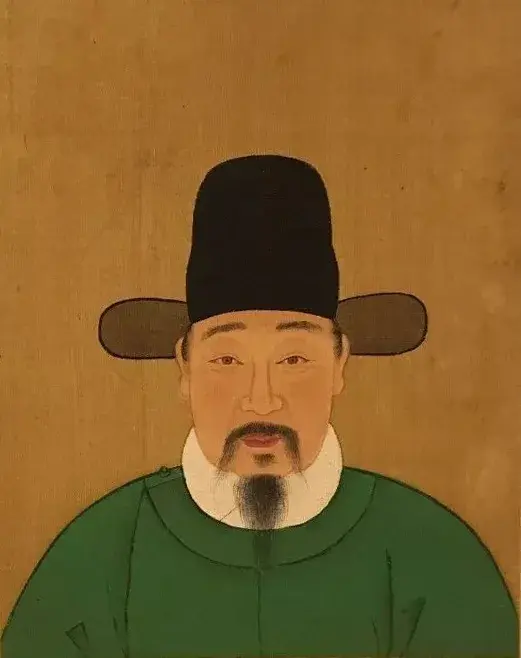
彭韶
Peng Shao (彭韶, 1430–1495), courtesy name Fengyi, a native of Putian County in Xinghua Prefecture, Fujian, was a renowned upright statesman and scholar of the mid-Ming dynasty. Passing the imperial examination as a jinshi in 1457, he served in the Ministry of Justice alongside He Qiaoxin, with whom he shared equal fame as "He and Peng." During the Chenghua reign, he was twice imprisoned in the Imperial Bodyguard prison—first…
Peng Shao (彭韶, 1430–1495), courtesy name Fengyi, a native of Putian County in Xinghua Prefecture, Fujian, was a renowned upright statesman and scholar of the mid-Ming dynasty. Passing the imperial examination as a jinshi in 1457, he served in the Ministry of Justice alongside He Qiaoxin, with whom he shared equal fame as "He and Peng." During the Chenghua reign, he was twice imprisoned in the Imperial Bodyguard prison—first for impeaching Assistant Censor-in-Chief Zhang Qi and later for refusing to confiscate peasant farmland in Zhending for the Empress Dowager's brother Zhou Yu. Serving subsequently as Surveillance Commissioner of Sichuan and Left Administration Commissioner of Guangdong, he was transferred to Guizhou after impeaching tribute-extorting eunuchs such as Gu Heng, Wei Juan, and Liang Fang's brother Liang De. Under the Hongzhi Emperor, he reformed the Zhejiang salt monopoly—presenting eight illustrated scrolls depicting the hardships of salt-boiling households—assisted Minister of Personnel Wang Shu as Left Vice Minister of Personnel, and succeeded He Qiaoxin as Minister of Justice in 1491, ranking alongside Wang Shu and He Qiaoxin as one of the "Three Grand Elders" of the Hongzhi court. He retired in 1494, died in 1495 at the age of sixty-six, and received the posthumous name Hui'an.
Born in Putian County, Fujian; passed the provincial examination in 1456
Passed the imperial examination as a jinshi and was appointed Secretary, then Vice Director, in the Ministry of Justice
Impeached Assistant Censor-in-Chief Zhang Qi and recommended recalling Wang Hong and Li Bing; imprisoned and later promoted to Director
Sent to inspect farmland in Zhending claimed by imperial relative Zhou Yu; petitioned to leave the land with the farmers and was briefly imprisoned again
Appointed Surveillance Vice Commissioner and later Surveillance Commissioner of Sichuan; solved major murder cases and abolished illicit shrines
Promoted to Left Administration Commissioner of Guangdong; recommended Chen Xianzhang and impeached eunuchs Gu Heng, Wei Juan, and Liang De, resulting in transfer to Guizhou
Promoted to Right Vice Censor-in-Chief and Grand Coordinator of Yingtian; submitted a candid New Year memorial on court governance and became Grand Coordinator of Shuntian
Recalled by the Hongzhi Emperor as Vice Minister of Justice; inspected western Zhejiang and presented eight illustrated scrolls on salt workers' hardships
Assisted Minister of Personnel Wang Shu in purifying official appointments and curbing palace eunuch influence
Succeeded He Qiaoxin as Minister of Justice; insisted on recovering embezzled funds from Marquis Liu Jing and curbing imperial in-laws
Retired in 1494 and died at home in 1495 at age sixty-six; posthumously appointed Junior Guardian of the Heir Apparent and canonized as Hui'an
Peng Shao was born in 1430 in Putian County, Xinghua Prefecture, Fujian. Passing the Fujian provincial examination in 1456 and the metropolitan examination in 1457 as a jinshi, he was appointed Secretary and then Vice Director in the Ministry of Justice, where his legal acumen and integrity earned him joint renown with his colleague He Qiaoxin as "He and Peng."
In 1466, when Zhang Qi was promoted out of sequence to Right Assistant Censor-in-Chief, Peng Shao submitted a memorial denouncing Zhang's lack of character and urging the recall of upright veterans such as Wang Hong, Li Bing, and Ye Sheng. Offended, the Chenghua Emperor threw Peng Shao into the Imperial Bodyguard prison; released after paying a redemption fine following protests by Supervising Secretary Mao Hong, he was promoted to Director. Soon afterward, Empress Dowager Zhou's younger brother Zhou Yu petitioned to claim untaxed peasant fields in Wuqiang and Wuyi counties of Zhending Prefecture as his private estate. Dispatched with Censor Ji Cong to survey the land, Peng Shao rode around the fields and returned directly to Beijing without measuring them out for Zhou Yu, submitting a memorial declaring: "The fields of Zhending have been cultivated by the people as permanent family property since the reigns of our ancestors. Imperial relatives share the fortune of the state—how can they contend with poor peasants for inches of land? I cannot bear to strip the common people of food and clothing to enrich noble relatives, and I willingly submit to punishment for failing my commission." The Emperor ordered the land left to the farmers but imprisoned Peng Shao again for "seeking fame and defying orders," releasing him only after vigorous appeals by the Censorate.
Appointed Surveillance Vice Commissioner of Sichuan, Peng Shao swiftly solved two long-standing mass murder cases in Anyue and Dingyuan counties in which local bullies had slaughtered thirty-three members of two families. Promoted to Surveillance Commissioner of Sichuan, he demolished illicit shrines across the province, ended the costly practice of sending palace eunuchs to preside over princely funerals, and impeached the Yunnan grand defender eunuch Qian Neng for disturbing post roads while presenting golden lanterns.
In the spring of 1478, Peng Shao was promoted to Left Administration Commissioner of Guangdong. While recommending the eminent Cantonese Neo-Confucian scholar Chen Xianzhang for appointment to the Hanlin Academy, Peng Shao submitted memorials condemning the extortionate "tribute" demands of Grand Defender eunuch Gu Heng, Maritime Trade eunuch Wei Juan, and Pearl Pool eunuch Huang Fu. When Liang De—younger brother of the Chenghua Emperor's favorite eunuch Liang Fang—returned to Guangdong to requisition rare birds and exotic plants, causing widespread misery, Peng Shao impeached him directly. Furious, Liang Fang slandered Peng Shao before the Emperor and had him transferred to Guizhou.
In 1484, Peng Shao was elevated to Right Vice Censor-in-Chief and Grand Coordinator of Yingtian. Summoned to Beijing at the start of 1485 as Minister of the Court of Judicial Review when a comet appeared around New Year's Day, he submitted a famous memorial warning the Chenghua Emperor that in four areas—family hierarchy (favoring Consort Wan), curbing eunuch power, frugality, and official appointments—the reign was failing to end as well as it had begun. Displeased, the Emperor reassigned him as Grand Coordinator of Shuntian and Yongping, where Peng Shao reduced corvée labor in the capital counties and impeached Grand Defender eunuch Tao Hong.
Upon the accession of the Hongzhi Emperor in 1487, Peng Shao was recalled as Right Vice Minister of Justice and sent to western Zhejiang following the salt-smuggling uprising of Chen Fu in Jiaxing. Tasked with overhauling the Zhejiang salt administration and promoted to Left Vice Minister of Justice, Peng Shao reduced forced quotas on salt merchants, forgave arrears, and—modeling himself on Zheng Xia's Song-dynasty Pictures of Refugees—painted and presented eight illustrated scrolls depicting the grueling labor and poverty of coastal salt-boiling households alongside six reform proposals, all of which the Emperor approved.
Transferred to Left Vice Minister of Personnel in 1490, Peng Shao worked closely with Minister of Personnel Wang Shu to purge corrupt officials, requested the restoration of midday imperial audiences, and urged the reduction of palace eunuch staffing. In the autumn of 1491, he succeeded He Qiaoxin as Minister of Justice. Over three years at the head of the ministry, he upheld the law without fear or favor: he insisted on recovering the full amount of thousands of taels embezzled by Liu Jing, Marquis of Anyuan; defended Censor Peng Cheng and exposed waste in the Court of Imperial Entertainments; and protested lenient sentences for murderous palace eunuchs and the unlawful conscription of tens of thousands of soldiers to build the family tomb of imperial father-in-law Zhang Luan.
Blocked repeatedly by Senior Grand Secretary Liu Ji and court nobles, and grieving the deaths of two sons and three grandsons, Peng Shao submitted repeated requests to retire, which were granted in the sixth month of 1494. He died at home in Putian in 1495 at the age of sixty-six, receiving the posthumous title Junior Guardian of the Heir Apparent and the posthumous name Hui'an. His writings were collected in the Peng Hui'an Ji and Zhengxun.
FIGURES ASSOCIATED WITH THIS DYNASTY