Birth in Jinjiang
Born into a poor family in Jinjiang County, Quanzhou Prefecture, Fujian
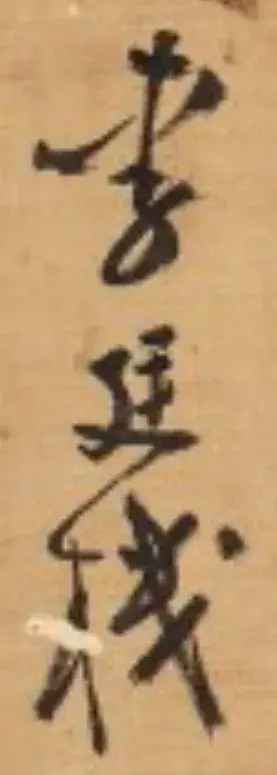
李廷机
Li Tingji (李廷机, 1542–1616), courtesy name Erzhang, art name Jiuwo, a native of Jinjiang County in Quanzhou Prefecture, Fujian, was a renowned scholar-official and Grand Secretary of the late Ming dynasty. Rising from poverty, he placed first in the 1570 Shuntian provincial examination (jieyuan), first in the 1583 metropolitan examination (huiyuan), and second overall in the palace examination (bangyan), entering the…
Li Tingji (李廷机, 1542–1616), courtesy name Erzhang, art name Jiuwo, a native of Jinjiang County in Quanzhou Prefecture, Fujian, was a renowned scholar-official and Grand Secretary of the late Ming dynasty. Rising from poverty, he placed first in the 1570 Shuntian provincial examination (jieyuan), first in the 1583 metropolitan examination (huiyuan), and second overall in the palace examination (bangyan), entering the Hanlin Academy as a Compiler. Serving successively as Chancellor of the Imperial University, Nanjing Right Vice Minister of Personnel, and Right Vice Minister of Rites acting as head of the Ministry of Rites, he became famous across the empire for his austere incorruptibility, administrative diligence, and elimination of fiscal waste. Appointed Minister of Rites and Grand Secretary of the Eastern Hall by the Wanli Emperor in the fifth month of 1607, he was immediately targeted by pro-Donglin and anti-Zhejiang censors who accused him of aligning with former Senior Grand Secretary Shen Yiguan. Refusing to cling to power, Li Tingji closed his doors after only a few months in office, sent his family back to Fujian, and moved into a dilapidated Taoist temple in Beijing, where he lived for five years (1608–1612) while submitting 123 resignation memorials that the reclusive Wanli Emperor left unanswered. Finally departing Beijing on his own initiative in the ninth month of 1612 with the Emperor's belated blessing and the title of Grand Guardian of the Heir Apparent, he died in poverty in Quanzhou in 1616 at the age of seventy-five and was canonized as Wenjie.
Born into a poor family in Jinjiang County, Quanzhou Prefecture, Fujian
Entered the Imperial University as a tribute student and won first place (jieyuan) in the Shuntian provincial examination
Placed first (huiyuan) in the metropolitan examination and second (bangyan) in the palace examination, becoming a Hanlin Compiler
Presided over the Zhejiang provincial examination with strict impartiality; subsequently rose to Chancellor of the Imperial University
Appointed Nanjing Right Vice Minister of Personnel, concurrently administering the Nanjing Ministries of Revenue, Rites, and Works; abolished miscellaneous commercial taxes and cleared blocked Yangtze waterways
Recalled to Beijing as Right Vice Minister of Rites and served for four years as acting head of the ministry, eliminating inflated envoy transport expenses
Appointed Minister of Rites and Grand Secretary of the Eastern Hall in the fifth month; fiercely impeached by censors led by Wang Yuanhan and Song Tao, prompting him to cease attending the cabinet
Sent his family home to Fujian and lived alone in dilapidated Beijing temples for five years, submitting over 120 resignation memorials that were shelved by the Wanli Emperor
Left Beijing in the ninth month after his 123rd resignation petition, receiving the title Grand Guardian of the Heir Apparent and an honorable retirement rescript
Died in poverty at his home in Jinjiang at age seventy-five; posthumously promoted to Junior Guardian and canonized as Wenjie
Li Tingji was born in 1542 in Jinjiang County, Quanzhou Prefecture, Fujian. Studying in poverty, he entered the Imperial University in Beijing as a tribute student and won first place (jieyuan) in the 1570 Shuntian provincial examination. After lecturing in the capital for over a decade, he won first place (huiyuan) in the 1583 metropolitan examination and finished second (bangyan) in the palace examination behind Zhu Guozuo, receiving appointment as a Compiler in the Hanlin Academy.
After serving as chief examiner for the 1588 Zhejiang provincial examination—where he eliminated all favoritism and bribery—Li Tingji rose to Proctor and then Chancellor of the Imperial University. Promoted in 1598 to Right Vice Minister of Personnel in Nanjing, he frequently acted as head of several Nanjing ministries simultaneously during the widespread official vacancies of the Wanli era. In Nanjing, he abolished burdensome miscellaneous transit taxes to revive commerce, forced the powerful military commandant Earl of Chengshan to demolish illegal river weirs that obstructed Yangtze navigation, banished the notorious local bully Li Wenzheng to the frontier, and used administrative budget surpluses to repair city walls, examination halls, and public offices without pocketing a single coin.
Recalled to Beijing in 1603 as Right Vice Minister of Rites, Li Tingji took charge of the Ministry of Rites after Vice Minister Guo Zhengyu resigned amid political conflict with Senior Grand Secretary Shen Yiguan. Administering the ministry for four years under the motto of "purity, caution, and diligence," Li Tingji audited the hostel and carriage expenses for foreign tribute missions—saving tens of thousands of taels annually—cancelled obsolete Korean garrison stipends after the Imjin War, and used ministerial savings to expand examination compounds and purchase housing for impoverished junior officials. While universally admired for his personal incorruptibility and charity toward street beggars, his austere, unbending temperament and refusal to court censorial opinion earned him a reputation for rigidity.
In the fifth month of 1607, on the recommendation of Senior Grand Secretary Zhu Geng, the Wanli Emperor appointed Li Tingji Minister of Rites and Grand Secretary of the Eastern Hall alongside Yu Shenxing and Ye Xianggao. Because Li Tingji had succeeded Guo Zhengyu at the Ministry of Rites and maintained cordial relations with Shen Yiguan and Zhu Geng, pro-Donglin and anti-Zhejiang censors led by Wang Yuanhan, Song Tao, and Hu Xin immediately launched a barrage of impeachments accusing him of narrow-mindedness and factional alignment with Shen Yiguan.
Deeply wounded by the attacks, Li Tingji stopped attending the Grand Secretariat after only a few months in office. To prove that he had no desire to cling to his post, he vacated his official residence, sent his wife and children back to Quanzhou, and moved with two elderly servants into a run-down shrine in Beijing. Because the reclusive Wanli Emperor routinely shelved all memorials (liuzhong), Li Tingji remained trapped in Beijing temples for five full years (1608–1612), submitting 123 separate memorials begging to be allowed to retire. Finally, in the ninth month of 1612, the seventy-one-year-old Li Tingji submitted a final farewell memorial and departed Beijing by cart without waiting for imperial permission. Rather than punishing him, the Wanli Emperor promoted him to Grand Guardian of the Heir Apparent and ordered local officials to escort him home with state honors. Living in utter poverty in Jinjiang, Li Tingji died in the ninth month of 1616 at the age of seventy-five and was posthumously promoted to Junior Guardian with the posthumous name Wenjie. His Classical commentaries and prose were collected in the twenty-eight-volume Collected Works of Li Wenjie (Li Wenjie Ji).
FIGURES ASSOCIATED WITH THIS DYNASTY