Birth in Hengyang
Born on the first day of the ninth lunar month beneath Huiyan Peak in Hengzhou, Huguang; third son of Confucian scholar Wang Zhaoping.
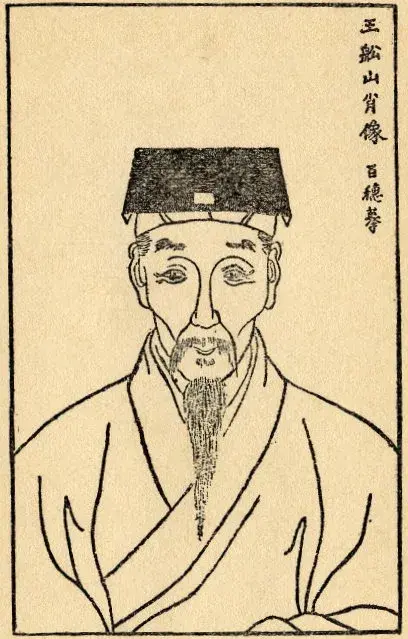
王夫之
Wang Fuzhi (王夫之, 1619–1692), courtesy name Ernong (而农), art names Jiangzhai (姜斋) and Chuanshan (船山), widely revered by scholars as Master Chuanshan (船山先生), was a native of Hengyang County in Hengzhou Prefecture, Huguang (modern Hengyang, Hunan Province). He was an illustrious philosopher, thinker, historian, and poet of the late Ming and early Qing transition, celebrated alongside Gu Yanwu and Huang Zongxi as one of the Three…
Wang Fuzhi (王夫之, 1619–1692), courtesy name Ernong (而农), art names Jiangzhai (姜斋) and Chuanshan (船山), widely revered by scholars as Master Chuanshan (船山先生), was a native of Hengyang County in Hengzhou Prefecture, Huguang (modern Hengyang, Hunan Province). He was an illustrious philosopher, thinker, historian, and poet of the late Ming and early Qing transition, celebrated alongside Gu Yanwu and Huang Zongxi as one of the Three Great Thinkers of the era, representing the zenith of classical Chinese materialist ontology and dialectical philosophy. Born into an upright scholar-gentry lineage, his father Wang Zhaoping was renowned for moral rectitude. Endowed with extraordinary intellect from infancy, Wang Fuzhi passed the county licensing examination at fourteen and secured fifth place in the Huguang provincial examinations of 1642. In 1644, upon the collapse of the Ming Dynasty and the southward invasion of Qing forces, Wang Fuzhi demonstrated unyielding dynastic loyalty. In 1648, he organized an armed anti-Qing uprising at the Fangguang Temple in Mount Heng. Following its defeat, he traveled south to Zhaoqing to join the Southern Ming Yongli court, receiving an appointment as Messenger in the Messenger Office. While serving the refugee court in Wuzhou, he submitted outspoken memorials impeaching corrupt factional ministers, narrowly escaping assassination through the intervention of allied anti-Qing militia commanders. In 1651, as the restoration cause fragmented, Wang Fuzhi returned to the rugged mountains of Hengyang, adopting peasant disguises and fleeing across Changning and Xingning under Qing arrest warrants, swearing an oath never to shave his hair or take office under the new dynasty. In 1675, at fifty-seven, Wang Fuzhi settled beneath Mount Shichuan, constructing a modest three-room thatched cottage named Xiangxi Caotang (West Xiang Thatched Cottage). Living in extreme poverty and solitude, he rejected all compromises, writing under dim lamplight for four decades to produce monumental masterpieces including Du Tongjian Lun, Song Lun, Zhouyi Waizhuan, Shangshu Yinyi, Zhangzi Zhengmeng Zhu, and Siwen Lu. He established a materialist ontology founded on the monism of vital energy (qi), advancing the revolutionary thesis that the Dao resides within concrete material vessels. He formulated dialectical concepts of dynamic motion and relative rest, developed an empirical epistemology asserting that action precedes knowledge, articulated an evolutionary philosophy of history that harmonized rational principles with objective trends, and refuted ascetic Neo-Confucian dogma by asserting that heavenly principle resides within natural human desires. He passed away at Xiangxi Caotang in 1692 at seventy-four, leaving a comprehensive philosophical legacy that revitalized Chinese rational thought and profoundly inspired modern Chinese revolutionary movements.
Born on the first day of the ninth lunar month beneath Huiyan Peak in Hengzhou, Huguang; third son of Confucian scholar Wang Zhaoping.
Passed the preliminary licensing examination at fourteen; recommended to the Hengyang County School by the provincial education inspector.
Studied at the historic Yuelu Academy in Changsha, founding the Xingshe literary society with classmate Kuang Pengsheng to champion statecraft.
Placed fifth overall and first in Spring and Autumn Annals scholarship in the Huguang provincial examinations in Wuchang.
When peasant rebel forces took Hengzhou and held his father hostage, he slashed his own face and wrists, using self-inflicted wounds to secure his release.
Mobilized armed forces with Xia Rubu and Guan Sijiu at Fangguang Temple in Mount Heng to resist Qing forces; fled to Zhaoqing upon defeat.
Appointed Messenger in the Messenger Office under Emperor Yongli; impeached corrupt minister Wang Huacheng and was saved by loyalist general Gao Yigong.
Returned secretly to Hengyang to reside at the Xumeng Hermitage beneath Shuangji Peak, swearing never to shave his hair or serve the Qing.
Hunted by Qing authorities, he assumed the name and clothing of a Yao mountaineer, wandering through Changning to lecture secretly on the classics.
Erected a thatched cottage at the foot of Mount Shichuan, adopting the title Master Chuanshan and immersing himself in writing.
When Wu Sangui declared himself emperor in Hengzhou and demanded an accession memorial, Wang Fuzhi fled into the forests and composed the Fuxi Fu.
Despite chronic respiratory disease, he finalized the thirty volumes of Du Tongjian Lun and fifteen volumes of Song Lun, culminating his historiography.
Died on the second day of the first lunar month at Xiangxi Caotang; interred in Ming garments with his self-composed epitaph, aged seventy-four.
Wang Fuzhi was born on the first day of the ninth lunar month in the forty-seventh year of Wanli (October 7, 1619) beneath Huiyan Peak in the southern district of Hengzhou, Huguang (modern Yanfeng District, Hengyang, Hunan Province). The Wang family was a distinguished scholarly clan that had migrated from the Lower Yangtze to Huguang during the late Yuan Dynasty, adhering strictly to Confucian moral decorum over generations. His father, Wang Zhaoping (courtesy name Wuyi), was fifty years old when this third son was born, and his mother, Lady Tan, was forty-seven. Wang Zhaoping had studied at the National Imperial Academy in Beijing, winning widespread admiration for his fierce moral integrity. While residing in the capital, he refused to offer bribes to retainers of the powerful grand councilor Wen Tiren, tearing up recommendation letters and declaring that he would rather return home than disgrace his ancestors by crawling before venal ministers.
Surrounded by family scholarship, Wang Fuzhi demonstrated early intellectual gifts. Beginning classical studies under his eldest brother Wang Jiezhi at four, he memorized the Thirteen Classics by age six. In 1632, at fourteen, he passed the preliminary licensing examinations to become a government student. Wang Zhijian, the provincial education inspector, was struck by his examination papers, recommending his admission into the prestigious Hengyang County School. In 1638, at twenty, Wang Fuzhi enrolled in the Yuelu Academy in Changsha. Along with his classmate Kuang Pengsheng, he established the Xingshe society, debating classical metaphysics while investigating military defense, hydraulic engineering, and fiscal statecraft. In 1639, he formed the Kuangshe society in Wuchang with comrades Guo Fengxian and Guan Sijiu, pledging to dedicate their talents to the welfare of the realm.
In the autumn of 1642, twenty-four-year-old Wang Fuzhi and his elder brother traveled to Wuchang to sit for the provincial examinations. Ranking first in the province in Spring and Autumn Annals interpretation, Wang Fuzhi secured the fifth overall place in Huguang, while his brother also earned provincial honors. The presiding examiners, Zhang Kuang and Cai Daoxian, formed an enduring friendship with the brilliant scholar. Following the examination, Wang Fuzhi joined more than one hundred degree-holders in an assembly atop Yellow Crane Tower, taking solemn oaths to defend the realm.
In the spring of 1643, Wang Fuzhi and his brother journeyed north toward Beijing for the metropolitan examinations, but found the roads blocked in Jiangxi because peasant insurgent armies under Li Zicheng and Zhang Xianzhong had captured key fortresses in northern and central Huguang. Returning to Hengzhou, the brothers faced severe peril when Zhang Xianzhong's lieutenant Ai Nengqi took the city in October. Seeking local prestige, the rebel army took sixty-year-old Wang Zhaoping hostage, demanding that his sons enter rebel service. In desperation to save his father, twenty-five-year-old Wang Fuzhi slashed his face and arms with a blade, smearing himself with blood and presenting himself at the rebel camp as a maimed cripple incapable of administrative duties. Convinced by his wounds, the insurgent commanders released Wang Zhaoping.
In the fifth month of 1644, news arrived that Beijing had fallen to peasant rebels and the Chongzhen Emperor had committed suicide on Coal Hill. Wang Fuzhi wept toward the north, composing an extensive Lament of Grief and Indignation in one hundred rhymes. In 1645, Qing armies swept south, toppling the Hongguang court in Nanjing. Wang Fuzhi moved his family into the mountains between Leiyang and Xingning. Deeply alarmed by military indiscipline among southern Ming commanders, he visited regional director Zhang Kuang, presenting proposals to reconcile rival generals He Tengjiao and Du Yinxin and coordinate with peasant rebel remnants, though his advice went unheeded. In 1647, Qing armies captured Hengzhou. His father, uncle, and elder brother Wang Canzhi perished amid the chaos, his father charging him with his dying breath to maintain unyielding resistance against Qing rule.
In the autumn of 1648, anti-Qing uprisings in Jiangxi and Guangdong revitalized the resistance. Thirty-year-old Wang Fuzhi gathered his resources, joining comrades Xia Rubu, Guan Sijiu, and Buddhist monk Xinghan to raise an armed force at Fangguang Temple on Mount Heng. Establishing their camp at Dajie in Hengyang, the volunteers battled Qing forces, but were overwhelmed by superior firepower and disciplined cavalry. Xia Rubu died in battle, and Wang Fuzhi composed his mournful verse Night Watch in the Riverfield Camp before escaping through the blockade to reach Zhaoqing, seeking service under Emperor Yongli.
In 1649, Wang Fuzhi reached Zhaoqing, joining anti-Qing statesmen Qu Shisi, Yan Qiheng, Jin Bao, and Fang Yizhi. In the spring of 1650, when the court transferred to Wuzhou, he received appointment as Messenger in the Messenger Office upon the recommendation of Minister of Personnel Yan Qiheng. However, the refugee court was dominated by prime minister Wang Huacheng, who engaged in factional extortion and imprisoned honest officials such as Jin Bao, Ding Shikui, and Meng Zhengfa under fabricated treason charges, creating the notorious Five Tigers Affair.
Despite his junior rank, Wang Fuzhi submitted three memorials to the emperor, denouncing the grand councilor's treachery and demanding the release of the imprisoned ministers. Furious at this defiance, Wang Huacheng dispatched assassins to murder him on the streets of Wuzhou. Loyal general Gao Yigong of the former peasant army intervened, deploying personal guards to spirit Wang Fuzhi out of the city, enabling him to reach Guilin to attend Viceroy Qu Shisi.
In August 1650, Qing commander Kong Youde encircled Guilin with massive forces. Recognizing that the fortress was doomed, Qu Shisi ordered Wang Fuzhi to evacuate with his wife, Lady Zheng. Trapped within a water fort at Yongfu, the couple starved for four days before swimming across the surrounding channels under cover of darkness. In November 1650, Guilin fell, and Qu Shisi died a martyr. Witnessing the control of the southern Ming regime by warlord Sun Kewang, Wang Fuzhi concluded that military restoration was lost, returning secretly to Hengzhou in 1651 to withdraw from political life.
In early 1651, thirty-three-year-old Wang Fuzhi arrived back in his native county with his wife and nephew. To resist the Manchu queue decree, he retreated to the Xumeng Hermitage beneath Shuangji Peak, vowing never to shave his head. In 1652, southern Ming general Li Dingguo recaptured Guilin and marched into Hunan, liberating Hengyang. Li Dingguo dispatched envoys with gifts to invite Wang Fuzhi to join his staff, but Wang Fuzhi declined, recognizing that internal feuds between Sun Kewang and Li Dingguo would tear the movement apart.
In 1653, Sun Kewang forced Li Dingguo's withdrawal, and Qing armies reoccupied Huguang. Placing Wang Fuzhi on provincial arrest warrants, imperial authorities dispatched search parties into the hills. In 1654, Wang Fuzhi disguised himself in coarse hemp garments, posing as a Yao tribesman to wander through the remote mountains of Changning and Xingning. Sheltering in ruined shrines and caves, he endured biting winters and disease while tutoring local scholars in the Book of Changes and Spring and Autumn Annals.
In this wilderness exile, Wang Fuzhi embarked on his philosophical writing. In 1655, he completed his first major theoretical work, Laozi Yan, in an abandoned mountain monastery, followed in 1656 by Huangshu (The Yellow Book), an impassioned defense of Huaxia cultural survival. In 1660, he constructed a rustic shelter named Baiye Lu in Gaoxi, Hengyang. In 1661, his devoted wife Lady Zheng died from illness and exhaustion, prompting him to compose sixty-nine elegiac verses collected as Luohua Shi. In 1662, upon learning that the Yongli Emperor had been executed in Kunming and Li Dingguo had died on the southern frontier, Wang Fuzhi composed an additional one hundred rhymes of his Lament of Grief and Indignation, styling himself the Gourd Hermit and severing all ties with the outside world.
In the autumn of 1675, fifty-seven-year-old Wang Fuzhi settled at the foot of Mount Shichuan in Jinlan Township, Hengyang. With the assistance of neighbors, he erected a humble three-room thatched cottage, naming it Xiangxi Caotang because it stood west of the Xiang River, while adopting the moniker Master Chuanshan. Xiangxi Caotang was situated in a secluded valley, furnished with only a desk, a bed, and writing brushes. In his advanced age, he suffered from severe bronchitis and rheumatism that prevented him from lying flat at night. In freezing winters, his ink froze in the stone inkstand, requiring him to thaw it with his breath.
In late 1673, Wu Sangui rebelled against the Qing in Yunnan, launching the Revolt of the Three Feudatories. Taking control of Hunan, Wu Sangui proclaimed himself emperor of the Zhou dynasty in Hengzhou in 1678. Seeking scholarly legitimacy, Wu Sangui sent emissaries with gold and court robes to invite Wang Fuzhi to author his accession memorial. Despising Wu Sangui as a turncoat who had ushered Manchu forces into China, Wang Fuzhi drove the messengers away and fled into the mountain forests, composing his allegorical prose Fuxi Fu to reaffirm his integrity. In 1682, following the suppression of the revolt, the Qing governor of Hunan and the prefect of Hengzhou traveled to Xiangxi Caotang to visit him, but Wang Fuzhi bolted his door and declined all gifts.
During his seventeen years at Xiangxi Caotang, Wang Fuzhi attained his intellectual zenith. Working by oil lamp, he completed monumental treatises spanning hundreds of volumes, including Du Tongjian Lun (thirty volumes), Song Lun (fifteen volumes), Zhangzi Zhengmeng Zhu (nine volumes), Zhouyi Neizhuan (six volumes), Shangshu Yinyi (six volumes), Siwen Lu (two volumes), and Chuci Tongshi (fourteen volumes), amounting to over four hundred volumes and eight million characters. In April 1691, coughing blood from his sickbed, he completed the final revisions of Du Tongjian Lun and Song Lun, concluding his life's philosophical and historical reflections.
On February 18, 1692 (second day of the first lunar month of the thirty-first year of Kangxi), the philosopher passed away peacefully at Xiangxi Caotang at the age of seventy-four. Having never shaved his head, he was buried in classical Ming robes in accordance with his testament. His self-composed tombstone inscription read: "Cherishing Liu Kun's solitary indignation yet finding no destiny to realize it, aspiring to Zhang Zai's authentic learning yet lacking the strength to achieve it. Fortunate to return wholly to this mound, I harbor sorrow for all eternity."
Wang Fuzhi's premier contribution to Chinese philosophy was dismantling the idealist metaphysics of Cheng-Zhu Neo-Confucianism and Lu-Wang heart-mind philosophy, constructing an integrated system of classical materialist ontology. Rejecting the Neo-Confucian doctrine that metaphysical principle (li) preceded material energy (qi), as well as the subjective idealism that the mind was identical with cosmic principle, Wang Fuzhi developed the materialist pneumatic monism of northern Song philosopher Zhang Zai. He asserted that the universe consisted solely of the concrete material substance of vital energy (qi), denying the existence of disembodied metaphysical spirits or ideas.
In his famous discourse on the Dao and concrete vessels (qi), Wang Fuzhi posited that all under heaven consists of concrete vessels, and without vessels there can be no Dao. He demonstrated that material vessels possess ontological primacy, while principles, laws, and abstract concepts are derivative regularities inherent within material things. By establishing that physical reality precedes metaphysical concepts, he eliminated the theoretical basis of theological fatalism and opened the path toward empirical inquiry in Chinese thought.
Analyzing the mechanics of cosmic development, Wang Fuzhi developed an advanced dialectical understanding of motion and transformation. Rejecting Buddhist and Daoist quietism that posited absolute emptiness or permanent rest as the ultimate state of existence, he declared that the universe was filled with dynamic, ceaseless motion. He formulated the theory of the mutual containment of motion and rest (dongjing xianghan), positing that rest is the resting of motion, not the absence of motion.
Wang Fuzhi explained that physical rest is not the cessation of vitality, but the relative stability and structural equilibrium of motion in specific local states; beneath visible rest lies continuous dynamic movement. Furthermore, he asserted that opposing forces within matter are mutually dependent and continuously transform into one another, with cyclical renewal serving as the universal law of cosmic growth. His conception of matter as inherently active and his synthesis of absolute motion with relative rest anticipated modern dialectical materialism.
In epistemology, Wang Fuzhi launched a rigorous critique against the idealist doctrine of innate knowledge (sheng'er zhizhi). Advancing empirical reflection theory, he resolved the debate over knowledge and action by asserting that action encompasses knowledge, but knowledge cannot encompass action, maintaining that knowledge and action nurture each other, with action taking temporal and epistemic priority.
Wang Fuzhi demonstrated that human sense perception and mental cognition must engage directly with the objective sounds and colors of the material world to discover real principles. He argued that if individuals could attain sudden enlightenment without sensory experience and mental reflection, animals would possess the highest innate knowledge. Insisting that practical action constitutes the source, testing ground, and ultimate objective of all genuine knowledge, he maintained that true understanding required the dialectical unity of terminology (names) and objective realities (substances), rooting epistemology firmly in human practice.
In historical philosophy, Wang Fuzhi compiled the thirty volumes of Du Tongjian Lun and fifteen volumes of Song Lun, demolishing dynastic cyclical theories and retrogressive historical models. He articulated the concept of the unity of objective trends and rational principles (li shi heyi), arguing that historical development follows necessary objective momentum (shi), within which inherent rational principles (li) reside. Because historical momentum advances according to objective necessities, human history progresses continuously, with later eras inevitably surpassing antiquity.
Applying this evolutionary perspective, Wang Fuzhi defended the First Emperor of Qin's abolition of feudal fiefs and establishment of centralized commanderies, asserting that the commandery system survived for two millennia because it aligned with the inevitable momentum of history. In political philosophy, he advanced the egalitarian thesis that governing the realm consists in equalizing the realm, condemning dynastic rulers who treated the state as private property and insisting that sovereign power exists solely to secure the welfare of the people.
In moral philosophy, Wang Fuzhi launched a devastating assault on the Song Neo-Confucian dogma of preserving heavenly principle while extinguishing human desires. Grounded in materialist humanism, he argued that human desires for nourishment, clothing, shelter, and companionship represent innate natural attributes essential for human survival. Without concrete human desires, abstract heavenly principles could not exist.
Wang Fuzhi proclaimed that heavenly principle resides within human desires, and without human desires there can be no heavenly principle. He insisted that legitimate material needs must be recognized and satisfied, arguing that the true purpose of ethical principles was to harmonize and regulate human desires rather than suppress them. Furthermore, he articulated an evolutionary doctrine of human nature, maintaining that human nature is generated daily and completed daily, demonstrating that ethical character is continuously cultivated through environmental interaction, education, and deliberate practice.
Wang Fuzhi was not only a monumental philosopher, but also an exemplar of unyielding moral courage and patriotism. During the dynastic cataclysm of the Ming-Qing transition, he fought with arms, served the refugee court, and denounced corrupt ministers. Following the defeat of the restoration cause, he retreated into the mountains for four decades, enduring poverty, illness, and persecution without shaving his hair, adopting Manchu dress, or accepting imperial appointments.
He refused monetary bribes and royal titles offered by Wu Sangui during his rebellion, and bolted his doors against visiting Qing governors and magistrates. Residing in a leaky thatched cottage, he preserved the cultural dignity and philosophical independence of his civilization. His self-composed epitaph, mourning the unfulfilled ambitions of ancient patriots, became an enduring monument of patriotic integrity that deeply inspired subsequent generations of Chinese reformers and revolutionaries.
FIGURES ASSOCIATED WITH THIS DYNASTY