Birth in Changyuan
Born on the 10th day of the 3rd month in Changyuan County, Daming Prefecture
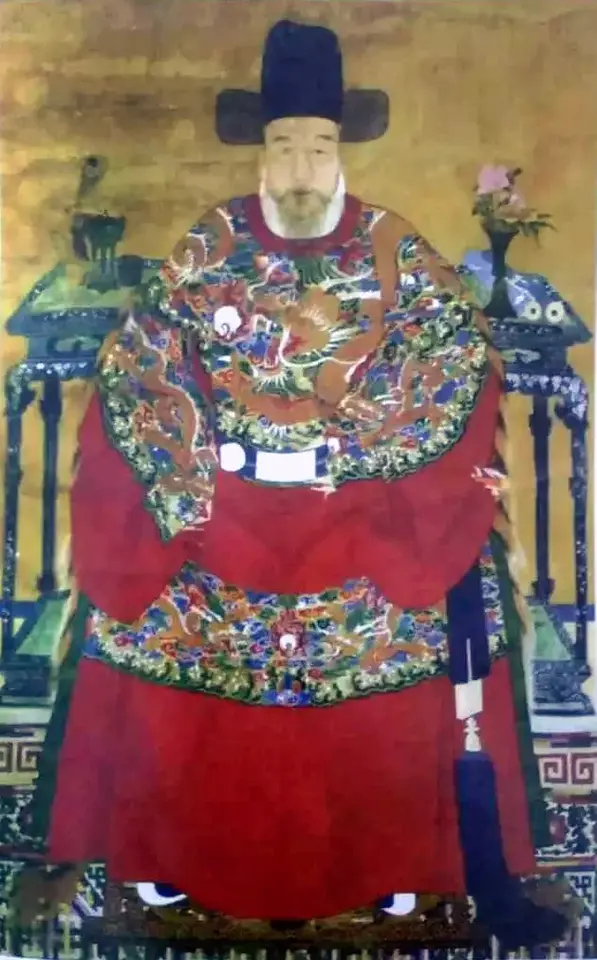
李化龙
Li Hualong (李化龙, April 11, 1554 – January 17, 1612), courtesy name Yutian, art name Linhuan, a native of Changyuan County in Daming Prefecture (modern Changyuan, Henan), was one of the foremost military commanders, hydraulic engineers, and statesmen of the late Ming dynasty. Passing the imperial examination as a jinshi in 1574 at the age of twenty, he served as Magistrate of Song County, bureau director in the Ministry of…
Li Hualong (李化龙, April 11, 1554 – January 17, 1612), courtesy name Yutian, art name Linhuan, a native of Changyuan County in Daming Prefecture (modern Changyuan, Henan), was one of the foremost military commanders, hydraulic engineers, and statesmen of the late Ming dynasty. Passing the imperial examination as a jinshi in 1574 at the age of twenty, he served as Magistrate of Song County, bureau director in the Ministry of Works, and Education Intendant of Henan and Shandong. Appointed Grand Coordinator of Liaodong in 1594, he and Regional Commander Dong Yiyuan crushed the Mongol coalition of Batu'er, Boyan'er, and Chaohua at Zhenwu Fort, killing Boyan'er and mortally wounding Batu'er. Recalled in 1599 as Supreme Commander of Sichuan, Huguang, and Guizhou with the Imperial Sword of Authority to suppress the massive rebellion of the hereditary Bozhou chieftain Yang Yinglong, Li Hualong mobilized 240,000 troops in eight converging columns in the spring of 1600, stormed Loushan Pass and the mountain citadel of Hailongtun in just 114 days, and replaced the 725-year-old chieftaincy with the regular prefectures of Zunyi and Pingyue (gaitu guiliu). Serving as Director-General of the Grand Canal in 1603–1605, he excavated the 260-li Jia River canal to bypass the perilous Yellow River rapids between Xuzhou and Suqian, permanently separating the Grand Canal from the Yellow River along that sector. Promoted to Minister of War and Junior Guardian, he took charge of the Capital Garrison in 1607 and headed the Ministry of War from 1609 until his death in office on January 17, 1612, at the age of fifty-eight, receiving the posthumous title of Grand Preceptor and the posthumous name Xiangyi.
Born on the 10th day of the 3rd month in Changyuan County, Daming Prefecture
Passed the imperial examination as a jinshi at age twenty and served as Magistrate of Song County in Henan, building city walls and curbing mine bandits
Appointed Secretary in the Nanjing Ministry of Works alongside friends Li Sancai, Wei Yunzhen, and Zou Yuanbiao; later served as Education Intendant of Henan and Shandong
Appointed Right Assistant Censor-in-Chief and Grand Coordinator of Liaodong; defeated the Mongol leaders Batu'er and Boyan'er at Zhenwu Fort with Dong Yiyuan, rising to Right Vice Minister of War
Appointed Supreme Commander of Sichuan, Huguang, and Guizhou in the third month and granted the Imperial Sword to suppress Yang Yinglong's Bozhou rebellion
Launched an eight-column offensive of 240,000 troops from Chongqing on the 12th day of the 2nd month, stormed Loushan Pass and Hailongtun by the 6th day of the 6th month, and converted Bozhou into Zunyi and Pingyue Prefectures
Appointed Director-General of the Grand Canal in the fourth month; excavated the 260-li Jia River channel from Xiazhen to Zhihe, completing it in 1604
Promoted to Minister of War and Junior Guardian for his Bozhou and canal achievements, with a hereditary Embroidered Uniform Guard commandership for his son
Recalled to oversee the Capital Garrison and assumed full charge of the Ministry of War in 1609, advancing to Junior Tutor and Grand Guardian of the Heir Apparent
Died in Beijing on January 17 at age fifty-eight; posthumously promoted to Junior Preceptor and Grand Preceptor and canonized as Xiangyi
Li Hualong was born on April 11, 1554, in Changyuan County, Daming Prefecture. A prodigy who passed the provincial examination in 1573 and the metropolitan examination as a jinshi in 1574 at the age of twenty, he was appointed Magistrate of Song County in the rugged mountains of Henan. Although veteran clerks initially underestimated his youth, Li Hualong quickly audited county registers, punished corrupt functionaries, constructed a brick city wall, and organized mutual-security units against mountain bandits. Promoted in 1580 to Secretary in the Nanjing Ministry of Works—where he formed a famous literary and political circle with Li Sancai, Wei Yunzhen, and Zou Yuanbiao—he subsequently served as Director in the Ministry of Works, Education Intendant of Henan and Shandong, Left Administration Vice Commissioner of Henan, and Right Transmission Commissioner.
In the fifth month of 1594, Li Hualong was appointed Right Assistant Censor-in-Chief and Grand Coordinator of Liaodong. When the Mongol chieftains Batu'er, Boyan'er, and Chaohua led tens of thousands of horsemen to attack Zhenwu Fort in the seventh month, Li Hualong and Regional Commander Dong Yiyuan ambushed and routed their coalition, killing Boyan'er with an arrow, mortally wounding Batu'er, and taking more than 540 heads. Afterward, Li Hualong skillfully divided the Mongol tribes by granting Xiaodaiqing permission to reopen the Yizhou timber market while refusing horse-market privileges to Batu'er's unrepentant followers. Promoted to Right Vice Minister of War in the tenth month of 1594, he retired the following year due to illness and mourning for his father.
In southwest China, the hereditary chieftain Yang Yinglong—whose family had ruled Bozhou (modern Zunyi, Guizhou) for over seven hundred years—rose in open rebellion, annihilating Ming provincial forces at Feilian Fort in early 1599 and sacking Qijiang County in Sichuan. In the third month of 1599, the Wanli Emperor recalled Li Hualong as Right Vice Minister of War and Supreme Commander of Sichuan, Huguang, and Guizhou, bestowing upon him the Imperial Sword of Authority.
Arriving in Chengdu in the fifth month of 1599 when local garrisons numbered fewer than 10,000 men, Li Hualong used diplomatic procrastination to stall Yang Yinglong while assembling reinforcements and supplies from more than ten provinces. Firmly rejecting court proposals for appeasement, he organized 240,000 imperial and native troops into eight columns of roughly 30,000 men each—four advancing from Sichuan under Generals Liu Ting (Qijiang route), Ma Kongying (Nanchuan route), Wu Guang (Hejiang route), and Cao Xibin (Yongning route); three from Guizhou under Tong Yuanzhen (Wujiang route), Zhang Cunyi (Shaxi route), and Li Yingxiang (Xinglong route); and one from Huguang under Chen Lin (Pianqiao route).
Swearing in his generals at Chongqing on the twelfth day of the second month of 1600, Li Hualong reprimanded the famous general Liu Ting to overcome his initial hesitation and used the Imperial Sword to arrest General Tong Yuanzhen after Tong's defeat at the Wujiang River. Inspired and disciplined, Liu Ting stormed the precipitous Loushan Pass on the sixteenth day of the fourth month, while Ma Kongying, Chen Lin, and Li Yingxiang broke through the outer defenses and converged on Yang Yinglong's mountain citadel of Hailongtun. Although Li Hualong received word of his mother's death during the siege, the Emperor ordered him to remain in command in mourning dress (moxie). Braving torrential rains, Ming forces bombarded the fortress gates and scaled the rear cliffs on the night of the fifth day of the sixth month; on the morning of the sixth day of the sixth month of 1600, Hailongtun fell and Yang Yinglong burned himself to death, ending the campaign in just 114 days. Li Hualong subsequently abolished the hereditary Bozhou chieftaincy (gaitu guiliu) and divided its territory into Zunyi Prefecture under Sichuan and Pingyue Prefecture under Guizhou, documenting the entire campaign in the sixty-six-volume Complete Book of the Pacification of Bozhou (Pingbo Quanshu).
In the fourth month of 1603, after completing mourning for his mother, Li Hualong was appointed Right Vice Minister of Works and Director-General of the Grand Canal. To free grain transport fleets from the treacherous 300-li stretch of the Yellow River between Xuzhou and Suqian, he championed the completion of the Jia River (Jiahe) canal from Xiazhen in Shandong to Zhihe in Jiangsu. Collaborating closely with Huai Grand Coordinator Li Sancai and overcoming rocky terrain by heating boulders with fire before splitting them, he excavated 260 li of new channel and constructed eight locks fed by Lake Weishan. Completed in the spring of 1604, the Jia River canal allowed thousands of grain barges to bypass the Yellow River rapids altogether, achieving a historic separation of the Yellow River and the Grand Canal.
Rewarded in 1605 with promotion to Minister of War, Junior Guardian, and a hereditary Embroidered Uniform Guard commandership for his son, Li Hualong was recalled to Beijing in 1607 to command the Capital Garrison and took sole charge of the Ministry of War in 1609. Working tirelessly during the administrative paralysis of the late Wanli reign to replenish frontier military funds and strengthen Liaodong defenses against the rising Jurchens, he died in office on January 17, 1612, at the age of fifty-eight. He was posthumously promoted to Junior Preceptor (and later Grand Preceptor) and canonized as Xiangyi.
As supreme commander of the 1599–1600 Bozhou Campaign—one of the "Three Great Campaigns of the Wanli Reign"—Li Hualong demonstrated exceptional strategic coordination. Mobilizing 240,000 soldiers and porters from across the empire, he orchestrated an eight-column concentric offensive through rugged southwestern mountain passes, enforced strict military discipline with the Imperial Sword, and motivated General Liu Ting to breach Loushan Pass and storm the seemingly impregnable fortress of Hailongtun in 114 days. Following the victory, he dismantled the 725-year-old Yang hereditary chieftaincy and established the regular prefectures of Zunyi and Pingyue, permanently integrating northern Guizhou and southern Sichuan into the Ming civil administration.
For two centuries, Ming grain fleets traveling betweenHuai'an and Shandong had been forced to navigate 300 li of the turbulent Yellow River past Xuzhou and the Lüliang Rapids. Taking office as Director-General of the Grand Canal in 1603, Li Hualong defied conservative opposition and directed tens of thousands of laborers to excavate the 260-li Jia River canal linking Xiazhen (Weishan) to Suqian via Hanzhuang and Tai'erzhuang. Completed within a single year in 1604 with eight regulating locks, the Jia River canal permanently bypassed the Yellow River rapids and became the main trunk line of the Grand Canal for the remainder of the Ming and Qing dynasties.
FIGURES ASSOCIATED WITH THIS DYNASTY