Birth in Suzhou
Born in Changzhou County, Suzhou Prefecture; lost his father in childhood and mastered the Five Classics under his mother's guidance
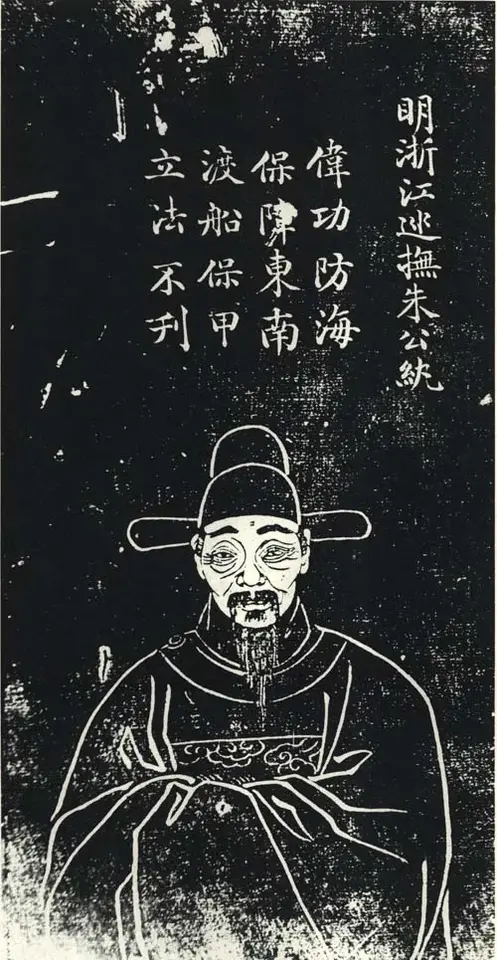
朱纨
Zhu Wan (朱纨, 1494 – January 19, 1550), courtesy name Zichun, art name Qiuya, a native of Changzhou County in Suzhou Prefecture, was an upright official and coastal defense commander of the mid-Ming dynasty. Passing the imperial examination as a jinshi in 1521, he served as magistrate of Jingzhou and Kaizhou, bureau director in the Nanjing ministries, Military Defense Vice Commissioner of Weimao in Sichuan—where he and…
Zhu Wan (朱纨, 1494 – January 19, 1550), courtesy name Zichun, art name Qiuya, a native of Changzhou County in Suzhou Prefecture, was an upright official and coastal defense commander of the mid-Ming dynasty. Passing the imperial examination as a jinshi in 1521, he served as magistrate of Jingzhou and Kaizhou, bureau director in the Nanjing ministries, Military Defense Vice Commissioner of Weimao in Sichuan—where he and Regional Commander He Qing pacified rebellious Qiang strongholds—and Grand Coordinator of Nan-Gan. In 1547, appointed Grand Coordinator of Zhejiang and Commander of Zhejiang-Fujian Coastal Defense to suppress worsening raids by Japanese pirates (wokou), Chinese pirate syndicates, and Portuguese (Folangji) smugglers, he strictly enforced maritime prohibitions and exposed the collusion between pirates and powerful coastal gentry families, famously declaring that "it is easy to eliminate foreign bandits, harder to eliminate Chinese coastal bandits, and hardest of all to eliminate bandits in official robes and caps." Under his command, Ming naval forces led by Lu Tang and Ke Qiao destroyed the international smuggling emporium at Shuangyu Port off Ningbo in 1548 and annihilated the pirate-Portuguese fleet of Li Guangtou at Zoumaxi in Fujian in 1549. Because his policies cut off the illicit profits of influential Fujian and Zhejiang gentry, he was impeached by Fujian censor Chen Jiude for executing ninety-six captured pirates without awaiting imperial confirmation. Dismissed and facing arrest in late 1549, Zhu Wan composed his own epitaph and took poison on January 19, 1550, at the age of fifty-seven; his death led to the collapse of Ming coastal defense and the devastating wokou crisis of the 1550s.
Born in Changzhou County, Suzhou Prefecture; lost his father in childhood and mastered the Five Classics under his mother's guidance
Passed the imperial examination as a jinshi, serving as Secretary in the Ministry of Works and Department Magistrate of Jingzhou and Kaizhou
Served successively as Vice Director in the Nanjing Ministry of Justice and Director in the Nanjing Ministries of War and Personnel
As Military Defense Vice Commissioner of Weimao in Sichuan, cooperated with Regional Commander He Qing to storm the Shengou strongholds and open a 100-li mountain road
Served as Left Administration Vice Commissioner of Shandong, Surveillance Commissioner of Yunnan, and Left Administration Commissioner of Guangdong
Appointed Right Vice Censor-in-Chief and Grand Coordinator of Nan-Gan
Appointed Grand Coordinator of Zhejiang and Commander of Zhejiang-Fujian Coastal Defense in the seventh month, enforcing strict maritime prohibitions
Ordered Lu Tang and Ke Qiao in the fourth month to storm and block Shuangyu Port off Ningbo; demoted in title to "Inspector of Zhejiang" after lobbying by Fujian officials
Routed the fleet of Li Guangtou and Portuguese smugglers at Zoumaxi in Fujian in the third month and executed ninety-six captives; impeached by Censor Chen Jiude in the seventh month and stripped of office
Facing arrest by imperial investigators, composed his own epitaph and drank poison on January 19 at age fifty-seven; posthumously rehabilitated in 1587
Zhu Wan was born in 1494 in Changzhou County, Suzhou Prefecture. Losing his father at an early age, he studied the Confucian classics in poverty under his mother's tutelage and passed the metropolitan examination as a jinshi in 1521. Appointed Secretary in the Ministry of Works, he was soon transferred to serve as Department Magistrate of Jingzhou and then Kaizhou in North Zhili, where he registered land concealed by local magnates, converted illicit shrines into community schools, and equalized corvée labor.
Promoted in 1532 to Vice Director in the Nanjing Ministry of Justice, he subsequently served as Director in the Nanjing Ministry of War and Director of the Bureau of Evaluations in the Nanjing Ministry of Personnel. After becoming Right Administration Assistant Commissioner of Jiangxi in 1536, he was appointed in 1537 as Military Defense Vice Commissioner of Weimao in western Sichuan. Working closely with Regional Commander He Qing, Zhu Wan led government troops to storm thefortified Shengou and Heishui strongholds, beheaded hundreds of rebels, and constructed a 100-li mountain road linking Weizhou and Maozhou. Between 1541 and 1546, he rose through provincial posts in Shandong, Yunnan, Sichuan, and Guangdong before being promoted to Right Vice Censor-in-Chief and Grand Coordinator of Nan-Gan.
By the mid-Jiajing era, Japanese raiders, Chinese pirate syndicates led by Xu Dong, Wang Zhi, and Li Guangtou, and armed Portuguese (Folangji) traders had established fortified smuggling bases along the Zhejiang and Fujian coasts. Crucially, wealthy coastal gentry and retired officials financed two-masted oceangoing vessels, supplied the pirates with grain, gunpowder, and credit, and fenced their plunder for tenfold profits.
In the seventh month of 1547, following pirate raids on Ningbo and Taizhou, the Jiajing Emperor appointed Zhu Wan Grand Coordinator of Zhejiang and Commander of Coastal Defense for Zhejiang and Fujian. Upon inspecting the coast, Zhu Wan recognized that maritime piracy could never be eradicated without severing its onshore support network. He destroyed illegal two-masted vessels, organized coastal households into mutual-responsibility (baojia) units, and publicly exposed powerful gentry families who colluded with smugglers, famously writing to the throne: "Eliminating foreign bandits is easy, but eliminating Chinese bandits is difficult; eliminating Chinese bandits along the coast is still comparatively easy, but eliminating Chinese bandits in official robes and caps is hardest of all!"
At the time, Shuangyu Island off Dinghai in Ningbo Prefecture served as the largest armed smuggling hub in East Asia, occupied by the pirate syndicate of Xu Dong, Li Guangtou, and Wang Zhi alongside hundreds of Portuguese traders. In the fourth month of 1548, Zhu Wan ordered Regional Military Commander Lu Tang and Fujian Vice Commissioner Ke Qiao to launch a night amphibious assault on Shuangyu Port during a storm. Ming forces burned more than twenty ocean-going vessels and hundreds of onshore buildings, captured key pirate leaders and Portuguese fighters, and permanently blocked the harbor entrance with stone-filled boats and wooden stakes.
Infuriated by the loss of their illicit trade, coastal magnates in Fujian and Zhejiang mobilized fellow provincials at the Beijing court to attack Zhu Wan. In the seventh month of 1548, Fujian Censor Zhou Liang and Supervising Secretary Ye Tang persuaded the court to downgrade Zhu Wan's post from Grand Coordinator (xunfu) to Regional Inspector (xunshi), curtailing his authority.
Undeterred, Zhu Wan struck again in the spring of 1549 when Li Guangtou and armed Portuguese smugglers raided Zhao'an County in southern Fujian. In the third month of 1549, Lu Tang and Ke Qiao ambushed the pirate fleet at Zoumaxi, capturing Li Guangtou and ninety-six pirate and Portuguese combatants. Knowing that influential gentry families would bribe judicial officials to free the prisoners if they were sent through routine legal channels, Zhu Wan invoked his imperial mandate to "act as circumstances require" (bianyi xingshi) and executed all ninety-six captives on the spot, reporting the executions to the throne alongside a scathing denunciation of Fujian gentry collusion.
In the seventh month of 1549, Fujian Censor Chen Jiude impeached Zhu Wan for executing foreign traders and subjects without awaiting an imperial rescript. Backed by Senior Grand Secretary Yan Song—whom the incorruptible Zhu Wan had refused to flatter—the Jiajing Emperor stripped Zhu Wan of office, imprisoned Lu Tang and Ke Qiao, and dispatched Supervising Secretary Du Ruzhen to Fujian to investigate and arrest Zhu Wan. Declaring that he would never allow himself to be humiliated by prison wardens after a lifetime of upright service, Zhu Wan composed his own epitaph and drank poison at home on January 19, 1550, at the age of fifty-seven. Following his death, the court abolished his coastal defense command and no official dared mention maritime enforcement; within four years, full-scale wokou invasions devastated southeastern China for over a decade. In 1587, the Wanli Emperor formally rehabilitated Zhu Wan and granted him state burial honors.
FIGURES ASSOCIATED WITH THIS DYNASTY