Life and Career
Early Scholarship and Model Governance in Changshu
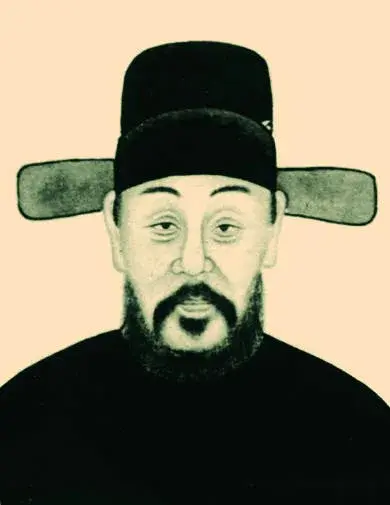
Yang Lian was born on August 5, 1572 (27th day of the 6th month, 6th year of Longqing) in Yingshan County, De'an Prefecture, Huguang, into a traditional Confucian scholarly family. Dedicated to practical statecraft and the moral philosophy of the Song dynasty, Yang Lian was quiet, thoughtful, and resolutely firm. Despite facing repeated setbacks in the provincial examinations, he persevered with unflagging discipline, finally earning his jinshi degree in 1607 (35th year of Wanli).
Following his examination success, Yang Lian was appointed Magistrate of Changshu County in Suzhou Prefecture, South Zhili. Changshu was an affluent Jiangnan region dominated by powerful gentry households whose influence complicated land registration and tax collection. Arriving at his post, Yang Lian lived in austere modesty, wearing simple hemp garments and sharing coarse rations with his staff. He conducted comprehensive cadastral surveys across the villages, uncovering large tracts of concealed farmland held by wealthy clans and redistributing tax obligations equitably to relieve smallholder peasants.
During his tenure, Yang Lian prioritized public works and education. He directed the construction of dozens of li of embankments along the waterways to hold back maritime storm tides, securing agricultural yields across thousands of acres of lowland fields. Concurrently, he renovated county academies and established free community schools, personally lecturing on Confucian statecraft. His clean administration earned him the beloved moniker "Blue-Sky Yang" from the local citizenry, and his high performance evaluation secured his promotion to the imperial capital as Supervising Secretary in the Office of Scrutiny for Revenue, followed by a transfer to the Office of Scrutiny for War.
Resolving the Succession Crisis and Shifting Palaces
In 1619 (47th year of Wanli), following the disastrous Ming defeat at the Battle of Sarhu, the frontier in Liaodong deteriorated rapidly. Serving in the Office of Scrutiny for War, Yang Lian demonstrated acute strategic insight. He audited frontier logistics registers, exposing systemic corruption among military administrators and senior commanders who pocketed provisions and inflated troop rosters. His forthright memorials gained him immediate prominence as a core leader of the imperial censors. In July 1620, the Wanli Emperor passed away, and Crown Prince Zhu Changluo ascended the throne as Emperor Guangzong.
In August 1620, following the death of Emperor Shenzong, Emperor Guangzong took the throne. Shenzong's favored consort, Noble Consort Zheng, plotted to have herself named empress dowager to exercise administrative authority, conspiring with palace eunuch Cui Wensheng to administer powerful purgatives to the ailing Guangzong. The medication induced violent diarrhea dozens of times a day, bringing the emperor to the brink of death. While Senior Grand Secretary Fang Congzhe hesitated, Yang Lian stepped forward, submitting memorials condemning Cui Wensheng's criminal medical malpractice and unmasking Consort Zheng's ambition, forcing her to withdraw from the imperial bedchamber. Recognizing his terminal condition, Guangzong summoned his grand secretaries and remonstrators to his bedside, grasping Yang Lian's hand and entreating: "You ministers must assist my eldest son to become a sage sovereign like Yao and Shun!" Yang Lian wept bitterly and accepted the sacred trust.
On the 1st day of the 9th month of 1620, after reigning for only twenty-nine days, Emperor Guangzong died abruptly. Prior to his demise, his concubine Consort Li (Western Li) colluded with eunuch Li Jinzhong (later known as Wei Zhongxian) to confine the sixteen-year-old heir Zhu Youxiao within the Qianqing Palace, closing the palace gates and barring civil ministers from entering. Armed palace attendants brandished blades to intimidate the officials. Yang Lian raised his voice and cried: "Today we have only advance, not retreat! Our heads may be severed, but the dynastic altars must not be lost!" He led Censor Zuo Guangdou and other loyal ministers through the palace gates. When attendants tried to push them back, Yang Lian glared and shouted: "We are the ministers entrusted with the prince by the late emperor; how dare you eunuchs defy the imperial will and detain the young sovereign!" Yang Lian and his colleagues extracted the prince from the inner chamber, shielding him with their robes as they escorted him to the Wenhua Hall, where the ministers bowed in allegiance and secured his accession as the Tianqi Emperor.
Following the accession, Western Li continued to occupy the Qianqing Palace, seeking to establish a regency from behind the curtain. Yang Lian submitted successive petitions citing ancestral law, declaring that the Qianqing Palace was reserved strictly for the ruling emperor and could not be occupied by concubines. Facing the immovable resolve of the civilian officials led by Yang Lian, Western Li was compelled to vacate the premises and move to the Renshou Palace. Yang Lian's decisive courage during the "Case of Shifting Palaces" resolved a dangerous political crisis, ensuring an orderly dynastic succession.
Combating Eunuch Tyranny and the Twenty-Four Crimes
Under the new reign, the young Tianqi Emperor neglected imperial duties in favor of carpentry, allowing the executive authority of the court to fall into the hands of the eunuch Wei Zhongxian and the wet nurse Madame Ke. Wei Zhongxian exploited imperial favor to control the Directorate of Ceremonial and the Brocade Guard, organizing sycophantic officials into the Eunuch Faction. They assassinated imperial consorts, silenced dissenters, and established a reign of terror across Beijing.
In 1623, Yang Lian was promoted to Vice Censor-in-Chief of the Censorate, assuming a leadership role over the entire imperial remonstrance corps. Seeing many officials submit to the Eunuch Faction out of fear, Yang Lian resolved to sacrifice his life to purge the imperial court. He gathered evidence of Wei's illicit appointments, financial embezzlements, and extrajudicial executions.
On June 1, 1624, Yang Lian walked into the imperial council and submitted his monumental Memorial Impeaching Wei Zhongxian for Twenty-Four Capital Crimes. Written in seclusion during long night vigils, the document systematically dissected Wei's transgressions: usurping sovereign authority, disrespecting the late emperor's consorts, poisoning Imperial Consort Yu, maintaining illegal private military detachments inside the palace, interfering with military appointments in Liaodong, and weaponizing the secret police against honest officials. Yang Lian concluded with the declaration: "Though I am of humble rank, I would rather have my skull crushed beneath the Meridian Gate than watch the ancestral altars of two hundred and fifty years be destroyed by this traitorous eunuch!"
The memorial shocked Beijing and was widely transcribed across the empire. Terrified, Wei Zhongxian knelt before the emperor in tears, pleading for his life. Protected by Madame Ke, the emperor dismissed the charges, rebuking Yang Lian for slandering a trusted attendant. In October 1624, Wei Zhongxian retaliated by issuing an edict dismissing Yang Lian from office. When Yang Lian departed the capital, tens of thousands of citizens lined the thoroughfares in tears to pay him tribute.
Unyielding Fortitude and Martyrdom in the Imperial Prison
In 1625, determined to destroy the leadership of the Donglin movement, Wei Zhongxian fabricated a bribery case involving the defeated Liaodong military commander Xiong Tingbi, alleging that Xiong had channeled twenty thousand taels of silver to Yang Lian. In June 1625, Brocade Guard agents arrested Yang Lian at his home in Yingshan and transported him in chains to Beijing.
Imprisoned in the Northern Pacification prison of the Brocade Guard, Yang Lian faced brutal interrogation directed by Wei Zhongxian's henchman, Grand Commandant Xu Xianchun. Xu Xianchun ordered daily sessions of severe beating, finger-presses, and branding with red-hot irons, shattering Yang Lian's ribs and lacerating his flesh. Unable to sit or stand, Yang Lian was dragged across the mud in iron manacles into the interrogation chamber. Yet each time he regained consciousness, he glared at Xu Xianchun, shouting: "Traitors! You may destroy my flesh and bone, but you cannot crush my immortal soul! I will watch your executions from the heavens!"
Frustrated by his unyielding defiance, Xu Xianchun ordered copper spikes driven into Yang Lian's ears and an iron nail hammered directly into his skull. In his final hours, Yang Lian bit his fingers and wrote his farewell testament in blood on a scrap of clothing: "My life was guided by benevolence and righteousness; dying for my sovereign, what regret have I before heaven and earth!" On August 28, 1625, Yang Lian was murdered in his cell at the age of fifty-four alongside Zuo Guangdou and other members of the Six Gentlemen. In 1627, following the accession of the Chongzhen Emperor and the execution of Wei Zhongxian and Xu Xianchun, Yang Lian was posthumously exonerated, granted the titles of Junior Guardian and Minister of War, and given the posthumous name Zhonglie.
Major Achievements
Model Local Administration in Changshu
Appointed Magistrate of Changshu in 1607, Yang Lian established an enduring reputation for incorruptible and effective local governance. Confronting the evasion of taxes by wealthy clans, he personally surveyed farmlands, revised cadastral records, and implemented fair taxation to relieve the peasantry. He constructed extensive tidal embankments to protect farmlands from floods, funded community academies, and maintained strict personal frugality, earning veneration as an ideal Confucian magistrate.
Inspecting Military Finances in Liaodong
Serving in the Office of Scrutiny for War following the 1619 Sarhu campaign, Yang Lian audited logistics ledgers for the northeastern frontier. He exposed widespread collusion between ministry bureaucrats and frontier commanders who embezzled military funds and inflated soldier counts. His analytical memorials on defensive fortification and troop provisioning provided crucial strategic direction during a period of acute national crisis.
Securing the Succession at the Wenhua Hall
During the critical transition following Emperor Guangzong's death in September 1620, Consort Li detained Crown Prince Zhu Youxiao within the Qianqing Palace to orchestrate a regency. Facing armed guards, Yang Lian broke through the palace gates, escorted the prince directly to the Wenhua Hall, and led the ministers in formal acclamation. His decisive intervention ensured an orderly transfer of power and preserved the dynastic line.
Forcing the Resolution of the Shifting Palaces Dispute
Following the accession of the Tianqi Emperor, Consort Li refused to vacate the sovereign quarters in the Qianqing Palace. Yang Lian presented successive memorials arguing that imperial residence rules were sacred and could not be compromised by imperial concubines. Coordinating civilian resistance outside the inner chambers, he compelled Consort Li to transfer to the Renshou Palace, extinguishing the threat of consort interference in state administration.
Authoring the Twenty-Four Crimes Memorial
In June 1624, as Vice Censor-in-Chief, Yang Lian authored the historic Memorial Impeaching Wei Zhongxian for Twenty-Four Capital Crimes. Disregarding personal peril, he systematically detailed Wei's abuses, including sovereign usurpations, assassinations of consorts, and extrajudicial repressions. The document shattered the aura of invulnerability surrounding the Eunuch Faction, establishing a high benchmark for ministerial courage.
Moral Leadership of the Donglin Movement
As a central figure of the Donglin fellowship, Yang Lian exemplified classical integrity and selfless public duty. Rejecting factional self-interest, he dedicated his career to the defense of dynastic institutions and administrative honesty. His high moral standard inspired contemporaries such as Zuo Guangdou and Gao Panlong, shaping the principled resistance of the late Ming scholar-official class against autocratic corruption.
Unyielding Fortitude under Imperial Prison Torture
Falsely arrested on fabricated bribery charges in 1625, Yang Lian was subjected to atrocious tortures in the Brocade Guard prison. Despite suffering fractured ribs, branding, and severe corporal mutilation, he refused to sign false confessions implicating fellow officials. His extraordinary mental resolve frustrated the secret police inquisitors, providing a heroic model of stoic defiance.
Authoring the Farewell Blood Testament
In his final moments in the dark cell of the imperial prison, Yang Lian wrote his dying testament on cloth using his own blood. Declaring that his life was dedicated to righteousness and that he met death without shame before heaven and earth, his blood-stained farewell stands as one of the most moving documents of patriotic martyrdom in Chinese history.
Posthumous Vindication under Emperor Chongzhen
Following the Chongzhen Emperor's accession in 1627, the court eliminated Wei Zhongxian and executed the executioner Xu Xianchun. Yang Lian was posthumously rehabilitated, awarded nine imperial sacrificial rites, granted the rank of Junior Guardian and Minister of War, and honored with the posthumous title Zhonglie. His sacrifice became a permanent symbol of righteous resistance against tyrannical usurpation.
Exemplary Personal Incorruptibility
Throughout his career as magistrate, supervising secretary, and vice censor-in-chief, Yang Lian remained completely uncorrupted. When Brocade Guard agents raided his ancestral home in Yingshan following his arrest, they found only a modest dwelling containing basic books and worn clothing, with no hidden wealth. His spotless lifestyle validated his moral standing and cemented his reputation as an incorruptible statesman.