Birth in Yuyao
Born into an official-gentry family in Huangzhupu, Yuyao, Zhejiang; descendant of Song poet Huang Tingjian; son of censor Huang Zunsu.
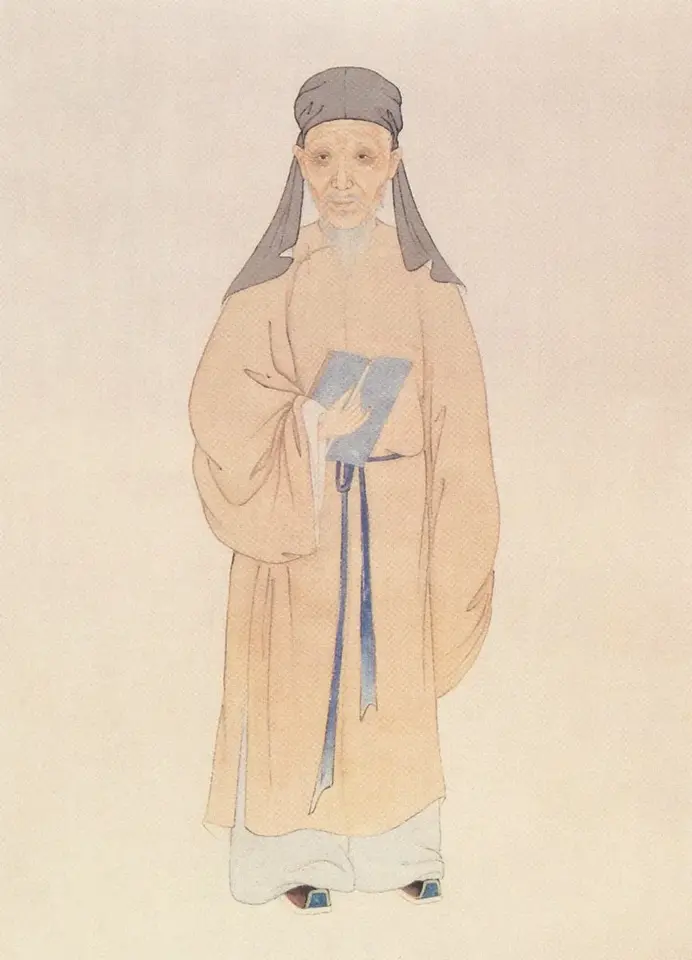
黄宗羲
Huang Zongxi (黄宗羲, 1610–1695), courtesy name Taichong (太冲), art names Lizhou (梨洲) and Nanlei (南雷), widely honored as Master Lizhou (梨洲先生), was a native of Yuyao County in Shaoxing Prefecture, Zhejiang (modern Yuyao, Ningbo, Zhejiang Province). He was an illustrious philosopher, historian, political thinker, and educator of the late Ming and early Qing transition, acclaimed alongside Gu Yanwu and Wang Fuzhi as one of the Three…
Huang Zongxi (黄宗羲, 1610–1695), courtesy name Taichong (太冲), art names Lizhou (梨洲) and Nanlei (南雷), widely honored as Master Lizhou (梨洲先生), was a native of Yuyao County in Shaoxing Prefecture, Zhejiang (modern Yuyao, Ningbo, Zhejiang Province). He was an illustrious philosopher, historian, political thinker, and educator of the late Ming and early Qing transition, acclaimed alongside Gu Yanwu and Wang Fuzhi as one of the Three Great Thinkers of the era and revered as the founding patriarch of the Eastern Zhejiang School. Born into an eminent Donglin Party lineage, his father Huang Zunsu, a supervising censor, was murdered under torture in the imperial prison during the Tianqi era for impeaching the powerful eunuch Wei Zhongxian. In 1628, the nineteen-year-old Huang Zongxi journeyed to Beijing to plead for justice, producing an iron awl from his sleeve during judicial proceedings to strike down the eunuch conspirators, earning widespread praise from the Chongzhen Emperor as a loyal minister and dutiful orphan. Huang Zongxi subsequently studied under the Neo-Confucian master Liu Zongzhou, mastering the Jishan doctrines of self-watchfulness, while joining the Restoration Society (Fushe) to combat eunuch factionalism. In 1644, upon the fall of Beijing and the advance of Qing forces southward, his mentor Liu Zongzhou starved himself to death in martyrdom. Huang Zongxi sold his family possessions and mobilized hundreds of rural youths in Yuyao to form the Shizhong Military Battalion, joining the resistance under Zhu Yihai, Prince of Lu, where he attained the office of Left Vice Censor-in-chief. In 1649, he sailed across the East China Sea to Nagasaki in Japan seeking military assistance for the Ming cause. Following the collapse of armed resistance and surviving multiple imperial manhunts, Huang Zongxi shifted his efforts toward scholarly writing and teaching, refusing all invitations to serve the Qing dynasty and dedicating his remaining decades to preserving Huaxia civilization through academic enterprise. Huang Zongxi made foundational contributions to political philosophy, historiography, and economic thought. His political masterpiece, Waiting for the Dawn (Mingyi Daifang Lu), launched a scathing critique against imperial autocracy, pioneering the democratic assertions that autocratic rulers were the greatest scourge to the realm and that the populace formed the host while sovereigns were merely guests. He advocated restoring the grand councilorship to balance royal power and transforming academies into civic assemblies capable of guiding public opinion and scrutinizing imperial policy. Economically, he rejected the traditional bias against commerce by arguing that industry and trade were equally fundamental with agriculture, while formulating historical insights into recurring fiscal tax crises that modern scholars designate as Huang Zongxi's Law. In historiography, he pioneered the genre of philosophical history by compiling The Records of Ming Scholars (Mingru Xue'an) and initiating the Records of Song-Yuan Scholars (Song-Yuan Xue'an). He passed away in Yuyao in 1695 at the age of eighty-six.
Born into an official-gentry family in Huangzhupu, Yuyao, Zhejiang; descendant of Song poet Huang Tingjian; son of censor Huang Zunsu.
His father was murdered in prison by eunuch Wei Zhongxian's faction; he swore to avenge his father and carry forward the Donglin cause.
Traveled to Beijing to appeal for justice, stabbing his father's murderers with an iron awl in court; praised by Emperor Chongzhen.
Became a disciple of Neo-Confucian master Liu Zongzhou, studying Jishan philosophy and joining the Restoration Society in Nanjing.
Persecuted by Ma Shiying and Ruan Dacheng under the Southern Ming Hongguang regime; escaped prison when Qing armies took Nanjing.
Liquidated family wealth to raise six hundred militiamen forming the Shizhong Battalion; appointed Vice Director in the Ministry of War by the Prince of Lu.
Promoted to Left Vice Censor-in-chief; sailed across the sea to Nagasaki, Japan, seeking military intervention, but returned empty-handed.
With armed resistance suppressed, he hid in the Siming Mountains under imperial arrest warrants, turning to teaching and philosophical writing.
Authored his landmark political treatise Waiting for the Dawn (Mingyi Daifang Lu), articulating early democratic critiques of imperial autocracy.
Completed the sixty-two-volume The Records of Ming Scholars, establishing the discipline of systematic philosophical historiography.
Declined imperial summons to sit for the Special Examination for Eminent Scholars and rejected offers to direct the official compilation of the History of Ming.
Completed Mingwen Hai and laid the foundation for Records of Song-Yuan Scholars; passed away in Yuyao at age eighty-six.
Huang Zongxi was born on the eighth day of the eighth lunar month in the thirty-eighth year of Wanli (September 24, 1610) in Huangzhupu, Tongde Township, Yuyao County, Shaoxing Prefecture, Zhejiang (modern Lizhou Subdistrict, Yuyao). The Huang family was an illustrious clan tracing descent from the northern Song literary master and calligrapher Huang Tingjian. His father, Huang Zunsu (courtesy name Zhenchang, art name Baiquan), was a metropolitan graduate of 1616 who served as investigating censor during the Tianqi era. Renowned for his fearless integrity, Huang Zunsu emerged as a prominent figure within the Donglin Party, standing firm against eunuch domination. Huang Zongxi received classical training from infancy, memorizing the canonical classics by age ten and winning his father's affection.
During the Tianqi reign of Emperor Xizong, the palace eunuch Wei Zhongxian established tyrannical control over court affairs, hunting down Donglin scholar-officials. Huang Zunsu repeatedly submitted outspoken memorials condemning the eunuch clique, resulting in his dismissal and return to Yuyao. In 1626, Wei Zhongxian fabricated treason charges and dispatched imperial guards to arrest Huang Zunsu, conveying him to the northern prison of the Embroidered Uniform Guard in Beijing. Enduring ruthless torture with branding irons and rack clamps, Huang Zunsu perished steadfastly in his cell at forty-three. When tidings reached Yuyao, seventeen-year-old Huang Zongxi was overcome with grief. Pressing his father's bloodstained prison testament against his chest, he swore to avenge his parent and eradicate the eunuch faction.
In 1628, the Chongzhen Emperor ascended the throne, dismantling the faction of Wei Zhongxian and Cui Chengxiu. The nineteen-year-old Huang Zongxi concealed a heavy iron awl within his sleeve, traveling alone to Beijing to demand justice before the throne. In the fifth month of 1628, the Board of Punishments held a joint judicial tribunal to interrogate imperial guard commanders Xu Xianchun and Cui Yingyuan. Standing in court as the martyr's orphan, Huang Zongxi observed the defendants denying their crimes. Overcome with fury, he drew the concealed iron awl from his sleeve and drove it into Xu Xianchun's throat and chest before the astonished magistrates, then struck down Cui Yingyuan, tearing out tufts of his beard to preserve as a sacrifice before his father's spirit tablet. Emperor Chongzhen praised his filial courage as that of a loyal minister and dutiful orphan, while the gentry of Zhejiang honored him as the Dutiful Son of Yaojiang.
Having avenged his father, Huang Zongxi returned to his home county. Witnessing the decay of the empire and intensifying frontier crises, he concluded that personal vengeance was insufficient to heal the realm. Rejecting civil examination curricula as intellectual shackles incapable of addressing statecraft crises, he established the Xuchao Hall at the foot of Mount Hua'an in Yuyao, collecting thousands of volumes to pursue practical scholarship that carried forward the Donglin spirit.
In 1630, at twenty-one, Huang Zongxi became a disciple of the late Ming Neo-Confucian master Liu Zongzhou (courtesy name Qidong, art name Niantai, known as Master Jishan). Liu Zongzhou founded the Jishan School, advocating self-watchfulness in solitude and sincerity of intention as the basis for uniting ethical cultivation with real-world statecraft. Studying under Liu Zongzhou for years, Huang Zongxi absorbed the core doctrines of heart-mind philosophy and practical learning. Deeply impressed by his talent and determination, Liu Zongzhou praised him to his colleagues, observing that Huang Zongxi possessed the heroic ambitions of ancient sages.
In that same autumn, literary leader Zhang Pu convened the assembly of Jiangnan scholars in Nanjing to establish the Restoration Society (Fushe). Introduced by his friend Zhou Biao, Huang Zongxi joined the society, rapidly becoming an influential leader through his learning and unyielding character. In 1638, when surviving eunuch partisans led by Ruan Dacheng attempted to rehabilitate themselves in Nanjing, Huang Zongxi joined Fang Yizhi and Mao Pijiang in drafting the Manifesto Against Turmoil in the Retained Capital, signed by 140 leading literati, banishing Ruan Dacheng from respectable intellectual circles. In 1642, Huang Zongxi failed the metropolitan examinations in Beijing after submitting outspoken policy essays criticizing imperial misrule. In 1644, peasant forces took Beijing, Emperor Chongzhen died, and the Ming central government fell.
In the fifth month of 1644, the Prince of Fu established the Southern Ming regime in Nanjing. Corrupt figures Ma Shiying and Ruan Dacheng seized supreme authority, compiling a blacklist titled Huangnan Lu to hunt down Restoration Society scholars. Huang Zongxi was arrested and thrown into the Nanjing imperial prison under imminent threat of execution. In the fifth month of 1645, Qing armies swept south and took Nanjing, causing the regime to collapse. Amid the chaos, Huang Zongxi escaped from his guards and fled on foot to Yuyao.
In the intercalary sixth month of 1645, Qing forces advanced into eastern Zhejiang, ordering all subjects to shave their hair and adopt Manchu dress. Gentry leaders Sun Jiaji and Xiong Rulin raised forces in Shaoxing, proclaiming Zhu Yihai, Prince of Lu, as regent. Thirty-six-year-old Huang Zongxi rallied his neighbors, liquidating his family lands, estates, and grain stores to muster six hundred militiamen from Huangzhupu into the Shizhong Military Battalion. The Prince of Lu appointed him Vice Director of the Bureau of Operations in the Ministry of War and promulgated Huang Zongxi's Datong Astronomical Calendar throughout the circuits of eastern Zhejiang.
In the fifth month of 1646, Huang Zongxi led the Shizhong Battalion and naval units across Hangzhou Bay to strike the fortress of Zhapu. Overwhelmed by superior numbers, the Ming defensive perimeter disintegrated, and Shaoxing fell in the sixth month. The Prince of Lu fled to Zhoushan, while Huang Zongxi retreated with Wang Yi's remnants into the rugged Siming Mountains, fortifying Zhangxi Temple and conducting guerrilla campaigns. When undisciplined soldiers disrupted local villagers during his absence, mountain inhabitants burned the camp, forcing Huang Zongxi into hiding before retreating to Mount Hua'an under intense Qing manhunts.
In 1649, Huang Zongxi traveled to Zhoushan to attend the Prince of Lu, receiving promotion to Left Vice Censor-in-chief. With the resistance facing collapse, he accepted a diplomatic mission alongside envoys Feng Jingdi and Ruan Mei to sail across the East China Sea to Japan to solicit samurai troops. Reaching Nagasaki and Satsuma after surviving perilous tempests, the envoys met with refusal due to the Tokugawa shogunate's strict isolationist policies, compelling Huang Zongxi to return to China. Concluding that factional disputes within the refugee court rendered military restoration hopeless, he withdrew permanently from the administration of the Prince of Lu.
Between 1650 and 1654, following the Qing capture of Zhoushan, imperial authorities launched three nationwide manhunts for Huang Zongxi's capture. During these perilous years of flight, tragedy struck his household repeatedly: his younger brother Huang Zongyan was captured twice and sentenced to death; his daughter-in-law, youngest son, and granddaughter perished from illness while fleeing; and his ancestral home in Huangzhupu was burned to the ground twice. Yet even in hiding, Huang Zongxi maintained secret correspondence with local resistance networks in Jinhua and warned the Prince of Lu of impending naval attacks.
By 1653, recognizing that armed force could not reverse the collapse of the dynasty, Huang Zongxi realized that the true task was to preserve the intellectual heritage of China and examine the institutional flaws that caused the imperial downfall. The forty-four-year-old scholar retreated to Mount Hua'an in Yuyao, adopting a life of study and teaching. Between 1663 and 1679, he established lecture halls across Cixi, Shaoxing, Ningbo, Haining, and Hangzhou, where hundreds of scholars gathered to study the revitalized traditions of Wang Yangming and Liu Zongzhou.
In 1663, while residing in Yuyao, Huang Zongxi completed his political masterpiece, Waiting for the Dawn (Mingyi Daifang Lu). Drawing upon decades of reflection, he stripped away dynastic propaganda to analyze how imperial autocracy subjugated the population, formulating the bold declarations that the people were the rightful masters while sovereigns were merely guests, and that autocratic emperors constituted the greatest harm to the realm. He followed this achievement in 1676 by publishing the sixty-two-volume The Records of Ming Scholars (Mingru Xue'an), constructing the earliest systematic history of Chinese philosophical thought based on school lineages and textual evidence.
As the Qing court consolidated its rule, the Kangxi Emperor sought to appease southern Chinese intellectuals by decreeing the Special Examination for Eminent Scholars (Boxue Hongru) in 1678. Huang Zongxi's name stood at the head of provincial nominations. Refusing to compromise his moral loyalty, he instructed his disciples to submit memorials citing his infirmities, declining the examination. In 1680, Emperor Kangxi ordered local magistrates to invite Huang Zongxi with ceremonial honors to direct the official compilation of the History of Ming in Beijing, an offer he rejected with equal firmness.
Recognizing his unequaled historical scholarship, Emperor Kangxi and the chief compiler Xu Yuanwen permitted him to remain at home, instructing provincial officials to copy his historical manuscripts and send them to the imperial compilation bureau in Beijing, while inviting his son Huang Baijia and leading disciple Wan Sitong to take part in the project. Following his mentor's instructions, Wan Sitong entered the capital as an unranked commoner, refusing imperial titles and official stipends, yet serving as the true de facto editor-in-chief of the History of Ming, embedding Huang Zongxi's rigorous historiographical principles within the official dynastic history. In 1680, Huang Zongxi concluded his public lecturing tours to focus on personal scholarship, assisting in the compilation of the Zhejiang Provincial Gazetteer in 1683.
In 1686, education commissioner Wang Yan advocated rebuilding the ancestral shrine of Huang Zunsu in Huangzhupu, prompting Huang Zongxi to compose an commemorative record. In 1687, Wang Yan funded the publication of Liu Zongzhou's collected writings, which Huang Zongxi edited alongside Dong Yang and Jiang Xizhe into the Complete Works of Master Liu. In 1688, he revised his literary drafts into Nanlei Wending and constructed his own tomb on Mount Longhu beside his father's grave. In 1690, Emperor Kangxi summoned him once more to serve as an imperial consultant, an invitation declined on his behalf by scholar Xu Qianxue due to age. In 1691, the eighty-two-year-old thinker ascended Mount Huangshan at the invitation of the Xin'an magistrate, authoring a preface for the mountain chronicle. In 1692, as the printing of The Records of Ming Scholars neared completion, he dictated its final preface to his son Huang Baijia from his sickbed, subsequently finishing the two-hundred-volume anthology Mingwen Hai in 1693.
On the third day of the seventh lunar month in 1695 (August 12, 1695), Huang Zongxi passed away in his ancestral home in Yuyao at the age of eighty-six. In his final days, he composed Lizhou Mo Ming and Zangzhi Huowen, instructing his heirs to practice strict burial simplicity. He forbade coffins, Buddhist funeral rites, mourning banners, and paper money, directing that his body be conveyed on a simple bamboo pallet covered with a single quilt and placed directly on a stone bed within the tomb. Four days prior to his death, he wrote to his grandson-in-law Wan Chengxun that having reached advanced age without committing grave evils, having fulfilled his filial duties, and having completed scholarly writings comparable to ancient masters, he could depart this world without sorrow.
Huang Zongxi's greatest contribution to Chinese intellectual history was his political treatise Waiting for the Dawn (Mingyi Daifang Lu), composed in 1663. Spanning thirteen essays including On the Ruler, On the Minister, On Law, Establishing Grand Councilors, and Schools, the opening treatise On the Ruler exposed the illegitimacy of hereditary imperial sovereignty. He argued that the original purpose of establishing a sovereign was to benefit the realm and alleviate harm. Early sage-kings governed with the welfare of the people as their foremost duty, treating the realm as the host and the ruler as a guest. Later dynastic autocrats, however, treated the realm as private personal property to be bequeathed to their descendants, sacrificing the public welfare for private imperial interest, leading to the condition where autocratic emperors became the greatest scourge to all under heaven. This assertion struck at the foundation of the divine right of kings, representing the most profound critique of imperial autocracy in premodern China.
In On the Minister and On Law, Huang Zongxi rearticulated the principles of state service and the rule of law. Rejecting the servile doctrine that ministers must obey despotic commands, he asserted that rulers and ministers were collaborative partners hauling a timber log together, sharing equal public responsibility. He declared that a scholar served the realm and its people rather than an individual ruler or ruling dynasty, arguing that national order was measured by the happiness of the people rather than the survival of a royal house. Criticizing post-Qin dynastic codes as illegal statutes designed solely to protect private family interests, he advocated replacing dynastic codes with public laws of the realm, establishing the principle that just laws must precede effective governance.
To curb autocratic excesses, Huang Zongxi designed an institutional blueprint of shared governance. He advocated restoring the grand councilorship as an independent executive office staffed by virtuous statesmen who shared policy authority with the sovereign. He noted that misrule under the Ming dated from the abolition of the grand councilorship by the dynastic founder, explaining that without an independent grand councilor, the emperor ruled unchecked, viewing officials as slaves and paving the way for eunuch usurpations. He proposed a premier grand councilor and several state councilors meeting daily with the emperor in the audience hall to debate policies, operating through a central policy chamber to issue administrative decisions directly to the ministries.
In Schools, Huang Zongxi proposed transforming academic institutions into public assemblies capable of supervising state policies. He maintained that schools should not function merely as academies for rote examination preparation, but as civic bodies through which the instruments of governance were formulated. He argued that royal decree alone could not determine truth and falsehood, demanding that public policy be submitted to academic assemblies for collective scrutiny. He proposed that eminent scholars serve as chancellors of the imperial university with rank equal to the grand councilor, requiring the emperor and high ministers to attend university lectures monthly as humble students, while allowing chancellors to criticize administrative failures openly. This conception anticipated modern representative assemblies and inspired late Qing constitutional reformers such as Kang Youwei and Liang Qichao.
Huang Zongxi delivered a scathing critique against the eight-legged essay curriculum of the civil service examinations, arguing that rote memorization stifled intellect and produced incompetent officials. In On Selection, he advocated the principle of broad admission and rigorous evaluation, formulating the Eight Criteria for Recruitment to select practical talents through diverse avenues.
The Eight Criteria dismantled the monopoly of civil examination essays, creating recruitment tracks that encompassed classical students, imperial university scholars, experienced local administrative clerks, and commoners who submitted constructive policy proposals. Crucially, he established specialized categories for technical disciplines, granting administrative office to experts proficient in mathematical astronomy, acoustics, cartography, meteorological observation, firearms, and hydraulic engineering. This reform suppressed the aristocratic monopolization of office while opening institutional avenues for scientific and practical engineering expertise.
In political economy, Huang Zongxi shattered the two-thousand-year-old doctrine that prioritized farming while suppressing commerce, declaring that industry and trade were equally fundamental with agriculture. In On Finance, he recognized the vibrant commercial economy of the Lower Yangtze, asserting that craftsmen produced goods desired by sage-kings while merchants distributed them across the realm, making both groups pillars of national wealth. He removed the ethical stigma attached to mercantile enterprise, providing an intellectual defense for emerging merchant capital.
Examining fiscal history, Huang Zongxi analyzed how imperial tax reforms generated recurring fiscal crises. He observed that from the Tang dynasty Two-Tax System to the Ming Single Whip Reform, imperial administrators repeatedly consolidated disparate exactions into single unified levies to simplify tax administration, yet subsequent reigns inevitably introduced new surcharges alongside the consolidated tax, causing the burdens on peasants and artisans to escalate uncontrollably. This cycle of fiscal consolidation followed by compounded extortion was formulated into Huang Zongxi's Law by modern historian Qin Hui, remaining a celebrated benchmark in Chinese fiscal and institutional history.
In historical scholarship, Huang Zongxi established the discipline of philosophical historiography in China. Over twenty-four years of research, he examined hundreds of collected writings spanning the 270 years of the Ming Dynasty, compiling the sixty-two-volume masterwork The Records of Ming Scholars (Mingru Xue'an). Organising the text into seventeen distinct academic lineages, he evaluated more than two hundred philosophers, tracing their ideological genealogies, defining their philosophical tenets, and evaluating their core writings.
The Records of Ming Scholars replaced simple chronological biographies with integrated structural histories of philosophical evolution, establishing balanced standards of scholarly critique that accommodated diverse intellectual perspectives. In his twilight years, Huang Zongxi initiated the Records of Song-Yuan Scholars (Song-Yuan Xue'an) to trace the three-century development of Neo-Confucianism under Song, Liao, Jin, and Yuan, providing the structural model subsequently completed by Quan Zuwang.
In philosophy, Huang Zongxi inherited the traditions of Wang Yangming's heart-mind teachings and Liu Zongzhou's Jishan School, while transforming them toward empirical realism. Observing that late Ming scholars had degenerated into sterile introspection, he injected a materialist emphasis into Neo-Confucian thought. Rejecting Zhu Xi's idealist claim that metaphysical principle preceded physical material energy, he championed the pneumatic monism of Zhang Zai, maintaining that the universe consisted solely of dynamic vital energy (qi), whose rational regularities were designated as principle (li), establishing that principle existed only within material energy.
In ethical cultivation, Huang Zongxi reinterpreted Wang Yangming's doctrine of extending innate moral knowledge into active practical implementation, arguing that the extension of moral knowledge was identical with moral action. He posited that the human mind possessed no fixed metaphysical substance prior to real-world experience, declaring that ethical substance existed only where practical effort was applied. He demanded that scholars master practical disciplines including astronomy, mathematics, cartography, hydraulics, military strategy, and fiscal accounting, redirecting Chinese philosophy from speculative quietism toward active social transformation.
FIGURES ASSOCIATED WITH THIS DYNASTY