Defense of the Capital
Fought multiple engagements under Minister Zhang Fengyi against invading Qing forces; promoted to Vice Commander of the Vanguard Camp.
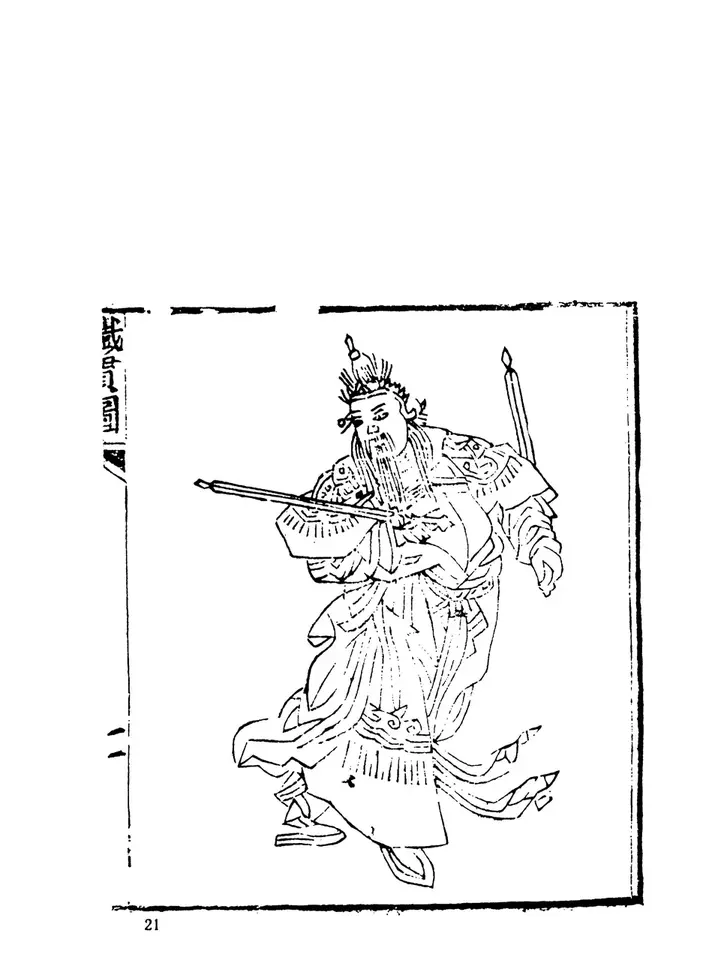
周遇吉
Zhou Yuji (周遇吉, d. 1644), courtesy name Cui'an (萃庵), was a native of Jinzhou Guard in Liaodong (present-day Jinzhou, Liaoning). He was an outstanding military commander, anti-Qing veteran, and celebrated loyalist martyr in the final tragic months of the Ming dynasty, rising to the rank of Regional Commander of Shanxi, Left Commissioner-in-chief, and Junior Guardian of the Heir Apparent. Originating from a hereditary frontier…
Zhou Yuji (周遇吉, d. 1644), courtesy name Cui'an (萃庵), was a native of Jinzhou Guard in Liaodong (present-day Jinzhou, Liaoning). He was an outstanding military commander, anti-Qing veteran, and celebrated loyalist martyr in the final tragic months of the Ming dynasty, rising to the rank of Regional Commander of Shanxi, Left Commissioner-in-chief, and Junior Guardian of the Heir Apparent. Originating from a hereditary frontier garrison family in Liaodong, Zhou built an early reputation for unflinching courage and tactical resourcefulness. In 1636, he served under Minister of War Zhang Fengyi to repel Qing raiding columns around Beijing, earning promotion to Vice Commander of the Vanguard Camp. Between 1637 and 1641, he campaigned across Henan, Huguang, and Shandong alongside Sun Yingyuan and Huang Degong, routing rebel forces under Luo Rucai and capturing the bandit leader Li Qingshan. In the winter of 1642, as a massive Qing army laden with plunder was returning north through Zhili, Zhou intercepted the invaders at Yangliuqing near Tianjin. Engaging in a ferocious three-day pitched battle, his cavalry inflicted thousands of casualties on the Qing rear guard and rescued vast numbers of captive civilians, achieving one of the rare Ming victories of the late war. In early 1644, Li Zicheng launched his massive eastern expedition to conquer Beijing. Stationed as Regional Commander of Shanxi, Zhou executed turncoat officer Xiong Tong who came bearing surrender demands, sending the traitor's severed head to the capital. Following the fall of Taiyuan, Zhou concentrated his surviving garrisons at the formidable defile of Ningwu Pass. Resisting wave after wave of assault by tens of thousands of Dashun rebel troops, Zhou deployed heavy artillery and executed a devastating counter-ambush that slaughtered thousands, bringing Li Zicheng to the brink of ordering a general retreat. When the outer battlements finally collapsed under massed cannon fire, Zhou fought through the streets on foot after losing his horse, hacking down dozens of enemy fighters until he was captured and executed by a firing squad of archers. His wife, Lady Liu, led the women of the garrison in rooftop archery defense before perishing in the flames. Following the enthronement of the Hongguang Emperor in Nanjing, Zhou was posthumously elevated to Grand Guardian with the posthumous title Zhongwu.
Fought multiple engagements under Minister Zhang Fengyi against invading Qing forces; promoted to Vice Commander of the Vanguard Camp.
Campaigned under Sun Yingyuan against peasant rebels, securing decisive victories at Guangshan and Gushi.
Assigned under Yang Sichang to guard the imperial Xianling Mausoleum at Jingmen; fortified Huaishuguan and Shihua Street, forcing Zhang Xianzhong into Sichuan.
Joined Huang Degong to rout rebels at Fengyang; pursued bandit chieftain Li Qingshan to Dongping, capturing him alive and earning promotion to Junior Guardian.
En route to his new command in Shanxi, reversed course to strike returning Qing raiders at Yangliuqing, slaying thousands in a three-day battle.
Purged disabled soldiers, refurbished arsenals, and prepared river fortifications along the Yellow River as Li Zicheng took Shaanxi.
Decapitated turncoat envoy Xiong Tong who attempted to persuade him to defect, sending the severed head to Beijing.
Withstood massive rebel assaults at Ningwu Pass; fought to the death in street combat after the breach, dying alongside his entire household.
Zhou Yuji was born into a hereditary military household registered in Jinzhou Guard under the Liaodong Regional Military Commission. Growing up amidst constant border warfare against the rising Jurchen Later Jin (Qing) state, Zhou cultivated superior martial prowess, mastery of archery and equestrian skirmishing, and a calm, fearless demeanor in battle. As Qing raiding armies repeatedly bypassed the Shanhai Pass to strike the metropolitan core through eastern Inner Mongolia, the court summoned seasoned Liaodong officers into the interior, bringing Zhou into imperial service within Zhili.
In 1636, during the Bingzi raid led by Qing general Ajige, Manchu cavalry swept into the outskirts of Beijing, placing the capital in martial law. Serving under Minister of War Zhang Fengyi, Zhou repeatedly commanded forward assault units in intense combat around Zhuozhou and Changping. Commending his exceptional valor, Zhang Fengyi petitioned the throne, securing Zhou's elevation by two administrative grades to Vice Commander of the Vanguard Camp. In the winter of 1637, as peasant rebellions escalated across Henan, Zhou marched south under Grand Commander Sun Yingyuan. Encountering main rebel divisions near Guangshan and Gushi, Zhou spearheaded shock cavalry assaults that shattered the enemy formations, earning imperial silk and gold rewards upon his triumphant return to Beijing.
In the autumn of 1639, Zhou re-entered the field, ambushing rebel chieftain Hu Keshou at Xichuan and compelling the surrender of his entire brigade. In late 1639, when Senior Grand Secretary Yang Sichang launched his southern campaign from Xiangyang, Zhou accompanied eunuch commissioner Liu Yuanbin to reinforce the theater. Anticipating that Zhang Xianzhong's rebel army would attempt to cross the Han River at Yuntan, Yang Sichang dispatched Zhou to hold the strategic defile of Huaishuguan, while Zhang Yilong garrisoned Guanghua. Blocked by Zhou's fortified lines, the rebels retreated. In December, after Zhang Xianzhong suffered defeat at Xing'an, Zhou executed rapid redeployments to Shihua Street and Caodian, severing the rebels' eastward egress and forcing their entire host to retreat westward into the rugged terrain of Sichuan. Zhou was subsequently stationed at Jingmen to safeguard the ancestral imperial tombs at Xianling. In 1640, he joined Sun Yingyuan in crushing the forces of Luo Rucai at Fengyiping. In 1641, he partnered with Regional Commander Huang Degong to relieve Fengyang, subsequently wheeling north into Shandong to encircle and capture the notorious bandit lord Li Qingshan at Dongping. For these cumulative battlefield successes, Zhou was elevated to Left Commissioner-in-chief and Junior Guardian of the Heir Apparent.
In the winter of 1642, the Qing general Abatai launched a devastating deep-penetration raid into northern China. Sweeping across Zhili into Shandong, the Eight Banners sacked dozens of cities including Dezhou, Linqing, and Jinan, gathering over three hundred thousand captive civilians and vast trainloads of silver, livestock, and grain. When the encumbered Qing columns began a leisurely northward march along the Grand Canal to return to Manchuria, demoralized Ming regional garrisons across Zhili and Shandong barricaded themselves inside city walls or retreated in panic, passively allowing the invaders safe passage.
During this crisis, Zhou Yuji had just received an imperial decree promoting him to Regional Commander of Shanxi and was leading his personal guard west to take up his command. Approaching Yangliuqing near Tianjin, intelligence scouts reported that seventy thousand Qing soldiers and auxiliary troops, escorting leagues of captive trains, were approaching the canal corridors. When subordinate officers urged Zhou to press forward to Shanxi to avoid unnecessary engagement with superior forces, Zhou drew his sword and angrily exclaimed: "The barbarians ravage our heartland as though marching through uninhabited fields! As an imperial general of the Great Ming dining on dynastic stipends, how can I flee and leave my countrymen to be dragged into slavery!"
Ordering his army to reverse direction, Zhou seized the strategic bottleneck at Yangliuqing. Surveying the intricate marshlands, canals, and dykes of the regional topography, he concealed iron cannon batteries and arquebusiers behind fortified embankments while positioning his shock cavalry in hidden groves. When the lead Qing baggage trains entered the defile, Zhou gave the signal: artillery roared, and Ming cavalry fell upon the enemy's flanks. Caught in the marshy narrows, the Qing vanguard descended into chaos. The engagement escalated into three days and nights of savage close-quarters combat along the canal banks. Fighting at the head of his men, Zhou cut down several enemy commanders and shattered multiple counter-charges, inflicting thousands of casualties on the invaders and liberating thousands of captured Chinese civilians. The victory at Yangliuqing stood out as a brilliant tactical achievement during the final years of the Ming-Qing wars, showcasing the lethal effectiveness of aggressive leadership.
In December 1642, Zhou arrived in Taiyuan to assume command as Regional Commander of Shanxi. Appreciating the mortal danger confronting the dynasty, Zhou immediately initiated sweeping reforms across the decayed provincial garrisons: purging corrupt muster rolls, dismissing elderly non-combatants, recruiting robust frontiersmen, refurbishing casting facilities for firearms, and conducting daily mounted combat drills.
By late 1643, the dynastic collapse reached its climax. Li Zicheng annihilated the main Ming armies under Sun Chuanting at Tongguan and conquered all of Shaanxi. Establishing the Dashun regime in Xi'an, Li resolved to march across the Yellow River through Shanxi to capture Beijing. Zhou Yuji and Shanxi Grand Coordinator Cai Maode devised a perimeter defense along the Yellow River crossings at Baode, Pianling, and Hequ, repeatedly sending urgent dispatches to Beijing for reinforcements. However, the bankrupt imperial court could spare only two thousand ill-equipped metropolitan troops under Vice Commander Xiong Tong. Zhou deployed Xiong's detachment to reinforce the river crossings while personally concentrating his veteran division at Daizhou to protect the northern mountain passes.
In February 1644, Dashun armies crossed the frozen Yellow River. Regional Commander Chen Shangzhi surrendered Pingyang without a fight, and Xiong Tong defected immediately upon contact. Knowing Zhou's martial renown, Li Zicheng dispatched Xiong Tong to Daizhou to deliver an ultimatum, urging Zhou to surrender in exchange for princely rank under the new dynasty. When Xiong Tong entered his tent and began reciting the benefits of capitulation, Zhou's eyes blazed with fury. Striking the table, he shouted: "I have received boundless favors from the Son of Heaven and rise to supreme generalship; I have sworn to die for the dynasty! How dare you invite me to become a traitorous rebel? You were entrusted with two thousand imperial soldiers to defend the frontier, yet you shameless cur now serve as a walking dog for the enemy!" Disregarding all entreaties, Zhou ordered his guards to drag Xiong Tong to the parade ground and behead him on the spot, packaging the traitor's severed head and dispatching it by courier to the imperial court in Beijing as proof of his unyielding loyalty.
On February 24, 1644 (the 7th day of the 2nd month), Taiyuan fell to the Dashun army, and Grand Coordinator Cai Maode committed suicide. After resting his troops, Li Zicheng advanced north through Xinzhou, bringing tens of thousands of veteran infantry and cavalry before Daizhou. Zhou resisted ferociously for several days, but finding Daizhou's walls low and its grain reserves depleted, he orchestrated a fighting withdrawal, leading his remaining division into the formidable mountain fortress of Ningwu Pass.
Ningwu Pass, historically known as the "Phoenix City," stood as the linchpin of the Outer Three Passes guarding the route between Taiyuan, Datong, and Beijing. Encircled by sheer cliffs, the stone citadel blocked the only valley pass through the mountains. Knowing that no imperial reinforcements could ever arrive, Zhou gathered his garrison of fewer than ten thousand men, swearing to defend the ramparts to the last drop of blood. Li Zicheng brought his full army to encircle the pass, erecting siege batteries and delivering an ultimatum that the entire city would be butchered if it failed to surrender within five days. Zhou rejected all talk of compromise, roaring from the walls: "Every soldier in my army is a martyr of righteousness; we know only death, never surrender!"
Deploying tactical cunning, Zhou feigned vulnerability by opening the outer gates with a small detachment of elderly soldiers, luring thousands of eager Dashun shock troops into the enclosed barbican. Once the trap was filled, Zhou released the counterweighted iron portcullis, trapping the enemy inside while musketeers and archers rained fire from above, annihilating several thousand elite rebel soldiers. Enraged by the massive casualties and having lost several prominent field commanders, Li Zicheng was so disheartened by the immovable citadel that he held a council of war, seriously contemplating abandoning the siege and retreating back into Shaanxi. However, his senior lieutenants insisted that retreating before a single isolated pass would shatter the army's morale on the eve of marching against Beijing.
On March 4, 1644, Li Zicheng concentrated all his heavy Dutch-style siege cannons to bombard the western curtain wall of Ningwu Pass. Under relentless concussive fire, the ancient stone ramparts cracked and collapsed, creating a massive breach through which thousands of rebel warriors swarmed. Zhou mounted his charger, leading dozens of household retainers into the rubble to engage the invaders in brutal street combat. When his horse was run through by pikes and collapsed, Zhou scrambled to his feet, drew twin broadswords, and fought on foot, hacking down dozens of enemy fighters until he was overwhelmed by sheer numbers and captured alive after sustaining multiple puncture wounds. Dragged before Li Zicheng, Zhou stood upright, spitting blood and cursing the rebel leader as an arch-traitor to the realm. Enraged, Li Zicheng ordered him bound to a towering wooden flagpole, where rebel archers executed him with a storm of arrows, subsequently hacking his lifeless corpse into pieces.
Concurrently, Zhou's wife, Lady Liu, demonstrated heroic fortitude matching her husband's. A daughter of a military household skilled in martial arts, Lady Liu gathered dozens of garrison wives, maidservants, and retainers within the administrative compound, barricading the gates and ascending the rooftops armed with bows. As rebel swarms advanced, the women unleashed continuous volleys of arrows, slaying dozens of raiders. Unable to storm the compound, rebel troops heaped dry brush around the building and set it ablaze. Lady Liu and her companions refused to surrender, perishing together in the inferno. Following the fall of the pass, Dashun forces exacted brutal vengeance, carrying out a merciless massacre of the garrison and civilian populace.
The heroic defense of Ningwu Pass dealt a shattering psychological blow to the Dashun movement. Weeks later, when rebel columns entered the gates of Beijing and witnessed civil and military officials groveling in surrender, veteran rebel soldiers muttered among themselves: "If every Ming commander across the provinces had fought like Regional Commander Zhou, we would never have reached the capital!" Following the establishment of the Southern Ming court under the Hongguang Emperor, Zhou was posthumously elevated to Grand Guardian (Taibao) and awarded the posthumous name Zhongwu (Loyal and Martial), with imperial memorial shrines erected in Nanjing and Ningwu to honor his immortal sacrifice.
FIGURES ASSOCIATED WITH THIS DYNASTY