Born in Jinxi
Born into an esteemed scholar-gentry lineage in Jinxi, Fuzhou, as the fourth son of scholar Lu He.
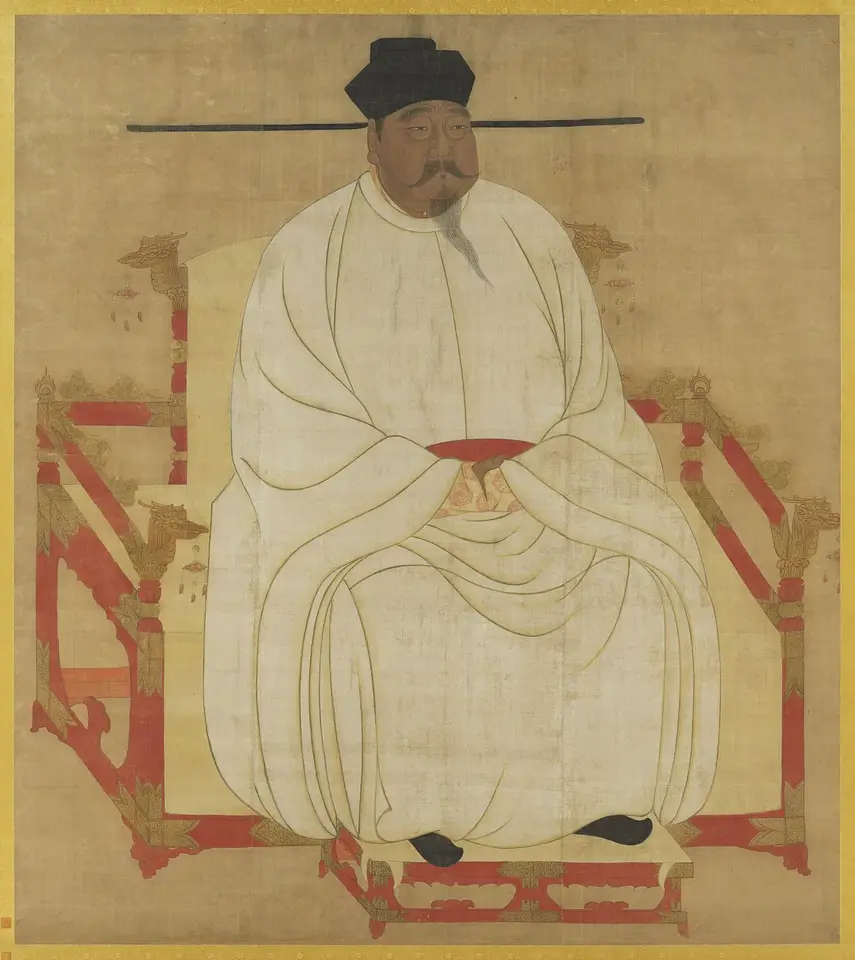
陆九韶
Lu Jiushao (陆九韶, 1128–1205), courtesy name Zimei, pseudonym Master of Suoshan and Old Gardener of Suoshan, was a native of Jinxi County, Fuzhou (modern-day Jinxi County, Jiangxi Province). He was the fourth son of the Song dynasty scholar Lu He and the elder brother of the seminal Neo-Confucian thinkers Lu Jiuling and Lu Jiuyuan (Master Xiangshan). Celebrated alongside his younger brothers as one of the "Three Lus of Jinxi"…
Lu Jiushao (陆九韶, 1128–1205), courtesy name Zimei, pseudonym Master of Suoshan and Old Gardener of Suoshan, was a native of Jinxi County, Fuzhou (modern-day Jinxi County, Jiangxi Province). He was the fourth son of the Song dynasty scholar Lu He and the elder brother of the seminal Neo-Confucian thinkers Lu Jiuling and Lu Jiuyuan (Master Xiangshan). Celebrated alongside his younger brothers as one of the "Three Lus of Jinxi" (or "Three Lus of Jiangxi"), Lu Jiushao was a foundational figure and pioneer of the School of Mind (Xinxue) and the founder of the Suoshan Academic Lineage. Renowned from youth for his moral rectitude, deep filial piety, and exhaustive command of the Confucian Classics, Lu Jiushao consistently placed moral cultivation and practical application above worldly ambition. Despite repeated imperial summons to serve in the bureaucratic administration under the category of "Virtuous and Reclusive Worthies," he steadfastly declined all government appointments. Preferring a life of contemplative integrity and scholarly independence, he built a retreat at Mount Suoshan near his native home, cultivating orchards with his own hands and gathering students to establish the Suoshan Academy. His educational philosophy stressed that scholarship must be intimately anchored in daily life and practical ethics, making enduring contributions to the popularization and practical grounding of Song dynasty Neo-Confucianism. In philosophical discourse, Lu Jiushao engaged in famous epistemological and metaphysical debates with Zhu Xi. After rigorous philological examination of Zhou Dunyi's Tongshu (Penetrating the Book of Changes) and Taijitu Shuo (Explanation of the Diagram of the Supreme Ultimate), he sharply criticized Zhu Xi's ontological formulation of "Non-Ultimate and yet Supreme Ultimate" (Wuji er Taiji), arguing that appending the concept of Wuji was an unnecessary Daoist encumbrance that distorted genuine Confucian doctrine. This theoretical critique directly inspired and framed the subsequent debates between his brother Lu Jiuyuan and Zhu Xi. In social and lineage organization, Lu Jiushao managed the long-standing communal household of the Lu lineage and authored the celebrated manual Jia Zhi (Family Regulations or Rules for Household Management), introducing pioneering budgeting principles and lineage rites such as morning drum-beating and communal recitation. In 1205, he passed away peacefully at his Suoshan hermitage at the age of seventy-eight.
Born into an esteemed scholar-gentry lineage in Jinxi, Fuzhou, as the fourth son of scholar Lu He.
Immersed himself in the Confucian Classics, committing to personal cultivation, practical governance, and family harmony.
Declined imperial summons as a reclusive scholar, establishing a rustic retreat at Mount Suoshan to teach disciples and farm his garden.
Observed strict ancestral mourning upon his father Lu He's death; Zhu Xi composed the funerary epitaph for his father.
Corresponded extensively with Zhu Xi regarding the Western Inscription and the Taijitu Shuo, initiating the critique against the Daoist concept of Wuji.
Formulated the Rules for Household Management, establishing the tenfold budget allocation system and strict ethical guidelines.
Administered communal living for hundreds of kin, instituting morning drum-beating and gong-striking for communal moral recitation.
Mourned the untimely death of his youngest brother Lu Jiuyuan, undertaking the preservation and transmission of the family lineage and teachings.
Passed away peacefully at Mount Suoshan at the age of seventy-eight; honored posthumously by disciples with the private posthumous title Jiansu.
Lu Jiushao was born in 1128 during the second year of the Jianyan reign of Emperor Gaozong of Song in Qingtian Village, Jinxi County, Fuzhou (modern-day Lufang Town, Jinxi County, Jiangxi Province). The Jinxi Lu lineage was renowned for generations of upright conduct, classical scholarship, and social beneficence. His father, Lu He, was a respected scholar who raised six exceptionally talented sons: Lu Jiusi, Lu Jiuxu, Lu Jiugao, Lu Jiushao, Lu Jiuling, and Lu Jiuyuan. Lu Jiushao, together with his fifth brother Lu Jiuling (Master Fuzhai) and his sixth brother Lu Jiuyuan (Master Xiangshan), pursued rigorous moral and intellectual inquiry from early youth, collectively earning the venerated title of the "Three Lus of Jinxi."
Possessing a solemn, steady temperament and profound inner resolve, Lu Jiushao immersed himself in the Confucian Canon and historical chronicles, dedicating his life to filial piety, brotherly affection, and conscientious practice. At that time, the Southern Song civil examination system had become intensely competitive and utilitarian, with scholars largely pursuing rote textual memorization and florid rhetoric for bureaucratic advancement. Disillusioned by this pedantic trend, Lu Jiushao resolved to disengage from examination rivalry. When local magistrates repeatedly nominated him for his moral excellence under the category of "Virtuous and Reclusive Worthies," and the imperial court issued formal edicts summoning him to office, he firmly declined every summons.
During the Qiandao era, Lu Jiushao selected a serene site at the foot of Mount Suoshan, situated tens of miles south of the county seat, and erected a scholarly retreat. Cultivating vegetables and tending crops alongside his disciples and kin, he adopted the self-effacing sobriquet "Old Gardener of Suoshan" (Suoshan Laopu) and named his academy the Suoshan Hermitage. Disciples from near and far traveled great distances to study under him, including notable scholars such as Yan Song and Xu Zhongcheng. At Suoshan, Lu Jiushao expounded the Six Classics while emphasizing that true learning must be grounded directly in daily moral duties.
Lu Jiushao avoided speculative metaphysics detached from daily reality, adopting as his core academic precept that "learning must be essential to daily practical use" (yi qie yu ri yong wei yao). In his daily life, he maintained an uncompromising regimen of self-examination, recording in his nocturnal journal every spoken word and action from the daytime to purify his intentions and eliminate selfish desires.
In metaphysical inquiry, Lu Jiushao engaged in profound intellectual correspondence with the foremost Neo-Confucian master Zhu Xi. Zhu Xi placed supreme philosophical emphasis on Zhou Dunyi's Taijitu Shuo, formulating the foundational axiom "Non-Ultimate and yet Supreme Ultimate" (Wuji er Taiji). Through painstaking textual analysis of Zhou Dunyi's writings, Lu Jiushao identified profound theoretical tensions within Zhu Xi's synthesis. In epistolary debates concerning the Western Inscription (Ximing) and the Supreme Ultimate, Lu Jiushao pointed out that Zhou Dunyi's mature and definitive work, Tongshu, never added the two characters Wuji above Taiji in its primary chapters on heavenly nature and destiny.
Lu Jiushao forcefully argued that the Supreme Ultimate (Taiji) was the self-sufficient, ultimate principle of the cosmos. To superimpose the term Wuji (Non-Ultimate) onto Taiji not only diverged from Zhou Dunyi's definitive thought in Tongshu, but also incorporated Daoist concepts of absolute nothingness and void into orthodox Confucian metaphysics, creating an unnecessary conceptual redundancy. He further advanced the philological argument that the diagram text Taijitu Shuo might have been an early draft influenced by Daoist esoteric manuals rather than Zhou Dunyi's mature doctrine. This trenchant challenge exposed critical tensions within Zhu Xi's cosmological framework, earning Zhu Xi's grudging respect and establishing the conceptual foundation for the subjective ontology of the School of Mind developed by his brother Lu Jiuyuan.
The Lu lineage of Jinxi had lived as an undivided, communal clan since the early Northern Song dynasty, maintaining communal ownership of property, communal meals, and unified agricultural management across multiple generations and hundreds of household members. To sustain familial harmony and financial resilience over extended decades, Lu Jiushao synthesized ancestral customs and practical governance into his masterwork, Rules for Household Management (Jia Zhi, also known as Jujiang Zhengben Zhiyong Pian).
Lu Jiushao divided household governance into two reciprocal pillars: "Correcting the Root" (Zhengben) and "Regulating Expenditure" (Zhiyong). Under "Correcting the Root," he established filial devotion, fraternal harmony, sincere learning, and neighborly benevolence as the fundamental anchors of family survival. He reminded the youth that filial duty meant providing joy and comfort even under modest circumstances, and insisted that study should illuminate classical moral duty rather than serve solely as a tool for bureaucratic titles.
In "Regulating Expenditure," Lu Jiushao elevated domestic financial administration into an art comparable to national statecraft. Advocating that spending must strictly follow income, he introduced a groundbreaking tenfold budgeting system: the clan's annual harvest rents and economic receipts were divided into ten equal shares. Three shares were stored indefinitely in reserve granaries against floods, droughts, and unforeseen crises; one share was dedicated exclusively to seasonal ancestral sacrifices; and the remaining six shares were allocated for the twelve months of living expenses, subdivided into daily budgets. Any surplus remaining at year's end was distributed to lineage widows, orphans, and destitute neighbors. Furthermore, he instituted strict bans against "Seven Lineage Vices," including gambling, indolence, extravagance, drunkenness, and litigiousness, noting that indulgence in any single vice would inevitably precipitate financial ruin.
Beyond financial codification, Lu Jiushao instituted solemn daily rituals that transformed lineage morality into communal rhythm. The clan elected its eldest and most virtuous member as Household Head (Jiazhang) to direct household affairs, while Lu Jiushao provided spiritual and ethical guidance.
To make moral cultivation accessible and engaging, Lu Jiushao composed instructional verses and rhymed warnings. Every morning at dawn, the household head assembled all male and female clan members in the ancestral hall to bow before the ancestral tablets. Following the greeting, an attendant beat the drum three times, and the assembled clan members stood solemnly to recite in unison Lu Jiushao's admonition: "Listen attentively! Heaven has ordained toil for human life. Idleness brings bitter hunger and cold; do not blame fate when calamity strikes, for spiritual beings watch from above!"
At midday, following communal lunch and tea, an attendant struck a bronze chime three times to restore complete silence, whereupon the lineage youths recited ethical reflections on self-restraint and moral discernment. Under these rigorous daily ceremonies of gong and drum, the Lu lineage maintained impeccable harmony, civic virtue, and mutual support across decades without a single member violating the law, earning widespread acclaim celebrated across southern China and documented by contemporary observers like Luo Dajing in Helin Yulu.
In his later years, Lu Jiushao led a peaceful life of contemplation and mentoring at Mount Suoshan, completely detached from public honors. In 1192, his beloved youngest brother Lu Jiuyuan passed away while serving as magistrate of Jingmen Military Prefecture. Overcoming profound grief, Lu Jiushao shouldered the responsibility of educating his nephew and safeguarding the heritage of the Suoshan School.
In 1205, Lu Jiushao passed away serenely at the Suoshan Hermitage at the age of seventy-eight. Scholars and commoners from surrounding prefectures gathered to mourn his passing, bestowing upon him the posthumous title Master Jiansu (Jiansu Xiansheng).
The Qing dynasty historian Quan Zuwang provided the definitive historical appraisal in the Records of Song and Yuan Academies: "Regarding the scholarship of the Three Lu brothers, Suoshan initiated it, Fuzhai popularized it, and Xiangshan perfected it. Suoshan was a person of solid integrity; his discourse was always practical and directly beneficial to daily life." Through his practical Confucian ethics, trenchant cosmological critique, and pioneering lineage institutional design, Lu Jiushao left an indelible imprint on the evolution of Song dynasty Neo-Confucianism and traditional Chinese communal governance.
As the senior brother and mentor of the Jinxi Lu lineage, Lu Jiushao declined imperial appointments to establish the Suoshan Academic School at Mount Suoshan. He actively countered the pedantic scholasticism of the examination system and the speculative excesses of contemporary Neo-Confucianism by defining the core principle that "learning must be essential to daily practical use," bridging inner moral cultivation with daily communal conduct.
During his long epistolary debate with Zhu Xi, Lu Jiushao demonstrated exceptional classical philology and philosophical rigor. By analyzing textual disparities between Zhou Dunyi's Tongshu and Taijitu Shuo, he championed the argument that the Daoist term Wuji should not be placed above the Confucian Taiji, thereby purifying the metaphysical ground for Lu Jiuyuan's subsequent formulation that "the universe is my mind, and my mind is the universe."
Lu Jiushao authored the celebrated Rules for Household Management, establishing one of the earliest and most rigorous domestic financial budgeting models in pre-modern Chinese history. His principles of living within one's means, adjusting expenditure based on resources, and dividing income into designated emergency, sacrificial, and daily portions provided an institutional benchmark for lineage estates and charitable trusts in subsequent dynasties.
Lu Jiushao translated Confucian ideals of self-cultivation and family regulation into structured communal ceremonies. By instituting daily morning drum-beating and midday gong-striking rituals accompanied by unison moral chanting, he sustained an expansive undivided clan across multiple generations, creating an enduring historical exemplar of communal solidarity and social education.
FIGURES ASSOCIATED WITH THIS DYNASTY