Duan Siping established the Dali Kingdom.
937 CE–1254 CE
Dali Kingdom
Regional polity大理
The Dali Kingdom was a regional state founded by Duan Siping in Yunnan, with its political center in the Erhai region. Its territory and influence covered most of present-day Yunnan, and it maintained contacts with the Song dynasty, Tibetan groups, and regions of Southeast Asia. Its history is commonly divided into Former Dali and Later Dali. At the end of Former Dali, Gao Shengtai briefly changed the state name to Dazhong before power was returned to the Duan house. Dali was especially noted…
937 CE–1254 CECapital · Yangjumie City (present-day Dali, Yunnan)
ERA OVERVIEW
The Dali Kingdom was a regional state founded by Duan Siping in Yunnan, with its political center in the Erhai region. Its territory and influence covered most of present-day Yunnan, and it maintained contacts with the Song dynasty, Tibetan groups, and regions of Southeast Asia. Its history is commonly divided into Former Dali and Later Dali. At the end of Former Dali, Gao Shengtai briefly changed the state name to Dazhong before power was returned to the Duan house. Dali was especially noted for the flourishing of Buddhism, including the Azhali Buddhist tradition, and a number of its rulers entered monastic life late in their reigns. Politically, the kingdom was sustained over the long term through a balance among Duan royal authority, Gao family power in the premiership, and local tribal forces.
Time span937 CE–1254 CE
CapitalYangjumie City (present-day Dali, Yunnan)
ERA TIMELINE
Duan Siying was deposed and the throne passed to Duan Siliang.
Duan Sushun took the throne and the Duan royal line continued.
Gao family power in the chief ministry increased further.
Gao Shengtai deposed Duan Zhengming and founded the Dazhong Kingdom.
Duan Zhengchun restored the Duan state, beginning Later Dali.
Duan Zhengyan took the throne.
Duan Zhixing took the throne.
Kublai Khan led Mongol forces into Dali.
(fourth year of the reign of Möng
1254 (fourth year of the reign of Möngke Khan): Duan Xingzhi surrendered and the independent regime ended.
FULL ENTRY
Overview
The Dali Kingdom was a regional state founded by Duan Siping in Yunnan, with its political center in the Erhai region. Its territory and influence covered most of present-day Yunnan, and it maintained contacts with the Song dynasty, Tibetan groups, and regions of Southeast Asia. Its history is commonly divided into Former Dali and Later Dali. At the end of Former Dali, Gao Shengtai briefly changed the state name to Dazhong before power was returned to the Duan house. Dali was especially noted for the flourishing of Buddhism, including the Azhali Buddhist tradition, and a number of its rulers entered monastic life late in their reigns. Politically, the kingdom was sustained over the long term through a balance among Duan royal authority, Gao family power in the premiership, and local tribal forces.
Historical Development
In 937, the second year of the Later Jin Tianfu era, Duan Siping overthrew the Dayining state and founded Dali. Early rulers including Duan Siliang and Duan Sicong maintained order in the Erhai region, while royal authority both cooperated and competed with powerful local families. From the Yuanfeng era of Emperor Shenzong of the Northern Song onward, the Gao family's influence increased further. In 1094, the first year of Shaosheng, Gao Shengtai deposed Duan Zhengming and established the Dazhong Kingdom. In 1096, the third year of Shaosheng, Gao Taiming supported Duan Zhengchun's restoration, beginning what is conventionally called Later Dali, although the Gao family continued to dominate the office of chief minister. Later Dali maintained tribute, horse trade, and frontier relations with the Song while internally relying on local lords. In 1253, the third year of the reign of the Mongol khan Möngke, Kublai Khan led an army across the Jinsha River into Yunnan. In the following year Duan Xingzhi surrendered, bringing Dali's existence as an independent regime to an end. The Yuan later established Yunnan Province, while members of the Duan family continued to participate in local governance in the Dali region.
Politics and Institutions
Dali centered politically on the Duan kings, but it was not a highly centralized imperial state on the Central Plains model. Great families such as the Gao clan repeatedly held the office of chief minister, while local tribal leaders and urban powerholders retained significant influence. Abdications, entry into monastic life, and the enthronement of rulers by powerful ministers occurred frequently, and political continuity depended heavily on cooperation among elite groups. In ritual, official titles, and documentary practice, the state absorbed elements of Tang and Song institutions while preserving the social structures of Yunnan.
Military and Diplomacy
Dali relied on the terrain of the Hengduan Mountains, the Erhai basin, and key passes for defense. Military forces were organized jointly by the royal house, major local families, and tribal groups. Foreign policy focused on maintaining security along the southwestern frontier with the Song, with Tibetan groups, and along routes into Southeast Asia. Mongol forces entered Yunnan through a long-range flanking movement, bypassed traditional northern defenses, and eventually compelled the Duan rulers to submit.
Economy and Commerce
Agriculture, animal husbandry, and handicrafts in the Erhai basin formed the economic base. Yunnan produced horses, salt, metals, and medicinal materials. Horse markets and frontier trade with the Song were important, while trade routes linked the region northward with Sichuan and southward with Southeast Asia. Buddhist monasteries, local lords, and village communities all controlled land and labor, with substantial differences among regions.
Culture and Society
Buddhism profoundly shaped Dali kingship and society. Many rulers abdicated and became monks, and monasteries served religious, educational, and social-organizational functions. The Azhali Buddhist tradition was particularly influential. Dali used Chinese characters in written administration and absorbed Central Plains ritual systems and literature while also preserving the cultures of the Bai and other peoples of Yunnan. The Three Pagodas of Chongsheng Temple, Buddhist manuscripts, and the Long Scroll of Buddhist Images of the Dali Kingdom are important surviving materials for the study of its religion and politics.
Rulers and Governing Core
Duan Siping, Duan Siying, Duan Siliang, Duan Sicong, Duan Sushun, Duan Suying, Duan Sulian, Duan Sulong, Duan Suzhen, Duan Suxing, Duan Silian, Duan Lianyi, Duan Shouhui, Duan Zhengming; during Later Dali: Duan Zhengchun, Duan Zhengyan, Duan Zhengxing, Duan Zhixing, Duan Zhilian, Duan Zhixiang, Duan Xiangxing, and Duan Xingzhi.
> This section explains the position of individual rulers within the evolution of the regime; full biographies are provided in the corresponding person entities.
Historical Assessment and Legacy
Dali maintained political continuity in Yunnan for more than three centuries and made the Erhai region an important node linking the Central Plains, the Tibetan Plateau, and Southeast Asia. It absorbed Tang-Song institutions and written Chinese culture while also reflecting a system in which powerful local families, multiple peoples, and Buddhist networks all participated in government. The Mongol conquest did not immediately eliminate Duan influence, and Yuan administration in Yunnan continued to make use of parts of the earlier political structure.
Rulers
Duan Siping, Duan Siying, Duan Siliang, Duan Sicong, Duan Sushun, Duan Suying, Duan Sulian, Duan Sulong, Duan Suzhen, Duan Suxing, Duan Silian, Duan Lianyi, Duan Shouhui, Duan Zhengming; during Later Dali: Duan Zhengchun, Duan Zhengyan, Duan Zhengxing, Duan Zhixing, Duan Zhilian, Duan Zhixiang, Duan Xiangxing, and Duan Xingzhi.
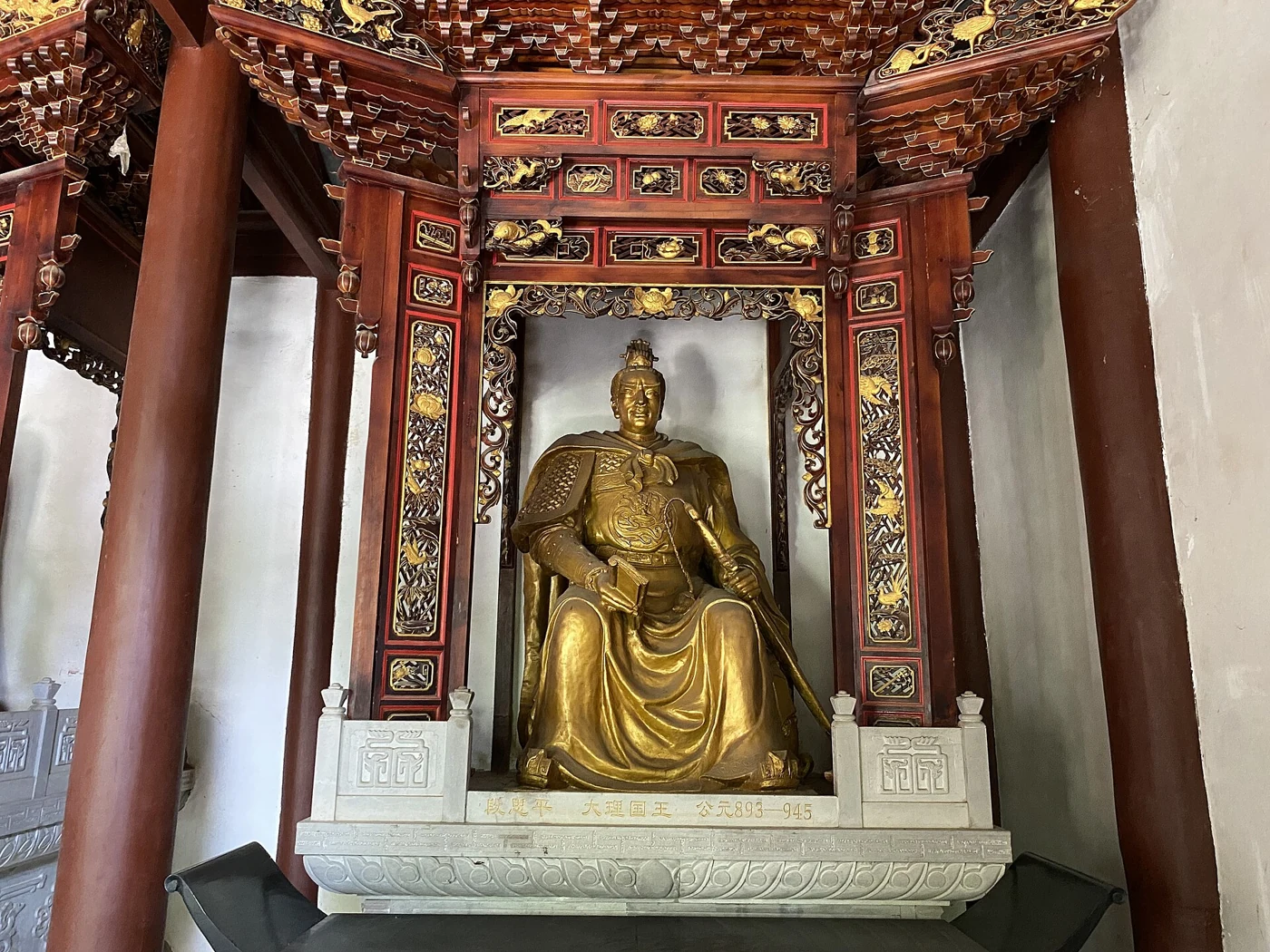 Dali Kingdom
Founding emperor of the Dali Kingdom
Duan Siping
Duan Siping (893–944), a member of the Bai ethnic group from Xijian in Dali (present-day Xizhou, Yunnan) with ancestral roots in Guzang, Wuwei (present-day Wuwei, Gansu), was a sixth-generation descendant of Duan Zhongguo (also known as Duan Jianwei), Grand Counselor (Qingpingguan) of the Nanzhao kingdom in the Tang dynasty, and the founding emperor of the Dali Kingdom (reigned 937–944). Born into an impoverished fam
Dali Kingdom
Historical figure
Duan Si Ying
The Chinese source cache identifies this person as a emperor associated with Dali. This entry preserves the source-backed identity and records the available chronology without adding unsupported claims.
Dali Kingdom
Historical figure
Duan Siliang
The Chinese source cache identifies this person as a emperor associated with Dali. This entry preserves the source-backed identity and records the available chronology without adding unsupported claims.
Dali Kingdom
Historical figure
Duan Sicong
The Chinese source cache identifies this person as a historical figure associated with Chinese history. This entry preserves the source-backed identity and records the available chronology without adding unsupported claims.
Dali Kingdom
Historical figure
Duan Su Shun
The Chinese source cache identifies this person as a historical figure associated with Ming. This entry preserves the source-backed identity and records the available chronology without adding unsupported claims.
Dali Kingdom
Historical figure
Duan Su Ying
The Chinese source cache identifies this person as a emperor associated with Ming. This entry preserves the source-backed identity and records the available chronology without adding unsupported claims.
Dali Kingdom
Historical figure
Duan Su Lian
The Chinese source cache identifies this person as a emperor associated with Ming. This entry preserves the source-backed identity and records the available chronology without adding unsupported claims.
Dali Kingdom
Eighth emperor of the Dali Kingdom
Duan Sulong
Duan Sulong, the eighth emperor of the Dali Kingdom with the posthumous title Bingyi Emperor, was the nephew of Emperor Xuansu Duan Sulian and grandson of Duan Suying, reigning from 1022 to 1026. In 1022 (the first year of Qianxing under Emperor Zhenzong of Song), Duan Sulian died; because his son had predeceased him and his grandson Duan Suzhen was still young, Duan Sulong took the throne, adopting the era name Ming
Dali Kingdom
Historical figure
Duan Suzhen
The Chinese source cache identifies this person as a emperor associated with Dali. This entry preserves the source-backed identity and records the available chronology without adding unsupported claims.
Dali Kingdom
Historical figure
Duan Suxing
The Chinese source cache identifies this person as a historical figure associated with Chinese history. This entry preserves the source-backed identity and records the available chronology without adding unsupported claims.
Dali Kingdom
Eleventh emperor of the Dali Kingdom
Duan Silian
Duan Silian (dates of birth and death unknown), a member of the Bai ethnic group from Dali (present-day Dali, Yunnan), was the great-grandson of Duan Siping and son of Duan Sizhi. He was the eleventh king of the Dali Kingdom (reigned 1044–1075), with the temple name Xingzong and the posthumous title Xiaode Emperor. In 1044 (the fourth year of Qingli of the Song), after the powerful minister Gao Zhisheng staged a coup
Dali Kingdom
Historical figure
Duan Lian Yi
The Chinese source cache identifies this person as a historical figure associated with Chinese history. This entry preserves the source-backed identity and records the available chronology without adding unsupported claims.
Dali Kingdom
Historical figure
Duan Shou Hui
The Chinese source cache identifies this person as a emperor associated with Ming. This entry preserves the source-backed identity and records the available chronology without adding unsupported claims.
Dali Kingdom
Fourteenth emperor of the Dali Kingdom
Duan Zhengming
Duan Zhengming, the fourteenth emperor of the Dali Kingdom, bore the imperial title Baoding Emperor and was the grandson of Xingzong Duan Silian; he lived in the era of the Northern Song. In 1081 (the fourth year of Yuanfeng under Emperor Shenzong of Song), the powerful Gao Zhisheng and his son Gao Shengtai, using "heavenly portents" as a pretext, forced Emperor Shangming Duan Shouhui to abdicate and become a monk, t
Dali Kingdom
Fifteenth emperor of the Dali Kingdom (first emperor of the Later Dali)
Duan Zhengchun
Duan Zhengchun (eleventh to twelfth century) was the fifteenth emperor of the Dali Kingdom in Yunnan, grandson of Duan Silian and elder brother of Duan Zhengming. His posthumous title was Wen'an Emperor and his temple name Zhongzong. His brother Duan Zhengming was usurped by Gao Shengtai; when Gao Shengtai died of illness three years later (1096), he charged his son Gao Taiming on his deathbed to return power to the
Dali Kingdom
Sixteenth emperor of the Dali Kingdom
Duan Zhengyan
Duan Zhengyan (1083–1176), also known as Duan Heyu, a member of the Bai ethnic group from Dali (present-day Dali, Yunnan), was the son of Duan Zhengchun, Emperor Wen'an of Dali, and the sixteenth emperor of the Dali Kingdom (reigned 1108–1147), with the temple name Xianzong and the posthumous title Xuanren Emperor. In 1094 his uncle, Baoding Emperor Duan Zhengming, pressured by the dominance of Gao Shengtai, abdicate
Dali Kingdom
Historical figure
Duan Zhengxing
The Chinese source cache identifies this person as a emperor associated with Dali. This entry preserves the source-backed identity and records the available chronology without adding unsupported claims.
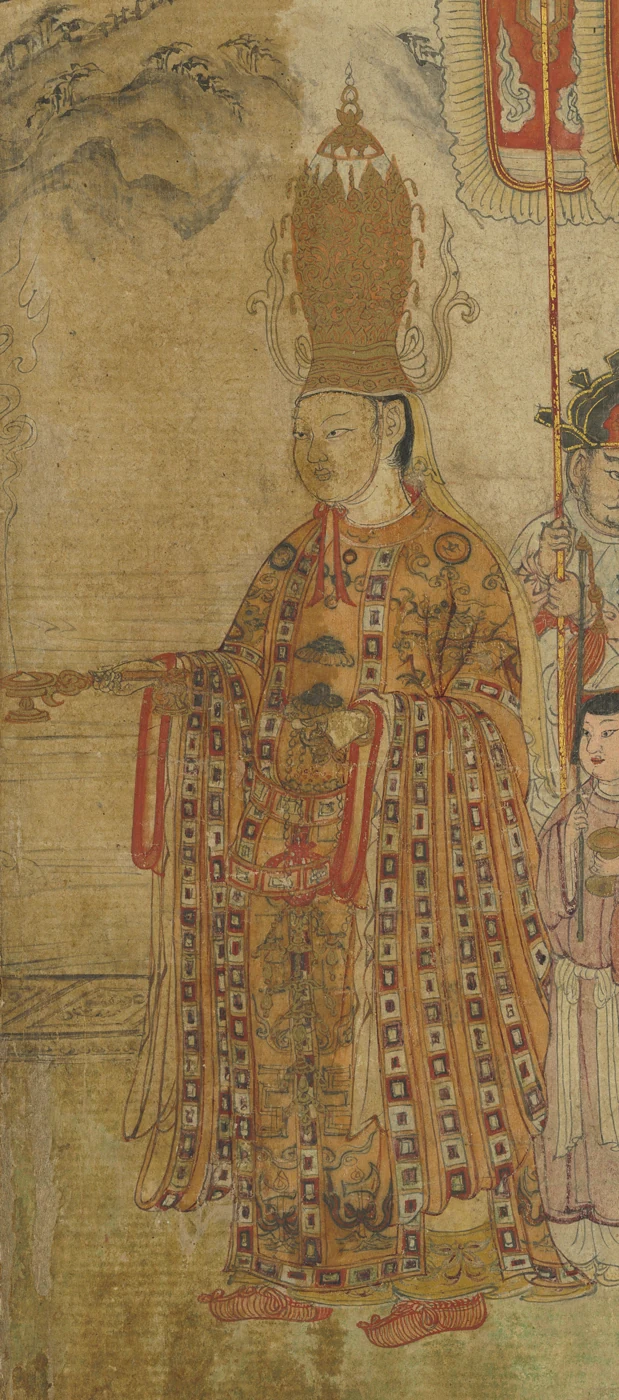 Dali Kingdom
Eighteenth emperor of the Dali Kingdom
Duan Zhixing
Duan Zhixing (died 1200), also known as Duan Yichangxing, was a member of the Bai ethnic group and the eighteenth emperor of the Dali Kingdom. Son of Duan Zhengxing, he reigned from 1172 to 1200, a total of twenty-eight years, with the temple name Xuanzong and the posthumous title Gongji Emperor. He succeeded in 1172 when Duan Zhengxing abdicated to become a monk, with state affairs still administered by the "Duke of
Dali Kingdom
Historical figure
Duan Zhi Lian
The Chinese source cache identifies this person as a emperor associated with Song. This entry preserves the source-backed identity and records the available chronology without adding unsupported claims.
Dali Kingdom
Historical figure
Duan Zhi Xiang
The Chinese source cache identifies this person as a emperor associated with Ming. This entry preserves the source-backed identity and records the available chronology without adding unsupported claims.
Dali Kingdom
Historical figure
Duan Xiang Xing
The Chinese source cache identifies this person as a emperor associated with Dali. This entry preserves the source-backed identity and records the available chronology without adding unsupported claims.
Dali Kingdom
Last emperor of the Dali Kingdom
Duan Xingzhi
Duan Xingzhi (died 1260), a member of the Bai ethnic group from present-day Dali, Yunnan, was the son of Duan Xiangxing and the last emperor of the Dali Kingdom, later serving as the first Grand Administrator of Dali under the Yuan dynasty. He succeeded to the throne in 1251 and adopted the era name Tianding. In 1253 the Mongol army marched south, the Dali capital fell, and the kingdom came to an end; Duan Xingzhi wa
KEY PEOPLE
Related entries
Bibliography
- 《资治通鉴》