Succeeded Duan Zhengxing | Succeeded Duan Zhengxing, with Gao Shouchang still administering state affairs.
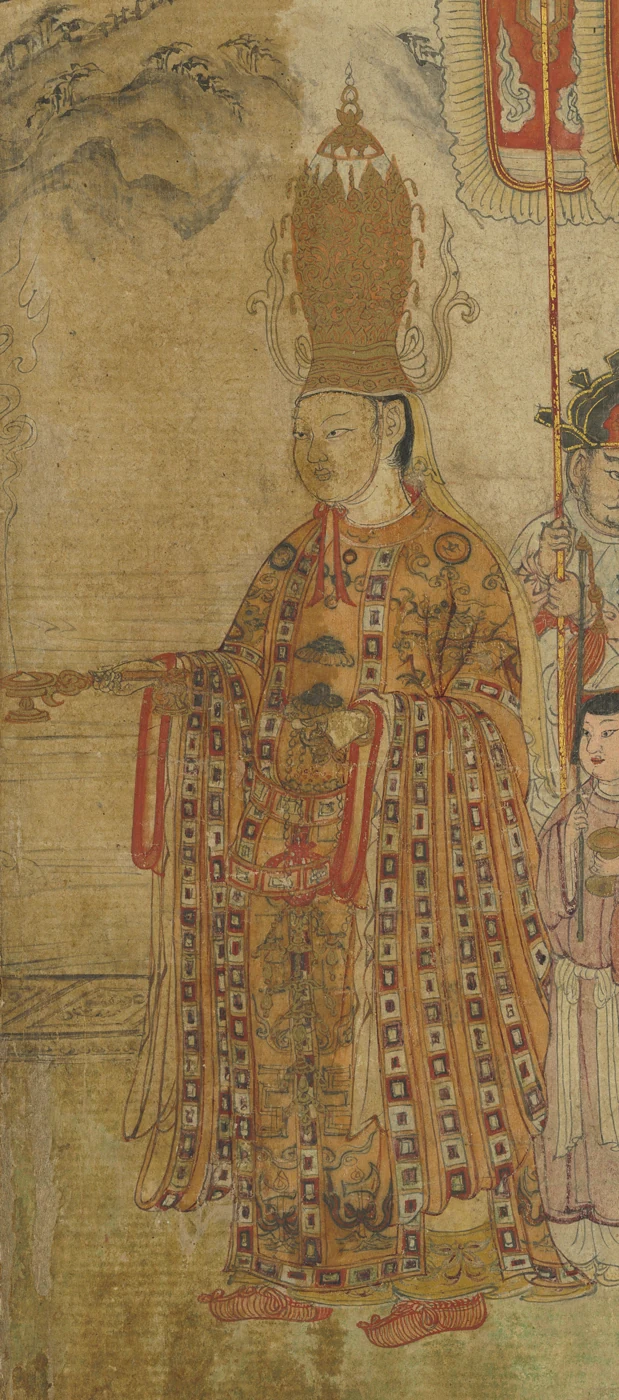
Eighteenth emperor of the Dali Kingdom
Duan Zhixing
段智兴
Duan Zhixing (died 1200), also known as Duan Yichangxing, was a member of the Bai ethnic group and the eighteenth emperor of the Dali Kingdom. Son of Duan Zhengxing, he reigned from 1172 to 1200, a total of twenty-eight years, with the temple name Xuanzong and the posthumous title Gongji Emperor. He succeeded in 1172 when Duan Zhengxing abdicated to become a monk, with state affairs still administered by the "Duke of the…
Dali Kingdom
PROFILE
Duan Zhixing (died 1200), also known as Duan Yichangxing, was a member of the Bai ethnic group and the eighteenth emperor of the Dali Kingdom. Son of Duan Zhengxing, he reigned from 1172 to 1200, a total of twenty-eight years, with the temple name Xuanzong and the posthumous title Gongji Emperor. He succeeded in 1172 when Duan Zhengxing abdicated to become a monk, with state affairs still administered by the "Duke of the Central Realm" (Zhongguo Gong) Gao Shouchang. During his reign he sent envoys to the Hengshan stockade in Guangxi to negotiate horse trade with the Southern Song and to request scriptures, medical texts, and medicinal herbs. Within the kingdom, the Gao clan was convulsed by fierce internal struggles. Duan Zhixing built sixty Buddhist temples in all, devoting himself to Buddhism and neglecting state affairs, to the detriment of the kingdom's strength. In 1195 he rebuilt the Longshou and Longwei passes and constructed Sanyang City. He died in 1200 and was succeeded by his son Duan Zhilian. The character Duan Zhixing—"Emperor of the South" and later the monk Yideng—in Jin Yong's novels The Legend of the Condor Heroes and The Return of the Condor Heroes is based on him.
- Period
- Dali Kingdom
- Date of Birth
- Unknown
- Date of Death
- 1200
- Also known as
- Duan Yichangxing
- Era / Dynasty
- Dali Kingdom
- Ethnicity
- Bai
- Identity / Occupation
- Eighteenth emperor of the Dali Kingdom
- Reign
- 1172–1200
- Predecessor
- Duan Zhengxing
- Successor
- Duan Zhilian
- Era Names
- Lizhen, Shengde (Shengming), Jiahui, Yuanheng, Anding
- Temple Name
- Xuanzong
- Posthumous Name
- Gongji Emperor
- Year of Death
- 1200
- Major Achievements
- Sent envoys to the Southern Song's Hengshan stockade to negotiate horse trade and request scriptures; built sixty Buddhist temples; rebuilt the Longshou and Longwei passes and Sanyang City
LIFE TIMELINE
Adopted the era name Lizhen | Adopted the era name Lizhen; sent envoys to the Song Hengshan stockade for horse trade and scriptures.
Struggles within the Gao clan: Gao Guanyinlong | Struggles within the Gao clan: Gao Guanyinlong, Aji, and Gao Guanmiaomiao seized power in turn.
Built sixteen temples in one year | Built sixteen temples in one year, sixty in all during his reign.
Rebuilt the Longshou and Longwei passes and constructed Sanyang City. | Rebuilt the Longshou and Longwei passes and constructed Sanyang City.
Died | Died; posthumous title Gongji Emperor, temple name Xuanzong; succeeded by Duan Zhilian.
Death | Duan Zhixing died and his son Duan Zhilian succeeded him.
BIOGRAPHY
Biography
Accession
In 1172, Duan Zhengxing abdicated to become a monk, and Duan Zhixing inherited the throne, with state affairs still managed by the "Duke of the Central Realm" Gao Shouchang. The following year he adopted the era name Lizhen.
Envoys to the Southern Song
Soon after his accession, Duan Zhixing dispatched Li Guanyinde and twenty-two others to the Hengshan stockade in Guangxi to request trade in horses with the Southern Song and to purchase scriptures, medical texts, and medicinal herbs—an important episode in the border trade between Dali and the Southern Song.
Struggles within the Gao Clan
During his reign the Gao clan was racked by intense internal struggles and the political situation shifted repeatedly. In 1174, Gao Guanyinlong seized Gao Shouchang's position and gave it to Gao Zhenming (Gao Shouchang's nephew); before long, Aji rose in arms, took the position back from Gao Zhenming, and restored Gao Shouchang, while Gao Zhenming fled to Heqing. In 1176, Gao Guanmiaomiao declared himself independent, rose from Baiya (present-day Hongya, Midu County, Yunnan), captured Shanchan (present-day Kunming), and took Gao Shouchang's place. Duan authority was further reduced to a shadow behind the Gao clan.
Devotion to Buddhism and Temple Building
Duan Zhixing built Buddhist temples on a grand scale, completing sixty in all—sixteen in the single year 1190—at considerable cost to the kingdom's strength; he himself devoted his days to Buddhism and neglected governance. In 1195 he rebuilt the Longshou Pass (present-day Shangguan, Dali City) and Longwei Pass (present-day Xiaguan, Dali City) and constructed Sanyang City.
Death
Duan Zhixing died in 1200 and was succeeded by his son Duan Zhilian. His posthumous title was Gongji Emperor and his temple name Xuanzong.
Major Activities
- Dispatched Li Guanyinde and others to the Hengshan stockade in Guangxi to negotiate the horse trade with the Southern Song and to purchase scriptures, medical texts, and medicinal herbs, promoting economic and cultural exchange between Dali and the Southern Song
- Built sixty Buddhist temples during his reign, and rebuilt the Longshou and Longwei passes and Sanyang City
The events of his reign can be grouped by year: in 1172 his father Duan Zhengxing abdicated and he inherited the rule of Dali; in 1173 he sent Li Guanyinde and others to Hengshanliao in the Southern Song to discuss the horse trade and ask for scriptures and medical books; in 1174 Gao Guanyinlong intervened in the contest between Gao Shouchang and Gao Zhenming for the chancellorship; in 1176 Gao Guanyinmiao rose and seized Gao Shouchang's position, and studies of the palace collections treat the Gao factional struggle as the background to the painting activity of the time; in 1190 sixteen Buddhist temples were built, though the total number of monasteries given in the accounts still lacks independent verification; in 1195 the Longshou and Longwei passes and the city of Sanyang were repaired; he died in 1200 and his son Duan Zhilian succeeded him. His reign of nearly thirty years leaves verifiable business chiefly in the sending of envoys for books, the repair of cities and the patronage of Buddhism, while the contest for the chancellorship within the Gao family shows that real power in Dali still lay with the Gao line.
Through his nearly thirty years on the throne the succession of Gao chancellors and the contest for the chancellorship ran almost without interruption, while dealings with the Southern Song consisted chiefly of the horse trade and requests for scriptures.
Two threads run through the sources for his reign: dealings with the Song, where envoys discussed the horse trade and asked for scriptures and medical books, and his patronage of Buddhism, with the building of temples and the repair of the Longshou and Longwei passes and the city of Sanyang; the contest for the chancellorship, meanwhile, lay among Gao Shouchang, Gao Zhenming, Gao Guanyinlong and Gao Guanyinmiao, showing that real power in Dali still rested with the Gao family. As evidence, direct records of his own words and acts are limited, and any assessment must stay within the verifiable events.
His son Duan Zhilian succeeded him, the arrangement of Duan rulers with Gao chancellors continuing through the following reigns.
The records of his nearly thirty years concern chiefly requests for books abroad, patronage of Buddhism and changes of chancellor, and with the material limited any appraisal of the man himself can only be tentative; the horse trade and the seeking of texts between Dali and the Southern Song also reflect the material and cultural exchange between Yunnan and the interior at the time.
The dates and events of his reign are given in the sources mostly in the form of parallel notices, so the entry keeps only the sending of envoys for books, the repair of the passes and the building of temples, while such claims as the total number of monasteries are noted as lacking independent verification.
His son succeeded him.
Personal Relations
- Duan Zhengxing: father and predecessor, who abdicated in 1172.
- Duan Zhilian: son and succeeding ruler.
- Gao Shouchang, Gao Zhenming, Gao Guanyinlong and Gao Guanyinmiao: members of the Gao chancellor group recorded in another account who were successively drawn into the contest for the chancellorship; this cannot simply be summarised as a war launched by Duan Zhixing in person.
Historical Assessment
The character Duan Zhixing in Jin Yong's wuxia novels The Legend of the Condor Heroes and The Return of the Condor Heroes—"Emperor of the South" (Nandi) of the "Five Greats" and, after becoming a monk, Master Yideng—is based on Xuanzong Duan Zhixing of Dali.
His grand temple-building and devotion to Buddhism, to the neglect of state affairs, weakened the kingdom; yet his missions to the Song for horses and scriptures furthered exchange with China.
FIGURES ASSOCIATED WITH THIS DYNASTY
Bibliography
- Zengding Nanzhao Yeshi (Expanded and Revised Unofficial History of Nanzhao)
- Biographical Dictionary of Ethnic Figures in Chinese History, Chinese Social Sciences Press, 1990