Birth in Jiankang
Born in the southern capital Jiankang while his father, Zu Chongzhi, was developing calendar systems.
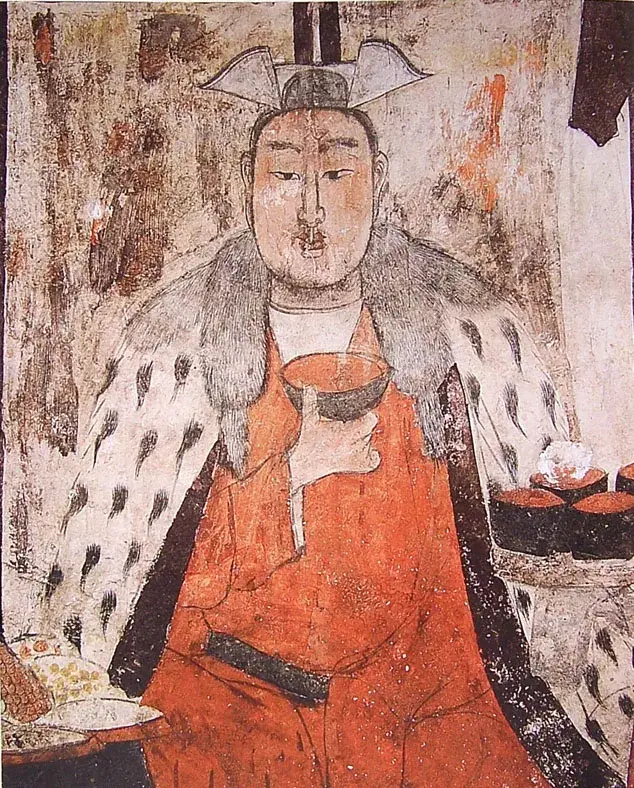
祖暅
[!NOTE] Zu Geng (c. 456–536), also known as Zu Gengzhi and courtesy name Jingshuo, was a preeminent mathematician, astronomer, mechanical engineer, and court official of the Southern Dynasties during the Northern and Southern Dynasties period. Born in Jiankang (modern Nanjing) and tracing ancestral roots to Fucheng in You County, Fanyang (modern Laishui, Hebei Province), he was the son and intellectual heir of the…
[!NOTE] Zu Geng (c. 456–536), also known as Zu Gengzhi and courtesy name Jingshuo, was a preeminent mathematician, astronomer, mechanical engineer, and court official of the Southern Dynasties during the Northern and Southern Dynasties period. Born in Jiankang (modern Nanjing) and tracing ancestral roots to Fucheng in You County, Fanyang (modern Laishui, Hebei Province), he was the son and intellectual heir of the world-renowned scientist Zu Chongzhi. Zu Geng achieved monumental global acclaim in mathematics by formulating Zu Geng's principle ("if volumes of two solids are equal at every cross-section of the same height, their total volumes must be identical"), using it to solve the ancient geometric riddle of the mou he fang gai (bicylinder) and derive the exact volume formula for a sphere, prefiguring Cavalieri's principle by more than eleven centuries. He co-authored the premier mathematical text Zhui Shu (Method of Interpolation, or Zhuishu) with his father and submitted three successive memorials to Emperor Wu of Liang between 504 and 510, scientifically defending observational astronomical data against conservative court opposition to successfully secure the official adoption of the advanced Daming Calendar (Daming Li). Serving as Chamberlain for the National Treasury and Governor of Yuzhang, he also designed high-precision shadow gnomons, outflow clepsydras, and riverine pontoon bridges.
Born in the southern capital Jiankang while his father, Zu Chongzhi, was developing calendar systems.
Trained in advanced calculation, astronomical observation, and mechanical engineering under his father's personal tutelage.
Formulated the geometric principle "if volumes are identical at equal heights, their totals cannot differ," deriving the exact volume of a sphere.
Utilized a self-designed observational tube to measure that the visible celestial pole star sat more than one degree away from the true astronomical pole.
Mourned his father's passing and undertook the mission to safeguard the Daming Calendar manuscripts.
Appointed Supernumerary Cavalier Attendant under Emperor Wu of Liang (Xiao Yan).
Submitted his first memorial urging the replacement of the outdated Yuanjia Calendar with the Daming Calendar.
Presented detailed solar solstice records, debating conservative astronomers at the Directorate of Astronomy.
Emperor Wu decreed the official nationwide implementation of the Daming Calendar; Zu Geng was promoted to Chamberlain for the National Treasury.
Appointed Governor of Yuzhang, reforming local administration and building agricultural irrigation dykes.
Died peacefully in Jiankang at approximately eighty years of age.
Zu Geng was born around 456 in Jiankang, the imperial capital of the Liu Song dynasty. His ancestral lineage originated in Fucheng, Fanyang, an aristocratic clan that had migrated south following the fourth-century fall of Western Jin, providing successive generations of court engineers and officials. His great-grandfather Zu Chang served as Chief Adjutant to the Minister of Works, his grandfather Zu Shuozhi was an imperial attendant proficient in calendars, and his father, Zu Chongzhi, was one of the greatest mathematicians and astronomers in human history.
Reared in this rigorous scientific household, Zu Geng demonstrated an instinctive aptitude for three-dimensional geometry, mechanics, and computation. Early records note that "he inherited the family enterprise, penetrating its finest subtleties with extraordinary ingenuity." He regularly assisted his father in tracking planetary motions, calibrating water clocks, and calculating the value of pi.
Zu Geng's concentration during mathematical inquiry was legendary. On one occasion, while walking down a bustling Jiankang avenue completely absorbed in working out a complex geometric proof, he walked straight into the ceremonial carriage of Grand Councilor Xu Mian. The minister's guards shouted in alarm, but Zu Geng realized his mistake only after looking up in bewilderment. Observers marveled that when his mind reached the heights of subtlety, "even claps of thunder could not penetrate his focus."
Prior to the sixth century, calculating the exact volume of a sphere remained an unsolved puzzle across the ancient world. The ancient text Nine Chapters on the Mathematical Art (Jiuzhang Suanshu) used an empirical approximation that produced substantial errors. During the Three Kingdoms period, Wei mathematician Liu Hui discovered that a sphere could be inscribed inside a geometric intersection of two identical orthogonal cylinders—a shape he termed the mouhefanggai (bicylinder). However, Liu Hui was unable to determine the volume of the bicylinder itself, lamenting that he had to leave the proof to later generations.
Accepting Liu Hui's challenge, Zu Geng conducted exhaustive investigations into three-dimensional cross-sections, ultimately formulating the foundational axiom: "If volumes of two solids are equal at every cross-section of the same height, their total volumes must be identical" (mi shi ji tong, ze ji bu rong yi).
Applying this principle, Zu Geng constructed an inverted square pyramid within a cube circumscribing the mou he fang gai. By proving that the horizontal slice of the empty space between the mou he fang gai and the cube equaled the horizontal slice of the inverted pyramid at every height, Zu Geng demonstrated that the volume of the mou he fang gai was exactly two-thirds that of its circumscribed cube. Because the ratio of the volume of an inscribed sphere to the mou he fang gai equals pi over four, he derived the definitive formula for the volume of a sphere: four-thirds times pi times the radius cubed. This discovery preceded Italian mathematician Bonaventura Cavalieri's formulation of the same concept by more than eleven hundred years.
In astronomy, Zu Geng's defining public crusade was his unwavering six-year struggle to secure imperial adoption of his father's masterwork, the Daming Calendar (Daming Li).
Completed in 462 by Zu Chongzhi, the Daming Calendar was a groundbreaking achievement, being the first calendar in Chinese history to integrate the astronomical precession of the equinoxes (suicha) and establishing a more accurate leap-year cycle (144 intercalary months in 391 years). However, court conservative Dai Faxing blocked its implementation under Liu Song, and the outdated Yuanjia Calendar remained in use even after Zu Chongzhi's death in 500.
Determined to vindicate his father's genius, Zu Geng submitted a detailed memorial to Emperor Wu of Liang in 504, urging the adoption of the Daming Calendar. When bureau officials shelved the request, Zu Geng conducted years of rigorous solar-shadow and planetary measurements on the observatory towers. In 509, he submitted a second memorial documenting that the Yuanjia Calendar was running a full day behind actual winter solstice observations.
Emperor Wu ordered an open debate and observational test at the Astronomical Directorate. Facing dozens of conservative court officials, Zu Geng demonstrated his celestial calculations with absolute mathematical rigor. Subsequent seasonal observations confirmed every calculation. Convinced by empirical reality, Emperor Wu promulgated an imperial decree in January 510 officially adopting the Daming Calendar, thereby elevating astronomical precision for agricultural production and dynastic timekeeping.
Beyond abstract mathematics, Zu Geng was an exceptional practical engineer. Contemporary histories noted that his mechanical designs achieved such breathtaking subtlety that "even the legendary artisans Lu Ban and Chui could not surpass him."
In the Liang court, Zu Geng restored the lost mechanisms of the south-pointing chariot (zhinanche), designing differential gears that kept the wooden pointer facing south regardless of directional turns. He constructed balancing vessels (qiqi) that demonstrated rotational equilibrium as moral admonitions for the emperor, and improved clepsydras by installing multiple float regulators to maintain constant water pressure. In positional astronomy, using an eight-foot sighting tube, he was the first astronomer to measure that the visible Polaris sat more than one degree away from the true celestial north pole, disproving the centuries-old belief in an unmoving pole star.
During the defense of Zhongli against Northern Wei armies, Zu Geng designed floating pontoon bridges across the Huai River, facilitating vital military supply flows. In his later years, he served as Governor of Yuzhang, governing with administrative benevolence, remitting excessive taxes, and directing flood-control dykes and irrigation channels that secured bumper harvests. He passed away in Jiankang around 536 at roughly eighty years of age.
Zu Geng's most celebrated contribution to world mathematics was the formulation of Zu Geng's principle, which served as an early milestone in the history of integral calculus.
Recognizing that continuous three-dimensional volumes could be compared through parallel planar slices, he articulated the law: "If heights are identical and cross-sectional areas match at every point, total volumes cannot differ." Applying this insight to the complex geometry of the mouhefanggai, he calculated the exact volume of a sphere without modern limits or coordinate calculus, establishing a theoretical high-water mark for medieval geometry centuries before the European scientific revolution.
Alongside his father, Zu Geng co-authored Zhui Shu (Method of Interpolation), universally recognized as the most advanced and difficult mathematical treatise of pre-modern East Asia.
The text contained the culmination of the Zu family's work on seven-decimal-place pi calculations, higher-degree algebraic equations, spherical trigonometry, and multi-layer numerical interpolation. During the Tang dynasty, when the imperial National University established its mathematics institute to teach the Ten Computational Canons (Suanjing Shishu), curriculum guidelines mandated four full years of study for Zhui Shu alone, twice the time allotted to any other text, testifying to its unmatched intellectual rigor.
Zu Geng's persistent memorials and astronomical defenses secured the official implementation of the Daming Calendar in 510, initiating a major technical revolution in Chinese calendar science.
By incorporating equinoctial precession into official calendar formulas, Zu Geng ensured that seasonal agricultural cycles remained synchronized with true astronomical realities, establishing an empirical paradigm followed by all subsequent dynastic courts through the Ming and Qing periods.
In applied observational astronomy, Zu Geng's discovery of the polar offset angle represented a major breakthrough in positional astronomy.
By proving that the celestial pole star moved in an orbital circle rather than remaining fixed at the exact center of heaven, he advanced medieval spherical trigonometry. His construction of all-bronze shadow gnomons and balanced clepsydras significantly improved observational precision across the Southern Dynasties.
FIGURES ASSOCIATED WITH THIS DYNASTY