Birth beside Lianxi
Born into a virtuous scholarly household in Daozhou; displayed early love for nature, classical history, and cosmological inquiry.
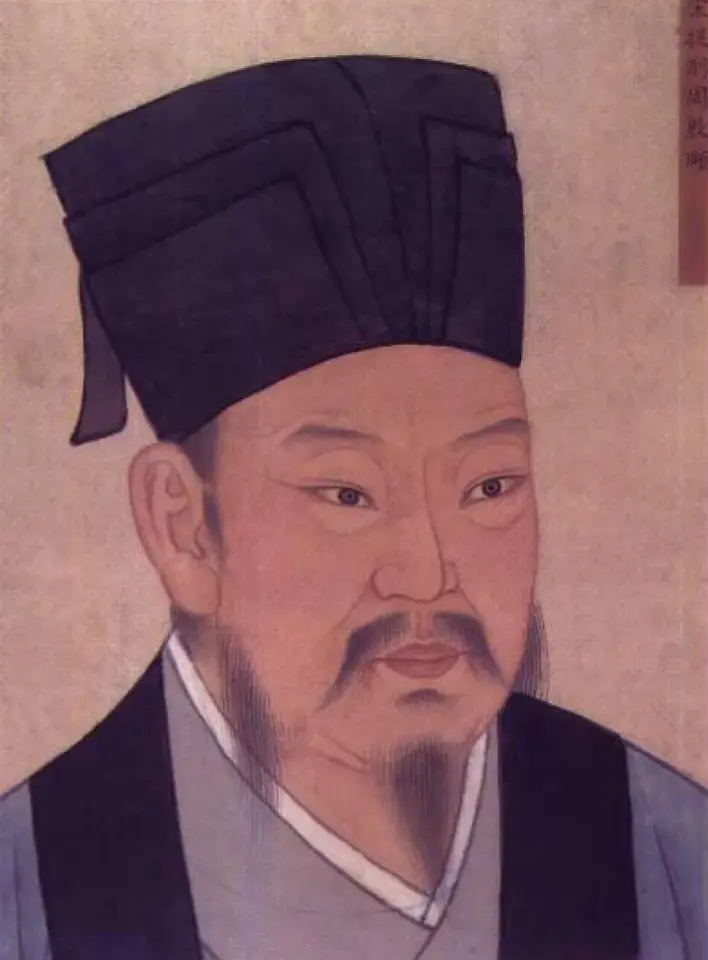
1017 CE–1073 CE
周敦颐
Zhou Dunyi (1017–1073 AD), originally named Dunshi, courtesy name Maoshu, art name Lianxi, was a native of Yingdao, Daozhou (present-day Dao County, Hunan Province). He was a seminal philosopher, cosmologist, and literary essayist of the Northern Song Dynasty, universally revered as "Master Lianxi" and celebrated as the foundational patriarch of Song Neo-Confucianism (Daoxue). Serving in high regional judicial and…
Zhou Dunyi (1017–1073 AD), originally named Dunshi, courtesy name Maoshu, art name Lianxi, was a native of Yingdao, Daozhou (present-day Dao County, Hunan Province). He was a seminal philosopher, cosmologist, and literary essayist of the Northern Song Dynasty, universally revered as "Master Lianxi" and celebrated as the foundational patriarch of Song Neo-Confucianism (Daoxue). Serving in high regional judicial and administrative posts including Judicial Commissioner of Guangdong and Prefect of Nankang, he was posthumously ennobled as Duke of Dao State, accorded the posthumous title "Yuangong", and enshrined in the central hall of the Confucian Temple. Hailing from a family of scholar-officials, Zhou entered official service through the ancestral privilege of his maternal uncle Zheng Xiang. In regional administrative posts across Fenning, Nan'an, Guiyang, and Chenzhou, he won widespread renown for moral integrity and judicial brilliance, fearlessly defending innocent prisoners against tyrannical superiors. Cheng Xiang was so moved by Zhou's transcendent moral poise that he sent his two young sons, Cheng Hao and Cheng Yi, to study under Zhou, making Zhou the direct intellectual catalyst for the Cheng-Zhu Neo-Confucian lineage. In metaphysics, Zhou synthesized classical Yijing cosmology with Daoist concepts and Confucian ethics, authoring the foundational treatises Taijitu Shuo (Explanation of the Diagram of the Supreme Ultimate) and Tongshu. Opening with the profound proposition "The Ultimateless and yet the Supreme Ultimate" (Wuji er Taiji), he built an integrated metaphysical architecture connecting cosmic evolution with the inner moral cultivation of the Confucian sage. In literature, his immortal essay On the Love of the Lotus (Ai Lian Shuo) celebrated the lotus that "emerges from the muddy mire unstained, bathed by clear ripples yet unbeguiling", establishing an immortal aesthetic metaphor for the noble Confucian gentleman. Retiring to his Lianxi hermitage beneath Mount Lu, he passed away in 1073 AD at age fifty-seven, revered across East Asia as the herald of Chinese philosophical resurgence.
Born into a virtuous scholarly household in Daozhou; displayed early love for nature, classical history, and cosmological inquiry.
Inducted through his maternal uncle's imperial privilege; appointed Registrar of Fenning, resolving decades-old legal mysteries.
Defied tyrant commissioner Wang Kui to exonerate an innocent death-row prisoner; instructed young disciples Cheng Hao and Cheng Yi.
Formulated the philosophical treatises Taijitu Shuo and Tongshu, establishing the cosmological foundations of Neo-Confucianism.
Administered Qianzhou with benevolent clarity; established academies at Yugu Terrace, attracting scholars from across the south.
Served as Judicial Commissioner of Guangdong; composed On the Love of the Lotus beside the Washing Horse Pool at Nankang.
Retired due to illness beneath Lotus Peak at Mount Lu, establishing the Lianxi Academy to teach classical metaphysics.
Passed away peacefully at age fifty-seven; posthumously ennobled as Duke of Dao State and enshrined in the Confucian Temple.
Zhou Dunyi was born beside the clear waters of the Lianxi stream in Yingdao, Daozhou. His father, Zhou Fucheng, earned the Jinshi degree during the reign of Emperor Zhenzong and served as Magistrate of Guiling County in Hezhou, renowned for incorruptible administration. Orphaned at the age of eight upon his father's death, Zhou was taken by his mother, Lady Zheng, to reside in the capital Kaifeng with her brother, Zheng Xiang. Zheng Xiang, an Auxiliary Academician of the Longtu Pavilion, possessed vast erudition and treated young Zhou as his own son, guiding his classical education. From childhood, Zhou possessed a tranquil spirit unswayed by worldly wealth, immersing himself in the Book of Changes (Yijing) and early cosmological texts while observing the natural growth of green grass and lotus flowers outside his study window.
In 1036 AD, on his deathbed, Zheng Xiang petitioned Emperor Renzong to bestow his hereditary yin-privilege upon his nephew. The twenty-year-old Zhou was commissioned as Court Gentleman for Miscellaneous Service and designated Registrar of Fenning County in Hongzhou (present-day Xiushui, Jiangxi). Upon his arrival, he confronted a labyrinthine murder case that had confounded previous magistrates for years, resulting in the unjust detention of dozens of innocent locals. Zhou personally re-examined the forensic registers, inspected the physical scene in civilian dress, and apprehended the true culprits within three days, releasing every wrongly imprisoned citizen. Local elders marveled at his unerring insight, declaring: "Even veteran judicial magistrates from the capital could not surpass our young registrar!"
In 1044 AD, Zhou was transferred to Nan'an Military Prefecture (present-day Dayu, Jiangxi) as Judicial Administrator in charge of penal reviews. A provincial official had trumped up charges against an innocent civilian, sentencing him to decapitation under military statutes. Re-evaluating the dossier, Zhou found the allegations completely baseless and pleaded with the circuit transport commissioner, Wang Kui, to spare the man's life. Wang Kui was notorious for tyrannical brutality, striking terror into provincial magistrates who never dared to cross his will. Enraged that a petty junior registrar dared challenge his judgment, Wang Kui slammed his desk and threatened Zhou with demotion and imprisonment. Zhou remained immovable, unfastened his official seal, cast it onto the judicial desk, and declared with righteous indignation: "If one must slaughter an innocent human being merely to curry favor with a superior officer, I would rather resign this very instant! Murdering men to buy promotion is something I will never do!" Shaken by Zhou's fearless moral majesty, Wang Kui relented and dismissed the charges, cementing Zhou's fame for unbending integrity.
During this period, Court Official Cheng Xiang visited Nan'an on imperial inspection. Hearing of Zhou's moral defense of the condemned, Cheng Xiang sought him out. Engaging in deep philosophical debates for days, Cheng Xiang was spellbound by Zhou's transcendent moral serenity and cosmic insight, forming an enduring brotherhood. Upon returning home, Cheng Xiang instructed his two gifted sons, Cheng Hao (fourteen) and Cheng Yi (thirteen), to travel to Nan'an to apprentice themselves to Zhou. Under Zhou's guidance, the young brothers were taught to seek the pristine joy of Confucius and Yan Hui (Kong Yan Lechu) and apprehend the moral origin of Heavenly Principle (Tianli), laying the direct foundational seeds of the Cheng-Zhu School of Neo-Confucianism.
Throughout subsequent decades, Zhou served as Administrative Assistant of Chenzhou, Magistrate of Guiyang, Magistrate of Yuxiang, and Vice Prefect of Qianzhou. In every post, he governed through the principle of "quieting the mind, reducing desires, and extending benevolence to the populace". Under his administration, litigation dwindled, prisons stood empty, and local agriculture flourished. In the tranquil hours between administrative duties, Zhou dedicated his intellect to resolving the grand philosophical dilemma of the cosmos and human morality.
Synthesizing the cosmological insights of the Yijing, Daoist meditation, and the ethical core of the Doctrine of the Mean, Zhou composed Taijitu Shuo (Explanation of the Diagram of the Supreme Ultimate) and Tongshu (Penetrating the Book of Changes). In Taijitu Shuo, he opened with the revolutionary phrase: "The Ultimateless and yet the Supreme Ultimate! The Supreme Ultimate moves and generates Yang; having reached its limit, it becomes tranquil. Through tranquility it generates Yin; having reached its limit, it moves once again. Motion and tranquility become mutually root and origin... The Great Void coalesces with the five elements. The Way of Qian forms the male; the Way of Kun forms the female. The two vital breaths interact, transforming and generating all creatures. Only human beings receive this in its clearest excellence, becoming the most spiritual of beings..."
This concise treatise of fewer than three hundred characters established an unprecedented metaphysical framework. For the first time in Chinese intellectual history, the physical cosmos and human moral virtues (Benevolence, Righteousness, Propriety, and Wisdom) were unified into an unbroken, harmonious metaphysical reality. Breaking through the narrow philological and textual annotations that had constrained Confucianism since the Han and Tang dynasties, Zhou constructed an unshakeable cosmological foundation for sagehood, establishing the grand philosophical bedrock for the entire Song-Ming Neo-Confucian tradition.
In 1067 AD, Emperor Shenzong elevated Zhou to Judicial Commissioner and Transport Assistant of Guangdong Circuit. In this humid frontier region, Zhou braved epidemic malarias, traversing sheer ravines to inspect remote county dungeons and dismiss corrupt magistrates, winning profound veneration throughout the southern coast.
In 1072 AD, weakened by decades of administrative exertion, Zhou requested appointment as Prefect of Nankang Military Prefecture (present-day Xingzi, Jiangxi). Nestled between the soaring crags of Mount Lu and the shimmering waters of Poyang Lake, Nankang offered deep natural solace. Zhou rebuilt the local academy, restored the ancient White Deer Grotto Academy, and excavated a pond outside his official residence, planting it with lotus flowers. Beside the Washing Horse Pool, he composed his immortal prose ode On the Love of the Lotus (Ai Lian Shuo): "Among flowers of water and land, those worthy of love are manifold. Tao Yuanming of Jin loved only the chrysanthemum. Since the Li Tang dynasty, men have doted upon the peony. Yet I love only the lotus: emerging from the muddy mire unstained, bathed by clear ripples yet unbeguiling; hollow within, straight without, neither creeping nor branching; its fragrance drifting pure from afar, standing tall and clean, fit to be gazed upon from a distance, yet never to be trifled with..." Using the pristine lotus as an allegory, Zhou immortalized the pristine Confucian ideal of the untainted moral gentleman.
In 1073 AD, Zhou retired to a simple hermitage beneath Lotus Peak at Mount Lu. Nostalgic for his ancestral homeland in Daozhou, he named the mountain stream outside his study "Lianxi" and his academy "Lianxi Study", earning him the universal honorific "Master Lianxi". On July 14, 1073 AD, Zhou passed away peacefully at age fifty-seven, interred beneath the Lotus Peak. In 1241 AD, Emperor Lizong of Southern Song posthumously created him Duke of Dao State and ordered his enshrinement in the central hall of the Confucian Temple, cementing his eternal stature as the founding father of Song Neo-Confucian thought.
Serving as Registrar of Fenning, Zhou Dunyi swiftly resolved long-standing legal disputes and earned renown for judicial clarity.
As Judicial Inspector of Nan'an, he offered to resign his post rather than allow Prefect Wang Kui to execute a prisoner wrongfully.
In Nan'an, he mentored the young brothers Cheng Hao and Cheng Yi, guiding them toward the study of Confucian moral philosophy.
His Taijitu Shuo and Tongshu established the metaphysical and ethical framework of Song Neo-Confucianism.
His prose essay Ai Lian Shuo celebrated the lotus emerging unstained from the mud as the emblem of the noble gentleman.
Founding the Lianxi Study beneath Mount Lu, he was later posthumously enfeoffed as Duke of Dao State and enshrined in the Confucian Temple.
FIGURES ASSOCIATED WITH THIS DYNASTY