Martial Lineage
Born into the hereditary Zhong family of generals, raised amidst border encampments.
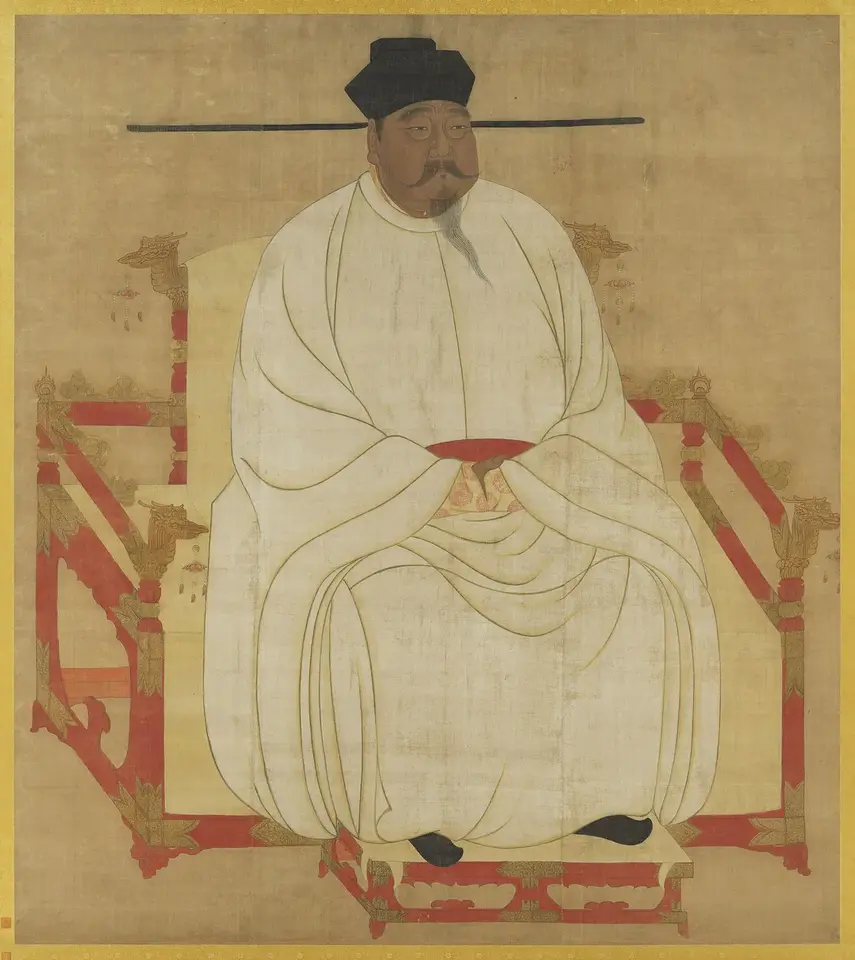
1059 CE–1126 CE
种师中
Chong Shizhong (种师中, 1059–1126), courtesy name Duanru (端孺), a native of Luoyang who long resided in Jingzhao, was a preeminent patriotic general of the late Northern Song dynasty, an outstanding third-generation commander of the hereditary Chong Family Army, and celebrated in folklore as Junior Marshal Chong. Born into an illustrious martial dynasty, his grandfather Chong Shiheng founded the famed Chong Family Army, while his…
Chong Shizhong (种师中, 1059–1126), courtesy name Duanru (端孺), a native of Luoyang who long resided in Jingzhao, was a preeminent patriotic general of the late Northern Song dynasty, an outstanding third-generation commander of the hereditary Chong Family Army, and celebrated in folklore as Junior Marshal Chong. Born into an illustrious martial dynasty, his grandfather Chong Shiheng founded the famed Chong Family Army, while his uncle Chong E and elder brother Chong Shidao achieved legendary renown in securing the northwestern borders against Western Xia. Having matured amidst cavalry camps on the frontier, Chong Shizhong possessed a profound grasp of operational strategy, defending key garrisons across Huanzhou, Qinzhou, and Qingyang for over three decades. During the Jurchen Jin invasion in the late Xuanhe era, Chong Shizhong and his brother led veteran western troops on a forced march to relieve the siege of Kaifeng, working alongside Li Gang to compel the eastern Jin army to retreat. Subsequently appointed Pacification Commissioner of Hedong, he spearheaded the northern expedition to relieve the besieged citadel of Taiyuan, rapidly recapturing Shouyang, Yuci, and Pingding Military Prefecture. Recognizing that the veteran Jurchen cavalry was formidable, he advocated fortifying key mountain passes, severing enemy supply lines, and coordinating a synchronized assault with approaching friendly armies. However, the imperial court, swayed by incompetent ministers, dispatched urgent gold-tablet decrees demanding an immediate, unsupported offensive. In May 1126, his isolated, starving army was encircled at Shaxiong Ridge by overwhelming Jurchen forces; though abandoned by allied commanders, Chong Shizhong fought to the bitter end, sustaining four fatal wounds before dying in battle at age sixty-eight. He was posthumously honored as Junior Preceptor and granted the posthumous name Zhuangmin.
Born into the hereditary Zhong family of generals, raised amidst border encampments.
Entered military service, honing operational cavalry skills in campaigns against Western Xia.
Successively governed Huanzhou, Binzhou, Qingyang, and Qinzhou, known for strict military discipline.
Repeatedly crushed Western Xia border incursions; promoted to Observation Commissioner of Fangzhou.
Jurchen armies invaded northern China, with Zongwang threatening Kaifeng and Zonghan besieging Taiyuan.
Rushed to Kaifeng at the head of elite Shaanxi cavalry, compelling the eastern Jin army to lift the siege.
Commissioned as Pacification Commissioner of Hedong to relieve Taiyuan, swiftly recapturing Shouyang and Pingding.
Advocated methodical encirclement, but the court issued urgent gold-tablet edicts demanding an immediate charge.
Encircled at Shaling with exhausted supplies; abandoned by allied armies, fought valiantly and died of four wounds.
Mourned universally by the realm; posthumously elevated to Junior Preceptor and granted the title Zhuangmin.
Zhong Shizhong was born in 1059 into the premier military dynasty of the Northern Song. From the early reign of Emperor Renzong, when his grandfather Zhong Shiheng pioneered the fortress network system in Shaanxi to establish the Zhong Family Army, the clan had hereditarily guarded the northwestern frontiers against Western Xia. His uncle Zhong E achieved historic victories during the Xihai campaigns, and his elder brother Zhong Shidao was revered across the realm as Senior Marshal Zhong. Ranked second among his brothers, Zhong Shizhong spent his formative years in military camps, being affectionately termed Junior Marshal Zhong.
Endowed with a sturdy physique, a deliberate mind, and strict integrity, Zhong Shizhong treated soldiers with paternal fairness while enforcing iron discipline. Entering service as an officer, he dedicated over three decades to the defense of the northwest, serving as Prefect of Huanzhou, Qinzhou, Binzhou, and Qingyang, while advancing to Assistant Commander-in-Chief of the Metropolitan Cavalry and Defense Commissioner of Fengning Army. Utilizing mountain redoubts and cooperative tactical formations, he repeatedly smashed Tangut cavalry incursions, transforming the Huanqing and Qinfeng sectors into an impregnable defensive line.
In the winter of 1125, the Jurchen Jin Empire launched an all-out invasion of the Song Empire along two axes. The eastern army under Wanyan Zongwang crossed the Yellow River to besiege Kaifeng, while the western army under Wanyan Zonghan encircled the pivotal northern bastion of Taiyuan. With the imperial court in sheer panic, the newly enthroned Emperor Qinzong issued frantic appeals for provincial armies to rescue the capital.
Confronted with dynastic peril, Zhong Shizhong and his brother Zhong Shidao mobilized fifteen cohorts of hardened western troops, force-marching day and night across the Yellow River. In early 1126, the arrival of the disciplined western legions transformed the morale of Kaifeng's defenders. Partnering closely with defense director Li Gang, the Zhong brothers manned the outer battlements, turning back Jurchen assault columns. Recognizing that Kaifeng was heavily fortified and that reinforcements were swelling, Wanyan Zongwang broke camp and withdrew north, securing a temporary reprieve for the capital.
Although Kaifeng was relieved, the situation in Shanxi was critical. Taiyuan had been besieged by Wanyan Zonghan's veteran divisions for months; the city was reduced to starvation, with citizens tearing down buildings for fuel while desperately holding the ramparts. Recognizing that the fall of Taiyuan would leave the Central Plains entirely exposed, the court appointed Zhong Shizhong as Pacification Commissioner of Hedong, ordering him to coordinate a tripartite relief offensive alongside commanders Yao Gu and Zhang Hao.
In March 1126, Zhong Shizhong advanced west through Jingxing Pass from Zhending. Exercising meticulous reconnaissance, he shattered the Jurchen forward blocking forces at Shouyang and liberated the city; pressing forward, he stormed and recaptured Pingding Army, executing dozens of Jurchen officers and severing logistical and courier communications between the eastern and western Jin field armies. His rapid advance brought Song outposts within striking distance of Yuci, greatly bolstering the morale of the defenders inside Taiyuan.
However, grave perils were mounting behind the lines. Through direct tactical engagements, Zhong Shizhong recognized that Wanyan Zonghan's western legions represented the finest heavy cavalry of the Jurchen military, far superior to ordinary garrison units. In detailed memorials, Zhong Shizhong laid out a methodical operational strategy: he advocated establishing heavily fortified forward camps at Shouyang and Yuci to interdict enemy supply lines while awaiting the synchronized arrival of Yao Gu's main southern army and Zhang Hao's flank divisions, so that all three forces could execute a coordinated encirclement of Taiyuan.
Tragically, civil chancellors in Kaifeng, such as Xu Churen and Tang Ke, possessed zero military comprehension and were consumed by political impatience. Slandering Zhong Shizhong as timid and dilatory, they persuaded Emperor Qinzong to issue multiple urgent gold-tablet edicts directly to the front, threatening Zhong Shizhong with court-martial and immediate execution unless he launched an immediate, unsupported frontal assault. Facing catastrophic imperial meddling, the veteran general looked to the sky and sighed, conscious that an unsupported advance meant certain doom, yet chose loyal obedience to the sovereign over personal survival.
In May 1126, Zhong Shizhong drove his exhausted, under-supplied army forward to Shaling near Yuci. Under scorching summer heat, local supply lines failed, leaving his troops without food or water. Exploiting the Song column's isolated advance, Wanyan Zonghan massed tens of thousands of elite cavalry to encircle Shaling. On May 19, the battle erupted; Zhong Shizhong stood in the vanguard, directing archery fire and counterattacks that repulsed five consecutive Jurchen cavalry charges. Yet as fighting raged from dawn to dusk, allied armies under Yao Gu hesitated in fear and failed to advance, while Zhang Hao's division broke in panic, leaving Shaling an isolated trap. When Jurchen heavy cavalry launched a final, crushing counter-attack, the famished Song army collapsed. Refusing to flee, Zhong Shizhong stood his ground with roughly a hundred personal guards, drawing his bow and striking down several enemy cavalrymen before receiving four grievous wounds, collapsing and dying on the field of honor at the age of sixty-eight.
The news of Zhong Shizhong's heroic death at Shaling struck the capital like a thunderbolt. Citizens and soldiers wept openly in the streets, mourning the loss of the empire's greatest defender. Deeply remorseful for having forced the disastrous advance, Emperor Qinzong posthumously conferred upon him the title of Junior Preceptor, granted him the posthumous name Zhuangmin, and bestowed generous pensions upon his descendants.
The catastrophe at Shaling virtually eradicated the finest veteran field divisions of the western army. With the collapse of the relief force, the isolated defenders of Taiyuan were overwhelmed after a 250-day siege. The fall of Taiyuan opened the floodgates for Jurchen cavalry to reunite and surge south, directly culminating in the capture of Kaifeng and the total extinction of the Northern Song dynasty in the Jingkang Incident. Subsequent historians universally noted that had the court heeded Zhong Shizhong's prudent operational plan, the northern frontiers would have held firm and the dynasty would have been saved.
During the terrifying winter of 1125 when Jurchen armies first reached Kaifeng, Northern Song provincial defenses collapsed in panic. At this critical juncture, Zhong Shizhong and his brother rallied fifteen veteran cohorts from Shaanxi to ride to the empire's rescue.
The arrival of the disciplined Zhong Family Army provided the essential military backbone that enabled Kaifeng's garrison to withstand Jurchen assaults. Zhong Shizhong's stalwart defensive deployment outside the capital walls demoralized the enemy, securing the survival of the imperial court during the first siege of Kaifeng.
During the opening phase of the Taiyuan relief campaign, Zhong Shizhong exhibited exceptional operational skill. Navigating rugged mountain corridors, he avoided frontal ambushes and captured Shouyang and Pingding Army in swift succession.
By severing the communication and supply lines between the eastern and western Jurchen field armies, he achieved a rare, major tactical victory against elite Jurchen divisions, demonstrating the formidable combat capabilities of the western army when properly led.
The battle of Shaling stands as one of the most poignant episodes of martial heroism in Chinese military history. Betrayed by political meddling, deserted by panic-stricken allied commanders, and stranded without food or water, Zhong Shizhong refused to abandon his military honor.
At nearly seventy years of age, he personally wielded blade and bow in the front ranks, fighting through four fatal wounds until his final breath. His selfless martyrdom embodied the finest traditions of the Zhong family generals, leaving an immortal legacy of unflinching patriotism in the face of insurmountable odds.
FIGURES ASSOCIATED WITH THIS DYNASTY