Born in Capital
Born into a distinguished aristocratic and military lineage in Kaifeng; great-grandson of Chancellor Zhang Qi.
1065 CE–1127 CE
张叔夜
Zhang Shuye (1065–1127), courtesy name Jizhong, was a native of Kaifeng Prefecture, the great-grandson of founding chancellor Zhang Qi, and an illustrious military commander and Signatory Official of the Bureau of Military Affairs (Qianshu Shumiyuan Shi) across the reigns of Emperor Huizong and Emperor Qinzong. Entering officialdom through hereditary privilege (yin), he began his military career as Administrative…
Zhang Shuye (1065–1127), courtesy name Jizhong, was a native of Kaifeng Prefecture, the great-grandson of founding chancellor Zhang Qi, and an illustrious military commander and Signatory Official of the Bureau of Military Affairs (Qianshu Shumiyuan Shi) across the reigns of Emperor Huizong and Emperor Qinzong. Entering officialdom through hereditary privilege (yin), he began his military career as Administrative Assistant of Lanzhou, where he astutely analyzed frontier defenses, captured the strategic mountain bastion of Tiandu, and constructed Xi'an Prefecture, permanently extinguishing Qiang border incursions. Under Emperor Huizong, he served in high-ranking central and regional positions, including Vice Governor of Kaifeng and Supervising Secretary. An upright Confucian official, he refused to curry favor with the powerful chancellor Cai Jing and was repeatedly demoted. In 1121, as Prefect of Haizhou, he anticipated the naval movements of Song Jiang's thirty-six-leader rebel force, ambushing and torching their maritime fleet, which forced the widespread uprising to surrender unconditionally; subsequently, as Prefect of Jinan, he swiftly pacified banditry across Shandong. In the autumn of 1126, Jurchen Jin forces swept southward and encircled the capital of Kaifeng. When Emperor Qinzong summoned regional armies to relieve the throne, Zhang Shuye, then serving as Regional Commander of the Southern Circuit and Prefect of Dengzhou, wept and mobilized his troops. Placing his eldest son Zhang Bofen over the vanguard and second son Zhang Zhongxiong over the rearguard, he marched a relief host of 30,000 soldiers through Jurchen interception lines, slaying Jin chiliarchs and becoming the only commander to fight his way into Kaifeng. Emperor Qinzong appointed him Signatory Official of the Bureau of Military Affairs to direct the defense. Zhang Shuye resisted fiercely on the battlements, repelling dozens of assaults, but the capital was lost when the court placed its trust in the mystic Guo Jing. Refusing to sign the document installing the puppet emperor Zhang Bangchang, Zhang Shuye was forcibly deported north alongside Emperor Qinzong. Upon reaching the Baigou boundary river between Song and Liao, Zhang Shuye looked back toward his homeland, raised a mournful cry, and starved himself to death in martyrdom at sixty-three. Emperor Gaozong posthumously bestowed the highest honor of Commissioner of Opening Office Equal to the Three Preceptors with the title Zhongwen.
Born into a distinguished aristocratic and military lineage in Kaifeng; great-grandson of Chancellor Zhang Qi.
Appointed Administrative Assistant of Lanzhou; orchestrated the capture of Tiandu and constructed Xi'an Prefecture to eliminate Qiang incursions.
Served as Magistrate of Xiangcheng, Vice Governor of Kaifeng, and Supervising Secretary; granted Jinshi status for exceptional policy treatises.
Implicated when his cousin Zhang Kegong impeached Cai Jing; demoted to oversee the Xi'an fodder pastures and dispatched to outer prefectures.
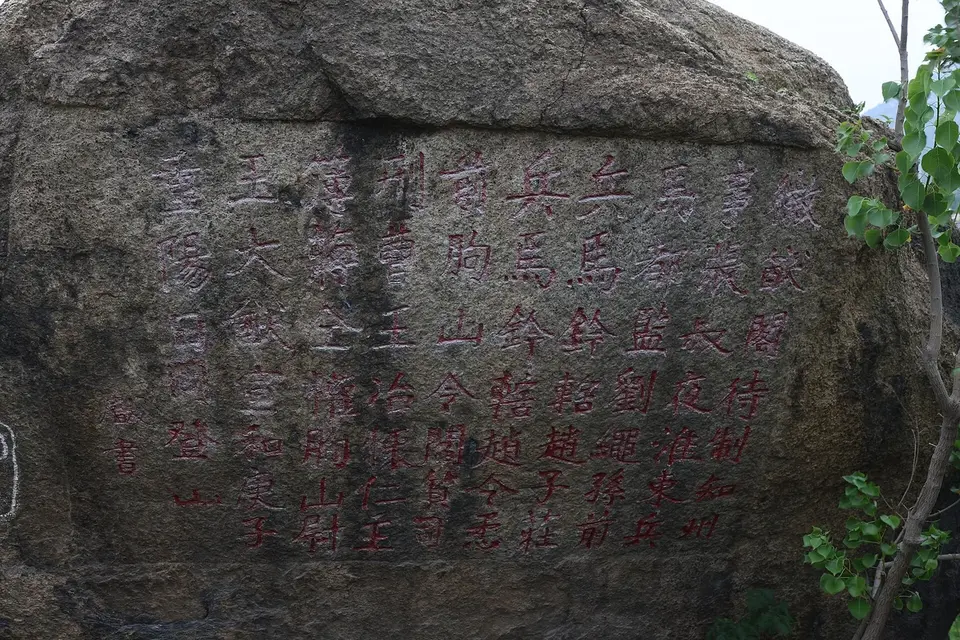
Served as Prefect of Haizhou; ambushed and torched the maritime fleet of Song Jiang's rebel host, forcing their unconditional surrender.
Dispatched as Prefect of Jinan; combined decisive pacification with benevolent relief, restoring security across Shandong.
Mobilized 30,000 troops from Dengzhou; fought through Jurchen lines to enter Kaifeng, appointed Signatory Official of Military Affairs.
Defied the puppet Chu regime; while being marched into captivity, starved himself to death at the Baigou boundary river, posthumously honored as Zhongwen.
Zhang Shuye was born in the second year of Zhiping (1065) during the reign of Emperor Yingzong. His great-grandfather Zhang Qi had served as Grand Councilor and Commissioner of Military Affairs under Emperor Zhenzong. Endowed with a keen intellect, Zhang Shuye developed a passion for classical military manuals from childhood. Upon reaching adulthood, he entered the civil service through hereditary privilege, being appointed Administrative Assistant of Lanzhou. Lanzhou occupied a precarious position on the northwestern border, historically utilizing the Yellow River as its principal defensive barrier. Each winter when the river froze, imperial troops were forced to remain under constant arms for months to deter sudden cavalry raids by Western Xia and Tangut Qiang tribes. Zhang Shuye surveyed the perimeter and warned his superiors: "Relying on a frozen river is perilous negligence. Leaving critical choke points unfortified while permitting enemy horsemen to approach the riverbanks places our defense in mortal hazard."
A mountainous region known as Tiandu lay centrally situated among the five northwestern defensive circuits. Hostile forces consistently utilized Tiandu as their primary staging depot to muster forces and coordinate raids into Song territory. Zhang Shuye personally reconnoitered the precipitous peaks, formulated a detailed operational plan, and persuaded the court to dispatch mobile strike forces to capture the heights. At Tiandu, he directed the construction of a permanent military bastion named Xi'an Prefecture. The new fortress severed the enemy's staging corridors, permanently shielding Lanzhou from frontier raids.
Recognizing his administrative talent, Circuit Fiscal Commissioner Jiang Zhiqi recommended him for postings as Magistrate of Xiangcheng and Chenliu. After submitting strategic treatises on military administration, Emperor Huizong granted him an honorary Jinshi degree and promoted him to Vice Director of the Right Bureau, subsequently elevating him to Vice Governor of Kaifeng and Supervising Secretary in the Chancellery. In the central government, Zhang Shuye overhauled bureaucratic inertia, outlawing fraudulent credential tampering.
In the third year of Daguan (1109), Zhang Shuye's cousin Zhang Kegong, serving as an imperial censor, submitted an unsparing memorial impeaching the corrupt Grand Preceptor Cai Jing. Cai Jing retaliated vindictively against the entire family, inventing trivial pretexts to demote Zhang Shuye to oversee the Xi'an fodder pastures, subsequently exiling him as Prefect of Shuzhou, Haizhou, and Taizhou. In 1118, as the court deliberated an alliance with the Jurchen Jin to destroy the Khitan Liao, Zhang Shuye was briefly summoned to the Ministry of Rites and sent as Deputy Envoy to the Liao court. Upon his return, he candidly warned that although the Liao was declining, an aggressive alliance with the martial Jurchens would invite catastrophic peril for the Song. Offending Cai Jing and the eunuch commander Tong Guan, Zhang Shuye was once again removed from the court and assigned to Haizhou.
In the second month of Xuanhe third year (1121), the rebel leader Song Jiang led his thirty-six chieftains across ten prefectures, routing government forces throughout Shandong and Hebei. After raiding Shuyang, Song Jiang marched directly toward Haizhou. Zhang Shuye dispatched scouts who discovered that the rebels had seized more than ten large sea-going junks along the coastline to transport their plunder. Predicting that Song Jiang relied entirely on these vessels as an escape route, Zhang Shuye selected one thousand death-ground warriors to conceal themselves in coastal sand dunes and reeds, while deploying light infantry to lure the rebels toward the city walls.
When Song Jiang's forces launched an assault, Zhang Shuye directed his units into a tactical retreat, drawing the enemy inland. Simultaneously, his concealed detachment stormed the beachheads, setting the rebel junks ablaze with incendiary projectiles. Witnessing their ships consumed by towering flames, Song Jiang's men panicked. Zhang Shuye unleashed his main force in a coordinated counter-attack, slaying rebel vanguard generals and capturing several dozen leaders. Cut off from all escape routes, Song Jiang surrendered unconditionally. In recognition of this feat, Zhang Shuye was promoted to Auxiliary Academician of Huizhou Pavilion and appointed Prefect of Jinan, where he systematically cleared regional bandit gangs through stern interdiction and benevolent resettlement.
In the autumn of Jingkang first year (1126), the Jurchen Jin armies commanded by Wanyan Zonghan and Wanyan Zongwang crossed the Yellow River and blockaded Kaifeng. Emperor Qinzong issued frantic appeals for provincial relief forces. Stationed in Dengzhou as Regional Commander of the Southern Circuit, Zhang Shuye received the edict with bitter tears and immediately mobilized his forces. Assigning his eldest son Zhang Bofen to command the vanguard and his second son Zhang Zhongxiong to lead the rearguard, he personally took charge of the main body, leading 30,000 disciplined infantry and cavalry north.
At Weishi, the relief army encountered heavy Jurchen cavalry units attempting to block the southern corridors. Zhang Shuye led the charge in person, shattering the interception force and beheading a Jin chiliarch. On the seventeenth day of the eleventh month, his battered army pierced through the encirclement and marched into Kaifeng through the Nanxun Gate. Amid imperial panic, Zhang Shuye was the sole regional commander who succeeded in bringing a full provincial army into the capital. Emperor Qinzong embraced him with tears: "I have long known your renown; today you lead your two sons into mortal combat to defend our ancestral altars; you are truly the pillar of the realm!" Qinzong immediately invested him as Signatory Official of the Bureau of Military Affairs.
Taking command of the defensive perimeter, Zhang Shuye patrolled the city walls day and night. When Jurchen siege batteries unleashed iron projectiles and ladder assaults, he personally stood atop the parapets, directing Divine Arm Crossbow detachments to repel dozens of assaults. However, Emperor Qinzong and conservative councilors foolishly trusted the charlatan Guo Jing, who claimed supernatural powers with his "Divine Soldiers of the Six Jia." On the twenty-fifth day of the leap eleventh month amid a blizzard, Guo Jing ordered the Xuanhua Gate opened to conduct a magical counterattack, allowing Jin cavalry to pour through the breach. Zhang Shuye rushed to the gate and fought desperately, suffering multiple wounds as his warhorse was slain beneath him, but the outer defenses were overrun, resulting in the fall of the capital.
Following the capture of the city, Jin commanders imprisoned the Song emperors and courtiers at the Qingcheng encampment. Jin general Wanyan Zonghan demanded that all Song ministers sign a joint petition installing the former chancellor Zhang Bangchang as emperor of the puppet Chu regime. Terrified of execution, the majority of courtiers affixed their seals, but Zhang Shuye adamantly refused. He rebuked the enemy commanders to their faces, stating that he would choose death before betraying the house of Zhao, and knelt before Emperor Qinzong weeping in self-reproach.
In the fourth month of Jingkang second year (1127), the Jin army deported the imperial family, courtiers, and artisans northward into Manchurian captivity. Zhang Shuye was placed in an iron cage upon an open prisoner cart. Passing through Xiangyi, he vowed to die rather than consume enemy rations, refusing all food and subsisting on occasional water. On the eighth day of the fourth month, the prisoner convoy reached the Baigou River, the historic border between the Song and Liao empires. When the wagon driver called out: "We have crossed the boundary river!", Zhang Shuye was overwhelmed with grief. He struggled to his feet inside the cage, raised a mournful cry toward the southern sky, and perished from grief and starvation at the age of sixty-three. Upon establishing the Southern Song, Emperor Gaozong posthumously restored his titles, conferred the supreme honor of Commissioner of Opening Office Equal to the Three Preceptors, and bestowed the posthumous name Zhongwen.
While serving in Lanzhou, Zhang Shuye identified the mountain stronghold of Tiandu as the vital staging hub for northwestern raiders, personally planning its capture and establishing Xi'an Prefecture, which permanently fortified the Lanzhou corridor against Qiang incursions.
As Prefect of Haizhou in 1121, Zhang Shuye utilized naval sabotage to incinerate Song Jiang's fleet while executing a coordinated double envelopment, forcing the famous thirty-six-chieftain rebel army into unconditional surrender.
When provincial commanders throughout the empire hesitated, Zhang Shuye mobilized 30,000 troops from Dengzhou, sliced through Jurchen cavalry lines, and entered besieged Kaifeng, providing the capital with its sole veteran field relief army.
Refusing to collaborate with the puppet Chu regime, Zhang Shuye starved himself while being deported into the northern wilderness, expiring in grief upon crossing the border at the Baigou River to preserve his fidelity to the Song dynasty.
FIGURES ASSOCIATED WITH THIS DYNASTY