Birth in Dingxing
Born in Dingxing, Baoding, as the ninth son of the prominent northern warlord Zhang Rou.
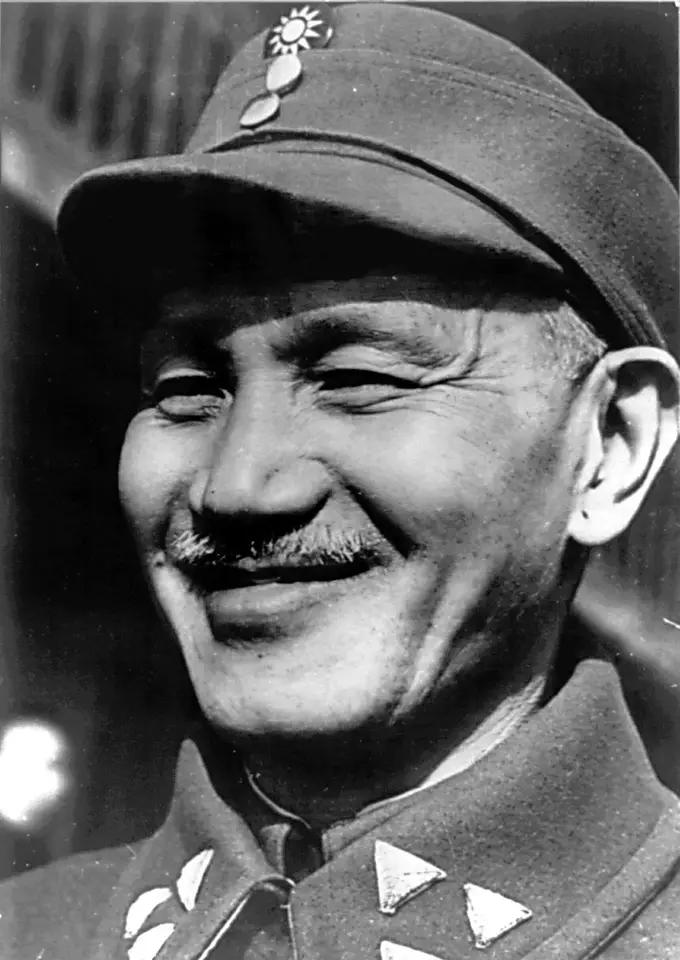
张弘范
Zhang Hongfan (1238–1280), courtesy name Zhongchou, was a native of Dingxing, Baoding (modern Hebei). He was a distinguished supreme commander, military strategist, and the ninth son of the founding Yuan grandee Zhang Rou. In his youth, he studied under the eminent Neo-Confucian master Hao Jing, mastering classical statecraft and horsemanship alongside literary composition. He distinguished himself in 1262 during the…
Zhang Hongfan (1238–1280), courtesy name Zhongchou, was a native of Dingxing, Baoding (modern Hebei). He was a distinguished supreme commander, military strategist, and the ninth son of the founding Yuan grandee Zhang Rou. In his youth, he studied under the eminent Neo-Confucian master Hao Jing, mastering classical statecraft and horsemanship alongside literary composition. He distinguished himself in 1262 during the suppression of Li Tan's rebellion and received the Golden Tiger Tally in 1264 to govern Shuntian Circuit. From 1269 onward, he played a decisive role in the pivotal Xiangyang-Fancheng campaign, devising the strategic fortifications of Wanshan Fort and the Single-Line Wall that severed Song supply lines, leading the assault that compelled the surrender of Xiangyang. In 1274, as vanguard general under Supreme Commander Bayan, he led naval forces down the Yangtze River, crushing Jia Sidao's massive army at the Battle of Dingjiazhou and subsequently breaking the Song fleet at Jiaoshan, earning Kublai Khan's coveted title "Ninth Ba'atur." In 1277, appointed Grand Marshal of the Mongolian-Han Army, he campaigned across Fujian and Guangdong, capturing Southern Song Chancellor Wen Tianxiang at Wupo Ridge and treating him with noble courtesy. In 1279, he commanded the decisive Naval Battle of Yamen, annihilating the last Song naval armada, which culminated in Chancellor Lu Xiufu leaping into the sea with the child emperor Zhao Bing, ending the Song Dynasty. He died of illness in Jiankang at forty-three, posthumously honored as Prince of Qi and Prince of Huaiyang with the posthumous title Wulie.
Born in Dingxing, Baoding, as the ninth son of the prominent northern warlord Zhang Rou.
Governed Shuntian Circuit on behalf of his elder brother Zhang Honglue with notable administrative rigor.
Summoned into imperial service by newly enthroned Kublai Khan as Supervisor-in-Chief of the Imperial Workshops.
Commanded troops under Prince Hebiqi to crush Li Tan's revolt, distinguishing himself during the siege of Ji'nan.
Bestowed the prestigious Golden Tiger Tally by Kublai Khan and appointed Civil Governor-General of Shuntian Circuit.
Advanced to the Xiangyang front; planned and erected Wanshan Fort to block Song grain transports.
Constructed the Single-Line Wall between Xiangyang and Fancheng, repelling Song relief forces.
Led the frontal assault that breached Fancheng despite arrow wounds, compelling the capitulation of Xiangyang.
Promoted to Senior General Defending the Realm and served as vanguard commander for Bayan's southern expedition.
Crushed Jia Sidao's army of one hundred and thirty thousand men at Dingjiazhou and pacified Jiangdong.
Coordinated naval and cavalry strikes to shatter Zhang Shijie's fleet at Jiaoshan; awarded the honorific title Ba'atur.
Commissioned as Pacification Commissioner of Jiangdong Circuit, stabilizing newly incorporated territories.
Elevated to Grand Marshal of the Mongolian-Han Army; ambushed and captured Chancellor Wen Tianxiang at Wupo Ridge.
Commanded the final naval victory at Yamen, annihilating the Song fleet and terminating the Song Dynasty.
Passed away from illness in Jiankang at forty-three; posthumously created Duke of Cai and canonized Wulie.
Zhang Hongfan was born in 1238 in Dingxing, Baoding. His father, Zhang Rou, was a formidable Han warlord during the transition from the Jin Dynasty to the Mongol Empire. Zhang Rou had initially organized thousands of local households into fortified settlements for self-defense before submitting to Genghis Khan, subsequently rising through military merits to become a senior general and Duke of Cai. Zhang Hongfan was the ninth son among Zhang Rou's eleven boys. Because the Jin Dynasty had already fallen four years prior to his birth, Zhang Hongfan grew up entirely under the nascent Yuan administration in northern China, receiving an exceptional education in both martial arts and Confucian learning.
Standing seven feet tall with a long, elegant beard, Zhang Hongfan possessed an imposing military bearing complemented by the refined demeanor of a Confucian scholar. He was an expert horseman, lethal with the long lance on horseback, and an avid student of classical literature who composed refined poetry and lyric songs. Recognizing the vital importance of civil governance, Zhang Rou retained the foremost northern Neo-Confucian scholar Hao Jing as resident family preceptor for his sons. Under Hao Jing's guidance, Zhang Hongfan studied the Classic of Changes, Spring and Autumn Annals, Zuo Zhuan, and Sun Tzu's Art of War, synthesizing Confucian moral statecraft with pragmatic military strategy.
In 1256, at nineteen, Zhang Hongfan undertook his first administrative assignment. When his eighth elder brother Zhang Honglue traveled to the imperial encampment to report on official duties, Zhang Honglue petitioned the court to allow Zhang Hongfan to manage the affairs of Shuntian Circuit in his absence. During his acting administration, Zhang Hongfan suppressed predatory gentry, investigated official misconduct, and encouraged displaced refugees to cultivate abandoned land, earning widespread praise from civil officials and commoners.
In 1260, Kublai Khan triumphed over his younger brother Ariq Boke to claim the Mongol khaganate, establishing the era name Zhongtong. Eager to recruit capable northern Han youths into his central guard, Kublai appointed the twenty-four-year-old Zhang Hongfan as Supervisor-in-Chief of the Imperial Workshops, placing him in close personal attendance to the throne.
In 1262, Li Tan, the powerful hereditary warlord governing Shandong from Yidu, launched a major rebellion against Kublai Khan, seizing Ji'nan and soliciting military intervention from the Southern Song. Kublai appointed imperial prince Hebiqi as supreme commander to suppress the insurrection. Reviewing the mobilizing officers at his temporary palace, Kublai was impressed by Zhang Hongfan's martial discipline and immediately elevated him to Commander-in-Chief of the Marching Army, placing two thousand elite infantry and cavalry under his command. Outside Ji'nan, Zhang Hongfan supervised the construction of a deep entrenchment circumvallation around the rebel fortress and repeatedly repulsed desperate night sorties, contributing decisively to the total elimination of the rebel army.
Following the suppression of Li Tan, the Yuan court recognized that allowing regional warlords to monopolize local military and civil powers posed an existential threat to centralized dynastic rule. Consequently, Kublai abolished the hereditary rights of regional magnates and dismissed magnate sons from provincial commands. Zhang Hongfan accepted his dismissal without grievance, returning home to attend to his elderly father. In 1264, after his brother Zhang Honglue was enrolled into the imperial Kheshig bodyguard, Kublai Khan recalled Zhang Hongfan's valor at Ji'nan, summoned him to the traveling palace, and personally conferred upon him the Golden Tiger Tally, appointing him Civil Governor-General of Shuntian Circuit.
In 1269, Kublai Khan initiated a massive campaign against the Southern Song, focusing on the twin frontier strongholds of Xiangyang and Fancheng along the Han River. Zhang Hongfan was reactivated and commissioned as Darughachi of the Daming Circuit and commander of the Badu-Batur division, marching to the front under Supreme Commanders Ashu and Ariq Qaya. Situated on opposite sides of the Han River and connected by pontoon bridges, Xiangyang and Fancheng had withstood siege for years through continuous grain shipments dispatched down the Han River from Sichuan.
After personally scouting both riverbanks, Zhang Hongfan submitted a visionary proposal: "The tenacity of Xiangyang depends entirely upon grain transports floating downriver from upper Sichuan. If we construct an impregnable fortress atop Mount Wan on the western bluffs, we can sever their lifeline completely." Ashu approved the strategy, and Zhang Hongfan supervised the rapid construction of Wanshan Fort, successfully cutting off Song riverine reinforcements. In 1271, Zhang Hongfan devised an even bolder tactical innovation: "Xiangyang and Fancheng sustain each other through floating bridges across the river. We must construct a Single-Line Wall directly into the water, erecting barriers and driving underwater pilings to destroy the bridges and isolate each city."
Kublai Khan endorsed the strategy with enthusiasm. In 1272, Song commanders Zhang Shun and Zhang Gui attempted a desperate naval breakthrough to deliver provisions into Xiangyang. Zhang Hongfan coordinated intercepting gunboats, slaying Zhang Gui and capturing the convoy. In 1273, Zhang Hongfan advocated focusing all firepower against Fancheng first. Leading the assault personally with scaling ladders, he was struck in the elbow by a crossbow bolt but continued fighting through heavy blood loss until Fancheng fell. Bereft of external support, Xiangyang commander Lu Wenhuan surrendered the following month, opening the Yangtze valley to the Yuan forces.
Following the fall of Xiangyang, Kublai Khan ordered a full-scale invasion under Supreme Commander Bayan, directing two hundred thousand troops eastward down the Yangtze. Zhang Hongfan was elevated to Senior General Defending the Realm and Pacification Commissioner of Jiangdong Circuit, serving as the spearhead of the central vanguard fleet.
In the spring of 1275, Bayan's forces confronted Southern Song Grand Chancellor Jia Sidao at Dingjiazhou near Chizhou. Jia Sidao had mobilized thirteen thousand veteran troops and twenty-five hundred warships in a desperate attempt to halt the invasion. When battle commenced, Zhang Hongfan directed combined naval and cavalry formations along the riverbanks, maneuvering gunboats equipped with incendiary catapults to smash the Song vanguard commanded by Sun Huchen. As Song front ranks collapsed, Jia Sidao fled in panic, and the reserve naval divisions under Xia Gui disintegrated. Zhang Hongfan pursued the routed enemy for tens of miles, annihilating the last strategic field army of the Southern Song.
Advancing swiftly to occupy Jiankang (Nanjing), the Yuan commanders paused during the midsummer heat, with several senior officers proposing to halt the offensive until autumn. Zhang Hongfan argued passionately that they must exploit their momentum before the Song court could reorganize defenses. Determined to prevent delay, Zhang Hongfan utilized the imperial postal relay to ride non-stop across northern China, presenting his strategic appraisal directly to Kublai Khan. Convinced by his analysis, Kublai ordered Bayan to execute an immediate offensive toward the Song capital.
In July 1275, surviving Song naval forces under Zhang Shijie and Sun Huchen amassed thousands of warships near Jiaoshan Island on the lower Yangtze to block the river mouth. Yuan commanders Ashu, Liu Guojie, and Zhang Hongfan launched a coordinated pincer offensive.
Zhang Hongfan sailed his squadron downriver with the current, striking the center of the Song formation with fire arrows and ballistas. Exploiting the unwieldy size of the chained Song vessels, Yuan ships broke their formation and set dozens ablaze. The Song armada disintegrated, and Zhang Hongfan pursued the remnants past Mount Cuishan, eliminating all defensive positions guarding the approaches to Hangzhou.
In recognition of his valor, Kublai Khan bestowed upon Zhang Hongfan the rare Mongolian honorific title "Ninth Ba'atur" and granted him command of the Bozhou Myriarchy. In October 1275, Zhang Hongfan returned to the capital, where Kublai hosted a grand banquet in the inner palace. However, having contracted severe malaria from tropical marshes, Zhang Hongfan fell critically ill. Deeply concerned, Kublai ordered the chief court physician to provide daily medical updates, stationing imperial guards outside his residence with instructions to prevent any disturbances while doctors treated him. In February 1276, the Southern Song court formally surrendered the imperial seal at Lin'an. In 1277, Zhang Hongfan was confirmed as Pacification Commissioner of Jiangdong Circuit, tasked with governing the pacified territories.
While occupying Jiankang, Changzhou, and Lin'an, Zhang Hongfan distinguished himself from other Mongol and Han commanders through his profound veneration for Chinese cultural heritage. While others plundered private estates, Zhang Hongfan strictly prohibited the burning of public offices, the desecration of Confucian temples, and the looting of academies.
He dispatched trusted detachments to seal the Imperial Archives, Bureau of Historiography, and Secretariat of the Southern Song court, carefully inventorying and preserving thousands of rare Song editions, imperial veritable records, administrative maps, and land registries. Zhang Hongfan transported these priceless documents safely to Dadu, providing the indispensable archival foundation for later dynastic histories.
Simultaneously, Zhang Hongfan sought out prominent Song scholars and recluses who had hidden in rural seclusion. He personally visited the Confucian temple in Jiankang to perform sacrificial rites, consulted local scholars regarding regional governance, and retained upright former Song administrators to maintain social stability. He distributed grain from government granaries to relieve famine and remitted unpaid taxes for displaced peasants, reconciling the southern populace to Yuan governance.
Following the fall of Lin'an, Southern Song loyalists Lu Xiufu, Zhang Shijie, and Wen Tianxiang fled southward along the coast with young princes Zhao Shi and Zhao Bing, establishing a maritime court to sustain resistance. In late 1277, Kublai Khan appointed Zhang Hongfan as Grand Marshal of the Mongolian-Han Army, presenting him with golden armor, an imperial sword, and a gold tiger tally to eliminate loyalist resistance across Fujian and Guangdong.
In the winter of 1278, Zhang Hongfan learned that Song Right Chancellor Wen Tianxiang was encamped at Wupo Ridge in Chaoyang, Guangdong, raising recruits. Zhang Hongfan launched an immediate cavalry raid, covering hundreds of li through mountain paths. Caught entirely off guard, the Song camp collapsed, and Wen Tianxiang was taken prisoner after a failed suicide attempt.
Admiring Wen Tianxiang's steadfast loyalty, Zhang Hongfan ordered his fetters removed and hosted him with the courtesies due to an honored state guest. When other Yuan commanders urged his summary execution, Zhang Hongfan refused, declaring that a loyal chancellor should not be slaughtered. When Zhang Hongfan requested a letter urging Zhang Shijie to surrender at Yamen, Wen Tianxiang composed his immortal poem "Passing the Lingding Sea," concluding with the line: "Since ancient times, who has escaped death? Let my loyal heart shine in the annals of history." Deeply moved by this uncompromising defiance, Zhang Hongfan refrained from pressuring him further and sent him under honorable escort to Dadu.
In January 1279, young Song Emperor Zhao Bing, Chancellor Lu Xiufu, and Commissioner Zhang Shijie established a fortified anchorage at Yamen in Xinhui, Guangdong. Zhang Shijie chained over a thousand warships together into a massive floating crescent around the royal flagship, determined to mount a final defense.
Zhang Hongfan arrived with the Yuan fleet. Observing the fortified maritime formation, he avoided a frontal attack, choosing to blockade the bay's exits and landing detachments to cut off Song access to coastal fresh water and firewood. Deprived of drinking water for over ten days, Song sailors were reduced to chewing uncooked rice and drinking saltwater, which induced severe illness and exhaustion.
On the morning of February 11, 1279, amid thick fog and a rising spring tide, Zhang Hongfan divided his fleet into four squadrons, advancing with the incoming surge. To distract the defenders, the Yuan vanguard played ceremonial music as if hosting a banquet, only to drop defensive canvas screens upon approaching the Song ships and unleash a devastating barrage of arrows and cannon stones. Zhang Hongfan personally directed boarding parties with heavy axes to sever the connecting iron chains, setting the Song ships adrift.
By evening, torrential rains lashed the bay and Song lines collapsed. Realizing that defeat was total, Left Chancellor Lu Xiufu donned imperial robes, took the eight-year-old Emperor Zhao Bing into his arms, and leaped into the ocean to prevent capture. Thousands of palace ladies, officials, and soldiers followed their sovereign into the waves, leaving the sea choked with floating corpses. Zhang Shijie escaped with a few vessels, only to perish in a typhoon shortly thereafter. The Song Dynasty, which had endured for 319 years, was completely extinguished. In the aftermath of the battle, Zhang Hongfan ordered stonecutters to carve twelve monumental Chinese characters into the coastal cliff: "Senior General Defending the Realm Zhang Hongfan Extinguished Song Here."
The victory at Yamen completed the political unification of China under the Yuan Dynasty. Leading his victorious legions northward through Guangdong and Jiangxi, Zhang Hongfan maintained strict discipline, preventing his troops from harming local inhabitants. In late 1279, he reached Jiankang.
However, years of relentless campaigning through tropical marshes and the cumulative toll of combat wounds from Xiangyang and Dingjiazhou triggered a fatal relapse of illness. On February 11, 1280, knowing his time was short, Zhang Hongfan bathed, dressed in formal ceremonial robes, and was supported into the courtyard, where he bowed twice toward the northern imperial capital. Returning inside, he ordered music and wine to bid farewell to his veteran commanders and family members.
Calling his eldest son Zhang Gui to his side, Zhang Hongfan presented him with the imperial sword and golden armor bestowed by Kublai Khan, solemnly charging him: "Your father used this sword and armor to achieve military honors and unite the realm. When you wear them in the future, never forget your duty to serve the state with loyalty!" Having spoken, he sat upright and passed away peacefully at the age of forty-three.
Kublai Khan grieved deeply over the loss of his premier general, suspending court audiences and dispatching imperial ministers to oversee funeral rites in Jiankang. Kublai posthumously conferred upon him the rank of Grand Master for Glorious Happiness and Manager of Governmental Affairs, creating him Duke of Cai with the posthumous title Wulie. In 1311, Emperor Wuzong elevated his honors to Grand Preceptor, Pillar of State, and Duke of Qi, altering his posthumous title to Zhongwu. In 1319, Emperor Renzong created him Prince of Huaiyang with the posthumous title Xianwu, conferring upon him the supreme honor of ancestral sacrifice alongside Kublai Khan in the imperial ancestral temple.
During the six-year siege of Xiangyang and Fancheng, Zhang Hongfan formulated the decisive strategic concepts that determined the campaign's outcome. He initiated and oversaw the construction of Wanshan Fort, severing Song supply lines flowing down the Han River from Sichuan. Subsequently, he devised the construction of the Single-Line Wall into the river, driving pilings to destroy the pontoon bridges connecting the twin cities. In the assault on Fancheng, he led the scaling ladders despite sustaining severe arrow wounds, compelling the surrender of Lu Wenhuan and opening the Yangtze gateway to the Mongol armies.
As vanguard commander under Bayan in 1275, Zhang Hongfan directed combined naval and cavalry formations that crushed Jia Sidao's army of one hundred and thirty thousand men at Dingjiazhou. When other commanders hesitated during the summer heat, he rode non-stop via postal courier to persuade Kublai Khan to maintain the offensive. Weeks later at Jiaoshan, he coordinated naval fire attacks that shattered Zhang Shijie's fleet, eliminating all southern defensive positions and securing the prestigious title of "Ninth Ba'atur."
In 1279, Zhang Hongfan commanded the historic naval engagement at Yamen, orchestrating a comprehensive strategy that combined blockade, fresh-water interdiction, and tidal timing. By cutting the iron chains connecting the Song fleet and launching close-range fire assaults, he broke the defensive perimeter, resulting in the demise of Emperor Zhao Bing and the extinction of the Song Dynasty. This triumph unified all Chinese territory under a single sovereign for the first time since the Tang Dynasty.
Zhang Hongfan demonstrated extraordinary magnanimity toward his political adversary Wen Tianxiang following the latter's capture at Wupo Ridge. Recognizing Wen's unwavering loyalty, he refused to execute him, providing him with honorable accommodations as a state guest. When Wen composed his masterpiece "Passing the Lingding Sea," Zhang Hongfan admired his incorruptible devotion and safeguarded his transit to Dadu, illustrating an enduring commitment to classical Confucian virtue.
Throughout his campaigns across southern China, Zhang Hongfan enforced strict prohibitions against plundering and murder. By performing sacrifices at the Confucian temple and appointing competent local officials to maintain order, he protected southern society from devastation and ensured administrative continuity under Yuan rule.
Following the surrender of Jiankang and Lin'an, he secured government archives, rare editions, and administrative maps, transferring thousands of Song volumes intact to Dadu while extending courteous patronage to local scholars and gentry.
Uniting martial skill with classical refinement, Zhang Hongfan was an accomplished poet and lyricist. His surviving song lyrics, notably "Mulanhuaman: Southern Expedition" with its renowned line "Pledging one's life to serve the state, viewing life and death as light as a feather," capture the grandeur and pathos of dynastic transition, establishing him as an outstanding archetype of the scholar-general in Chinese historiography.
FIGURES ASSOCIATED WITH THIS DYNASTY