Biography
Early Erudition and Academy Studies
Zhang Boduan was born in Tiantai County, Taizhou Prefecture, in 984. Although subsequent local gazetteers debated his ancestral origin between Tiantai and Linhai, the original preface to Wuzhen Pian carries his explicit signature as Zhang Boduan Pingshu of Tiantai, and standard liturgical texts such as the Precious Litany of the Southern Five Patriarchs affirm his Tiantai lineage. Born into a prominent family devoted to Daoist learning and classical literature, Zhang exhibited exceptional intellectual capacity from childhood. He studied the Confucian classics while thoroughly exploring pre-Qin philosophers, celestial cartography, calendar calculations, military tactical formations, pulse diagnosis, and herbal pharmacology.
As a young man seeking to serve the empire, Zhang traveled to the imperial capital of Bianjing to study at the Piyong Imperial Academy. However, the civil examinations were fiercely competitive, and Zhang repeatedly failed to obtain his degree despite his wide erudition. Southern Song commentator Weng Baoguang noted that among his contemporaries at the academy, only Zhang failed to achieve metropolitan graduation. During his travels between Bianjing and Luoyang, Zhang engaged in extensive philosophical discussions with the Neo-Confucian pioneer Shao Yong, remarking that he had exhaustively scrutinized Confucian, Buddhist, and Daoist canons alongside legal and mathematical manuals. Recognizing the transient vanity of bureaucratic honors, Zhang returned to eastern Zhejiang to seek employment.
Judicial Clerkship and the Legal Fire Controversy
To support his family, Zhang assumed employment as a legal clerk in the prefectural yamen of Linhai, Taizhou. Southern Song master Bai Yuchan referred to him as an imperial petty clerk, reflecting his humble status in local administration. In Linhai, Zhang carried out his duties with rigorous impartiality, personally reviewing legal dossiers to prevent miscarriages of justice and earning the respect of commoners. However, his upright nature provoked resentment among dishonest subordinates and clerks who routinely exploited legal loopholes for illicit profit.
Regarding his departure from office, Song chronicler Lu Sicheng noted that he was implicated in legal trouble and exiled to Lingnan. Qing dynasty local gazetteers embellished this event with a popular folktale regarding a misplaced fish hidden in the rafters, claiming that Zhang mistakenly beat a maidservant who committed suicide in shame, prompting him to burn all official files in remorse. Modern historical criticism has demonstrated that this anecdote was a conventional didactic morality tale, and the associated verses were later spiritualist compositions. The historical reality was that an accidental fire broke out in the prefectural archive, whereupon corrupt colleagues scapegoated Zhang, resulting in his conviction under statutes governing the destruction of official records and his punitive exile to military outposts south of the Five Ridges.
Wandering the Five Ridges and the Guilin Song
Exile to the southern wilderness transformed Zhang's life trajectory. In the Song dynasty, the regions south of the Five Ridges were regarded as disease-ridden frontiers. Yet for Zhang, who possessed an innate inclination toward spiritual cultivation, the sudden loss of social status severed his remaining attachments to secular ambition. In the preface to Wuzhen Pian, he described how he drifted like clouds and water across southern mountains and seas, seeking wisdom from every traveler and recluse.
During his years in Lingnan, Zhang traversed Guangdong and Guangxi, visiting prominent sacred peaks such as the Luofu Mountains and Xiqiao Mountains. He sought out secluded herbalists and mountain recluses, studying pulse diagnostics and longevity cultivation. In 1063, in Guilin, the Daoist practitioner Liu Jing sought his spiritual guidance. In response, Zhang composed a long heptasyllabic doctrinal song for him. The Southern Song cliff inscription of this poem preserved in Guilin represents the earliest dated physical evidence of Zhang's Daoist activities, demonstrating that by age eighty he had already attained broad spiritual renown.
Service in Guilin and Enlightenment in Chengdu
In 1064, renowned statesman Lu Shen was appointed Prefect of Guilin and Military Commissioner for Guangnan West Circuit. Known for his strategic discernment and respect for learned scholars, Lu Shen learned of Zhang's profound grasp of military planning, logistics, and historical jurisprudence. Lu Shen secured imperial authorization to pardon Zhang's penal status and inducted him into his official staff as a confidential secretary handling state archives and administrative communications.
Zhang served with devotion in Guilin, assisting Lu Shen in pacifying regional unrest, managing troop garrisons, and organizing water conservancy. In 1068, Emperor Shenzong transferred Lu Shen to serve as Prefect of Chengdu and Military Commissioner of Chengdu Circuit. Lu Shen brought Zhang with him to the Sichuan regional metropolis. In the spring of 1069, Zhang visited Tianhui Temple north of Chengdu, where he encountered a venerable white-haired Daoist dressed in rough garments. Conversing beneath an ancient pine, Zhang was astonished by the stranger's profound discourse on cosmic yin-yang movements and alchemical vessels. Recognizing him as a transcendent master, Zhang prostrated himself; the recluse revealed himself as Liu Haichan, the direct disciple of Zhongli Quan and Lyu Dongbin.
Liu Haichan admitted Zhang to his inner lineage, verbally transmitting the supreme alchemical formula of medicinal substances and fire phase timing. Liu Haichan instructed him on utilizing the body's internal spirit and vitality as the true lead and mercury, clarifying the sequential progress from physical longevity to transcendent spiritual liberation. Zhang experienced instant illumination, describing the encounter as sunlight piercing dense fog, dispelling all accumulated doubts and laying the intellectual foundation of his internal alchemical system.
Hermitage in Hanyin and the Origins of Ziyang
In 1070, Lu Shen died in office in Chengdu after a prolonged illness. Following the dispersal of the administrative staff, the eighty-seven-year-old Zhang severed all connections with bureaucratic patronage. Carrying only a walking staff and straw sandals, he journeyed north along the Shu roads, crossing the Qinling Mountains into the Hanyin Mountains of southern Shaanxi along the Han River. Enchanted by the isolated cliffs and misty valleys, Zhang erected a simple thatched hermitage to put Liu Haichan's oral formulas into practice.
In his solitary mountain retreat, Zhang practiced meditative breathing and internal circulation. He regulated his internal vitality through the initial hundred-day foundation, the ten-month embryonic nourishment, and the three-year nursing phase, transforming his physical essence and breath into pure yang spiritual consciousness. After years of solitary discipline, Zhang achieved complete internal transformation. In honor of his spiritual attainment in their mountains, local residents named the area Ziyang, establishing the historical origin of modern Ziyang County in Shaanxi Province.
Travels in Qin and Long and Lessons of Transmission
Having perfected his internal alchemy, Zhang traveled across Qinzhou, Longxi, Fenghuang, and the Guanzhong plains. He resided anonymously in Buddhist monasteries, Daoist temples, and local herbal pharmacies, treating impoverished patients while searching for disciples worthy of receiving his secret teaching. However, most individuals were enamored of external alchemy, metallic transmutation, or physical longevity tricks, lacking moral purity.
During his travels, Zhang transmitted his esoteric formulas on three occasions to individuals who appeared promising. Unfortunately, none possessed genuine spiritual dedication; they misused the formulas for worldly gain or vanity, entangling Zhang in severe personal setbacks. Experiencing these tribulations, Zhang lamented the immense difficulty of finding suitable successors, concluding that indiscriminate oral transmission could endanger both master and disciple.
Caotang Temple and the Writing of Wuzhen Pian
In 1075, at over ninety years of age, Zhang took up temporary residence at Caotang Temple in Qinzhou, Gansu. Reflecting on his experiences, he realized that relying exclusively on oral transmission risked the complete loss of internal alchemical wisdom, leaving future generations vulnerable to dangerous external alchemical deceptions.
Zhang closed his doors and resolved to commit the complete system of internal alchemy to written verse. Drawing upon the hexagram structures of the Yinfu Jing and Cantong Qi, and incorporating the moral introspection of Confucianism and the prajna wisdom of Mahayana Buddhism, he completed his masterpiece, entitled Wuzhen Pian (Folios on Awakening to Reality). He expressed his fervent hope that future generations might attain spiritual truth through the written word.
Final Days in Tiantai and Miraculous Manifestations
After finishing Wuzhen Pian, Zhang returned to his ancestral home in Tiantai, Zhejiang. Despite his advanced age, he retained youthful vigor and a radiant countenance, strolling through the pines of Linhai and Tiantai to instruct worthy seekers. There he encountered the physician Shi Tai, recognizing him as an upright vessel of the Tao. Zhang entrusted the entirety of his alchemical transmission to Shi Tai, ensuring the unbroken continuation of the Southern Lineage.
On the fifteenth day of the third lunar month in 1082, the ninety-nine-year-old Zhang prepared for his departure. Gathering his disciples, he bathed, adjusted his robes, and sat in meditative posture in a stone chamber in Tiantai. Composing a final verse affirming that the true self transcends physical form, he passed away peacefully with a serene smile.
His disciples conducted the funeral pyre at Baihuakeng in Tiantai. As purple clouds rose above the mountains, they retrieved over a thousand round relics from the ashes, sparkling like jewels in deep blue and green hues. Miraculous encounters were recorded in subsequent decades; commentator Weng Baoguang recorded that seven years later, his disciple Liu Fengzhen met Zhang alive on Mount Wangwu, while official gazetteers noted his appearance before civil officials in Fujian. Emperor Huizong subsequently issued an imperial edict posthumously granting him the title Perfected Master Ziyang.
Major Achievements
Composing Wuzhen Pian as the Supreme Alchemical Authority
Zhang Boduan's foremost contribution to Chinese intellectual history was his authorship of Wuzhen Pian, a watershed text in Daoist internal alchemy. Prior to Zhang, Daoist alchemy leaned heavily on the obscure imagery of the Han dynasty Cantong Qi, whose veiled language frequently led practitioners into consuming toxic mineral compounds.
Zhang deployed accessible, elegant poetry to present internal alchemy systematically. He asserted that every human being innately possesses the medicine of immortality, emphasizing that the human body itself serves as the furnace, with internal vital essence, breath, and spirit acting as the true lead and mercury.
The architectural design of Wuzhen Pian follows rigorous cosmological numbers: the first volume contains sixteen heptasyllabic octaves reflecting ancient weights of measure; the second volume presents sixty-four heptasyllabic quatrains corresponding to the sixty-four hexagrams of the Book of Changes; the third volume provides additional pentasyllabic and heptasyllabic verse alongside twelve lyric poems corresponding to the twelve musical pitch pipes, concluding with Chan Buddhist verses pointing directly to ultimate reality. Wuzhen Pian was universally celebrated alongside Cantong Qi as the supreme alchemical classic of Chinese history.
Founding the Southern Lineage and the Dual Cultivation Paradigm
Zhang founded the Southern Lineage of the Golden Elixir School of Taoism, which became one of the two foundational branches of late imperial Taoism alongside the Northern Quanzhen School. Following Zhang, the lineage passed successively to Shi Tai, Xue Shi, Chen Nan, and Bai Yuchan, establishing the Southern Five Patriarchs.
Doctrinally, Zhang formulated the principle of dual cultivation of physical vitality and spiritual nature, emphasizing physical cultivation first, followed by spiritual enlightenment. The initial physical phase cultivates internal vital energy and restores physiological vitality, repairing bodily depletion; the subsequent spiritual phase applies meditative contemplation to realize transcendent wisdom. By establishing a methodical two-stage program, Zhang provided a rational and structured approach to longevity and spiritual liberation.
Advocating the Unity of the Three Teachings and Buddhist Integration
Zhang was an audacious pioneer of the intellectual harmonization of Confucianism, Buddhism, and Taoism during the Song dynasty. During an era of sectarian rivalry, Zhang declared that while religious traditions diverge in external form, their underlying truth is identical.
He integrated the sudden enlightenment insights of the Platform Sutra, the Diamond Sutra, and the Surangama Sutra into his alchemical philosophy. He maintained that Daoist alchemical refinement and Buddhist realization of emptiness share the same ultimate destination; without the non-attachment of Chan Buddhism, an alchemist risks remaining trapped in physical self-preservation. Furthermore, he incorporated the ethical rectitude of the Confucian Doctrine of the Mean as the indispensable prerequisite for spiritual practice, exerting deep influence on later Neo-Confucian and Daoist thinkers.
Codifying Alchemical Practice in Jindan Sibaizi
Beyond Wuzhen Pian, Zhang composed Jindan Sibaizi (Four Hundred Characters on the Golden Elixir), comprising eighty five-character lines that distilled the essentials of internal cultivation.
In this concise treatise, Zhang reduced complex alchemical terminology to four fundamental operational components: lead, mercury, earth, and fire. The text served as an accessible and practical manual for novice practitioners, eliminating extraneous obscurities and standardizing internal alchemical pedagogy across the Southern Lineage for centuries.
Imperial Honors and Influence on Folk Literature
Zhang Boduan's spiritual legacy received sustained imperial recognition across dynasties. Emperor Huizong of Song conferred upon him the title Perfected Master Ziyang; Emperor Shizu of Yuan elevated him to Perfected Master Ziyang Daoguang Honghua; and the Yongzheng Emperor of the Qing dynasty praised Wuzhen Pian in his imperial anthologies, ordering the reconstruction of Daoist shrines in Tiantai.
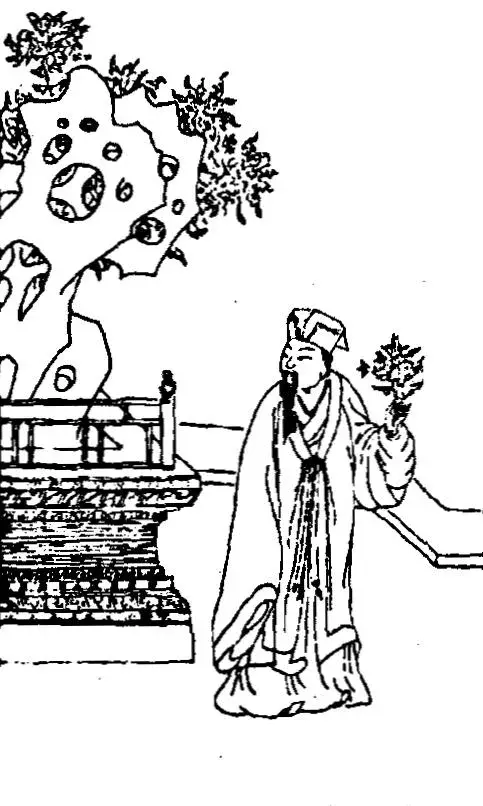
In popular Chinese narrative culture, Zhang was immortalized as a compassionate protector against malevolent forces. In the celebrated sixteenth-century classic Journey to the West, chapters seventy and seventy-one recount how Perfected Master Ziyang presented a divine prickly garment to protect the captive Queen of Zhuzi from demonic violation. Similarly, Feng Menglong's Stories to Awaken the World features Zhang subduing a supernatural ape in Meiling. These cultural appearances testify to his enduring imprint on the popular imagination.
Imperial Patronage of the Yongzheng Emperor and the Renewal of Tongbai
The Yongzheng Emperor of the Qing dynasty held an intense admiration for Zhang Boduan's writings. In an epitaph composed for imperial official Zhu Lunhan, scholar Yao Nai recorded that while serving in Zhejiang, the emperor experienced a vivid dream of a Daoist identifying himself as Zhang Pingshu of Tiantai. Following verification, the emperor issued decrees allocating imperial treasury funds to rebuild Tongbai Palace and the Ziyang Shrine on Mount Tiantai, casting a gilded statue of the master. The emperor composed imperial commentaries praising Zhang for reconciling Confucian ethics with transcendent insight.
Exegetical Traditions and Literary Transmission of Wuzhen Pian
Following its dissemination, Wuzhen Pian inspired a prolific tradition of scholarly commentaries spanning the Song, Yuan, Ming, and Qing dynasties. In the Southern Song, Weng Baoguang produced a seminal three-volume commentary correlating alchemical fire phases with Chan insights. In the Yuan dynasty, master Chen Zhixu synthesized Southern and Northern lineages in his influential annotations. Ming scholar Lu Xixing and Qing internal alchemical master Liu Yiming composed extensive commentaries explaining the text's symbolic language. These commentaries elevated Wuzhen Pian into a foundational classic of Asian philosophy.