Entering Huan Wen's Staff
Recruited by Huan Wen on Yuan Qiao's recommendation; appointed West Bureau Clerk and entrusted with confidential affairs.
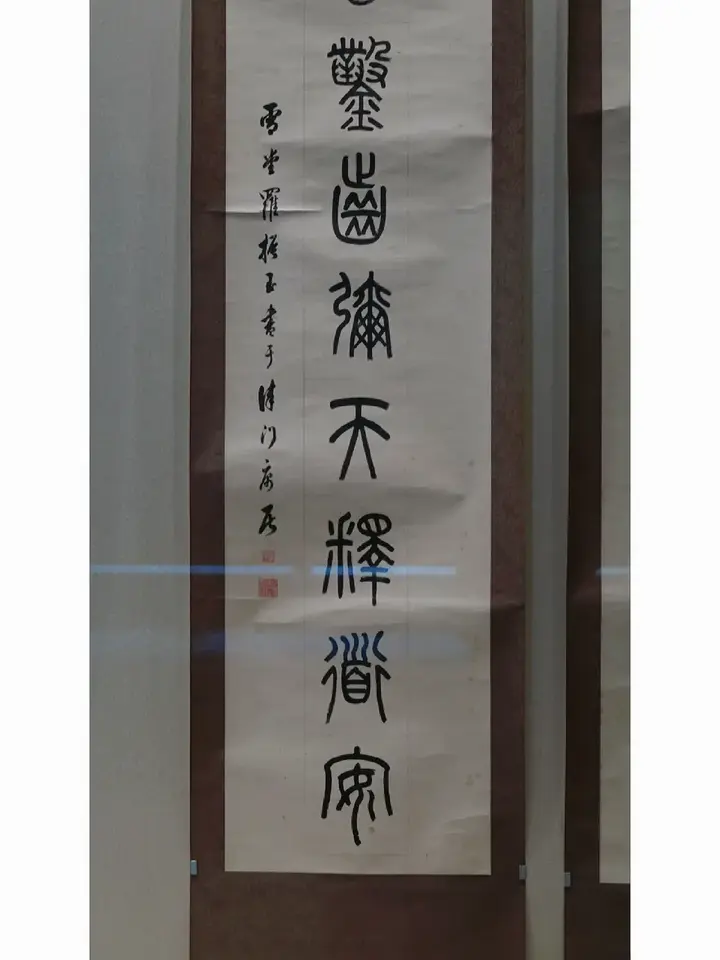
习凿齿
Xi Zaochi (习凿齿, d. 384 CE), courtesy name Yanwei (彦威), a native of Xiangyang in Jingzhou, was an eminent historian, philosopher, and essayist of the Eastern Jin dynasty. Born into an influential aristocratic family in the Han River basin, Xi was renowned from youth for broad learning, perceptive historical insights, and exceptional prose skill. Beginning his career on the staff of General-in-Chief Huan Wen, he served as…
Xi Zaochi (习凿齿, d. 384 CE), courtesy name Yanwei (彦威), a native of Xiangyang in Jingzhou, was an eminent historian, philosopher, and essayist of the Eastern Jin dynasty. Born into an influential aristocratic family in the Han River basin, Xi was renowned from youth for broad learning, perceptive historical insights, and exceptional prose skill. Beginning his career on the staff of General-in-Chief Huan Wen, he served as Attendant Officer, West Bureau Clerk, and Aide to the Governor, playing an indispensable role in regional military administration. During an official diplomatic mission to the imperial capital Jiankang, Xi conversed extensively with Prime Minister Sima Yu (the future Emperor Jianwen). Upon returning, he praised Sima Yu's peerless virtue, defying Huan Wen's ambition to usurp the throne. Demoted to Section Clerk of the Population Bureau and later dispatched as Administrator of Xingyang, Xi eventually retired to Xiangyang. To combat Huan Wen's imperial designs, he authored the fifty-four-volume historical masterpiece Annals of Han and Jin. In this work, he overthrew the traditional legitimacy of Cao Wei, pioneering the doctrine that Shu Han was the authentic continuation of the Han dynasty and arguing that the Jin dynasty succeeded Han directly rather than through Wei. When Former Qin forces under Fu Jian captured Xiangyang in 379 CE, Fu Jian sent carriages to escort Xi and the great Buddhist master Shi Dao'an to Chang'an, remarking that conquering the south had yielded only one and a half men of true worth, referring to Xi's lameness. Maintaining unbending loyalty to Eastern Jin, Xi declined northern office and secured permission to return home. Following the recovery of Xiangyang in 384 CE, the court summoned him to direct the imperial historical bureau, but he died before assuming office, leaving behind his final memorial Discourse on Jin Inheriting the Han Mandate. Renowned for his close friendship with Dao'an and his regional monograph Record of Elders of Xiangyang, Xi occupies a foundational position in Chinese historiography.
Recruited by Huan Wen on Yuan Qiao's recommendation; appointed West Bureau Clerk and entrusted with confidential affairs.
Promoted to Aide to the Governor for administrative excellence; managed communications during northern expeditions.
Traveled on an imperial mission to Jiankang; praised Prime Minister Sima Yu, infuriating Huan Wen and suffering demotion.
Dispatched as Administrator of Xingyang; retired to Xiangyang after the city fell to Former Yan, corresponding with Huan Mi.
Welcomed Buddhist master Shi Dao'an to Xiangyang; their witty verbal exchange became celebrated throughout the realm.
Penned the Annals of Han and Jin in fifty-four volumes, exalting Shu Han to delegitimize Huan Wen's usurpation plots.
Former Qin captured Xiangyang; ruler Fu Jian sent carriage transport to bring Xi and Dao'an to Chang'an with supreme honors.
Citing severe foot illness, firmly declined public appointments under Former Qin and secured permission to return south.
Xiangyang was recaptured by Eastern Jin; summoned to direct state history, he drafted his final memorial on Han succession before dying in October.
Xi Zaochi was born into an eminent clan in Xiangyang County, Xiangyang Commandery. The Xi family had flourished as prominent landholders and political leaders in the Middle Yangtze region since the Han and Wei periods. Living in the aftermath of the Disaster of Yongjia and the southward migration of the Western Jin court, the Xiangyang region served as both a strategic defensive frontier against northern non-Han dynasties and a vibrant haven for classical civilization.
From early youth, Xi possessed expansive intellectual ambitions. He shunned pedantic textual commentary, striving instead to comprehend the underlying mechanisms of dynastic rise and fall across ancient history. Highly praised for his incisive historical essays and elegant epistolary style, he became celebrated across Jingzhou before reaching thirty. Deeply versed in regional topography and ancestral traditions, he viewed himself as an heir to the noble statesmen who had once flourished in the Han River basin.
Around 346 CE, General of the Western Pacification Huan Wen assumed governorship of Jingzhou, establishing administrative headquarters in Jiangling and recruiting regional elites. Yuan Qiao, the Administrator of Jiangxia and Huan Wen's trusted strategist, recognized Xi's exceptional statecraft and repeatedly recommended him to the general. Huan Wen drafted Xi as an Attendant Officer.
Demonstrating sharp administrative skill and drafting lucid diplomatic memoranda, Xi won Huan Wen's deep confidence and was promoted to West Bureau Clerk, participating in confidential policy discussions. Over the following years, he advanced to Assistant Officer of the Headquarters and Aide to the Governor. When prominent eastern scholars like Han Bo and Fu Tao visited Jingzhou, they sought out Xi's company, marveling at his intellectual scope.
During his staff tenure, Xi maintained a close intellectual friendship with Han Bo and Fu Tao. Han Bo was an authority on the Book of Changes and Neo-Daoist metaphysics, while Fu Tao excelled in historical documentation. Meeting regularly in Jiangling, they debated the relationship between natural spontaneity and moral codes, analyzing the historical roots of the collapse of the Western Jin. Xi's practical statesmanship and historical depth ensured that Huan Wen's military headquarters became a leading intellectual center in southern China, earning Xi widespread admiration among the literati.
Whether accompanying Huan Wen on northern military expeditions or remaining behind to govern Jiangling, Xi held key responsibilities. During one campaign, Huan Wen secretly summoned a Shu astrologer, inquiring in the dead of night about the lifespan of the Eastern Jin dynasty. When the diviner replied that the dynastic fortune remained enduring, Huan Wen was displeased. The next morning, Huan Wen presented the astrologer with a bolt of silk and five thousand copper coins. Terrified, the astrologer rushed to Xi's residence, believing that the silk was an order to hang himself and the money was intended for a coffin. Xi laughed heartily, reassuring the diviner that Huan Wen was merely teasing him with silk and providing travel funds to allow his safe return home. When the astrologer thanked Huan Wen and departed, Huan Wen chuckled with delight, observing that thirty years of reading Confucian texts could not match a single conversation with Master Xi.
During this period, scholar Sun Chuo visited Huan Wen. Sun Chuo jested with Xi, quoting from the Book of Songs to mock Xiangyang as an uncultured southern borderland: "Ignorant and foolish are the southern tribes, daring to make an enemy of the great state!" Xi responded instantly by citing verses celebrating the royal pacification of northern nomads: "Severely we struck the Xianyun, penetrating even unto Taiyuan!" When walking together later, Sun Chuo taunted: "Sifting the sand, the worthless tiles and stones linger behind!" Xi immediately retorted: "Winnowing the chaff, the empty husks float in front!" Such lightning repartee and classical mastery won universal respect.
As Huan Wen's military victories across the north consolidated his prestige, his arrogance grew into an overt ambition to usurp the imperial throne of Eastern Jin. Deeply grounded in classical Confucian loyalty, Xi watched this development with dismay, resolving to protect the dynasty through principled resistance.
Toward the end of the Shengping era, Huan Wen dispatched Xi to the capital Jiankang on an official mission. Prime Minister Sima Yu, then Prince of Kuaiji, was universally admired for his elegant serenity and administrative forbearance. Meeting with Xi, Sima Yu discussed statecraft and moral philosophy, treating the southern scholar with supreme honors.
Upon returning to Jingzhou, Huan Wen summoned Xi and asked with keen suspicion: "Having visited the capital, what manner of man did you find the Prime Minister?" Huan Wen hoped that Xi would belittle Sima Yu to justify his own usurpation. Instead, Xi replied with steadfast candor: "His Highness's virtue and nobility are beyond anything your servant has witnessed in his lifetime!"
This forthright assessment shattered Huan Wen's illusions and defied his private schemes. Enraged, Huan Wen stripped Xi of his senior offices, demoting him to Section Clerk of the Population Bureau. Previously, Xi had served alongside his two maternal uncles, Luo Chong and Luo You; having surpassed them in rank, Xi had repeatedly petitioned Huan Wen to advance his uncles. In a display of spite, Huan Wen elevated the two uncles to Area Commanders of Xiangyang while dispatching the gifted Xi far from the political center as Administrator of Xingyang.
In 363 CE, northern turmoil intensified as Former Yan forces captured Xingyang. Xi vacated his office and returned to his ancestral home in Xiangyang. Huan Wen's younger brother Huan Mi shared Xi's literary refinement and maintained an affectionate correspondence. Upon settling in Xiangyang, Xi composed his famous letter to Huan Mi, reflecting upon the historical tragedies of the Han River valley.
In his letter, Xi movingly described entering Xiangyang through the north gate, looking west toward Mount Longzhong to imagine the soaring dragon roar of Zhuge Liang, gazing east toward Baisha to recall the phoenix cry of Pang Tong, viewing the ruins of Fancheng to remember Deng You's sacrificial virtue, and looking south upon the city walls to honor the benevolent memory of Yang Hu.
Looking across the Tanxi stream and the Yuliang fish-weirs, he meditated upon the rustic integrity of hermit-scholars like Sima Hui and Pang Degong. He urged Huan Mi to emulate these ancient masters, warning that in an era of division, gentlemen must strive for excellence rather than subsiding into passive mediocrity like the late Han governor Liu Biao. The letter remains celebrated as an eloquent monument of regional remembrance.
In 365 CE, fleeing northern civil war, the eminent Buddhist monk Shi Dao'an led several hundred disciples across the Han River into Xiangyang. Dao'an was the foremost master of the Prajnaparamita school in early Chinese Buddhism, famed for razor-sharp logic and profound learning. Long admiring Dao'an's reputation, Xi dispatched a formal welcoming letter expressing the admiration of southern scholars.
When Dao'an arrived, Xi went to the monastery to pay his respects. Entering the dining hall while Dao'an held his bowl, Xi called out with pride: "Xi Zaochi of the Four Seas!" Without pausing his meal, Dao'an looked up calmly and replied: "Shi Dao'an of the Vast Sky!" The pairing of Vast Sky against Four Seas and Shi Dao'an against Xi Zaochi was acclaimed across southern China as a peerless intellectual match.
Following this dramatic introduction, the two engaged in extensive discussions comparing Buddhist emptiness with Confucian morality. Deeply humbled by Dao'an's spiritual stature, Xi mobilized his clan's resources to secure food, land, and patronage for the monastic community, transforming Xiangyang into the national hub of Mahayana translation and commentary for fifteen years. Xi wrote an urgent letter to Prime Minister Xie An, praising Dao'an's vast scholarship and recommending him to the imperial court, providing crucial momentum for the early sinification of Buddhism.
During the Taihe era, Huan Wen deposed Emperor Fei, enthroned Emperor Jianwen, and stationed formidable armies outside the capital, demanding the Nine Bestowals in preparation for seizing the throne. The Eastern Jin court trembled in terror.
Living in seclusion in Xiangyang, Xi recognized that while military arms could not check the dictator, the enduring judgment of history remained an invincible weapon. Working in isolation, he composed the monumental fifty-four-volume Annals of Han and Jin.
Spanning three centuries from the restoration of Emperor Guangwu of Han to the fall of Emperor Min of Western Jin, the work delivered a revolutionary historiographical verdict: Xi discarded the precedent set by Chen Shou's Records of the Three Kingdoms, proclaiming Shu Han under Liu Bei as the legitimate continuation of the Han dynasty and branding the Cao Wei regime as illegitimate usurpers. He demonstrated that the Han dynasty survived until the fall of Shu Han, and that the Jin dynasty succeeded Han directly rather than inheriting a mandate from Wei. By proving that sovereignty could not be attained through brute force and treachery, Xi struck a devastating intellectual blow against Huan Wen's usurpation plots, helping preserve the Eastern Jin throne. Following Huan Wen's death, the political crisis passed. Afflicted with chronic leg illness, Xi retired into quiet scholarly isolation.
In 379 CE, Former Qin monarch Fu Jian captured Xiangyang, capturing defense commander Zhu Xu. Fu Jian venerated Chinese classical learning, having long heard astrological prophecies that holy men would arise to assist the realm. Following the victory, Fu Jian sent comfortable carriages to bring Xi and Dao'an to Chang'an with royal honors.
Welcoming Xi at the Weiyang Palace, Fu Jian engaged in long discussions on statecraft and classical philosophy, offering him substantial material rewards. Fu Jian wrote proudly to his military commanders: "When Western Jin conquered Wu, its greatest prize was obtaining the two talents Lu Ji and Lu Yun; today, as we subdue the southern riverlands, we have acquired only one and a half worthy gentlemen!" By one and a half men, Fu Jian referred to Dao'an and the physically disabled Xi, paying tribute to Xi's towering intellectual stature.
Remaining unswervingly loyal to the Eastern Jin dynasty, Xi adamantly declined all political appointments under the northern non-Han regime. Pleading worsening paralysis in his legs, he begged permission to return home. Moved by his steadfast loyalty, Fu Jian permitted him to return to Xiangyang.
In 384 CE, following the Battle of Fei River, Eastern Jin armies recaptured Xiangyang. Recognizing Xi's lifetime of loyalty and unparalleled historical talent, Emperor Xiaowu issued an imperial decree summoning him to lead the compilation of national history. However, years of hardship and illness had shattered his body. Realizing that death was near, Xi gathered his remaining strength to draft his final memorial, Discourse on Jin Inheriting the Han Mandate, outlining his philosophy that the Jin dynasty directly inherited the Han mandate. In October 384 CE, he passed away in Xiangyang at approximately sixty-eight years of age. His son Xi Piqiang inherited his intellectual mantle, serving as Senior Attendant Officer of Chariots and Cavalry.
Xi Zaochi's primary achievement in Chinese historiography was his pioneering formulation that Shu Han was the legitimate dynasty while Cao Wei was an illegitimate usurper, alongside his doctrine that Jin directly succeeded Han.
Prior to Xi, Chen Shou's Records of the Three Kingdoms and official Western Jin histories treated Cao Wei's receipt of the Han abdication as the official line of imperial transmission. In the Annals of Han and Jin and his memorial Discourse on Jin Inheriting the Han Mandate, Xi overthrew this view. He argued that legitimacy was defined by moral rectitude and dynastic continuity rather than territorial scale or military coercion. Because Liu Bei was a scion of the imperial house preserving the ancestral line, Shu Han remained the true sovereign state, while the Cao family remained treacherous usurpers who never achieved universal rule.
Xi argued that just as Emperor Gaozu of Han bypassed the Qin dynasty to succeed the Zhou tradition, the Jin dynasty possessed the moral mandate to bypass Wei and directly inherit the four-century glory of Han. This revolutionary theory transformed Confucian political philosophy, providing the direct foundation for Zhu Xi's Comprehensive Mirror in Aid of Governance Outline and defining the cultural ethos of the Romance of the Three Kingdoms.
Spanning fifty-four volumes, the Annals of Han and Jin established enduring standards for independent, courageous recording in dynastic history.
Xi upheld the sacred duty of the historian to record facts without fear of retribution. In detailing the delicate transition between Wei and Jin, official court historians had whitewashed the Sima family's assassinations and purges. Xi defied convention by documenting Sima Zhao's murder of Duke of Gaogui Village Cao Mao, while preserving authentic battlefield records such as Jiang Wei's tactical ruse where the dead Zhuge Liang routed the living Sima Yi.
Moreover, Xi preserved the complete text of Zhuge Liang's Second Memorial on the Northern Expedition, providing the primary documentary proof of its authenticity for future generations. Tang master of historiography Liu Zhiji praised Xi in General Principles of History, marveling that centuries of court deception were swept away by his courageous brush.
In geographical literature, Xi established an enduring model with his five-volume monograph Record of Elders of Xiangyang.
Before the widespread development of provincial gazetteers in the Song and Ming eras, Xi surveyed the topography, ancestral lineages, military ruins, and notable figures of his home region. He recorded the humble dwelling of Zhuge Liang in Longzhong and composed the Inscription on the Residence of Marquis Zhuge, providing the earliest documentary evidence for the historic cradle of Shu Han statecraft.
Furthermore, the work broke through dry administrative listings by using vivid dialogues and dramatic scenes to bring historical figures to life, depicting hermit Pang Degong tilling his fields while refusing Liu Biao's summons. The work preserved irreplaceable records of the middle Yangtze valley and profoundly influenced the emergence of Tang and Song narrative fiction.
Xi was a pioneering scholar-official who actively fostered the sinification of Mahayana Buddhism during the fourth century.
Recognizing that Prajnaparamita metaphysics offered profound solutions to ontological questions neglected in traditional Confucianism, Xi provided crucial material, financial, and political protection for Shi Dao'an's monastic assembly in Xiangyang. Through fifteen years of intense dialogue, they harmonized Buddhist emptiness with Confucian inner virtue and Daoist quietude.
This cultural alliance bore lasting fruit. When Dao'an dispatched his disciples southward, master Huiyuan carried these synthesized teachings to Mount Lu, founding the White Lotus Society at Donglin Temple and elevating Chinese Buddhism to its golden age. Through his dedicated patronage, Xi built a vital bridge between indigenous classical learning and imported Buddhist philosophy.
FIGURES ASSOCIATED WITH THIS DYNASTY