Birth into Gentry Elite
Born in Jinyang to Cao Wei Minister of Works Wang Chang; renowned for calm gravitas.
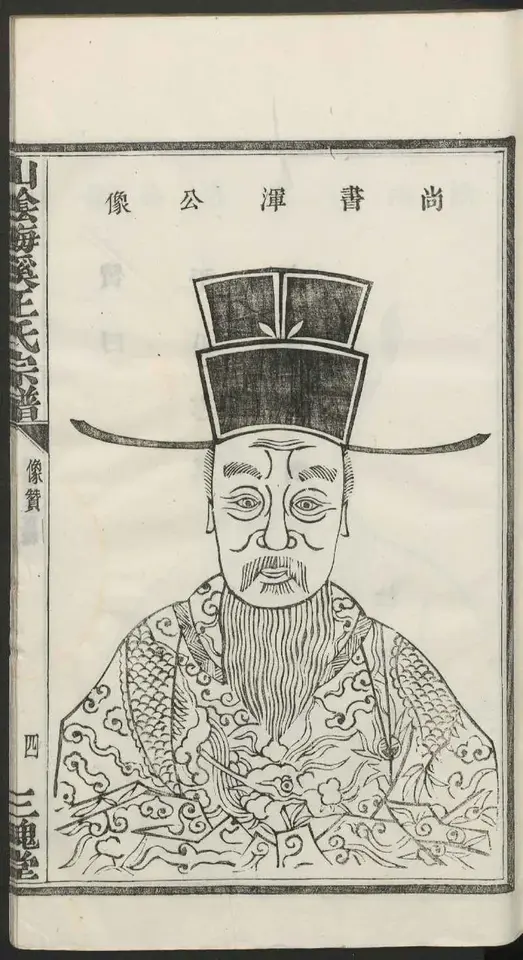
223 CE–297 CE
王浑
Wang Hun (王浑, 223–297), courtesy name Xuanchong, was an eminent military commander and founding statesman of the Western Jin Dynasty, originating from Jinyang, Taiyuan Commandery (modern Taiyuan, Shanxi). He was the son of Wang Chang, Minister of Works of Cao Wei. Emerging from the illustrious Taiyuan Wang clan, Wang Hun was renowned for his grave composure, far-reaching vision, and institutional prudence. Serving originally…
Wang Hun (王浑, 223–297), courtesy name Xuanchong, was an eminent military commander and founding statesman of the Western Jin Dynasty, originating from Jinyang, Taiyuan Commandery (modern Taiyuan, Shanxi). He was the son of Wang Chang, Minister of Works of Cao Wei. Emerging from the illustrious Taiyuan Wang clan, Wang Hun was renowned for his grave composure, far-reaching vision, and institutional prudence. Serving originally under General-in-Chief Cao Shuang, he was dismissed following the Gaoping Tombs Incident before being recruited into Sima Zhao's inner circle, later succeeding to his father's noble rank as Marquis of Jingling. Following the establishment of the Western Jin Dynasty, Wang Hun held crucial regional commands as Inspector of Xu Province, Inspector of Yu Province, General of Pacifying the East, and Commander-in-Chief of Military Affairs in Yang Province, stationed at Shouchun and Xuchang to oversee border defenses against Eastern Wu. In an audacious night amphibious assault across the Huai River, he crushed a massive invasion force of one hundred thousand troops led by Wu generals Xue Ying and Lu Shu, subsequently destroying the enemy's logistical bases and fleets at Wan City. During the decisive conquest of Eastern Wu in 279, Wang Hun commanded the eastern theater army advancing from Hengjiang. In the epic Battle of Niuzhu (Bancheng), his forces completely destroyed the final mobile field army of Eastern Wu under Chancellor Zhang Ti, killing Zhang Ti and over seven thousand eight hundred elite troops. For these monumental services, he was created Duke of Jingling and Senior General Who Conquers the East. In 282, Wang Hun was recalled to the imperial court as Left Vice Director of the Imperial Secretariat. When Emperor Wu contemplated sending his capable brother Sima You (Prince of Qi) to his fief, Wang Hun submitted a powerful memorial urging against the banishment, arguing that royal princes should serve as imperial shields modeled on the Duke of Zhou. Upon the ascension of Emperor Hui, Wang Hun was elevated to Minister of Education and Palace Attendant, granted official retinues matching the elder statesman Wang Xiang. During the bloody coups of Empress Jia and Prince of Chu Sima Wei in 291, Wang Hun mobilized one thousand private retainers to bar his gates, refusing to collaborate in treasonous purges. Following Sima Wei's downfall, Wang Hun helped secure the palace and was appointed Manager of Affairs of Masters of Writing. He passed away peacefully in 297 at age seventy-five, posthumously honored with the name Duke Yuan.
Born in Jinyang to Cao Wei Minister of Works Wang Chang; renowned for calm gravitas.
Dismissed after Cao Shuang's fall; later recruited by Sima Zhao as Magistrate of Huai County.
Assisted Sima Zhao in quelling Guanqiu Jian's rebellion, rising to Cavalier Regular Attendant.
Inherited the title Marquis of Jingling upon his father's death; appointed Colonel of Agile Cavalry.
Appointed Inspector of Xu Province by Jin founder Sima Yan; opened state granaries to save famine victims.
Crossed the Huai River secretly at night, shattering an invading Wu host of one hundred thousand soldiers.
Appointed Commander-in-Chief of Yang Province; burned Wu logistical granaries and fleets at Wan City.
Commissioned to lead the eastern army in the conquest of Eastern Wu, capturing Xunyang and Gaowang.
Annihilated Eastern Wu's main army under Chancellor Zhang Ti at Bancheng, slaying seven thousand eight hundred troops.
Promoted to Senior General Who Conquers the East and created Duke of Jingling following Wu's capitulation.
Appointed Left Vice Director of Secretariat; submitted urgent memorials advising against banishing Sima You.
Promoted to Minister of Education; honored with special retinue privileges under Emperor Hui.
Barred gates with one thousand armed retainers against Prince Sima Wei; restored order and given supreme administrative rank.
Passed away in office at age seventy-five; awarded highest sacrificial honors and posthumously titled Duke Yuan.
Wang Hun, courtesy name Xuanchong, belonged to the prominent Taiyuan Wang lineage of Jinyang (modern Taiyuan, Shanxi). His father, Wang Chang, served as Minister of Works in the Cao Wei Dynasty, celebrated as an authority on classical learning and a decorated military commander. In his youth, Wang Hun demonstrated deep composure, expansive personal capacity, and strict adherence to institutional laws. During the Zhengshi era, when General-in-Chief Cao Shuang exercised regency in Cao Wei, Wang Hun was recruited as an administrative clerk into Cao Shuang's headquarters.
In the first month of 249, Grand Tutor Sima Yi staged the Gaoping Tombs coup, eliminating Cao Shuang and his faction. As an administrative subordinate of Cao Shuang, Wang Hun was routinely relieved of official duties. Following several years of private retirement, Sima Zhao recognized his lineage and practical competence, appointing him Magistrate of Huai County. Wang Hun discharged his local gubernatorial duties with fairness and composure. During the rebellion of Guanqiu Jian and Wen Qin in Huainan in 255, Sima Zhao personally led imperial armies east, commissioning Wang Hun as military advisor. For his effective logistical and strategic advice, Wang Hun was promoted through successive posts to Cavalier Attendant and Cavalier Regular Attendant.
In 259, Minister of Works Wang Chang passed away, and Wang Hun inherited his father's noble title as Marquis of Jingling. During the Xianxi era, he was appointed Colonel of Agile Cavalry, commanding elite palace guard units. In the twelfth month of 265, Emperor Yuan of Wei (Cao Huan) abdicated in favor of Sima Yan (Emperor Wu of Jin), formally establishing the Western Jin Dynasty. Sima Yan conferred the title General of Inspiring Martial Might upon Wang Hun, appointing him Inspector of Xu Province.
Upon arriving in Xu Province, Wang Hun found the region devastated by war and severe droughts. Disregarding bureaucratic red tape, he ordered state granaries opened immediately to distribute grain to starving refugees, personally visiting affected settlements to supervise agricultural recovery and resettle displaced households. To reward his governance, Emperor Wu increased his appanage by one thousand eight hundred households. He was subsequently appointed Eastern Central General and Supervisor of Military Affairs in Huaibei, stationed at Xuchang, where his memorials on frontier defense were consistently adopted.
In 273, the court appointed Wang Hun General Who Subdues Bandits and Supervisor of Military Affairs in Yu Province, holding talisman credentials while concurrently serving as Inspector of Yu Province. Because Yu Province bordered Eastern Wu, border frictions were constant. Wang Hun enforced strict military discipline, prohibiting frontier garrisons from raiding across borders while broadcasting the court's benevolence. Moved by his virtuous administration, thousands of civilian households suffering under Sun Hao's tyranny crossed the Huai River to settle in Jin territory, establishing deep popular goodwill toward the northern dynasty.
Shortly thereafter, Eastern Wu veteran commanders Lu Shu and Xue Ying launched an invasion with forces claiming one hundred thousand troops, advancing along two prongs against Yiyang and Xinsi. Because provincial garrisons were on scheduled seasonal furloughs, the forward Jin bases were held by merely a single brigade. Believing the Jin defenders would cower inside their walls, the Wu commanders advanced without vigilance. Sizing up the opportunity, Wang Hun launched an audacious counteroffensive. Mobilizing his available shock troops under cover of darkness, he conducted an amphibious crossing of the Huai River, striking the Wu flank like a thunderbolt. The surprised Wu armies collapsed in complete rout, suffering heavy casualties.
In recognition of this triumph, the court promoted Wang Hun to General of Pacifying the East and Commander-in-Chief of Military Affairs in Yang Province, stationed at the strategic fortress of Shouchun. When Wu Emperor Sun Hao launched extensive agricultural reclamation projects at Wan City to stockpile provisions for future invasions, Wang Hun acted decisively. He dispatched Inspector of Yang Province Ying Chuo with Huainan detachments to strike Wan City, overrunning the fortifications, capturing thousands of defenders, and burning immense reserves of grain, crops, and over one hundred naval transport vessels. Stationed along the southeastern border, Wang Hun surveyed the waterways and mountain passes, submitting detailed strategic operational plans for the ultimate conquest of Eastern Wu.
In the eleventh month of 279, Emperor Wu authorized a grand six-pronged invasion involving over two hundred thousand troops to conquer Eastern Wu. Wang Hun was appointed supreme commander of the eastern theater army, advancing from Hengjiang directly toward the Wu capital Jianye.
Wang Hun executed his campaign with methodical precision. He dispatched Staff Officer Chen Shen and Commander Zhang Qiao to storm Xunyang and Laxiang, while ambushing Wu vanguard officer Kong Zhong, capturing five enemy commanders. He then ordered Army Protector Li Chun to occupy Gaowang Castle, routing Wu commander Yu Gong. Confronting this overwhelming advance, Wu generals Chen Dai and Zhu Ming surrendered their armies to Wang Hun. In succession, Wu naval commander Sun Yan and Minister of Education He Zhi delivered their seals and surrendered their riverine garrisons.
Meanwhile, western and central Jin armies under Du Yu and Wang Jun advanced down the Yangtze River, overrunning Jingzhou. Terrified by the collapse of his border defenses, Sun Hao mobilized his final strategic reserve, appointing Chancellor Zhang Ti as supreme commander to lead Danping Administrator Shen Ying, Army Protector Sun Zhen, and Vice Strategist Zhuge Liang with thirty thousand elite troops across the Yangtze to Niuzhu. Zhang Ti advanced to Bancheng, encircling Jin vanguard officer Zhang Qiao at Yangqiao Castle.
Hearing of the encirclement, Wang Hun dispatched Marshal Sun Chou and Inspector of Yang Province Zhou Jun with relief forces. The opposing hosts met at Bancheng in the most ferocious pitched battle of the war. At the outset, Wu commander Shen Ying led five thousand heavily armored Danping shock troops in three suicidal charges against the Jin line. Under Wang Hun's disciplined tactical control, the Jin defensive squares held fast like iron walls. When the Wu assault exhausted its momentum, Zhou Jun and Sun Chou unleashed heavy cavalry in a devastating double envelopment. The Wu host collapsed in total chaos; Chancellor Zhang Ti, Shen Ying, and Sun Zhen were killed on the field, with over seven thousand eight hundred elite troops slain or captured. This catastrophic defeat shattered the military spine of Eastern Wu, leaving Jianye entirely exposed.
Following the destruction of Zhang Ti's army, Eastern Wu lost all will to resist. Sun Hao dispatched surrender memorials to multiple Jin camps. Stationed north of the river, Wang Hun was gathering naval transports and securing thousands of prisoners before advancing across the Yangtze. Inspector Zhou Jun urged an immediate river crossing to storm Jianye, but Wang Hun hesitated, observing: "I bear imperial commissions instructing me to destroy Zhang Ti's field army; we must not advance recklessly without explicit orders."
Taking advantage of the river currents, Dragon-Flapping General Wang Jun sailed his vast armada downriver, docking beneath the walls of Stone City, where Sun Hao surrendered his regalia to Wang Jun in the third month of 280. Crossing the river the following morning, Wang Hun ascended the palace of Jianye and held a banquet for his troops. Gazing upon the surrendered city, he was overwhelmed with regret that his caution had allowed Wang Jun to claim premier honors. Feeling his destruction of the Wu central army was the paramount achievement of the war, Wang Hun submitted angry memorials accusing Wang Jun of insubordination, even petitioning to have Wang Jun arrested in a prisoner cart.
While contemporary courtiers criticized Wang Hun for petty jealousy, Emperor Wu recognized the overarching military reality: Wang Hun's victory at Bancheng had annihilated the only force capable of defending the southern capital. Emperor Wu issued an imperial decree praising Wang Hun for breaking the enemy's main army, elevating him to Duke of Jingling, increasing his appanage by eight thousand households, and promoting him to Senior General Who Conquers the East. Re-assigned to govern Yang Province at Shouchun, Wang Hun demonstrated admirable civil magnanimity. He governed with lenient laws, reduced taxes, and extended courteous patronage to former Wu scholars and gentry, quickly reconciling the conquered populace to imperial rule.
In 282, Wang Hun was recalled to the capital as Left Vice Director of the Imperial Secretariat and Cavalier Regular Attendant. As Emperor Wu's health declined, court factions debated imperial succession, recognizing that Crown Prince Sima Zhong lacked mental capacity. Emperor Wu's younger brother Sima You (Prince of Qi) enjoyed immense prestige for his virtue and administrative competence. Scheming courtiers such as Xun Xu and Feng Dan, fearing Sima You would undermine their influence, persuaded Emperor Wu to banish Sima You to his regional fief.
While most courtiers acquiesced in silence, Wang Hun submitted a passionate memorial in direct protest. Drawing upon ancient precedents, he argued: "When King Wu of Zhou established the state, he enfeoffed brothers to shield the royal house. The Duke of Zhou, brother to King Wu and uncle to King Cheng, assisted the court without being sent to his fief, his unblemished loyalty recorded in the Golden Casket. Prince You stands in relation to our dynasty as the Duke of Zhou stood to the royal house of Zhou. He is upright, loyal, and capable, truly the imperial heart and backbone. Banishing him will divide royal kin and invite future catastrophes."
Wang Hun proposed a balanced regency triarchy, appointing Sima You alongside Grand Commandant Jia Chong and imperial relative Yang Yao as joint guardians to the Crown Prince. However, Emperor Wu rejected the advice, forcing Sima You to depart the capital, where he died of grief, sowing the seeds of the War of the Eight Princes. In 290, Wang Hun was elevated to Minister of Education, and upon Emperor Hui's accession, he was granted palace attendant privileges and an official retinue matching senior statesman Wang Xiang.
In 291, Empress Jia collaborated with Prince of Chu Sima Wei to slaughter regent Yang Jun. Seeking supreme power, Sima Wei prepared to murder Prince of Runan Sima Liang and Grand Tutor Wei Guan. Sima Wei's advisor Gongsun Hong urged him: "When Sima Yi deposed Cao Shuang, he had Minister of Education Jiang Ji share his carriage to reassure the realm. Minister of Education Wang Hun possesses immense military prestige; you should invite him to share your carriage to pacify the public."
Sima Wei dispatched cavalry to compel Wang Hun's participation. Aware that Sima Wei was acting on forged decrees, the seventy-year-old Wang Hun refused to comply. He feigned illness, closed his mansion gates, and armed one thousand private retainers to defend the compound walls. Intimidated by Wang Hun's resolute defense and towering prestige, Sima Wei withdrew. When Empress Jia executed Sima Wei shortly thereafter, Wang Hun led his guards into the palace to restore metropolitan order, receiving the premier title Manager of Affairs of Masters of Writing. In 297, Wang Hun passed away peacefully at age seventy-five, awarded state sacrificial rites and the posthumous name Duke Yuan.
Wang Hun stood as the premier defensive bulwark of Western Jin along the southeastern marches. Facing an invasion by one hundred thousand Eastern Wu troops under Lu Shu and Xue Ying, he executed a brilliant night amphibious crossing of the Huai River with inferior numbers, crushing the enemy host in a classic active defense.
His subsequent raid on Wan City incinerated critical enemy logistical granaries and fleets, completely neutralizing Sun Hao's aggressive designs. His meticulous surveys of southern terrain provided essential intelligence for the ultimate unification of China.
During the 279 conquest of Eastern Wu, Wang Hun bore the primary burden of engaging the enemy's main strategic reserve. The Battle of Niuzhu (Bancheng) represented the climax of the war.
Confronting thirty thousand elite Wu soldiers under Chancellor Zhang Ti and the ferocious charges of Shen Ying's armored shock troops, Wang Hun orchestrated a steadfast combined-arms defense before executing a cavalry double envelopment. Slashing down seven thousand eight hundred enemy soldiers and killing Zhang Ti, Wang Hun shattered Eastern Wu's defensive will, directly precipitating the capitulation of the southern dynasty.
In 282, Wang Hun exhibited unbending moral courage by protesting the banishment of Prince of Qi Sima You. His eloquent memorial, warning against the dangers of isolating close royal kin and proposing a tripartite regency balance, presciently anticipated the catastrophic breakdown of the Western Jin state.
During the bloody coups of 291, he mobilized his domestic retainers to defy Sima Wei's armed intimidation, maintaining unblemished integrity amidst palace bloodshed. His composed political wisdom enabled him to preserve the prestige and safety of the Taiyuan Wang clan throughout turbulent times.
FIGURES ASSOCIATED WITH THIS DYNASTY