Shenxian | Born into the prominent Wang lineage; father Wang You planted three sophora trees, predicting a premier descendant.
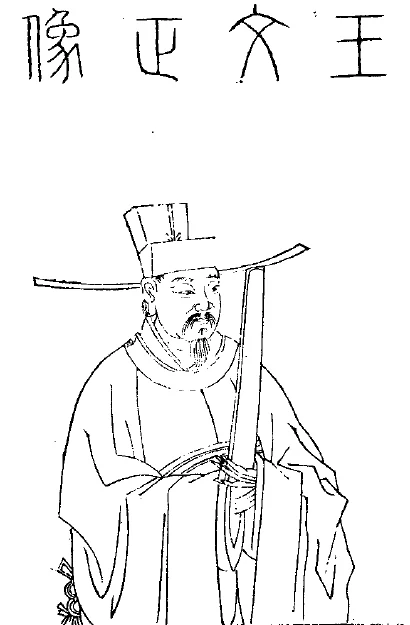
957 CE–1017 CE
Noted statesman and chancellor of the Northern Songa model minister of his age
Wang Dan
王旦
Wang Dan (957–1017), courtesy name Ziming, was a native of Shenxian, Damingfu (modern Shen County, Shandong Province). He was an illustrious statesman, Prime Minister, and one of the defining figures of the early Northern Song dynasty, hailing from the eminent Three Sophora Trees Wang clan. Passing the imperial examinations in 980, he served in local magistrates, the Hanlin Academy, and the Bureau of Military Affairs. In…
957 CE–1017 CENorthern Song
PROFILE
Wang Dan (957–1017), courtesy name Ziming, was a native of Shenxian, Damingfu (modern Shen County, Shandong Province). He was an illustrious statesman, Prime Minister, and one of the defining figures of the early Northern Song dynasty, hailing from the eminent Three Sophora Trees Wang clan. Passing the imperial examinations in 980, he served in local magistrates, the Hanlin Academy, and the Bureau of Military Affairs. In 1004, amidst the existential crisis of the Shanyuan Campaign against the Khitan Liao, he was appointed Metropolitan Regent of Kaifeng, brilliantly maintaining supply lines and domestic order while Emperor Zhenzong proceeded to the front. In 1006, he was elevated to Prime Minister (Tong Zhongshu Menxia Pingzhangshi) and Supervisor of National History, holding the supreme ministerial seat for eighteen consecutive years. Known for his profound composure, magnanimity, and peerless judgment of character, he promoted stalwarts like Kou Zhun and Wang Zeng, solidifying the peace celebrated as the Xianping and Jingde eras. In his later years, he reluctantly complied with Zhenzong's Daoist Fengshan and "Heavenly Text" rituals—an act he bitterly regretted on his deathbed, ordering his head shaved and body shrouded in monastic robes as an act of penance. He died in 1017 at sixty-one, receiving the highest posthumous name Wengzheng and temple enshrinement beside Emperor Zhenzong.
- Courtesy / Art Name
- Ziming
- Era
- Taizong, Zhenzong reigns
- Dynasty
- Early to Mid Northern Song Dynasty
- Identity
- Noted statesman and chancellor of the Northern Song, a model minister of his age
- Date of Birth
- 957
- Date of Death
- 1017
- Ethnicity
- Han
- Ancestral Home
- Shenxian, Damingfu (modern Shen County, Shandong Province)
- Place of Birth
- Shen county of Daming prefecture (present-day Shen county, Shandong)
- Place of Death
- Place of death unknown
- Lifespan
- 61 years,
- Highest Office
- Grand Academician of Zhaowen Hall, Prime Minister (Pingzhangshi), Supervisor of National History, Minister of Works, Co-Director of Bureau of Military Affairs
- Major Offices
- Grand Academician of Zhaowen Hall, Prime Minister (Pingzhangshi), Supervisor of National History, Minister of Works, Co-Director of Bureau of Military Affairs
- Peerage
- Duke of Wei
- Posthumous Name
- Grand Tutor , Director of Secretariat and Chancellery, Enfeoffed as Prince/Duke of Wei , Posthumous Name Wengzheng
- Major Achievements
- Proposing the Ever-Normal Granary (Changpingcang) system, securing Kaifeng as Metropolitan Regent during the Shanyuan Campaign, steering national administration as Senior Grand Councilor for 18 years, discovering and elevating premier statesmen including Kou Zhun and Wang Zeng
LIFE TIMELINE
Kaifeng | Repeatedly petitioned for retirement due to deteriorating health; Emperor Zhenzong issued imperial edicts retaining his service.
Kaifeng | Passed the Jinshi imperial examination; appointed Judge and Magistrate of Pingjiang, governing with equity.
Kaifeng | Passed away on October 2 at age 61; ordered a monastic shroud to atone for the Heavenly Text affair; posthumously named Wengzheng.
Tanzhou | Supervised the Tanzhou Silver Mines; recommended by commander He Chengnu to join the Hanlin Academy compilations.
Zhengzhou | Appointed Vice Prefect of Zhengzhou; submitted a landmark memorial proposing the empire-wide Ever-Normal Granary system.
In 985 AD | In 985 AD, while serving as Vice Prefect of Zhengzhou, Wang Dan witnessed merchant cartels exploiting seasonal shortages to manipulate grain prices.
Kaifeng | Recommended by Wang Yucheng for prime ministerial caliber; passed palace examinations and joined the Historiography Institute.
Following palace examinations | Following palace examinations, Wang Dan was appointed Drafter of Edicts in 991 AD.
Kaifeng | Appointed Drafter of Edicts; co-supervised imperial civil examinations with Su Yijian, strictly enforcing meritocracy.
Fengxiang | Voluntarily recused himself from sensitive central posts when his father-in-law Zhao Changyan became Vice Councilor.
Kaifeng | Emperor Zhenzong acceded to the throne; promoted to Hanlin Academician and Director of the Civil Personnel Evaluation Bureau.
Assistant administrator of state affairs | He was appointed Assistant Administrator of State Affairs.
Assistant administrator of state affairs #3 | He was appointed Assistant Administrator of State Affairs.
Kaifeng | Appointed Vice Grand Councilor (Canzhi Zhengshi), collaborating closely with Senior Premier Li Hang.
The Shanyuan Crisis and Metropolitan Regency In autumn 1004 AD | ### The Shanyuan Crisis and Metropolitan Regency In autumn 1004 AD, the Khitan Liao Empire invaded Northern Song with 200,000 cavalry, besieging Chanzhou (modern Puyang) and threatening Kaifeng.
Kaifeng | Appointed Metropolitan Regent during the Shanyuan Campaign; secured capital stability and coordinated grain logistics.
Upon returning to Kaifeng | Upon returning to Kaifeng, Emperor Zhenzong patted Wang Dan's back and declared: "That the capital remained unshakable and the front line achieved peace is entirely due to your peerless regency!" ### Eighteen Years as Supreme Premier In 1006 AD, Wang Dan was named Prime Minister (Tong Zhongshu Menxia Pingzhangshi) and Supervisor of National History.
Kaifeng | Elevated to Prime Minister (Tong Pingzhangshi) and Supervisor of National History, commencing his 18-year premier.
Mount Tai | Received imperial pearls as a silencing gift; reluctantly presided as Grand Commissioner over the Mount Tai Fengshan ceremonies.
Later in 1011 AD | Later in 1011 AD, he oversaw the sacrifices at Fenyin, while massive treasury reserves were squandered constructing the decadent Yuqing Zhaoying Palace.
Fenyin | Served as Grand Commissioner for the Fenyin Sacrifices; promoted to Grand Academician of Zhaowen Hall and Duke of Wei.
Kaifeng | Consistently championed rival Kou Zhun's reappointment to supreme command, exemplifying legendary magnanimity.
I was enveloped within his grace without even knowing it | I was enveloped within his grace without even knowing it; I cannot match his greatness by a fraction!" ### Final Testament and Monastic Repentance In 1017 AD, worn down by illness, Wang Dan repeatedly begged to resign.
BIOGRAPHY
Biography
The Three Sophora Lineage and Youthful Gravity
Wang Dan was born in 957 AD during the Later Zhou dynasty. His father, Wang You, was an eminent scholar-official of spotless integrity who served as Vice Minister of War under the early Song emperors. When Emperor Taizu suspected Duke Fu Yanqing of treason and sent Wang You to investigate, Wang You risked his family's lives to verify Fu's innocence, remonstrating with the emperor against executing meritorious generals. Believing that virtue would be repaid across generations, Wang You planted three sophora trees in his courtyard and proclaimed: "Among my descendants, there will surely be one who reaches the Three Excellencies (Grand Councilor)!" This prophetic act gave birth to the renowned Three Sophora Trees (San Huai Tang) lineage. From early childhood, Wang Dan was exceptionally calm, serious, and immersed in Confucian classics. While other boys played, he sat reading late into the night. His uncle Wang Zhen looked upon him with admiration and remarked: "This youth possesses immense depth and poise; he is destined to become a prime minister of universal peace, fulfilling our brother's prophecy." In 980 AD, at age twenty-three, Wang Dan passed the imperial examination as a brilliant Jinshi scholar, receiving his first appointment as Magistrate of Pingjiang County. ### Grassroots Administration and the Ever-Normal Granary In Pingjiang, Wang Dan confronted entrenched local powerholders who evaded taxes while oppressing smallholders. He reorganized tax ledgers, rejected all covert gifts, and cleared backlogs of judicial disputes. Instead of resorting to harsh floggings, he instructed impoverished offenders with moral precepts, releasing those forced into crime by destitution while punishing corrupt gentry. The district flourished under his gentle yet unbending rule. In 984 AD, he was transferred to Tanzhou to oversee silver mining operations. His flawless accounting eliminated embezzlement. General He Chengnu met him during a southern inspection and was astonished by his strategic depth, promptly sending memorials to Kaifeng praising his prime ministerial potential. Recalled to the capital, Wang Dan was assigned to the editorial board compiling the monumental literary anthology Wenyuan Yinghua. In 985 AD, while serving as Vice Prefect of Zhengzhou, Wang Dan witnessed merchant cartels exploiting seasonal shortages to manipulate grain prices. In response, he drafted the celebrated Memorial on Establishing Ever-Normal Granaries (Qi She Changpingcang Shu). He argued that food supply was the foundation of the state; by purchasing surplus grain during abundant autumn harvests at fair prices and releasing it during spring scarcities, the state could stabilize grain prices, eliminate speculation, and protect peasant livelihoods. Emperor Taizong enthusiastically endorsed the proposal, instituting it across regional circuits as a permanent national policy. ### Hanlin Scholar and Principled Self-Recusal Noticing Wang Dan's rising reputation, renowned scholar Wang Yucheng recommended him directly to Emperor Taizong. Following palace examinations, Wang Dan was appointed Drafter of Edicts in 991 AD. His edicts and proclamations were revered for their balance, dignity, and classical resonance. In 992 AD, he co-presided over the metropolitan examinations alongside Su Yijian. When aristocratic families inundated him with private notes seeking favoritism, Wang Dan sealed them in chests without glancing at them, selecting brilliant scholars like Wang Zeng purely on merit. When his father-in-law Zhao Changyan was elevated to Vice Grand Councilor, Wang Dan immediately petitioned Emperor Taizong to relieve him of his central post as Drafter of Edicts, citing Tang dynasty precedents to avoid conflicts of interest. Emperor Taizong was deeply moved by his modesty and scruples, making him Senior Compiler in the Jixian Hall until Zhao departed the capital. ### Steward of the Xianping Governance Upon Emperor Zhenzong's ascension in 997 AD, Wang Dan was promoted to Hanlin Academician and Director of Civil Personnel Evaluation. In 1000 AD, he joined the Bureau of Military Affairs, and the following year became Vice Grand Councilor alongside Senior Premier Li Hang. Zhenzong was young and eager for dynamic achievements, but Li Hang advocated quietist governance, non-interference, and preservation of established ancestral institutions. Wang Dan deeply concurred. Every morning, Li Hang made a point to report petty agricultural disasters and droughts to the throne; when Wang Dan initially queried this, Li Hang explained that young monarchs shielded in palatial luxury would grow reckless and decadent if not perpetually reminded of common suffering. Wang Dan took this lesson to heart. On his deathbed, Li Hang named Wang Dan as the sole minister capable of preserving the dynasty, inaugurating the era of stability known as the Xianping Governance. ### The Shanyuan Crisis and Metropolitan Regency In autumn 1004 AD, the Khitan Liao Empire invaded Northern Song with 200,000 cavalry, besieging Chanzhou (modern Puyang) and threatening Kaifeng. Cowardly courtiers advocated fleeing to Nanjing or Chengdu. Grand Councilor Kou Zhun stood firm, insisting that Emperor Zhenzong personally lead troops to the front line. As the imperial cortege departed Kaifeng, Prince Zhao Yuanfen, the designated Metropolitan Regent, died suddenly. Panic swept the capital; rumors proliferated, banditry surfaced, and enemy spies plotted disruption. At this supreme crisis, Emperor Zhenzong grasped Wang Dan's hands and pleaded: "The capital is the root of the realm. Without your profound gravity, order cannot be maintained. You must return at once and govern Kaifeng!" Rushing back to the capital, Wang Dan assumed command with absolute serenity. He executed looters, opened administrative offices at dawn, heard litigations as usual, and patrolled granaries. Seeing Wang Dan so unflappable, the populace calmed down immediately. Concurrently, Wang Dan mobilized river transports day and night, rushing hundreds of thousands of bushels of grain, tens of thousands of winter uniforms, and armaments to the Chanzhou garrison. Well-fed and well-supplied, Song defenders shot down Liao general Xiao Talin, forcing the Liao court to conclude the historic Shanyuan Alliance. Upon returning to Kaifeng, Emperor Zhenzong patted Wang Dan's back and declared: "That the capital remained unshakable and the front line achieved peace is entirely due to your peerless regency!" ### Eighteen Years as Supreme Premier In 1006 AD, Wang Dan was named Prime Minister (Tong Zhongshu Menxia Pingzhangshi) and Supervisor of National History. Over the next eighteen years, he stood at the apex of government as Senior Premier. His philosophy centered on "tranquility, minimizing bureaucratic harassment, and restraining vanity." He carefully scrutinized every edict to prevent arbitrary shifts in policy. When regional calamities struck, he ordered emergency granaries opened immediately without waiting for bureaucratic approvals. He adamantly rejected imperial nepotism: whenever palace eunuchs or royal kin brought special imperial rescripts (neijiang) demanding unearned titles, Wang Dan blocked them or returned them directly to the throne, remarking: "Offices of state belong to the ancestors and the realm, not to private imperial patronage!" As Supervisor of National History, he presided over the compilation of the Veritable Records of Taizu and Taizong and the National History of Two Reigns, preserving crucial historical documents that formed the core of later dynastic records. ### The Heavenly Text and Lifelong Remorse Despite his glorious record, Wang Dan's twilight years were overshadowed by an agonizing moral compromise. In the wake of the Shanyuan Alliance, crafty courtier Wang Qinruo whispered into Zhenzong's ear that the treaty was a humiliating peace pact. To restore imperial pride, Wang Qinruo urged the emperor to manufacture divine portents, stage the "descent of Heavenly Texts," and perform the grand Fengshan ceremonies on Mount Tai. Knowing Wang Dan's principled stubbornness, Emperor Zhenzong invited him to an intimate palace banquet in 1008 AD. At sunset, the emperor gifted him a sealed jar, whispering: "This is fine vintage wine; share it with your family." Upon opening the jar at home, Wang Dan found it packed with radiant pearls. He realized with horror that the emperor was bribing his silence. Bound by filial devotion to the monarch and reluctant to shatter their relationship in open conflict, Wang Dan sighed and chose passive compliance. When the forged Heavenly Text "appeared," Wang Dan was made Grand Commissioner of the Fengshan Sacrifices, ascending Mount Tai and penning the commemorative inscription Fengsitan Song. Later in 1011 AD, he oversaw the sacrifices at Fenyin, while massive treasury reserves were squandered constructing the decadent Yuqing Zhaoying Palace. Though showered with honors as Duke of Wei, Wang Dan was consumed by guilt. Whenever courtiers flattered the portents, Wang Dan looked down in silent shame. He frequently wept before his sons and brothers, lamenting: "For twenty years I have held the premiership. Yet I failed to stop this fraudulent folly, burdening the people with pointless toil. This is an indelible stain upon my life!" ### Legendary Magnanimity and Patronage of Kou Zhun Wang Dan's boundless generosity of spirit was celebrated across generations. He kept a personal notebook detailing the integrity and skills of scholar-officials throughout the empire, elevating talent without partisan bias. Luminaries like Wang Zeng, Lyu Yijian, Li Di, and Zhang Zhibai all rose to high office through his discernment. His relationship with fellow premier Kou Zhun became legendary. While Kou Zhun was sharp-tongued and frequently criticized Wang Dan's deliberate pace in front of Emperor Zhenzong, Wang Dan consistently praised Kou Zhun's bravery and brilliance. When Zhenzong puzzled over why Wang Dan repaid enmity with praise, Wang Dan replied: "I have held power long and made many mistakes. That Kou Zhun speaks bluntly to Your Majesty proves his absolute fidelity to the state." Later, when Kou Zhun was relegated to Shanzhou and sought Wang Dan's private influence to obtain the title of Chancellor-Commissioner (Shixiang), Wang Dan rebuked the emissary, stating that ministerial titles could not be bartered privately. Kou Zhun was furious. Shortly thereafter, Emperor Zhenzong issued an imperial edict promoting Kou Zhun to Chancellor-Commissioner. When Kou Zhun thanked the emperor, Zhenzong smiled and remarked: "This was entirely due to Prime Minister Wang Dan's repeated memorials on your behalf." Overwhelmed with shame and awe, Kou Zhun wept and told his followers: "Lord Wang's virtue is vast as the ocean. I was enveloped within his grace without even knowing it; I cannot match his greatness by a fraction!" ### Final Testament and Monastic Repentance In 1017 AD, worn down by illness, Wang Dan repeatedly begged to resign. Emperor Zhenzong appointed him Grand Tutor and Superintendent of Yuqing Zhaoying Palace, refusing to let him leave court. Realizing his end was near, Wang Dan summoned his brother Wang Xu, son Wang Su, and disciples to his deathbed. Weeping, he delivered his final instructions to his son: "I have enjoyed imperial favor for twenty years without repaying the state. In the matter of the Heavenly Text and Fengshan, I knew it was false yet lacked the courage to die resisting it. After I die, you must not shroud me in court robes. Shave several inches of my hair and dress my body in simple Buddhist monk's robes, so that I may express my repentance before heaven and earth in the underworld!" On October 2, 1017 AD, Wang Dan passed away peacefully in Kaifeng at the age of sixty-one. Devastated, Emperor Zhenzong suspended court for three days, wept at his residence, and bestowed posthumous titles including Grand Tutor, Director of the Chancellery, and the name Wenzhen (later changed to Wengzheng under Emperor Renzong). Wang Su faithfully carried out his dying wish, having a Buddhist monk shave his father's hair and shroud him in monastic vestments. Under Emperor Renzong, his spirit was enshrined in Emperor Zhenzong's ancestral temple, forever remembered as the pinnacle of Song prime ministers.
Major Activities
Proposal of the Ever-Normal Granary System
Authored the seminal memorial proposing the empire-wide establishment of Ever-Normal Granaries during his tenure in Zhengzhou, laying the legal and economic foundation for Song dynasty price regulation and famine relief. ### Metropolis Defense during the Shanyuan Crisis Stood alone as Metropolitan Regent of Kaifeng in 1004 AD, maintaining civic order and directing logistical supply lines of grain and munitions that enabled frontline forces to secure the Shanyuan Alliance. ### Eighteen-Year Stabilizing Premiership Guided the central government as Senior Grand Councilor for nearly two decades, promoting institutional continuity, curbing royal nepotism, and blocking unwarranted imperial rescripts. ### Patronage of Generational Statesmen Mentored and promoted key statesmen of the Northern Song, including Wang Zeng, Lyu Yijian, and Li Di, while displaying legendary magnanimity in repeatedly advancing his critic Kou Zhun. ### Direction of National Historiography Supervised the compilation of the Veritable Records of Emperors Taizu and Taizong as well as the National History of Two Reigns, preserving core administrative and institutional documents of the early Song. ### Exemplary Lineage Governance Practiced personal austerity throughout his life, distributing salaries to clan members and poor scholars. His household established the famed Three Sophora Trees lineage, which produced eminent statesmen and scholars for centuries.
Personal Relations
- Father: Wang You, Vice Minister of War and founder of the Three Sophora lineage.
- Wife: Lady Zhao, daughter of Vice Grand Councilor Zhao Changyan.
- Sons: Wang Su (eminent minister and Academician of Duanming Hall), Wang Zheng, Wang Zhi.
- Monarchs: Emperor Taizong (early mentor and promoter), Emperor Zhenzong (trusted partner in governance for eighteen years).
- Colleagues: Li Hang (senior premier who recommended Wang Dan as his successor), Kou Zhun (rival and collaborator whom Wang Dan continually elevated), Bi Shi'an (co-premier during the Shanyuan era), Wang Zeng (disciple and protégé).
- Rivals / Flatterers: Wang Qinruo and Ding Wei (manipulative courtiers whose Heavenly Text deception Wang Dan opposed in spirit yet failed to halt).
Historical Assessment
Throughout imperial and modern historiography, Wang Dan is revered as the epitome of the wise, tranquil, and magnanimous prime minister.
- Emperor Zhenzong: "Wang Dan served in the premiership for eighteen years, elevating the virtuous, remaining wholly impartial, and stabilizing the realm—he was truly the pillar of My state and altars!"
- Kou Zhun: "Lord Wang Wengzheng possessed sublime virtue! I lived within his tolerance without even knowing its breadth; I fall far short of his stature."
- Ouyang Xiu (Spirit Way Inscription): "He was grave, deep, simple in demeanor, and extraordinarily astute within. Serving as premier for eighteen years, the realm enjoyed peace without a single disruption to the people."
- *Sima Guang (Zizhi Tongjian)*: "During Zhenzong's reign, the realm enjoyed universal peace. Wang Dan governed with sincerity and unswerving fidelity. Though flawed by the Fengshan affair, his grand integrity stood majestic—a premier hero of the Song dynasty."
- *History of Song (Song Shi)*: "Among renowned prime ministers of Song, posterity invariably extols Wengzheng. His regret over the pearls and deathbed monastic shroud revealed the agonizing depth of his moral conscience."
FIGURES ASSOCIATED WITH THIS DYNASTY
Bibliography
- Toqto'a et al., History of Song (Song Shi), Volume 282, "Biography of Wang Dan"
- Wang Cheng, Dongdu Shilüe (Summary of Eastern Capital History), Volume 40