Birth | Daughter of Jaqa Gambu, younger brother of Toghrul (Wang Khan) of the Kereit
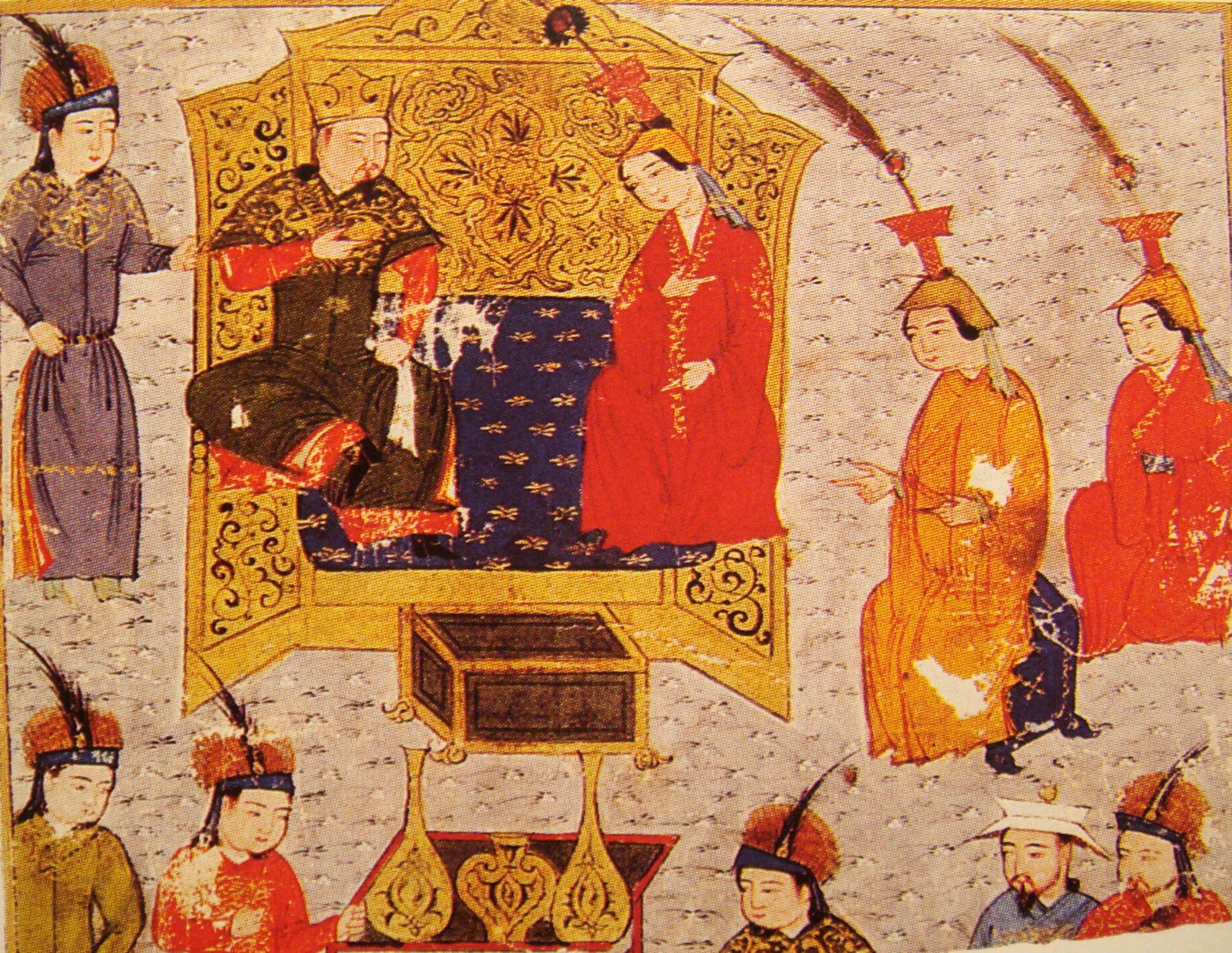
1192 CE–1252 CE
Empress dowager of the Mongol Empire and political figure
Sorkhokhtani Beki
克烈·唆鲁禾帖尼
Sorkhokhtani Beki (1192–1252), of the Kereit clan, was an empress dowager of the Mongol Empire, principal wife of Tolui, posthumously Emperor Ruizong of Yuan, and mother of Möngke, Kublai Khan, Hulagu, and Ariq Böke. Because all four sons became emperors or founders of khanates, later historians called her the "mother of four emperors." Born into Kereit aristocracy, Sorkhokhtani practiced Nestorian Christianity and was known…
1192 CE–1252 CEYuan
PROFILE
Sorkhokhtani Beki (1192–1252), of the Kereit clan, was an empress dowager of the Mongol Empire, principal wife of Tolui, posthumously Emperor Ruizong of Yuan, and mother of Möngke, Kublai Khan, Hulagu, and Ariq Böke. Because all four sons became emperors or founders of khanates, later historians called her the "mother of four emperors." Born into Kereit aristocracy, Sorkhokhtani practiced Nestorian Christianity and was known for political intelligence and strategic judgment. After Tolui's death, she managed the family's affairs, maintained discipline among her household, cultivated support, and ultimately played a decisive role in transferring the Great Khanate from Ögedei's line to Tolui's line, laying political foundations for the later Yuan Dynasty. Kublai Khan posthumously titled her Empress Zhuangsheng in 1265; in 1309 she received the additional honorific Xianyi, becoming Empress Xianyi Zhuangsheng.
- Other name
- Kereit mother of four emperors
- Period
- Yuan
- Dynasty / regime
- Yuan
- Identity
- Empress dowager of the Mongol Empire and political figure
- Ethnicity / group
- Mongol, Kereit tribe
- Native place
- Not reliably confirmed in historical sources
- Date of birth
- 1192
- Place of birth
- Unknown
- Date of death
- 1252
- Place of death
- Unknown
- Tenure as empress
- Historical sources require further reliable confirmation
- Highest office
- See Biography and Major Activities
- Major achievements
- Wife of Tolui; mother of Möngke, Kublai Khan, Hulagu, and Ariq Böke
LIFE TIMELINE
About age 11 | After Genghis Khan defeated the Kereit, given in marriage to Tolui
Birth of eldest son Möngke
Birth of second son Kublai Khan
Birth of third son Hulagu
Birth of fourth son Ariq Böke
Age 40 | Tolui died; Sorkhokhtani assumed management of Tolui's family and domains
Refused Ögedei's proposal that she remarry Güyük and persuaded Tolui's followers to accept a transfer of appanages to Köden
Received eighty thousand households in the Zhending Circuit
Ögedei died; during the succession vacancy she restrained her household from abusing warrants and requisitions
Attended the quriltai with her sons and supported Güyük's accession
Secretly warned Batu to prepare against Güyük's westward movement; Güyük died during the journey
Helped her eldest son Möngke become Great Khan and was honored as empress dowager
Died of illness at age sixty
Kublai Khan posthumously titled her Empress Zhuangsheng
Emperor Wuzong of Yuan added the honorific Xianyi, producing the title Empress Xianyi Zhuangsheng
BIOGRAPHY
Biography
Family Background and Early Years
Sorkhokhtani Beki was born into the Kereit, as a daughter of Jaqa Gambu, younger brother of Toghrul, known as Wang Khan. Before the rise of the Mongols, the Kereit were among the strongest nomadic peoples of the northern steppe, occupying areas around the Tuul and Orkhon rivers and controlling important routes across Mongolia. According to the source, the Kereit had practiced Nestorian Christianity from the eleventh century and possessed a comparatively developed religious and cultural tradition. Before unifying the Mongols, Genghis Khan had once depended on the Kereit and treated Toghrul as a father. In 1203, Genghis Khan defeated the Kereit and Toghrul died. After the fall of the Kereit, Sorkhokhtani was given as wife to Genghis Khan's youngest son Tolui.
She was only about eleven or twelve when she married Tolui. Tolui was the youngest son of Genghis Khan and Börte. Under the Mongol custom by which the youngest son remained at the hearth, Tolui inherited much of his father's property and army. Of the 129,000 troops described in the source as left by Genghis Khan, 101,000 went to Tolui, giving his household exceptional military strength within the Mongol Empire. As Tolui's principal wife, Sorkhokhtani held high status. She remained a Nestorian Christian but was described as religiously tolerant and protective of other traditions.
The Jami al-Tawarikh praised her as steadfast, modest, chaste, intelligent, and capable, skilled in raising children and governing dependents. Mongols called her "Sain Eke," meaning "good mother."
Tolui's Death and Leadership of the Household
Tolui died in the ninth lunar month of 1232 while returning from the campaign against Jin. The History of Yuan states that he fell ill on the return journey after operations against Jin, while the Secret History of the Mongols records that he drank cursed water on behalf of his brother Ögedei and died. Sorkhokhtani was about forty at the time and all four sons were still young. She took charge of Tolui's property and troops and became the effective head of his line.
She managed the household strictly and instructed her sons to observe the Yasa associated with Genghis Khan. She established strict accounting for supplies and equipment in the family armies, making fraud difficult. Ögedei respected his sister-in-law and, according to the source, consulted her on military and state affairs and did not lightly override her decisions.
Following the Mongol custom of levirate marriage, Ögedei proposed that Sorkhokhtani marry his eldest son Güyük. She politely refused on the grounds that her sons were not yet grown. The source interprets the refusal as politically significant: marriage to Güyük could have transferred Tolui's military and property base into Ögedei's line and weakened her sons' future position.
In 1233, Ögedei, without first consulting the royal family, decided to transfer two thousand households of the Suldus and one thousand of the Sunit that had been under Tolui's authority to his own son Köden. Tolui's officials, including Shigi Qutuqu, Suldus figures, and Mönggeser, objected and wanted to challenge the decision. Sorkhokhtani persuaded them to obey the Great Khan, saying the Tolui household already possessed ample wealth. This avoided internal conflict and helped win Köden's goodwill; he later supported Tolui's line.
Administration of Her Appanage and Cultivation of Support
In 1236, Ögedei divided households in the Chinese territories among members of the imperial family and assigned Sorkhokhtani eighty thousand households in the Zhending Circuit around present-day Zhengding, Hebei, a densely populated and economically productive part of North China. At the time, Mongol military encampments in Zhending included tens of thousands of dependents and caused damage to mulberry trees and crops. Shi Tianze, a local official, reported the problem to her. Sorkhokhtani ordered the military households moved to the steppe north of the frontier. The source says this relieved soldiers and civilians and restored agricultural life, making Zhending one of the fastest-recovering and best-governed regions of North China.
She protected the people of her domains and punished officials and soldiers who violated regulations. The source states that residents of her appanage fared better than those in many other princely domains. After Ögedei's death, when Töregene Khatun ruled as regent and discipline deteriorated, many princes issued excessive warrants and requisitioned property. Sorkhokhtani and her sons were said not to participate, improving their reputation.
Sorkhokhtani also valued religion and learning and recruited talented people. Although a Nestorian Christian, she protected Buddhist, Daoist, and Islamic clerics and scholars and also valued Confucian learning. The Taiyi Daoist Xiao Fudao was invited to the Mongol court, where Kublai asked him about government; Sorkhokhtani issued a formal order granting him the title Zhonghe Renjing Zhenren. She recruited the Zhending scholar Li Pan to instruct Ariq Böke. A Christian scholar of astronomy and medicine from the Byzantine world, called Aixue in the source, was also brought from the Western Regions by envoys she sent. She arranged for such specialists to assist her sons, who later employed them as advisers and officials.
Key Role in the Struggle for the Great Khanate
Ögedei died in 1241, leaving the Great Khanate vacant. Töregene Khatun wanted her eldest son Güyük to become Great Khan, but Batu of Jochi's line was hostile to Güyük and refused to attend the election assembly. Temüge Otchigin, youngest brother of Genghis Khan, also brought troops in an attempt to contend for power, creating a danger of civil conflict. Sorkhokhtani judged the situation and led her sons to the quriltai. In 1246 she supported Güyük's accession, helping stabilize the immediate crisis and increasing her own prestige.
After taking the throne, Güyük remained hostile to Batu. Early in 1248, claiming that the climate around Emil would help his health, he led forces west from the capital at Qaraqorum, while the source states that his real purpose was to attack Batu. Sorkhokhtani recognized the intention and secretly sent a messenger warning Batu to prepare. Batu moved troops east. Güyük died during the westward journey in the third lunar month; the source records a tradition that he was poisoned by Batu's agents. The episode strengthened the relationship between Tolui's and Jochi's lines and helped create an alliance against Ögedei's descendants.
After Güyük's death, Batu, based in the Qipchaq steppe, was the senior prince with the greatest prestige and military power. He invited princes and officials to his camp for a quriltai to choose the new Great Khan. Most princes of Ögedei's and Chagatai's lines refused. Oghul Qaimish, Güyük's widow, sent only an official representative. Sorkhokhtani, by contrast, sent her eldest son Möngke with his brothers and household retainers.
The source records Sorkhokhtani privately telling Möngke that Batu suffered from illness in his feet and that other princes would not visit him, so Möngke should go; if Batu supported him, he might have a chance at the throne. After Möngke arrived, Batu was impressed by his intelligence and decided to support him. Batu sent urgent messengers to the surviving wives of Genghis Khan, the household of Ögedei, Sorkhokhtani, and other princes and commanders, arguing that among the princes Möngke had direct knowledge of Genghis Khan's Yasa and commands and was therefore the proper choice as Great Khan.
Sorkhokhtani worked broadly to persuade Mongol princes to attend the quriltai for Möngke's accession. Princes of Ögedei's and Chagatai's lines initially refused, causing long delays. Because of Sorkhokhtani's high reputation and ability to cultivate support among nobles, most princes and ministers eventually attended. On July 1, 1251, the eleventh day of the sixth lunar month in the first year of Möngke's reign, princes and officials gathered in quriltai on the Onon River and acclaimed Möngke as Great Khan.
Later Years and Posthumous Honors
After Möngke's accession, Sorkhokhtani was honored as empress dowager. Möngke then acted harshly against political opponents in order to consolidate his throne. Oghul Qaimish, widow of Güyük, was executed after being accused of cursing Möngke; the source states that Sorkhokhtani also took part in the matter.
Sorkhokhtani died of illness in the first lunar month of 1252 at age sixty.
When the imperial ancestral temple was completed in 1265, Kublai Khan granted his mother the posthumous title Empress Zhuangsheng. On January 7, 1310, corresponding to the sixth day of the twelfth lunar month of the second year of Zhida, Emperor Wuzong of Yuan added the honorific Xianyi, after which her full title became Empress Xianyi Zhuangsheng. In the tenth lunar month of 1310, Emperor Wuzong again bestowed a jade certificate and jade seal. Its text read: “The achievements of the ancestors and the virtues of the lineage are proclaimed to Heaven; within the inner quarters, exemplary conduct was perfected in the ancestral temple. Great conduct makes a name manifest, and abundant favor calls forth abundant recompense. Above, this adds luster to the work of assisting and establishing the realm; below, it gives full expression to filial remembrance of those who came before. Reverently we consider Empress Zhuangsheng: brilliant and broad in understanding, sage in goodness, gentle and admirable. Exalted as the consort of Jingxiang, she spread the transforming influence of the inner court; in serving Guangxian, she diligently fulfilled the duties of a wife. Her merit was manifest in upholding Heaven's mandate, and auspicious signs twice appeared in dreams of the sun. Tracing the sacred succession, one sees how its vast source gradually arose; knowing her deep benevolence and generous grace, one sees that they were without limit. The mysterious token began with Tushan, yet earlier honors did not fully match her virtue; the azure register arose with Wenmu—how could later descendants forget? We therefore consult the constant canons and greatly proclaim her splendid excellence, expounding the meaning of her precious maternal kindness and giving form to the model to be recorded in history. We respectfully dispatch an acting Grand Commandant to present the jade certificate and jade seal and to add the honorific title Empress Xianyi Zhuangsheng. May her sagely spirit clearly descend and graciously accept it. The rites are solemn in the secluded temple, and the music intones Yize. Through countless years, may she receive blessings without end.”
Major Activities
Political Activities
Sorkhokhtani Beki was a key figure in the transfer of the Mongol Great Khanate from Ögedei's line to Tolui's line. After Tolui's death she controlled his household, resisted Ögedei's proposal that she remarry Güyük, and defended family interests while avoiding open confrontation. After Ögedei's death, she restrained her household from issuing abusive warrants and requisitioning property, thereby winning prestige. When Güyük moved west against Batu, she secretly warned Batu and helped draw Tolui's and Jochi's lines together. After Güyük's death, she fully supported Möngke's candidacy and helped secure the transfer of the throne to Tolui's descendants.
Administration of Her Appanage
Sorkhokhtani held eighty thousand households in Zhending Circuit. She was described as a capable administrator who protected subjects and punished lawbreaking officials and soldiers. She removed disruptive Mongol military households from Zhending to the northern steppe, protecting agricultural production. The source credits these policies with making Zhending one of the fastest-recovering and best-governed regions of North China.
Religious and Cultural Policy
Sorkhokhtani practiced Nestorian Christianity but protected Buddhism, Daoism, and Islam as well and treated their clergy and scholars favorably. She also valued Confucian learning, recruited Li Pan of Zhending to teach Ariq Böke, and sent envoys to bring Aixue, a Christian specialist in astronomy and medicine, from the Western Regions. He later became an important figure at the Mongol court.
Relations with Contemporaries
Sorkhokhtani maintained a cooperative relationship with Ögedei, who consulted her on state affairs. Although she refused to marry Güyük, she later brought her sons to the quriltai that enthroned him. She developed close relations with Batu, secretly warned him of Güyük's westward movement, and drew Jochi's line into support for Möngke. She also handled relations with Köden carefully, accepting Ögedei's transfer of households and thereby winning Köden's goodwill toward Tolui's line.
Personal Relations
Family
- Father: Jaqa Gambu, younger brother of Toghrul of the Kereit
- Husband: Tolui, posthumously Emperor Ruizong of Yuan and youngest son of Genghis Khan
- Eldest son: Möngke, later Great Khan and Emperor Xianzong of Yuan
- Second son: Kublai Khan, later Emperor Shizu of Yuan
- Third son: Hulagu, founder of the Ilkhanate
- Fourth son: Ariq Böke, rival of Kublai Khan in the succession struggle
- Daughters: Dumuqan and Yesubuhua, as named in the source
Associates
- Xiao Fudao: Taiyi Daoist priest whom Sorkhokhtani granted the title Zhonghe Renjing Zhenren
- Aixue: Christian scholar of astronomy and medicine from the Byzantine world, recruited through her envoys
- Li Pan: scholar of Zhending recruited to instruct Ariq Böke
Rulers
- Genghis Khan: father-in-law who gave Sorkhokhtani in marriage to Tolui
- Ögedei: Great Khan who consulted her on military and state affairs
- Güyük: Great Khan whose accession Sorkhokhtani supported at the quriltai
- Möngke: her eldest son, whom she helped place on the throne
Conflicts
- Oghul Qaimish: Güyük's widow, later executed after Möngke's accession
- Princes of Ögedei's line: opposed Möngke's accession and required prolonged political negotiation by Sorkhokhtani and her allies
Historical Assessment
Yuan and Contemporary Assessments
- The Jami al-Tawarikh praised Sorkhokhtani as steadfast, modest, chaste, intelligent, and capable in raising children and governing dependents, and recorded the Mongol title "Sain Eke," meaning "good mother."
- Papal envoy John of Plano Carpini, writing from personal observation in 1246, stated that among the Tatars this noblewoman possessed exceptional prestige and, aside from Batu, greater power than anyone other than the emperor's mother.
- The jade register of 1310 praised her as wise, broad-minded, holy, good, gentle, and gracious, emphasizing her contribution to the establishment and continuation of dynastic rule.
Ming and Qing Periods
- The "Biographies of Empresses and Consorts" in the History of Yuan described Sorkhokhtani as intelligent and talented and credited her with managing the household and raising Tolui's sons after his death.
- Ming historian Hu Cuizhong, in the Continuation of the History of Yuan, credited her political intelligence with preserving Tolui's household and helping make Möngke's accession possible.
- The Qing compiler Gu Sili's Selected Yuan Poetry includes court-related material that refers to her as the "mother of four emperors."
Modern Assessments
- Japanese scholar Sugiyama Masaaki, in Rise and Fall of the Mongol Empire, described Sorkhokhtani as one of the most intelligent women in Mongol imperial history and emphasized her role in placing Tolui's line on the throne.
- The History of the Yuan Dynasty edited by Han Rulin describes her as far-sighted, resourceful, and decisive, giving her a crucial role in the succession struggle.
- Mongolian scholar Bao Bayar's collection of portraits of Mongol historical figures ranks her among the most important women in Mongol history and praises her political and familial contributions.
FIGURES ASSOCIATED WITH THIS DYNASTY
Bibliography
- History of Yuan, "Biographies of Empresses and Consorts," compiled by Song Lian et al.
- Secret History of the Mongols