Steppe Birth
Born along the Onon River in the Mongolian heartland, the second legitimate son of Jochi.
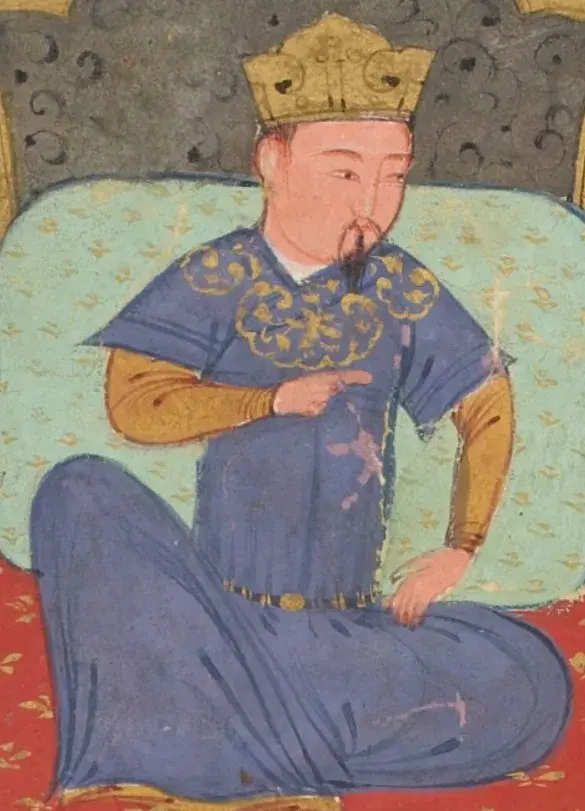
1209 CE–1256 CE
孛儿只斤·拔都
Borjigin Batu (1209–1256), also known historically as Batu Khan, was a paramount Mongol prince, military commander, and the founding sovereign of the Kipchak Khanate, widely known in European and Russian historiography as the Golden Horde. He was a grandson of Genghis Khan and the second legitimate son of Jochi, born to Empress Ukha Ujin of the Onggirat tribe. Renowned for his generous spirit, strategic foresight, and…
Borjigin Batu (1209–1256), also known historically as Batu Khan, was a paramount Mongol prince, military commander, and the founding sovereign of the Kipchak Khanate, widely known in European and Russian historiography as the Golden Horde. He was a grandson of Genghis Khan and the second legitimate son of Jochi, born to Empress Ukha Ujin of the Onggirat tribe. Renowned for his generous spirit, strategic foresight, and equitable treatment of commanders and soldiers, he was venerated throughout the steppe as Sain Khan, meaning the Good or Wise Khan. Following Jochi's death in 1225, his elder brother Orda voluntarily deferred to Batu, elevating him as ruler of the Ulus of Jochi. In 1235, Great Khan Ögedei appointed Batu Supreme Commander of the second pan-Mongol western campaign, historically termed the Campaign of the Elder Sons. Leading an allied army of one hundred and fifty thousand troops alongside veteran general Subutai and imperial princes including Güyük and Möngke, Batu conquered the Kipchak steppes, subjugated Volga Bulgaria, and systematically reduced the principalities of Kievan Rus, capturing Ryazan, Vladimir, Moscow, and Kiev. He subsequently launched a sweeping three-pronged invasion into Central Europe, annihilating joint Polish and German chivalric armies at the Battle of Legnica and crushing the royal Hungarian army of King Béla IV at the Battle of Mohi on the Sajo River. Halting at the Adriatic coast upon Ögedei's death, Batu consolidated his realm along the lower Volga, establishing his capital at Sarai Batu. During the succession crises following Güyük's demise, Batu's decisive intervention secured the imperial throne for Möngke Khan. Passing away in 1256 at the age of forty-eight, Batu established a transcontinental empire that governed Eastern Europe for over two centuries, fundamentally reshaping Eurasian geopolitics and Russian statehood.
Born along the Onon River in the Mongolian heartland, the second legitimate son of Jochi.
Succeeded to the headship of the Ulus of Jochi upon Jochi's death, with the support of brother Orda.
Led Jochid princes to the Kurultai at the Keluren River to elect Ögedei as Great Khan.
Commissioned as Supreme Commander of the Western Expedition by decree of the Great Khan Ögedei.
Massed armies at the Ural River; Subutai took Bulgaria while Batu and Möngke captured Kipchak chief Bachman.
Crossed the frozen Volga into Kievan Rus, reducing Ryazan and Kolomna, defeating Grand Duke Yuri II.
Battered the historic citadel of Kiev with counterweight trebuchets, storming the city and subduing Rus.
Crushed Polish-German knights at Legnica and annihilated the Hungarian army at Mohi, advancing to Vienna.
Halted Western advances upon receiving news of Ögedei's death, withdrawing eastward to secure the lower Volga.
Declined attendance at Güyük's kurultai on grounds of illness, establishing the Golden Horde capital at Sarai.
Mobilized against Güyük's secret march toward the west after receiving warnings from Princess Sorghaghtani.
Convened the Jochid kurultai at Ala Qamaq, declining the imperial crown and nominating Prince Möngke.
Dispatched brother Berke with armies to escort Möngke to the imperial throne, securing administrative autonomy.
Passed away peacefully at Sarai on the Volga at the age of forty-eight, succeeded by son Sartaq and brother Berke.
Batu Khan was born in 1209 along the banks of the Onon River in the Mongolian steppe, during the early consolidations of the Mongol Empire by his imperial grandfather, Genghis Khan. As the second legitimate son of Jochi, eldest son of Genghis Khan, and Empress Ukha Ujin of the prominent Onggirat clan, Batu grew up amidst the expansive campaigns that defined the empire's rise. From early youth, he was noted for his composed demeanor, personal warmth, and unstinting generosity toward his warriors and subjects. These qualities earned him the lasting esteem of his kinsmen, who honored him throughout the steppe as Sain Khan, signifying a ruler of exceptional benevolence and wisdom. Following Jochi's passing in 1225, Batu's elder brother Orda voluntarily relinquished his hereditary claim to the principal leadership, declaring that Batu's commanding vision and operational talent far exceeded his own. Consequently, the Jochid princes unanimously elevated Batu to govern the vast northwestern appanage known as the Ulus of Jochi.
In 1227, following the death of Genghis Khan, Batu led the delegations of the Jochid princes across thousands of miles to attend the Great Kurultai at the Keluren River in 1229. At this pivotal assembly, Batu gave his resolute support to his uncle Ögedei, ensuring the orderly election of the new Great Khan. In 1235, after completing the conquest of the Jin dynasty in northern China, Ögedei summoned a grand imperial council at Har Tsorho to plan the expansion of the empire westward. To ensure the complete commitment of the imperial family, Ögedei decreed that each princely house must send its eldest son to lead the campaign, designating Batu as Supreme Commander-in-Chief. Assisted by Subutai, the supreme field tactician of the age, and joined by imperial princes including Güyük, Möngke, Baidar, and Qadan, Batu marshaled an army of one hundred and fifty thousand veterans to subjugate the vast regions west of the Ural Mountains.
In the autumn of 1236, Batu's multifaceted armies convened along the banks of the Ural River. Vanguard columns under Subutai swiftly neutralized the Volga Bulgars, while Batu and Möngke swept south along the lower Volga to encircle and eliminate Bachman, the defiant chieftain of the Kipchak confederation, in the coastal inlets of the Caspian Sea. With his steppe flank secured, Batu directed his armies across the frozen rivers into the heartlands of Kievan Rus in the winter of 1237. Utilizing coordinated cavalry encirclements and heavy assault engines, Mongol columns stormed Ryazan, Kolomna, and Moscow in rapid succession. In the spring of 1238, Batu routed the assembled armies of Grand Duke Yuri II of Vladimir at the Battle of the Sit River, completely shattering the defensive coalition of northeastern Rus.
Recognizing the logistical perils of spring thawing in the northern marshlands, Batu halted his advance fifty kilometers short of Novgorod, wheeling his divisions south toward the Caucasus to rest and resupply his cavalry mounts. Throughout 1239, while Möngke and Güyük pacified the Alans and Circassians in the North Caucasus, Batu established firm administrative controls over the Volga basin. In the autumn of 1240, the grand army converged upon Kiev, the spiritual and dynastic metropolis of Kievan Rus. Despite heroic resistance from the defenders, Batu deployed giant counterweight trebuchets to batter down the stone ramparts, carrying the city by storm and ending centuries of Kievan political hegemony. Moving west, his columns reduced Galicia-Volhynia, opening the strategic mountain corridors leading into Central Europe.
In the spring of 1241, leaving thirty thousand troops to secure Ukraine, Batu deployed twelve thousand cavalry into Central Europe in a masterclass of multi-theater coordination. The northern wing under Baidar and Qadan invaded Poland, capturing Sandomierz and Kraków before engaging a combined force of Polish knights, Teutonic Knights, and Silesian heavy cavalry at the Battle of Legnica on April 9, 1241. The allied chivalry was annihilated, and Duke Henry II of Silesia was slain. Meanwhile, the southern wing bypassed the Carpathians into Wallachia and Transylvania. Batu personally led the central army across the Verecke Pass directly toward Pest on the Danube, drawing King Béla IV of Hungary into a confrontation.
At the Battle of Mohi on April 11, 1241, Batu achieved his greatest tactical victory. When King Béla entrenched sixty thousand elite troops in an armored wagon fortress on the Sajo River, Batu engaged the bridgehead frontally while dispatching Subutai across a downstream ford under cover of darkness to encircle the Hungarian rear. Trapped between dual assaults, the Hungarian army collapsed in catastrophe, suffering over fifty thousand casualties, while Béla IV fled in disguise toward the Adriatic coast. Batu occupied Pest, and in the winter of 1241, his divisions crossed the frozen Danube to capture Gran (Esztergom). Vanguard scout units penetrated into the outskirts of Vienna and Neustadt. Western Christendom stood paralyzed with fear, but in early 1242, dispatch riders arrived from Karakorum announcing the death of Ögedei Khan. In accordance with imperial law, Batu halted his westward advance and commenced a phased withdrawal to the Volga.
During the eastward withdrawal, Batu consolidated his authority across the Kipchak steppes, establishing the administrative machinery of his autonomous domain. Informed that Empress Töregene was maneuvering to install Güyük, with whom Batu had clashed bitterly during the European campaign, Batu halted his return journey along the lower Volga in 1243, pleading chronic illness to excuse himself from attending the imperial Kurultai in Mongolia. Despite multiple summons from Töregene, Batu remained immovable, directing his forces to settle permanently in the rich grasslands of the Volga delta.
Here, Batu established the Kipchak Khanate, known as the Golden Horde, designating Sarai Batu near modern Astrakhan as his imperial capital. Batu organized the realm into efficient military-administrative tumens, instituted a standardized census and postal relay system, and subjected the Russian princes to an institutionalized vassalage. He instituted the system of the yarlyk (imperial patent), granting Grand Prince Yaroslav II and subsequently Alexander Nevsky investiture to govern Rus on behalf of the Khan in exchange for tribute and military levies. Extending from the Irtysh River in Siberia to the Dniester River in Eastern Europe, the Golden Horde emerged as the wealthiest and militarily most powerful ulus within the Mongol commonwealth.
Hostilities between Batu and Güyük Khan reached a boiling point in 1248, when Güyük mobilized imperial banner armies under the pretext of taking health cures in the west, intending an armed showdown with Batu. Forewarned by Princess Sorghaghtani, the widow of Tolui, Batu mobilized his veterans and marched east. Before the armies clashed, Güyük died suddenly near Xinjiang, averting civil war. As the senior living prince of the Golden Clan, Batu seized the political initiative, organizing an extraordinary Kurultai at his steppe base of Ala Qamaq in 1250 to settle the succession.
At this assembly, several princes suggested enthroning Batu as the supreme Great Khan. Batu firmly declined the imperial crown, arguing that the succession rightfully belonged to the lineage of Tolui, who had faithfully preserved the ancestral hearth. He passionately championed Möngke, whose operational genius he had witnessed during the western campaigns. Supported by General Uryankhadai, Batu secured the nomination of Möngke, overcoming the boycotts of the Ögedeid and Chagataid factions. In 1251, Batu dispatched his brother Berke with a massive cavalry corps to Karakorum to oversee Möngke's official coronation, cementing an unbreakable strategic axis between Karakorum and Sarai.
Following Möngke's accession, Batu was granted supreme administrative and military authority over all western territories of the empire, ruling virtually as an independent emperor across Eastern Europe, Central Asia, and the Caucasus. Recognizing the cultural and religious diversity of his subjects, Batu maintained an enlightened policy of religious toleration, granting tax exemptions to the Russian Orthodox Church, which allowed Russian ecclesiastical life to flourish. His fair adjudication of disputes and encouragement of Eurasian commerce transformed Sarai into a magnificent international metropolis.
In 1256, at the age of forty-eight, Batu Khan passed away at his palace in Sarai along the Volga. His funeral was conducted with full Mongol imperial honors, burying him alongside his armor and treasures according to ancient steppe rites. He was succeeded briefly by his Christian son Sartaq and grandson Ulaghchi, before his dynamic brother Berke assumed the khanate. Under the institutional structures established by Batu, the Golden Horde endured as an autonomous world empire for more than two centuries, exercising a profound and lasting influence upon the political culture, fiscal institutions, and geopolitical evolution of modern Russia and Eastern Europe.
Batu Khan's most celebrated historic achievement was his supreme operational leadership during the Great Western Campaign from 1236 to 1242, one of the most expansive military enterprises in human history. Coordinating over one hundred and fifty thousand multinational troops across thousands of miles of hostile steppe, forest, and mountains, Batu integrated nomadic cavalry maneuver with Chinese siege technology and European intelligence gathering. His operational sequencing, which dismantled the Volga Bulgars, decimated the Kipchak tribes, subdued the fourteen principalities of Kievan Rus, and crushed the combined chivalry of Poland, Germany, and Hungary in rapid succession, fundamentally shattered the military paradigm of medieval Europe and established the global supremacy of Mongol arms.
Following the conclusion of the western expedition, Batu demonstrated exceptional state-building acumen by founding the Golden Horde across the lower Volga basin. Rather than remaining an itinerant conqueror, he established permanent urban centers, notably his grand capital of Sarai Batu, while introducing comprehensive administrative systems including the yam postal network, standardized population censuses, and systematic taxation. His empire served as a vital geopolitical bridge linking East Asia with the Mediterranean and Northern Europe, providing unprecedented security for cross-continental trade caravans and laying the foundations for the Pax Mongolica across the Eurasian heartland.
At moments of acute constitutional crisis within the Mongol Empire, Batu exercised decisive political authority as the supreme kingmaker of the Golden Clan. His steadfast refusal to submit to Güyük Khan's autocratic overreach prevented the subjugation of the western appanages, while his visionary initiative in convening the Ala Qamaq Kurultai broke the political monopoly of the Ögedeid house. By orchestrating the elevation of Möngke Khan in 1251 through a combination of diplomatic persuasion and military backing, Batu preserved the cohesion of the empire while securing unparalleled institutional autonomy and imperial prestige for the Jochid line.
Governing a multi-ethnic and multi-confessional realm comprising pagan nomads, Orthodox Slavs, Muslim Bulgars, and Western Christians, Batu enacted policies of enlightened cultural pragmatism that earned him the title Sain Khan. He established formal legal charters exempting the Russian Orthodox clergy from taxes, conscription, and secular interference, allowing local institutions to preserve their integrity under imperial protection. This equitable governance neutralized potential rebellions, fostered inter-communal cooperation, and stimulated vigorous international trade along the Volga and Caspian waterways, transforming his steppe realm into a thriving nexus of commercial and intellectual exchange.
Batu's campaigns remain canonical examples of large-scale military coordination and operational deception. In the European theater, his synchronized multi-corps advance across Poland, Transylvania, and Hungary caught Western Christendom completely off balance, preventing coordinated defensive counterstrokes. His tactical victory at the Battle of Mohi on the Sajo River, where he combined a frontal assault across a narrow bridgehead with a nocturnal amphibious flanking maneuver under Subutai to trap sixty thousand defenders in their own encampment, stands as an enduring masterpiece of encirclement tactics, demonstrating supreme mastery over operational tempo and battlefield geometry.
Batu's institutional design for the governance of Rus profoundly redirected the course of Eastern European history. By replacing the fractured, internecine rivalries of the Kievan princes with the centralized yarlyk investiture system, the Golden Horde provided the administrative umbrella under which northeastern principalities, particularly Vladimir and Moscow, consolidated their authority. The fiscal mechanisms, postal logistics, military structures, and diplomatic protocols developed under Batu's oversight were subsequently internalized by the Grand Princes of Moscow, ultimately midwifing the emergence of the unified Russian autocracy that succeeded the Horde.
FIGURES ASSOCIATED WITH THIS DYNASTY