Birth
Born into the Uriankhai tribe near the Burkhan Khaldun mountains
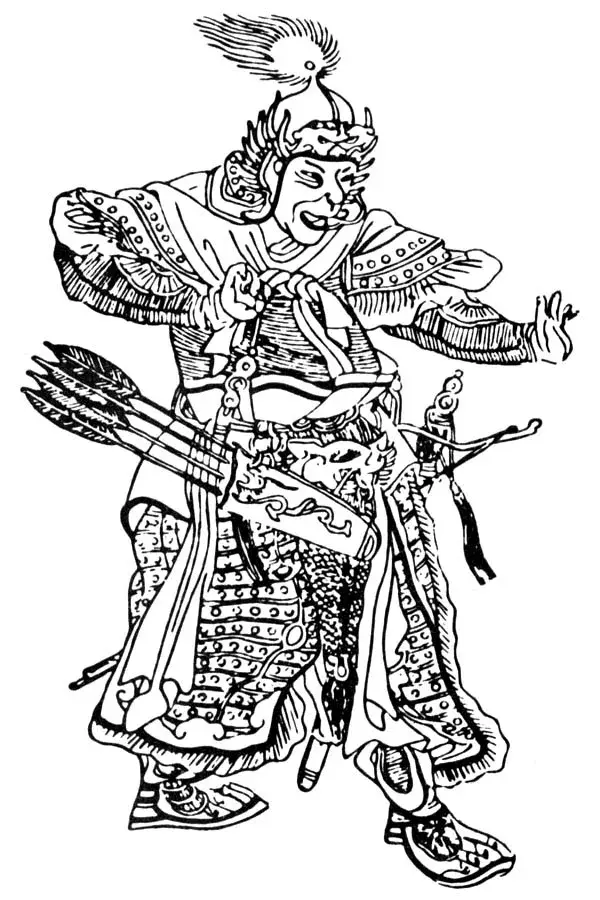
1176 CE–1248 CE
速不台
Subutai (速不台, 1176–1248), also rendered Subutai Ba'atur, was the primary military strategist and supreme general of the Mongol Empire under Genghis Khan and Ogedei Khan. Belonging to the Uriankhai tribe, he was renowned as one of Genghis Khan's legendary "Four Hounds" (Dorben Nokhas) alongside Jelme, Jebe, and Khubilai. Joining Genghis Khan in his youth, Subutai played an indispensable role in unifying the steppe nomadic…
Subutai (速不台, 1176–1248), also rendered Subutai Ba'atur, was the primary military strategist and supreme general of the Mongol Empire under Genghis Khan and Ogedei Khan. Belonging to the Uriankhai tribe, he was renowned as one of Genghis Khan's legendary "Four Hounds" (Dorben Nokhas) alongside Jelme, Jebe, and Khubilai. Joining Genghis Khan in his youth, Subutai played an indispensable role in unifying the steppe nomadic tribes. He commanded spearhead forces in the initial invasion of the Jin Dynasty from 1211 and the First Western Campaign against the Khwarazmian Empire from 1219. Partnering with Jebe, Subutai executed an unprecedented three-year cavalry raid encircling the Caspian Sea, devastating Georgia and crushing the combined forces of Rus principalities and Cumans at the Battle of the Kalka River in 1223. Later, he served as the principal field commander in the total conquest of the Jin Dynasty, orchestrating the crushing victory at Sanfengshan and besieging Bianjing in 1232. Between 1235 and 1242, Subutai served as the senior strategic commander of Batu Khan's grand western expedition into Europe, conquering the principalities of Kievan Rus and annihilating the Hungarian royal army at the Battle of the Sajo River (Mohi) in 1241. Campaigning across an immense expanse from Korea in the east to the Adriatic Sea in the west, Subutai is widely regarded as one of the greatest military tacticians and strategists in world history.
Born into the Uriankhai tribe near the Burkhan Khaldun mountains
Fought alongside Temujin against Jamukha's thirteen wings
Commanded vanguard forces in the decisive war against the Naiman tribe
Sustained a severe wound during the northern campaign while storming Jin fortifications
Received Genghis Khan's iron-cart mandate to hunt down the fleeing Merkit princes
Marched east around the northern Caspian Sea and rejoined the main Mongol army
Accepted the capitulation of the Jin capital and spared its population upon Yelü Chucai's counsel
Entered the service of Temujin (Genghis Khan) in his early youth
Served as a hostage guard and sworn companion (noker) to Genghis Khan
Appointed Commander of a Thousand (Mingghan) and designated one of the ten founding meritorious leaders
Led vanguard troops in the assault on Huanzhou, scaling the city ramparts first
Pursued and destroyed the remaining Merkit forces near the Chu River
Pursued Khwarazmshah Muhammad II across Persia with Jebe, driving him to die in exile on the Caspian Sea
Defeated the Georgian royal knightly forces near Tiflis
Annihilated the allied Rus and Cuman armies through a masterclass feigned retreat
Captured Shali Uighur regions and fortified towns in modern Gansu
Returned to the Mongolian heartland following the passing of Genghis Khan
Masterminded the victory at Sanfengshan alongside Tolui and besieged Bianjing
Captured Caizhou alongside Southern Song forces, ending the Jin Dynasty
Served as chief strategist of Batu's expedition, subjugating Rus, Poland, and Hungary
Decisively defeated King Bela IV of Hungary at the Sajo River
Ordered strategic retreat eastward following the death of Ogedei Khan
Attended the grand coronation kurultai of Guyuk Khan
Died peacefully on his pastures by the Tuul River at the age of seventy-two
Subutai came from the Uriankhai tribe, traditionally associated with blacksmithing and hunting in the forested mountainous regions. His father, Qaban, offered Subutai's elder brother Jelme to Temujin when the latter was a fugitive. In his youth, Subutai likewise entered Temujin's personal retinue. Beginning as a keeper of the herds and camp servant, Subutai distinguished himself by his exceptional intellect, discipline, and physical courage, quickly rising to become a noker (companion-in-arms).
During the bitter wars against the Jamukha alliance, the Naimans, and the Kereits, Subutai regularly spearheaded dangerous flanking maneuvers. When the Mongol Empire was proclaimed in 1206, Genghis Khan named Subutai one of the ninety-five Commanders of a Thousand and celebrated him as one of the "Four Hounds"—commanders dispatched to hunt down the fiercest enemies of the empire.
In 1211, when Genghis Khan launched his campaign against the Jin Dynasty, Subutai served in the frontline vanguard. At the siege of Huanzhou, he was the first warrior to breach the battlements, receiving lavish commendations.
In 1217, Subutai requested command to hunt down the sons of Tokhtoa Beki, the defeated leader of the Merkits, who had fled toward modern Kazakhstan. Utilizing carts covered in iron sheeting to cross rugged terrain, Subutai marched westward for thousands of miles, cornered the Merkit remnants along the Chu River, and utterly annihilated them, securing the western flank of the expanding empire.
The First Western Campaign and the Cavalry Raid
In 1219, Genghis Khan invaded the Khwarazmian Empire. As the Shah, Muhammad II, fled west into Iran, Genghis Khan dispatched Subutai and Jebe with two tumens (twenty thousand cavalrymen) with strict orders to pursue him relentlessly.
Moving with blinding speed, Subutai and Jebe crossed northern Iran, bypassing fortified cities while extorting ransoms or reducing uncooperative garrisons. They drove Muhammad II onto an isolated island in the Caspian Sea, where he died in utter exhaustion and despair in late 1220.
With their original mission complete, Subutai and Jebe requested permission from Genghis Khan to conduct a reconnaissance-in-force around the Caspian Sea. In 1221–1222, the Mongol army traversed Azerbaijan, crossed the rugged Caucasus Mountains through the Darial Gorge in midwinter, and defeated a coalition of Alans and Cumans.
In May 1223, a massive coalition of Rus princes, led by Mstislav the Bold of Galich and Mstislav of Kiev, joined with Cuman warriors to confront the invaders. Subutai orchestrated a calculated nine-day feigned retreat, luring the overconfident Rus army into an uncoordinated pursuit across eighty miles of open steppe. At the Kalka River, Subutai turned his elite cavalry around, enveloped the strung-out Rus vanguard, and annihilated the opposing host. The princes of Kiev were captured and placed beneath a wooden victory platform upon which the Mongol generals feasted. Following this engagement, Subutai led his forces around the northern Caspian shore, defeating the Volga Bulgars, and reunited with Genghis Khan in 1225.
The Subjugation of the Jin Dynasty
Following the accession of Ogedei Khan in 1229, the Mongols mobilized their full strength to destroy the Jin Dynasty. In 1230, Subutai participated in the assault against the fortified pass of Tongguan, but initial operations were repulsed. Rather than sustaining heavy casualties in siege warfare, Subutai endorsed Tolui's bold strategy: executing a massive cavalry detour through Southern Song territory along the Han River valley to strike the Jin heartland from the unfortified south.
In early 1232, the Mongol forces under Tolui and Subutai converged near Mount Sanfeng (Sanfengshan). As a blinding blizzard descended, Subutai ordered his troops to pin down the freezing, famished Jin elite field army of 150,000 under Wan-Yan Heda. Employing fluid archery attacks while leaving open a deceptive avenue of escape, Subutai ambushed and massacred the retreating Jin troops in the snowdrifts, destroying the last mobile army of the Jin Empire.
Subutai subsequently encircled the Jin capital, Bianjing (modern Kaifeng). Despite ferocious defenses utilizing gunpowder bombs (Zhentianlei), Subutai maintained a tight cordon for nearly a year until Emperor Aizong fled eastward. When Bianjing surrendered in 1233, Ogedei Khan initially ordered the slaughter of its vast population, but the chancellor Yelü Chucai convinced the Khan to spare the inhabitants. Subutai then pursued Emperor Aizong to Caizhou, coordinating with the Southern Song army under Meng Gong to breach the walls in February 1234, formally extinguishing the Jin Dynasty.
The Great European Expedition
In 1235, Ogedei Khan convened a kurultai to launch the conquest of Europe. Although Batu Khan, grandson of Genghis Khan, was designated the supreme royal commander, the sixty-year-old Subutai was appointed the actual tactical and operational director of the 120,000-strong multinational army.
Between 1236 and 1240, Subutai orchestrated a campaign of devastating operational coordination. Across three brutal Russian winters, when frozen rivers functioned as paved highways for Mongol cavalry, Subutai methodically conquered Ryazan, Kolomna, Vladimir, and Moscow. In December 1240, after encircling Kiev, Subutai breached its ancient ramparts, completing the subjugation of southern and central Rus.
In early 1241, Subutai devised a master operational plan spanning thousands of miles. To prevent Christian European kingdoms from forming a united front, he divided his army into distinct operational wings. The northern wing under Baidar and Kadan invaded Poland, crushing Duke Henry II of Silesia at the Battle of Legnica on April 9, 1241.
Simultaneously, Subutai and Batu led the main southern army across the Carpathian passes directly into Hungary. King Bela IV mobilized a royal army of over sixty thousand knights and men-at-arms at the Sajo River.
On April 10–11, 1241, the two armies confronted each other across a fortified bridge over the Sajo River. While Batu engaged the Hungarian bridgehead frontally using stone throwers and heavy siege engines, Subutai personally led a secret night flanking maneuver across the marshy downstream waters, constructing a temporary timber bridge under cover of darkness.
At dawn, Subutai's strike force appeared behind the Hungarian royal camp, completing a total double envelopment. Recognizing the trap, the Hungarians panicking and attempted to break out through a gap deliberately left open by Subutai westward toward Pest. Over the ensuing days, Mongol light cavalry harried and slaughtered the disorganized Hungarian army across thirty miles of open terrain. Bela IV fled to the Adriatic coast, and Hungary was entirely subjugated.
In early 1242, Mongol reconnaissance detachments were patrolling within sight of Vienna. However, news arrived that Ogedei Khan had died in Karakorum. Batu and the Mongol princes were obliged to return east to participate in the imperial succession, prompting Subutai to execute an orderly, destructive strategic withdrawal through the Balkans back to the Volga steppes.
After returning from the European expedition, Subutai lived out his twilight years in the Mongolian homeland. In 1246, he attended the grand coronation kurultai of Guyuk Khan, where foreign envoys, including the papal emissary John of Plano Carpini, observed the legendary old general seated among the highest grandees of the empire.
Subutai died quietly in his encampment on the banks of the Tuul River in 1248 at the age of seventy-two. His descendants continued to serve as premier commanders of the Mongol Empire and Yuan Dynasty: his son Uriangkhadai conquered the Dali Kingdom and pacified Yunnan, while his grandson Aju served as the supreme field commander in the conquest of Southern Song. During the Yuan Dynasty, the imperial court posthumously enfeoffed Subutai as Prince of Henan (Henan Wang) and conferred upon him the posthumous title Zhongwu (Loyal and Martial).
Subutai's three-year reconnaissance around the Caspian Sea demonstrated an unprecedented mastery of long-range cavalry mobility, intelligence gathering, and operational deception across unfamiliar terrain.
In both the Sanfengshan campaign and the European expedition, Subutai separated his armies by hundreds of miles during the approach march while synchronizing their convergence on the decisive battlefield.
Through his son Uriangkhadai and grandson Aju, Subutai established a three-generation military dynasty that spearheaded Mongol campaigns from Eastern Europe to Dali and the Southern Song heartland.
FIGURES ASSOCIATED WITH THIS DYNASTY