Birth in Capital
Born in Jiankang Palace as the eldest son of Emperor Cheng of Jin and Lady Zhou.
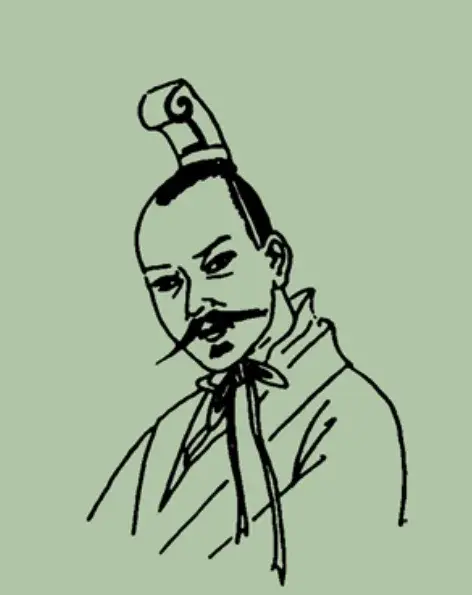
341 CE–365 CE
司马丕
Sima Pi (司马丕, 341–365 AD), courtesy name Qianling (千龄), posthumously revered as Emperor Ai of Jin (晋哀帝), was the sixth emperor of the Eastern Jin dynasty. Born in the imperial capital of Jiankang as the eldest son of Emperor Cheng of Jin, he was initially bypassed for succession in 342 AD due to political maneuvering by Regent Yu Bing, who prioritized an adult sovereign, and was instead enfeoffed as Prince of Langya.…
Sima Pi (司马丕, 341–365 AD), courtesy name Qianling (千龄), posthumously revered as Emperor Ai of Jin (晋哀帝), was the sixth emperor of the Eastern Jin dynasty. Born in the imperial capital of Jiankang as the eldest son of Emperor Cheng of Jin, he was initially bypassed for succession in 342 AD due to political maneuvering by Regent Yu Bing, who prioritized an adult sovereign, and was instead enfeoffed as Prince of Langya. Following the heirless death of his cousin Emperor Mu in 361 AD, Sima Pi was welcomed onto the throne by Empress Dowager Chu Shuanzi and court grandees. During his reign, he supported Grand Marshal Huan Wen's northern expeditions to recapture Luoyang, and promulgated the landmark Gengxu Land Reform to register northern emigrants and stabilize imperial revenue. However, his obsessive devotion to Daoist longevity elixirs and fasting caused severe mineral poisoning, rendering him mentally incapacitated. He died in 365 AD at age twenty-five and was interred at Anping Mausoleum.
Born in Jiankang Palace as the eldest son of Emperor Cheng of Jin and Lady Zhou.
Bypassed for imperial succession due to Yu Bing's maneuvering and enfeoffed as Prince of Langya.
Ascended the throne in Taiji Hall following the demise of Emperor Mu without male heir.
Promulgated the Longhe era name, honored Empress Dowager Chu, and granted regional tax remissions.
Changed era to Xingning; Huan Wen's campaigns recaptured ancient imperial tombs at Luoyang.
Issued the nationwide land and residency census; suffered severe alchemical poisoning leading to regency restoration.
Died in Xitang Palace at twenty-five without heirs; buried at Anping Mausoleum and posthumously named Emperor Ai.
Sima Pi was born in Jiankang Palace in the seventh year of Xiankang as the firstborn son of Emperor Cheng of Jin and his consort Lady Zhou. In June of the following year, when Emperor Cheng fell critically ill, Sima Pi was still an infant in swaddling clothes. Secretariat Director Yu Bing, seeking to preserve the supreme court dominance of the Yu clan, argued that border threats demanded an adult ruler, orchestrating the installation of the emperor's younger brother Sima Yue and depriving infant Sima Pi of the crown.
During his youth in the princely residence of Langya, Sima Pi was raised under the strict moral guidance of his mother Lady Zhou. Although from modest lineage, Lady Zhou conducted herself with exemplary modesty and constantly instructed her son to observe filial modesty and avoid court intrigue. Sima Pi devoted himself to classical texts, developing a mild and courteous temperament that won him widespread respect among the imperial clan.
Upon ascending the throne as Emperor Kang, Sima Yue acknowledged his elder brother's dynastic magnanimity and officially enfeoffed young Sima Pi as Prince of Langya. When Emperor Kang died after two years, his toddler son Emperor Mu succeeded him. Throughout nearly two decades under Emperor Mu's reign and various regencies, Sima Pi adhered strictly to seclusion, avoiding partisan alliances and living quietly in his princely estate.
Observing frequent premature imperial deaths and factional conflicts among powerful consort families and regional warlords, Sima Pi grew disillusioned with mundane politics. He sought solace in Lao-Zhuang philosophy and mystical longevity arts. Despite his high princely status, he favored modest living, communing with Daoist hermits and exploring metaphysical texts to ease the isolation of political sidelined life.
In May of the fifth year of Shengping, Emperor Mu passed away without heirs at age nineteen after seventeen years on the throne. Confronted with succession dilemmas, Empress Dowager Chu Shuanzi issued an imperial edict declaring that Prince Sima Pi represented the direct legitimate lineage of the Jin house. Officials and ministers prepared imperial carriages and formally welcomed Sima Pi to assume the throne.
On the Gengshen day of May in 361 AD, twenty-one-year-old Sima Pi ascended the throne at the Taiji Hall as the sixth sovereign of Eastern Jin, proclaiming a general amnesty and designating the next year as Longhe. Respecting dynastic hierarchy, he installed Empress Dowager Chu at the Chongde Palace and confirmed Grand Marshal Huan Wen as supreme military commander over the upper and lower Yangtze commands.
Following his coronation, Sima Pi elevated his consort Wang Muzhi, daughter of prominent minister Wang Meng, as empress of the empire, announcing the union before Heaven and imperial ancestors. He bestowed honorary ranks on elder statesmen and distributed grain and silks to aged and destitute commoners across the empire, displaying benevolent royal governance.
In the first month of Longhe, Sima Pi honored his birth mother Lady Zhou with the title of Imperial Dowager Consort, granting her ceremonies equivalent to an empress dowager while conferring posthumous noble ranks upon his maternal grandfather. Confronting regional disruptions from previous floods and droughts, the emperor remitted agricultural levies and ordered governors to refrain from exorbitant corvee requisitions.
During his daily administration, Sima Pi demonstrated mild and accommodating leadership. Facing the autonomous military power of Huan Wen along the middle Yangtze, the emperor maintained political equilibrium through generous titles and court diplomacy. Simultaneously, he placed trust in aristocratic leaders like Wang Tanzhi and Xie An, ensuring smooth governance between the imperial secretariat and chancellery.
Constrained by the entrenched dominance of aristocratic families and military warlords, Sima Pi sought administrative improvements within possible bounds. In the autumn of 361 AD, he streamlined redundant court offices, abolished vexatious legal statutes, and sponsored classical lectures by National University scholars to revitalize Confucian moral education in the Jiangnan region.
Despite administrative diligence, Sima Pi's longstanding passion for Daoist mysticism intensified after his accession. Convinced of longevity formulas and transcendent ascension, he invited Daoist practitioners from across Jiangnan into the palace precincts. He established ritual altars and participated in smelting cinnabar and heavy minerals, yearning for physical immortality.
Heeding the counsel of Daoist adepts, the emperor adopted strict grain-abstinence practices, refusing regular cereals and nutritious food while relying exclusively on toxic mineral pills compounded from lead, mercury, and sulfur. The caustic minerals and toxic elements rapidly deteriorated his internal organs and damaged his central nervous system.
By March of the second year of Xingning, the catastrophic consequences of chronic mineral poisoning fully manifested. Sima Pi suffered severe physical ulcerations and delirium, slipping into chronic comas and mental derangement. Completely incapacitated and unable to recognize his attendants or conduct state business, the imperial court faced an unprecedented crisis of leadership.
With the emperor bedridden and mentally unresponsive, Empress Dowager Chu Shuanzi yielded to ministerial appeals and reassumed regency to oversee state documents. Sima Pi was moved to the Xitang Hall for medical treatment. Although imperial physicians attempted to purge toxins with cooling herbal draughts, heavy metal accumulation had damaged his body beyond repair, leaving him an invalid cared for by palace attendants.
During the emperor's prolonged confinement, state governance fell under the joint stewardship of the regent empress dowager and leading ministers. Grand Marshal Huan Wen capitalized on the throne's weakness to tighten control over capital garrisons and Yangtze armed forces. In rare intervals of physical lucidity, Sima Pi could only lament his gullibility in swallowing toxic alchemical nostrums, mourning his failure to fulfill dynastic obligations.
On March 30, 365 AD (the twenty-second day of the second month of Xingning's third year), Emperor Ai passed away in the Xitang Hall of Jiankang at the young age of twenty-five. His brief life fell victim to both aristocratic political paralysis and catastrophic alchemical delusions. Court officials observed solemn mourning rituals in accordance with imperial statutes.
Because Sima Pi died childless, Empress Dowager Chu designated his younger full brother Sima Yi, Prince of Langya, as his successor. Deliberating on his mild disposition combined with premature tragedy, court scholars posthumously named him Emperor Ai (the Mournful Emperor). On April 16, 365 AD, his remains were interred at Anping Mausoleum, marking another poignant chapter in Eastern Jin history.
The most monumental structural reform undertaken during Sima Pi's reign was the Gengxu Land Reform enacted in 364 AD. Following the migration of northern refugees to the south, the court had instituted non-territorial refugee administrative units known as commanderies-in-exile, whose residents registered on white registers and avoided local tax and military burdens, creating deep fiscal disparities.
To resolve systemic revenue losses and social inequality, Sima Pi promulgated the historic Land Reform Decree on the Gengxu day of the third month of Xingning's second year. The imperial decree abolished white registers in southern territories, requiring all northern immigrants and prominent emigrant clans to register on standard yellow registers under local magistrates, equalizing fiscal duties and prohibiting private serf concealment.
To ensure rigorous enforcement in critical immigrant corridors, Sima Pi dispatched special imperial commissioners to major centers such as Jinling and Guangling. Imperial censors rigorously investigated land holdings and immigrant households, reclassifying concealed dependents into official tax rolls and ending the widespread abuse of elite tax-haven exemptions.
The successful implementation of the Gengxu Land Reform dealt a decisive blow to the economic privileges of immigrant aristocratic clans. By expanding taxpayer rolls and increasing central treasury revenues, the reform provided essential grain and manpower reserves for subsequent military campaigns, establishing a durable fiscal foundation for the middle Eastern Jin state.
On external and military fronts, Sima Pi balanced defense against northern non-Han powers with support for dynastic restoration. When Grand Marshal Huan Wen mobilized troops to reclaim central plains territories, the emperor provided administrative sanction and logistical backing, conferring upon Huan Wen the title of Duke of Nanjun to secure his loyalty.
To support northern offensive operations, Sima Pi ordered garrison forces in Huainan and Yuzhou to coordinate defensively, directing Inspector Yuan Zhen to fortify Runan and Qiaojun while constructing waterway defenses along the Huai River. This supply network sustained frontline armies and repelled border incursions by Murong Xianbei cavalry.
Between the Longhe and Xingning eras, Huan Wen's campaigns successfully expelled rebel forces and recovered the ancient capital of Luoyang south of the Yellow River. Sima Pi dispatched imperial envoys to restore the ancestral tombs of early Jin emperors, conducting grand sacrificial rituals that reinforced dynastic legitimacy among northern Chinese populations.
Observing the northern balance between Former Qin and Former Yan, Sima Pi maintained frontier watchtowers while mediating court frictions between Huan Wen and civil aristocrats such as Xie An and Wang Tanzhi. This diplomatic poise utilized Huan Wen's military genius while preserving internal stability against potential usurpation.
Even while bedridden in his final months, Sima Pi supported decrees granting posthumous honors and grain subsidies to fallen soldiers, ensuring that northern borders remained secure from major invasions and granting southern communities rare periods of peaceful economic development.
Naturally affable and filial, Sima Pi prioritized clan harmony and imperial unity. He harbored no resentment toward cousins or collateral princes favored during earlier regencies, generously increasing princely stipends and extending assistance to impoverished imperial kinsmen to foster solidarity within the ruling house.
Within the imperial palace, Sima Pi practiced personal austerity, conscious of southern agrarian hardships. He abolished superfluous palace decorations, reduced cosmetic allowances for the inner court, prohibited provincial governors from sending extravagant tribute, and trimmed imperial carriage retinues, fostering a thrifty administrative tone.
Sima Pi placed great emphasis on ancestral temple ceremonies and ritual music. Noting ritual irregularities following the northern collapse, he gathered Confucian scholars and court ritualists to reorder ancestral precedence and sacrifice manuals, restoring classical liturgical standards that won approval from prominent scholars.
In relations with consort families, Sima Pi upheld statutory boundaries, preventing maternal relatives from monopolizing state posts. Although his mother received high maternal honors, her family members observed imperial restraint, preventing the recurrent foreign-consort coups that had plagued early Eastern Jin history.
In legal administration, Sima Pi repeatedly issued decrees granting judicial pardons and tax remissions. When severe floods and locust infestations devastated Jiangnan harvests during the Xingning era, the emperor ordered public granaries opened for immediate refugee distribution, remitting annual agricultural and textile levies.
Dismayed by judicial severity and bureaucratic frame-ups, Sima Pi dispatched royal commissioners to inspect regional prisons, exonerating wrongfully condemned prisoners, reducing capital penalties, and abolishing mutilating corporal punishments in favor of moral rehabilitation.
Sima Pi also sponsored hydraulic repairs along the waterways around Jiankang, encouraging military reclamation of wasteland and easing burdens on canal transport laborers. These practical measures fostered agricultural recovery across the Yangtze and Taihu plains, consolidating the economic stability of the Eastern Jin dynasty.
FIGURES ASSOCIATED WITH THIS DYNASTY