Royal Enfeoffment and Viceregal Command
Created Prince of Yue then Prince of Shu upon the founding of the Sui dynasty, assuming viceregal military command over twenty-four prefectures of Yizhou.
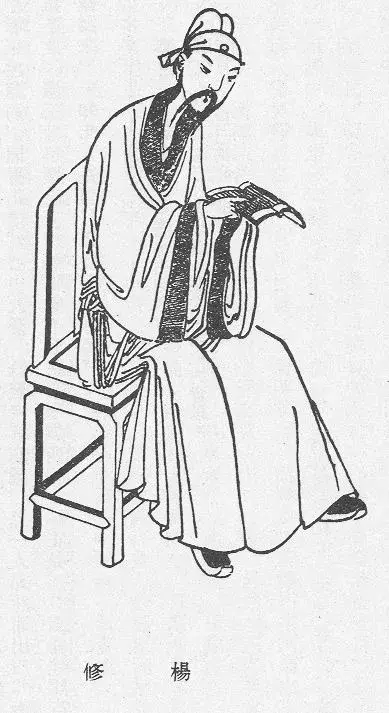
杨秀
Yang Xiu (杨秀, died 618) was a native of Huayin County in Hongnong Commandery (present-day Huayin City, Shaanxi Province). He was the fourth son of Emperor Wen of Sui (Yang Jian) and Empress Wenxian (Dugu Qieluo), and a full younger brother to Emperor Yang of Sui (Yang Guang). Imposing in stature, boasting a magnificent beard and physical martial prowess, Yang Xiu possessed extraordinary courage and commanded widespread awe…
Yang Xiu (杨秀, died 618) was a native of Huayin County in Hongnong Commandery (present-day Huayin City, Shaanxi Province). He was the fourth son of Emperor Wen of Sui (Yang Jian) and Empress Wenxian (Dugu Qieluo), and a full younger brother to Emperor Yang of Sui (Yang Guang). Imposing in stature, boasting a magnificent beard and physical martial prowess, Yang Xiu possessed extraordinary courage and commanded widespread awe among imperial civil and military officials. In 581, upon founding the Sui dynasty, Emperor Wen enfeoffed Yang Xiu as Prince of Yue and soon after as Prince of Shu, conferring upon him the ranks of Pillar of State, Governor of Yizhou, and Area Commander-in-Chief of Yizhou, entrusting him with absolute command over the military and civil governance of twenty-four prefectures across the Bashu region. In 582, he advanced to Senior Pillar of State and Director of the Southwestern Circuit Branch Department of State Affairs, directing frontier defenses across Sichuan, Guizhou, Yunnan, and southeastern Tibet. Throughout his two decades governing the southwest, Yang Xiu instituted ambitious civil infrastructure and urban development projects. He oversaw the vast enlargement of the Chengdu municipal fortifications into an expanded "Sub-City" (Zicheng), excavated the scenic Mohe Pond, constructed the landmark Sanhua Tower, dredged the regional Two Rivers canal system, and patronized the construction of Xinxiang Monastery (the historical predecessor of Wenshu Monastery). However, his proud, unyielding temperament and luxurious court lifestyle provoked imperial anxiety. Following the deposal of Crown Prince Yang Yong in 600, the newly installed Crown Prince Yang Guang conspired with Chancellor Yang Su to frame Yang Xiu using fabricated voodoo effigies and treasonous manifestos. In 602, Emperor Wen stripped Yang Xiu of his royal titles, reduced him to commoner status, and placed him under permanent house arrest. In 618, during the Jiangdu mutiny led by Yuwen Huaji, the rebel commanders deemed Yang Xiu too formidable to control and murdered him alongside his sons.
Created Prince of Yue then Prince of Shu upon the founding of the Sui dynasty, assuming viceregal military command over twenty-four prefectures of Yizhou.
Promoted to Senior Pillar of State and Director of the Southwestern Circuit Branch Department of State Affairs, coordinating the comprehensive defense of the southwest.
Doubled the urban perimeter of Chengdu, excavating Mohe Pond, building Sanhua Tower, and dredging the navigation waterways of the Two Rivers.
Summoned briefly to the capital Daxing to serve as Director of the Imperial Secretarial Bureau and Grand General of the Right Militant Guard, returning to Yizhou shortly thereafter.
After Crown Prince Yang Yong was deposed, Yang Guang became heir; Yang Xiu's vocal dissatisfaction provoked intense surveillance from Yang Guang and Yang Su.
Framed by Yang Su through planted voodoo dolls and forged treasonous declarations; Emperor Wen stripped Yang Xiu of all ranks, imprisoning him in the palace.
Upon ascending the throne, Emperor Yang ordered heightened security and perpetual solitary confinement for Yang Xiu.
Rebel leader Yuwen Huaji assassinated Emperor Yang; fearing Yang Xiu's martial fortitude, the mutineers executed Yang Xiu and his sons.
Yang Xiu was born into the founding imperial house of the Sui dynasty as the fourth son of Emperor Wen (Yang Jian) and Empress Dugu Qieluo. Endowed with natural audacity, martial strength, and a magnificent physical stature adorned with an imposing beard, Yang Xiu excelled in horsemanship, archery, and tactical strategy from early youth, commanding deep respect among imperial officials. Following the founding of the Sui dynasty in 581, Emperor Wen created him Prince of Yue and shortly thereafter Prince of Shu. Recognizing that the strategic southwestern basin of Bashu required an imperial prince of stern authority to guarantee frontier stability, the emperor appointed Yang Xiu Pillar of State, Governor of Yizhou, and Area Commander-in-Chief of Yizhou, investing him with supreme authority over twenty-four prefectures.
In 582, to consolidate administrative authority across the ethnically diverse southwestern borders, the Sui court created the Southwestern Circuit Branch Department of State Affairs in Yizhou, promoting Yang Xiu to Senior Pillar of State and Branch Director, governing territories spanning modern Sichuan, Yunnan, and Guizhou. Governing Bashu with decisive firmness, Yang Xiu trained garrison regiments, reformed local administration, and pacified southwestern tribal chieftains, preserving domestic security across the region. In 592, Emperor Wen recalled Yang Xiu to the imperial capital of Daxing to serve as Director of the Imperial Secretarial Bureau and Grand General of the Right Militant Guard, involving him in central decisions. However, because the southwestern frontier depended on his martial deterrence, the emperor reappointed him to Yizhou soon after.
Residing in Chengdu for two decades, Yang Xiu left an enduring architectural and infrastructure legacy. At the time of his arrival, Chengdu's older municipal fortifications were cramped, measuring merely seven li in circuit. To accommodate the expanding commercial population and construct a princely administrative center worthy of the Sui empire, Yang Xiu conscripted regional laborers to execute an ambitious urban enlargement. He extended the southwestern ramparts, expanding the perimeter to over ten li and doubling the urban surface area, creating the celebrated "Sub-City" (Zicheng).
During the excavation of earth for the new fortifications, Yang Xiu utilized the vast sunken depression to create an expansive artificial lake named Mohe Pond (Mohe Chi), channeling fresh water directly from the outer western river system to form a scenic water reservoir. On the lake's embankment, he constructed Sanhua Tower (Sanhua Lou), which became a cultural center for official banquets and literary salons. To facilitate transport and grain logistics for the expanding city, Yang Xiu directed the dredging and widening of the Two Rivers (the Nan River and Jin River), significantly augmenting regional water transport. A devoted patron of Buddhism, Yang Xiu also financed the construction of the grand Xinxiang Nunnery in Chengdu, inviting the revered nun Xinxiang to serve as abbess; this complex survives today as the celebrated Wenshu Monastery.
As his tenure in Bashu extended, Yang Xiu's lifestyle became lavish and authoritarian. In his princely palaces and retinue, his carriages, horses, and insignia increasingly emulated imperial protocol, including the unauthorized manufacture of white-feathered arrows and the erection of jade dais structures. Aware of his son's volatile temperament, Emperor Wen once confided to Empress Dugu: "Yang Xiu is destined to come to a violent end. While I live he will cause no trouble, but after my death, he will inevitably rebel against his brothers!" Consequently, the emperor began curbing his administrative prerogatives, repeatedly denying his requests for expanded military staff.
In 600, a major palace crisis erupted when Crown Prince Yang Yong was framed and deposed through the machinations of Prince of Jin Yang Guang and Chancellor Yang Su. Yang Xiu, whose personality was straightforward and unyielding, sympathized with his deposed elder brother Yang Yong and expressed indignation over Yang Guang's devious ascendance. Aware of Yang Xiu's military prestige in the southwest and his simmering hostility, the newly elevated Crown Prince Yang Guang allied with Chancellor Yang Su to plant spies within Yang Xiu's staff, fabricating pretexts to bring about his downfall.
In 602, under Yang Su's instigation, Emperor Wen formally summoned Yang Xiu to the imperial capital of Daxing for interrogation. Upon his arrival, Emperor Wen received him with frosty silence, dispatching court officers the next day to denounce his extravagance and statutory violations. In the palace assembly, Crown Prince Yang Guang feigned tearful intercession on his brother's behalf, subtly hardening the emperor's wrath. The emperor consigned Yang Xiu to a special tribunal composed of Yang Su, Su Wei, Niu Hong, Liu Shu, and Zhao Chuo.
To ensure Yang Xiu's total destruction, Yang Guang and Yang Su manufactured damning evidence of witchcraft. Agents secretly carved wooden effigies inscribed with the names of Emperor Wen and Prince of Han Yang Liang, bound their arms with cords, pierced their chests with iron spikes, and buried them at the foot of Mount Hua. Yang Su then staged a public excavation to "discover" these voodoo dolls. Furthermore, Yang Guang forged a seditious military manifesto threatening armed march on the capital, planting it among Yang Xiu's personal papers. Confronted with this fabricated treason, Emperor Wen was incensed, denouncing Yang Xiu for committing "ten unpardonable crimes that violate heaven and human ethics." The emperor stripped Yang Xiu of all royal titles, reduced him to commoner status, and ordered his perpetual solitary confinement in the Palace Attendants Department, forbidding all contact with his family and assigning two harsh bondwomen to attend him. More than one hundred of his provincial officers were executed or exiled.
Living in despair within his palace prison, Yang Xiu submitted an emotional memorial professing guilt and begging only to see his young sons before dying. Touched by his plea as his own health deteriorated, Emperor Wen relented, permitting his sons to share his quarters.
Following Emperor Wen's death in 604, Emperor Yang ascended the throne and immediately reinforced Yang Xiu's solitary imprisonment, locking him away in detached imperial villas for fourteen years. In the third month of 618, as the Sui empire collapsed into fragmentation, general Yuwen Huaji launched a palace coup in Jiangdu, strangling Emperor Yang. The conspirators initially considered installing the deposed Prince of Shu as a puppet sovereign. However, Yuwen Huaji's senior advisors warned that Yang Xiu was proud, martial, and impossible to manipulate. Fearing future retaliation, Yuwen Huaji summarily executed Yang Xiu and his sons in Jiangdu, bringing the tragic life of the former viceroy of the southwest to a violent end.
Throughout his twenty-year tenure as Area Commander-in-Chief of Yizhou and Director of the Southwestern Circuit, Yang Xiu served as the paramount military viceroy of the Sui dynasty in the southwest, overseeing twenty-four prefectures.
He maintained fortified outposts, integrated indigenous southwestern tribal chieftains into the imperial tributary system, enforced strict military discipline, and deterred raids from northern nomadic forces and proto-Nanzhao tribes. His firm governance preserved peace throughout the Bashu basin during the Kaihuang era, securing a prosperous and stable southwestern base that contributed substantially to the Sui conquest of Chen and the unification of China.
Yang Xiu was the central figure in the medieval transformation of Chengdu. His expansion doubled the physical surface of the city, constructing the Sub-City ramparts that defined Chengdu's municipal core for subsequent centuries.
By transforming excavated clay pits into the expansive Mohe Pond and erecting Sanhua Tower, Yang Xiu created an iconic recreational and cultural landscape celebrated by Tang and Song poets. His dredging of the Two Rivers canal network established reliable municipal water transport and irrigation, ensuring Chengdu's economic ascendancy as the empire's second most prosperous city during the Tang dynasty. His founding of Xinxiang Nunnery bequeathed to history the enduring sacred sanctuary of Wenshu Monastery.
Yang Xiu's downfall represents a classic tragedy of fraternal succession warfare in early medieval Chinese dynastic politics. As a powerful, martial prince stationed in an imperial borderland, he defended ancestral lineage traditions against the political intrigue of Yang Guang.
His defiance made him the principal target of Yang Guang and Yang Su's manufactured voodoo plot, which utilized fabricated effigies and planted declarations to engineer his lifetime incarceration. His elimination revealed the ruthlessness of the late Sui imperial succession and severely weakened the dynastic military defenses guarding the southwestern gateway of the empire.
FIGURES ASSOCIATED WITH THIS DYNASTY