Fenghua | Born into a prominent literary family in Fenghua; showed early devotion to classical morality and the teachings of the Cheng brothers.
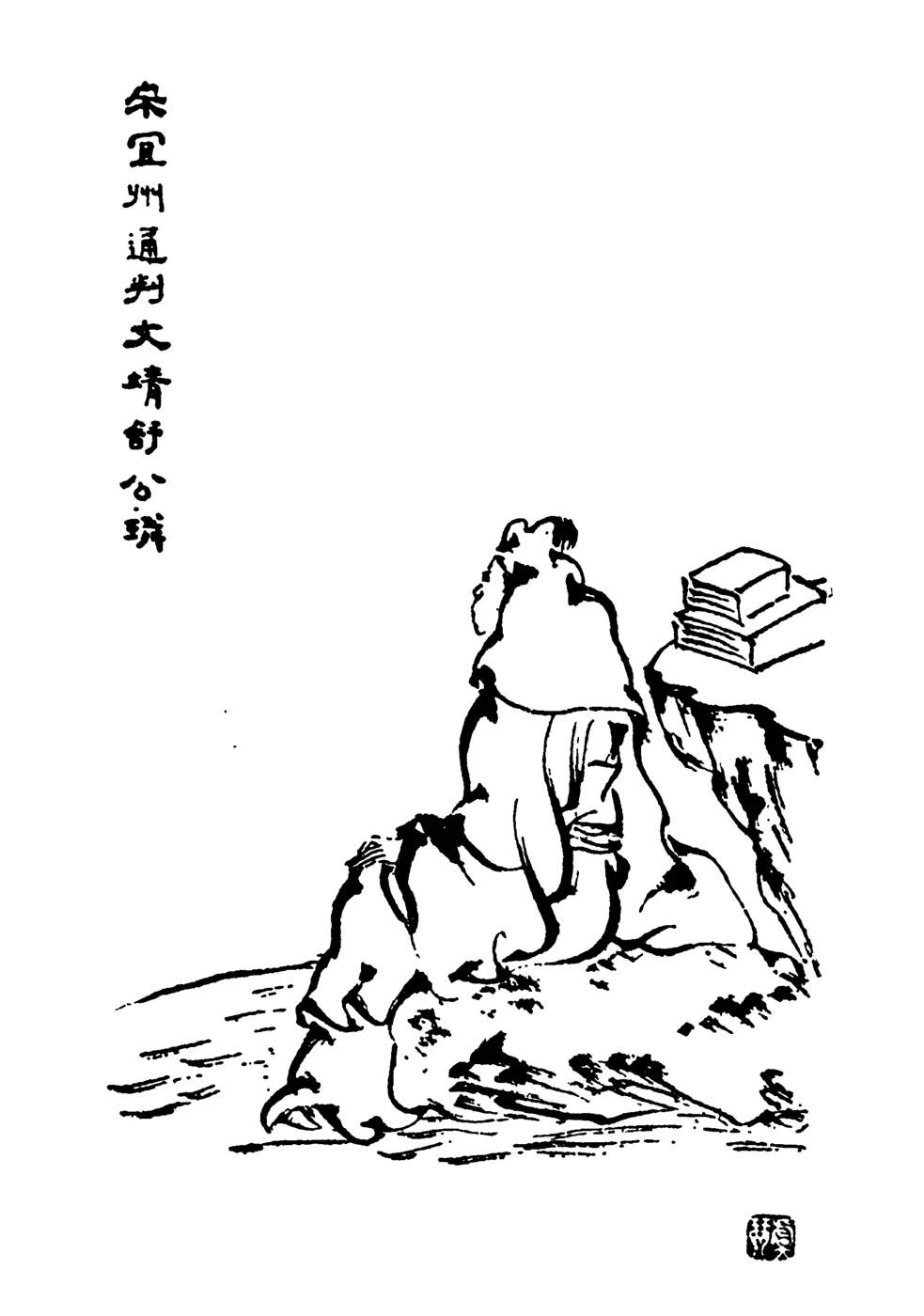
1136 CE–1199 CE
Historical figure
Shu Lin
舒璘
Shu Lin (1136–1199 AD), courtesy name Yuanzhi and later Yuanbin, styled Master Guangping, was a native of Fenghua in Qingyuan Prefecture (modern Fenghua, Ningbo, Zhejiang). He was a distinguished neo-Confucian philosopher, scholar of the School of Mind, and educator of the Southern Song Dynasty, revered alongside Yang Jian, Yuan Xie, and Shen Huan as one of the 'Four Masters of Yongshang'. A senior disciple of Lu Jiuyuan, he…
1136 CE–1199 CESouthern Song
PROFILE
Shu Lin (1136–1199 AD), courtesy name Yuanzhi and later Yuanbin, styled Master Guangping, was a native of Fenghua in Qingyuan Prefecture (modern Fenghua, Ningbo, Zhejiang). He was a distinguished neo-Confucian philosopher, scholar of the School of Mind, and educator of the Southern Song Dynasty, revered alongside Yang Jian, Yuan Xie, and Shen Huan as one of the 'Four Masters of Yongshang'. A senior disciple of Lu Jiuyuan, he obtained his jinshi degree in 1172 and served as Professor of Huizhou, Magistrate of Pingyang, and Professor of Xinzhou. In Huizhou, his exceptional educational achievements led Grand Chancellor Liu Zheng to proclaim him 'the foremost instructor under heaven'. In philosophy, Shu Lin championed the doctrine of 'honesty and practicality' (pingshi), bridging Lu Jiuyuan's School of Mind with the practical empirical methods of Zhu Xi and Lü Zuqian, insisting that moral awakening must be practiced in ordinary daily life. Appointed Vice-Prefect of Xuanzhou in 1199, he passed away before assuming office at age sixty-four. During the Chunyou era, he was posthumously granted the title Wenjing and enshrined in the Confucian Temple.
- Courtesy / Art Name
- Yuanzhi; Yuanbin
- Era
- Ancient times
- Dynasty
- Southern Song Dynasty
- Identity
- Historical figure
- Date of Birth
- 1136
- Date of Death
- 1199
- Ethnicity
- Han
- Ancestral Home
- Fenghua County, Mingzhou (present-day Fenghua District, Ningbo, Zhejiang)
- Place of Birth
- Fenghua County, Mingzhou (modern Ningbo, Zhejiang)
- Place of Death
- Unknown
- Lifespan
- 64 years old
- Highest Office
- Instructor of Huizhou, magistrate of Pingyang, instructor of Xinzhou, assistant prefect of Xuanzhou
- Major Offices
- Instructor of Huizhou, magistrate of Pingyang, instructor of Xinzhou, assistant prefect of Xuanzhou
- Posthumous Name
- Wenjing
- Major Achievements
- A noted Neo-Confucian, master of the School of Mind and educator of the Southern Song, known with Yang Jian, Yuan Xie and Shen Huan as the 'Four Masters of Yongshang' and a leading disciple of Lu Jiuyuan. He passed the imperial examination in the eighth year of Qiandao (1172) and served successively as Instructor of Huizhou, Magistrate of Pingyang and Instructor of Xinzhou.
LIFE TIMELINE
Lin'an, Wuzhou | Studied at the Imperial Academy; walked on foot to Wuzhou to attend lectures by Zhu Xi and Lü Zuqian, then journeyed to Jinxi to master Lu Jiuyuan's philosophy of mind.
Youth | Hearing of the learning of the Cheng brothers, he entered the Directorate of Education and studied in the company of Zhang Shi, Lu Jiuyuan, Zhu Xi and Lü Zuqian.
Lin'an | Passed the imperial examinations as jinshi, gaining widespread renown across southeast intellectual circles.
Huizhou | Appointed Professor of Huizhou Prefecture Academy, instilling moral self-cultivation; praised by Chancellor Liu Zheng as 'the foremost instructor under heaven'.
Jiangxi, Xinzhou | Served as administrative officer for the Jiangxi Fiscal Commission, then as Professor of Xinzhou Academy.
Pingyang County | Appointed Magistrate of Pingyang in Wenzhou; reformed taxes, constructed sea dikes, settled lawsuits, and founded academies.
Fenghua | Observed mourning for his mother in Fenghua, teaching disciples at Guangping Study and holding academic assemblies with Yang Jian, Yuan Xie, and Shen Huan.
Fenghua, Xuanzhou | Appointed Vice-Prefect of Xuanzhou; died of illness at home before departure at age sixty-four; epitaph composed by Yang Jian.
Lin'an | Emperor Lizong honored neo-Confucian scholars, posthumously granting Shu Lin the title Wenjing and enshrouding him in the Confucian Temple.
In 1190 AD | In 1190 AD, he was appointed Magistrate of Pingyang County in Wenzhou.
Age 15 | In 1190 AD, he was appointed Magistrate of Pingyang County in Wenzhou.
Aged fifty-five | He opened a school in the rear garden of his house and taught at home at the Guangping Academy.
Master of Yongshang and Cultural Legacy In 1194 AD | ### Master of Yongshang and Cultural Legacy In 1194 AD, upon his mother's passing, Shu Lin returned to Fenghua, establishing the Guangping Academy.
Aged about sixty | He served as instructor of the prefectural school of Xinzhou.
Yang Jian remarked with reverence: "Master Guangping's words are gentle | Yang Jian remarked with reverence: "Master Guangping's words are gentle, meticulous, and grounded; he illuminates transcendent truth within mundane affairs, attaining heights none of us can equal." In 1199 AD (Qingyuan 5), the court commissioned Shu Lin as Vice-Prefect of Xuanzhou.
Age 64 | Yang Jian remarked with reverence: "Master Guangping's words are gentle, meticulous, and grounded; he illuminates transcendent truth within mundane affairs, attaining heights none of us can equal." In 1199 AD (Qingyuan 5), the court commissioned Shu Lin as Vice-Prefect of Xuanzhou.
In 1241 AD | In 1241 AD, Emperor Lizong posthumously honored him with the title Wenjing and ordered his tablet enshrined within the Confucian Temple.
In 1241 AD | In 1241 AD, Emperor Lizong posthumously honored him with the title Wenjing and ordered his tablet enshrined within the Confucian Temple.
BIOGRAPHY
Biography
Classical Formation and Diverse Mentorship Shu Lin, courtesy name Yuanzhi and later Yuanbin, was a native of Guangping in Fenghua County, Qingyuan Prefecture (modern Fenghua, Ningbo, Zhejiang Province). Born into an established family of Confucian scholars, Shu Lin exhibited intellectual sobriety and moral rectitude from early childhood. Upon reading the Analects and Mencius, he reflected deeply on the ancient moral transmission, resolving to dedicate his life to the revival of the Confucian moral ethos. In his youth, Shu Lin traveled to the capital Lin'an to enroll in the Imperial Academy. During the high Southern Song, southern philosophy experienced an extraordinary renaissance, with Zhu Xi expounding principle in Jian'an, Lü Zuqian teaching in Wuzhou, and Lu Jiuyuan articulating the School of Mind in Jinxi. Eager to penetrate the core tenets of the rival masters, Shu Lin sought out multiple mentors. Learning that Zhu Xi and Lü Zuqian were convening a philosophical retreat in Wuzhou, he walked hundreds of li through harsh weather to study under them. Soon afterwards, moved by Lu Jiuyuan's proclamation that 'the universe is my mind, and my mind is the universe,' Shu Lin traveled to Jiangxi to become one of Lu's foremost disciples, integrating the essence of mind philosophy with classical discipline. ### Educational Acclaim as 'The Foremost Instructor' In 1172 AD (Qiandao 8), thirty-seven-year-old Shu Lin achieved the jinshi degree. His initial appointment was as Prefectural Professor (Jiaoshou) of Huizhou. At Huizhou, Shu Lin distinguished himself as an educational reformer of exceptional stature. Although Huizhou possessed rich literary traditions, local students were obsessed with ornate examination composition to achieve bureaucratic office. Shu Lin transformed the curriculum, lecturing daily on the core concepts of the Great Learning and Doctrine of the Mean, reminding his students: "The true gentleman studies not to flaunt literary brilliance for personal ambition, but to awaken the innate moral goodness of his mind and enact cosmic righteousness." Employing tailored pedagogical methods, he guided errant students with patient moral dialogue rather than corporal punishment, while funding indigent scholars from his personal salary. The academic atmosphere of Huizhou underwent a profound transformation. When Grand Chancellor Liu Zheng inspected Huizhou, he was overwhelmed by the scholars' moral decorum, declaring publicly that Shu Lin was 'the foremost instructor under heaven' (Tianxia Diyi Jiaoguan). ### Pragmatic Governance and Everyday Morality Following his tenure in Huizhou, Shu Lin served as administrative officer for the Jiangxi Fiscal Commission and Professor of Xinzhou Academy. In 1190 AD, he was appointed Magistrate of Pingyang County in Wenzhou. Pingyang was a coastal district burdened by litigious customs, heavy commercial levies, and predatory land enclosures. Shu Lin pursued compassionate, equitable governance. He meticulously surveyed land registers to eliminate fraudulent tax shifting onto poor peasants, while mobilizing thousands of laborers to rebuild ocean dikes and sea walls to withstand coastal storms. In adjudicating legal disputes, Shu Lin favored moral conciliation over judicial torture. When neighbors or kin quarreled over property, he summoned both parties to the hall, explaining filial piety and communal harmony until the litigants embraced in tears and withdrew their complaints. Outside administrative hours, he gathered local scholars at the county academy to debate philosophical classics. So deep was local gratitude that the people of Pingyang erected a shrine and commemorative stele in his honor. ### Master of Yongshang and Cultural Legacy In 1194 AD, upon his mother's passing, Shu Lin returned to Fenghua, establishing the Guangping Academy. During this period, three other prominent regional philosophers—Yang Jian (Master Cihu), Yuan Xie (Master Xiezhai), and Shen Huan (Master Dingchuan)—were actively lecturing across eastern Zhejiang. United in moral purpose, they formed the celebrated intellectual group known as the 'Four Masters of Yongshang' . Among the four, Shu Lin was the elder mentor, distinguished by his insistence on 'honesty and practicality' (pingshi). Yang Jian remarked with reverence: "Master Guangping's words are gentle, meticulous, and grounded; he illuminates transcendent truth within mundane affairs, attaining heights none of us can equal." In 1199 AD (Qingyuan 5), the court commissioned Shu Lin as Vice-Prefect of Xuanzhou. However, decades of relentless academic and administrative labor had broken his health. He fell critically ill and died in his study in Fenghua at the age of sixty-four. His intimate friend Yang Jian composed his moving tomb epitaph. In 1241 AD, Emperor Lizong posthumously honored him with the title Wenjing and ordered his tablet enshrined within the Confucian Temple.
Major Activities
Pioneering the Practical School of Mind Shu Lin's primary philosophical contribution lay in his championing of 'practicality' (pingshi). Amidst the intense intellectual friction between Zhu Xi's School of Principle and Lu Jiuyuan's School of Mind, Shu Lin synthesized Lu's internal moral awakening with Zhu's rigorous daily investigation of things. He insisted that the innate mind must manifest directly within mundane routines—eating, dressing, and communal duties—avoiding empty mysticism and establishing a pragmatic moral tradition across eastern Zhejiang. ### Educational Leadership at Huizhou As Professor of Huizhou Academy, Shu Lin broke the stranglehold of examination-focused pedantry by emphasizing personal moral transformation. His inspiring pedagogical methods earned him Grand Chancellor Liu Zheng's accolade as 'the foremost instructor under heaven'. ### Founding the Yongshang School Co-founding the 'Four Masters of Yongshang' with Yang Jian, Yuan Xie, and Shen Huan, Shu Lin helped establish Ningbo (Siming) as the vibrant southern heartland of the School of Mind, laying the foundational philosophical bedrock that directly inspired Wang Yangming's later synthesis.
Personal Relations
- Classical Teachers: Zhu Xi (Master Huiweng), Lü Zuqian (Master Donglai), Zhang Shi (Master Nanxuan)
- The Four Masters of Yongshang: - Yang Jian (Master Cihu, author of Shu Lin's epitaph) - Yuan Xie (Master Xiezhai) - Shen Huan (Master Dingchuan)
- Patron Statesman: Liu Zheng (Grand Chancellor of the Southern Song)
Historical Assessment
Classical Dynastic Historians Yang Jian in Epitaph of Master Shu Wenjing:
"The Master was gentle, reverent, pure, and penetrating. His words were simple and truthful; his conduct earnest and solid. Illuminating the profound mysteries of mind philosophy without dabbling in ethereal vagueness, his heart was entirely free from the taint of worldly fame. He was truly an exemplary Confucian sage and the guiding light of our regional tradition!" Huang Zongxi in Records of Song and Yuan Confucians (Volume 70):
"Among Xiangshan's disciples, Master Cihu embraced ethereal illumination, while Master Guangping practiced steadfast practicality. Shu Wenjing grounded his pursuit in the everyday, avoiding sectarian bias. Between Zhu and Lu, Master Guangping alone truly attained the Golden Mean!" Grand Chancellor Liu Zheng:
"His educational rules emulate the Three Dynasties; his moral influence enriches southern China. He is truly the foremost instructor under heaven!"
FIGURES ASSOCIATED WITH THIS DYNASTY
Bibliography
- History of Song (Song Shi*), Volume 438: Biographies of Confucians 8 (Biography of Lu Jiuyuan, with notice of Shu Lin).
- Huang Zongxi and Quan Zuwang, Records of Song and Yuan Confucians (Song Yuan Xue'an), Volume 70: Guangping Xue'an.
- Yang Jian, Posthumous Works of Master Cihu, Volume 15: Epitaph of Master Shu Guangping.
- Qian Mu, An Outline of Song and Ming Neo-Confucianism, Jiuzhou Press.