史天泽
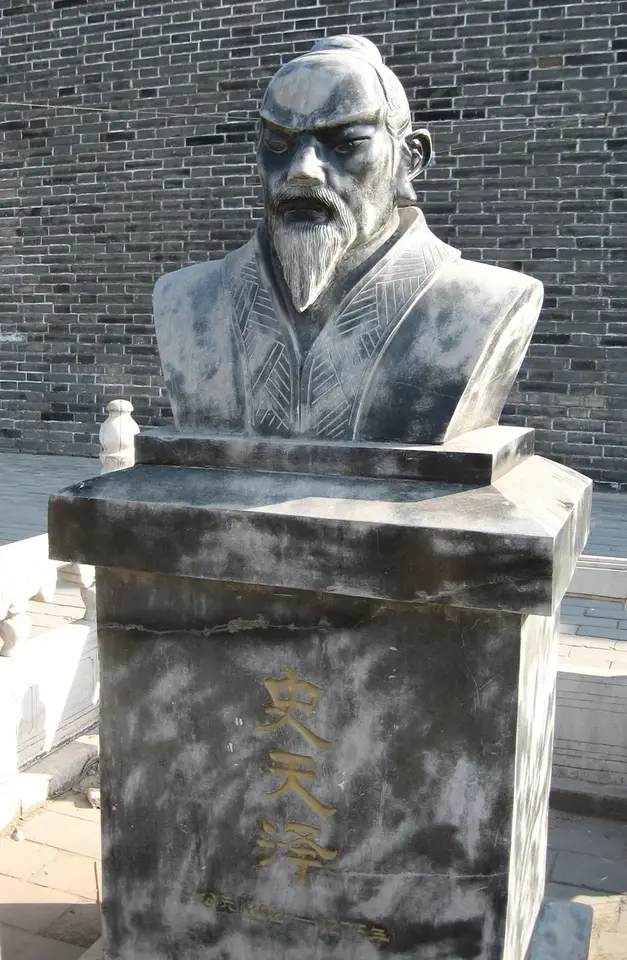
Historical sculpture of Shi Tianzhe
Image creditsDavid Chen (Iamdavidtheking 11:28, 10 September 2007 (UTC)) · CC BY 3.0Image source

1202 CE–1275 CE

Founding general of the Yuan dynastyrepresentative of Northern Chinese hereditary lordsGrand Councilor of the Central Secretariat

Shi Tianze (史天泽)

史天泽

Shi Tianze (史天泽, 1202 – March 5, 1275), courtesy name Runfu (润甫), was a native of Yongqing in Daxing (modern Yongqing County, Hebei Province) and a prominent military commander, statesman, and leading representative of the Northern Chinese hereditary lords during the Mongol Empire and early Yuan dynasty. Skilled in mounted archery and possessing extraordinary physical strength in his youth, he accompanied his father Shi…

1202 CE–1275 CEYuan Dynasty (元朝)

PROFILE

Shi Tianze (史天泽, 1202 – March 5, 1275), courtesy name Runfu (润甫), was a native of Yongqing in Daxing (modern Yongqing County, Hebei Province) and a prominent military commander, statesman, and leading representative of the Northern Chinese hereditary lords during the Mongol Empire and early Yuan dynasty. Skilled in mounted archery and possessing extraordinary physical strength in his youth, he accompanied his father Shi Bingzhi in surrendering to the Mongol commander Muqali in 1213. After his elder brother Shi Tianni was assassinated at Zhending in 1225, Shi Tianze inherited the post of Grand Marshal of Infantry and Cavalry of Hebei Western Circuit, defeated the Jin general Wu Xian, and captured and executed the Southern Song Red Coat Army commander Peng Yibin, securing the Zhending base. He subsequently served as Myriarch of Zhending and Five Circuits and Pacification and Planning Commissioner of Henan, participating in the siege of Caizhou that destroyed the Jin dynasty and campaigns against the Southern Song in Xiangyang, Han River, and western Huai. Following Kublai Khan's accession, Shi Tianze served successively as Pacification Commissioner of Henan, Right Grand Councilor of the Central Secretariat, Vice Commissioner of the Bureau of Military Affairs, and Left Grand Councilor of the Central Secretariat. He assisted in the campaign against Ariq Böke, suppressed Li Tan's rebellion, and took the lead in voluntarily surrendering his family's military command to facilitate Yuan imperial centralization. Appointed alongside Bayan in 1274 to lead the grand expedition against the Southern Song, he fell ill on the march and returned north, dying at Zhending the following year at the age of seventy-four. He was posthumously enfeoffed as Prince of Zhenyang and given the posthumous name Zhongwu.

Courtesy Name
Runfu (润甫)
Identity
Founding general of the Yuan dynasty, representative of Northern Chinese hereditary lords, Grand Councilor of the Central Secretariat
Era
Mongol Empire to early Yuan dynasty
Dynasty
Yuan dynasty (元朝)
Highest Office
Commander Unequalled in Honor (开府仪同三司), Administrator of Major Military and State Affairs (平章军国重事), Left Grand Councilor of the Central Secretariat (中书左丞相)
Principal Offices
Grand Marshal of Infantry and Cavalry of Hebei Western Circuit, Myriarch of Zhending and Five Circuits, Pacification and Planning Commissioner of Henan, Right Grand Councilor of the Central Secretariat, Vice Commissioner of the Bureau of Military Affairs, Left Grand Councilor of the Central Secretariat
Posthumous Titles
Defender-in-chief (太尉), Grand Preceptor (太师), Prince of Zhenyang (镇阳王)
Posthumous Name
Zhongwu (忠武)
Date of Birth
1202 (2nd year of the Taihe era, Jin dynasty)
Date of Death
March 5, 1275 (7th day of the 2nd month, 12th year of the Zhiyuan era, Yuan dynasty)
Native Place
Yongqing, Daxing (modern Yongqing County, Langfang, Hebei Province)

LIFE TIMELINE

Relationship graph

BIOGRAPHY

Chronology

  • 1202 (2nd year of the Taihe era, Jin) | Birth | Born into the prominent Shi clan of Yongqing, Daxing (modern Yongqing, Hebei)
  • 1213 (1st year of the Zhenyou era, Jin) | Surrender to the Mongols | Accompanied his father Shi Bingzhi to Zhuozhou to surrender to the Mongol commander Muqali and served as commander of the vanguard guard
  • 1220 (4th year of the Xingding era, Jin) | Garrison at Zhending | Accompanied his elder brother Shi Tianni, who was appointed Grand Marshal of Infantry and Cavalry of Hebei Western Circuit, to garrison Zhending
  • 1225 (2nd year of the Zhengda era, Jin) | Succession and Suppression | Succeeded as Grand Marshal after Shi Tianni was murdered by Wu Xian, and led forces to defeat Wu Xian and recapture Zhending
  • 1226 (3rd year of the Zhengda era, Jin) | Capture of Peng Yibin | Executed a pincer attack at Mount Zanhuang, capturing and executing the Southern Song Red Coat Army general Peng Yibin
  • 1229 (1st year of Emperor Taizong, Yuan) | Myriarch of Five Circuits | Appointed Myriarch of the five circuits of Zhending, Hejian, Daming, Dongping, and Jinan upon Ögedei Khan's accession
  • 1230 (2nd year of Emperor Taizong, Yuan) | Assault at Weizhou | Participated in the Battle of Weizhou, leading a thousand cavalry behind enemy lines to rout a Jin detachment and capture Weizhou
  • 1232 (4th year of Emperor Taizong, Yuan) | Campaign in Eastern Henan | Crossed the Yellow River against the Jin, accepted the surrender of Taikang and Suizhou, and slew the Jin general Wanyan Qingshannu at Yangyi
  • 1233 (5th year of Emperor Taizong, Yuan) | Relief of Xinwei | Rushed to relieve Xinwei, broke through the encirclement, and coordinated with the main army to rout Wanyan Baisa before advancing on Caizhou
  • 1234 (6th year of Emperor Taizong, Yuan) | Fall of Caizhou | Commanded the northern sector at Caizhou, crossing the Ru River on rafts to fight until the fall of the Jin dynasty, then returned to Zhending
  • 1235 (7th year of Emperor Taizong, Yuan) | Campaign in Xiangyang | Joined Prince Köchü's southern campaign, scaling the walls of Zaoyang first and smashing the Song naval formation at Qiaoshitan near Xiangyang
  • 1237 (9th year of Emperor Taizong, Yuan) | Battles in Western Huai | Accompanied Prince Ku'un Buqa to capture Guangzhou, Fuzhou, and Shouchun, and took Chuzhou, Xuyi, and Baoying
  • 1252 (2nd year of Emperor Xianzong, Yuan) | Administration of Henan | Granted five cities in Weizhou as his appanage by Möngke Khan and appointed Pacification and Planning Commissioner of Henan under Kublai to reorganize Central Plains administration
  • 1259 (9th year of Emperor Xianzong, Yuan) | Victory at Mount Diaoyu | Accompanied Möngke Khan into Sichuan against the Song and defeated the Song general Lü Wende's fleet downstream from Mount Diaoyu in Hezhou
  • 1260 (1st year of the Zhongtong era, Yuan) | Support for Kublai | Supported Kublai Khan's enthronement and was appointed Pacification Commissioner of Henan Circuits and Commissioner of Jianghuai Armies
  • 1261 (2nd year of the Zhongtong era, Yuan) | Right Grand Councilor | Appointed Right Grand Councilor of the Central Secretariat as the first Northern Chinese chief minister of the Yuan, and accompanied Kublai north against Ariq Böke
  • 1262 (3rd year of the Zhongtong era, Yuan) | Suppression of Li Tan | Joined Prince Qabichi in besieging Jinan to crush Li Tan's rebellion, afterwards voluntarily memorializing to relinquish the Shi family's military authority
  • 1266 (3rd year of the Zhiyuan era, Yuan) | Assisting the Heir Apparent | Appointed Vice Commissioner of the Bureau of Military Affairs to assist Crown Prince Zhenjin, Prince of Yan
  • 1268 (5th year of the Zhiyuan era, Yuan) | Siege of Xiangyang | Proceeded to the Xiangyang front with Aju to construct a long circumvallation around the Song garrison, returning to Zhending due to illness the next year
  • 1274 (11th year of the Zhiyuan era, Yuan) | Grand Southern Expedition | Appointed Left Grand Councilor of the Central Secretariat alongside Bayan to lead the grand army against the Song, but was ordered back north from Yingzhou after falling critically ill
  • 1275 (12th year of the Zhiyuan era, Yuan) | Death at Zhending | Died at Zhending on the 7th day of the 2nd month at age seventy-four; posthumously granted Defender-in-chief, named Zhongwu, and later enfeoffed as Prince of Zhenyang

Biography

Family Background and Early Submission to the Mongols

Shi Tianze's ancestors belonged to a prominent and wealthy clan in Yongqing, Daxing (modern Yongqing County, Hebei Province) that enjoyed high prestige in the local community. As the Jin court fell into decline in its final years and banditry erupted across the Central Plains, local magnates gathered villagers to build fortified stockades for self-defense. His father Shi Bingzhi was fond of learning and generous with his wealth, attracting several hundred families from near and far to seek his protection. The third son of Shi Bingzhi, Shi Tianze stood eight chi tall with a voice resonant as a bell, and from youth excelled in mounted archery and possessed extraordinary physical strength.

In the autumn of 1213 (1st year of the Zhenyou era), Mongol forces marched south against the Jin dynasty. When Muqali advanced into Hebei in the tenth month, Shi Bingzhi assessed the shifting balance of power and led his clansmen and several thousand villagers to Zhuozhou to offer their surrender. Muqali ordered Shi Bingzhi to retain command of his followers at Bazhou, appointed his eldest son Shi Tianni as Myriarch, and assigned Shi Tianze to serve in the army as commander of the vanguard guard. The following year, Shi Bingzhi accompanied Muqali in capturing the Jin northern capital of Dading Prefecture and was rewarded with the post of Administrator of the Six Ministries of the Presidential Council, establishing the Shi family's military and political standing within the Mongol regime.

In 1220 (4th year of the Xingding era), the Jin Pacification and Planning Commissioner of Zhending, Wu Xian, surrendered Zhending Prefecture to the Mongols. Muqali appointed Shi Tianni as Grand Marshal of Infantry and Cavalry of Hebei Western Circuit to garrison Zhending, with Wu Xian serving as his deputy. Shi Tianze accompanied his elder brother to Zhending to assist in defense and military administration. Observing that Wu Xian harbored treacherous intentions, he repeatedly warned his brother to take precautions, before escorting their mother back to Dading Prefecture in the spring of 1225 on his brother's orders.

Succeeding to Command and Pacifying Hebei

Shortly after Shi Tianze departed northward, Wu Xian staged a rebellion in Zhending, ambushing and killing Shi Tianni and reclaiming the city against the Mongols. Shi Tianni's aides Wang Jin and Wang Shoudao rode north through the night, overtaking Shi Tianze at Yanjing to report the catastrophe in Zhending and urge him to return south immediately to rally the scattered remnants of their troops. Vowing to avenge his brother, Shi Tianze sold his luggage to purchase armor and weapons and rode south; by the time he reached Mancheng, he had gathered a substantial force of former soldiers and horses. He dispatched Army Supervisor Li Boyou to report the military situation and request reinforcements from Prince Börü, who issued an edict appointing Shi Tianze to succeed his brother as Grand Marshal of Infantry and Cavalry of Hebei Western Circuit and sent the general Xiaonaidai with three thousand Mongol troops to coordinate operations.

Joining forces, the two armies attacked Lunu (modern Dingzhou, Hebei). When Wu Xian's fierce general Ge Tieqiang ("Iron Spear Ge") led ten thousand men out to give battle, Shi Tianze charged at the head of his troops, inspiring his soldiers to redouble their courage. Pursuing the enemy relentlessly as they retreated by night and became bottlenecked at the Gu River, he captured Ge Tieqiang alive and seized large quantities of armor and supplies. Pressing his victory, Shi Tianze took Zhongshan, secured Wuji, captured Zhaozhou, and advanced to Yetou, where he linked up with reinforcements led by his second elder brother Shi Tian'an. Together they routed Wu Xian's main force, driving Wu Xian to flee to Shuangmen Stockade in the western hills and recovering Zhending at a stroke.

Before long, the Southern Song Grand Protector of Daming in Hebei, Peng Yibin, secretly communicated with Wu Xian and marched north in an attempt to seize Zhending. Shi Tianze and Xiaonaidai occupied Mount Zanhuang to block Wu Xian, leaving Peng Yibin isolated without support. When Peng Yibin retreated to the mountain summit and set fire to the slopes for defense, Shi Tianze selected fifty elite iron cavalrymen as a vanguard and personally led the main body in a fierce assault, capturing and executing Peng Yibin and shattering Southern Song influence north of the Yellow River.

Subsequently, Wu Xian sent spies into Zhending to collude with conspirators inside the walls and retook the city in a night raid. Breaking out with only a handful of men, Shi Tianze rode to Gaocheng, borrowed several hundred elite troops from its commander Dong Jun, and launched an immediate nighttime counterattack on Zhending in a pincer movement with Xiaonaidai's forces. Defeated once more, Wu Xian abandoned the city and fled to Baodu Stockade in the western hills. Shi Tianze stormed Baodu Stockade as well as the mountain strongholds of Yijian, Cangyu, and Mawu, forcing Wu Xian to flee south in panic; Xiangzhou and Weizhou submitted in succession, bringing complete stability to Hebei Western Circuit.

Campaigns to Destroy the Jin Dynasty

When Ögedei Khan ascended the throne in 1229 (1st year of Emperor Taizong) and formalized the military system, he selected Shi Tianze, Liu Heima, and Xiao Zhala from among the Northern Chinese commanders as the three grand marshals commanding Chinese forces, appointing Shi Tianze as Myriarch of the five circuits of Zhending, Hejian, Daming, Dongping, and Jinan. Around the age of forty, deeply conscious that governing a region required understanding historical successes and failures, Shi Tianze devoted his leisure hours to studying the Comprehensive Mirror in Aid of Governance (Zizhi Tongjian) and other histories, while inviting Confucian scholars such as Wang Changling and Li Dajie to discuss governance, greatly broadening his statesmanship.

In the winter of 1230 (2nd year of Emperor Taizong), Shi Tianze led his troops to join the Mongol main army in besieging Weizhou, which was held by Wu Xian. When the renowned Jin commander Wanyan Hada arrived with a relief army of one hundred thousand men, the Mongols suffered an initial setback; Shi Tianze alone led over a thousand cavalrymen around the Jin rear to rout a Jin detachment, then joined the main Mongol force in a tight siege that forced Wu Xian to abandon Weizhou and flee. In the spring of 1232 (4th year of Emperor Taizong), Shi Tianze crossed the Yellow River at Baipo with Ögedei Khan. After Tolui annihilated the main Jin army at Mount Sanfeng, Shi Tianze campaigned across eastern Henan, accepting the surrender of Taikang, Zhexian, Wagang, and Suizhou in succession and pursuing and slaying the Jin general Wanyan Qingshannu at Yangyi.

In the spring of 1233 (5th year of Emperor Taizong), Emperor Aizong of Jin crossed north of the Yellow River from Bianjing and ordered his general Wanyan Baisa to lead eighty thousand troops in a surprise attack on Xinwei. Hearing the news, Shi Tianze rode through the night with light cavalry to relieve the city, arriving to find it already encircled by Jin forces. Brandishing his halberd, Shi Tianze charged single-handedly through the heavy encirclement to the base of the city walls, shouting to encourage the defenders to hold fast for relief before cutting his way back out. When the main Mongol army arrived the next day, they crushed the Jin forces between an internal and external attack; Wanyan Baisa fled toward Pucheng, and Shi Tianze pursued him relentlessly, capturing or killing nearly all eighty thousand of his men. In the sixth month of that year, Shi Tianze joined the siege of Caizhou, commanding the northern sector where his soldiers bound rafts to cross the Ru River and fought bloody engagements for days on end until Caizhou fell in the first month of 1234, extinguishing the Jin dynasty, after which he led his army back to Zhending.

Governing Zhending and Southern Campaigns in Xiangyang and Huai

Following the fall of the Jin, the Zhending region was left exhausted by years of warfare and heavy requisitions. Because the court pressed relentlessly for taxes that the populace could not pay, residents were forced to borrow from Central Asian merchants at usurious compound rates known as "lamb interest" (yanggao xi), where interest doubled repeatedly until families sold their fields and even their wives and children without clearing their debts. Shi Tianze memorialized the court to allow the local government to pay off the loans at a cap of principal plus equal interest; when successive locust plagues and droughts forced the people to borrow another thirteen thousand ingots of silver for tribute, Shi Tianze exhausted his own family fortune and led his clansmen and subordinate officials in paying off the arrears on the people's behalf. He also petitioned to relocate tens of thousands of Mongol camp households (aolu) who had been felling mulberry trees and trampling crops northward beyond the passes, allowing Zhending's agriculture and population to recover rapidly until its armor and tax revenues ranked first among all circuits.

When the Mongols launched a multi-pronged offensive against the Southern Song in 1235 (7th year of Emperor Taizong), Shi Tianze accompanied Prince Köchü south into the Xiangyang and Han River region. During the assault on Zaoyang, Shi Tianze led the charge and was the first to scale the walls; advancing on Xiangyang, where Song forces had massed several thousand warships at Qiaoshitan in mutually supporting formations, Shi Tianze personally steered two warships packed with dare-to-die soldiers straight into the Song naval line, throwing the Song fleet into chaos and causing tens of thousands to drown. In 1237 (9th year of Emperor Taizong), he accompanied Prince Ku'un Buqa in besieging Guangzhou, breaching both its outer and inner walls. At the Battle of Fuzhou, he personally beat the war drum to lead forty brave warriors in smashing a lake stockade formed by three thousand Song warships, compelling the Fuzhou garrison to surrender; at Shouchun, he rode out single-handedly to repel a Song night raid on his camp, driving the enemy into the Huai River before capturing Chuzhou, Xuyi, Baoying, and other prefectures and counties in eastern Huai.

Administering Henan and Appointment as Grand Councilor

In 1252 (2nd year of Emperor Xianzong), Möngke Khan granted Shi Tianze five cities in Weizhou as his appanage. After Kublai was commissioned to oversee military and civil affairs across the Chinese territories south of the Gobi, he addressed the depopulation and uncultivated lands of Henan and Shaanxi by memorializing to appoint Shi Tianze, Zhao Bi, and others as Pacification and Planning Commissioners of Henan. Upon taking office, Shi Tianze selected capable officials, regulated paper currency, equalized taxation, established mobile granaries, organized military and civilian agricultural colonies (tuntian) and mutual security (baojia) units, and severely punished corrupt and tyrannical functionaries. Within two or three years, order was restored across Henan and displaced refugees returned to their farms, while his nephews Shi Quan and Shi Shu were stationed at Tangzhou and Dengzhou to form a strategic encirclement around the Southern Song twin fortresses of Xiangyang and Fancheng. When Alandar was dispatched in 1257 to audit finances in Henan and fabricated charges against local officials while sparing Shi Tianze out of deference, Shi Tianze stepped forward to declare that as commissioner he bore primary responsibility, successfully securing leniency and release for a large number of his subordinates.

In the autumn of 1258, Shi Tianze accompanied Möngke Khan into western Sichuan against the Song, camping at Mount Diaoyu in Hezhou the following summer. Amid a severe epidemic in the Mongol camp, the Song general Lü Wende led more than a thousand armored warships upstream along the Jialing River to attack. Ordered to intercept him, Shi Tianze deployed his forces on both banks to subject the enemy to crossfire while personally leading his fleet downstream in a fierce assault, winning three consecutive engagements and driving back the Song navy. Following Möngke Khan's death, Shi Tianze firmly supported Kublai Khan's succession. In 1260 (1st year of the Zhongtong era), Kublai appointed him Pacification Commissioner of Henan Circuits and Planning Commissioner of Jianghuai Armies; in the fifth month of 1261, Kublai formally appointed Shi Tianze as Right Grand Councilor of the Central Secretariat, making him the first Northern Chinese chief minister of the Yuan dynasty. Later that year he accompanied Kublai north against Ariq Böke, commanding the left wing to crush the enemy at the Battle of Shimultai.

Relinquishing Military Power and Final Years

In the spring of 1262 (3rd year of the Zhongtong era), the Shandong hereditary lord Li Tan rebelled at Jinan. Kublai Khan ordered Prince Qabichi to take overall command of the punitive forces and sent Shi Tianze to advise the campaign. Arriving at Jinan, Shi Tianze judged that because Li Tan was resourceful and his troops were battle-hardened, a hasty frontal assault was inadvisable; instead, he recommended building a long circumvallation to starve the city and sever all outside relief. After a four-month siege, Jinan exhausted its provisions and fell; Li Tan was captured alive, and Shi Tianze insisted on his immediate execution to reassure the public. Following the suppression of Li Tan's revolt, the Yuan court grew increasingly suspicious of Northern Chinese hereditary lords who held vast military power. Discerning the political tide, Shi Tianze submitted a memorial to Kublai upon returning to Yanjing, stating that military and civil authority should not be concentrated in a single family and requesting that his own Shi clan be the first to have its sons and nephews relieved of military command. Kublai adopted his proposal and immediately stripped the younger members of the Shi family of their military posts, facilitating a peaceful transition from the northern hereditary lord system to a centralized bureaucratic state.

In 1266 (3rd year of the Zhiyuan era), when Crown Prince Zhenjin, Prince of Yan, was placed in charge of the Central Secretariat and the Bureau of Military Affairs, Shi Tianze was reappointed Left Grand Councilor of the Central Secretariat and Vice Commissioner of the Bureau of Military Affairs to mentor the prince. When Yuan forces besieged Xiangyang in 1268 (5th year of the Zhiyuan era), Shi Tianze traveled to the front with imperial princes and senior ministers to supervise the construction of long siege works that cut off Song reinforcements, returning to Zhending due to illness the following year. In 1271 (8th year of the Zhiyuan era), he was promoted to Commander Unequalled in Honor and Administrator of Major Military and State Affairs. In 1274 (11th year of the Zhiyuan era), Kublai Khan issued an edict for the grand campaign to conquer the Southern Song, appointing Shi Tianze and Bayan jointly as Left Grand Councilors of the Central Secretariat to marshal two hundred thousand land and naval troops at Xiangyang. When the army reached Yingzhou, Shi Tianze suffered a severe relapse of his illness; Kublai ordered him to return north to Zhending and dispatched his son Shi Gang along with imperial physicians by post horse to treat him with fine medicines. Knowing he would not recover, Shi Tianze submitted a final memorial earnestly requesting that the imperial army refrain from wanton slaughter and pillage after crossing the Yangtze River. On March 5, 1275 (7th day of the 2nd month, 12th year of the Zhiyuan era), Shi Tianze died at Zhending at the age of seventy-four. Deeply grieved, Kublai Khan bestowed two thousand five hundred taels of silver, posthumously granted him the title of Defender-in-chief and the posthumous name Zhongwu, and later elevated him to Grand Preceptor and Prince of Zhenyang.
Key Achievements

Contributions to the Conquest of Jin and Reconstruction of Henan

Shi Tianze achieved repeated distinction during the Mongol conquest of the Jin dynasty and the pacification of the Central Plains. From his appointment as Myriarch of Five Circuits commanding Chinese troops in 1229, he participated in the relief of Weizhou, the pacification of eastern Henan, the rescue of Xinwei, and the decisive siege of Caizhou, excelling at turning the tide with surprise cavalry strikes when the main army was checked or isolated cities were encircled. Appointed Pacification and Planning Commissioner of Henan in 1252, he implemented a comprehensive program of tax relief, currency reform, mobile granaries, agricultural colonies, and local security across the war-ravaged heartland. Within a few years, registered households multiplied and granaries were replenished, while forward bases established along the Tangzhou–Dengzhou line laid a solid military and logistical foundation for the subsequent Yuan conquest of the Southern Song.

Protecting Local Society and Patronizing Confucian Learning

Garrisoning Zhending for decades, Shi Tianze devoted great effort to protecting the agrarian economy and the literati of northern China. Confronting the usurious "lamb interest" loans imposed by Central Asian merchants, he successfully petitioned the court to cap repayments at principal plus equal interest, expended his own family wealth to pay off thirteen thousand ingots of silver in public debt, and secured the relocation of Mongol camp households that had been destroying mulberry groves and crops, transforming Zhending into the most prosperous and stable metropolis in the north. Within his own clan, once his late brother Shi Tianni's son Shi Ji came of age, Shi Tianze repeatedly petitioned to return the post of Grand Marshal to his nephew; moved by his modesty, Ögedei Khan specially appointed Shi Ji as Grand Protector of Infantry and Cavalry of Zhending Circuit. Shi Tianze also extended generous patronage to former Jin elder statesmen and renowned Confucian scholars such as Wang Changling and Li Dajie, founding schools and preserving cultural continuity.

Assisting Kublai Khan and Voluntarily Relinquishing Military Command

After Kublai Khan established his court in the Zhongtong era, Shi Tianze—as the Yuan dynasty's first Northern Chinese Right Grand Councilor of the Central Secretariat—actively participated in structuring the central government and implementing Chinese administrative institutions, helping codify ministerial regulations and promote Confucian officials. In 1262, after helping crush Li Tan's rebellion at Jinan and recognizing the throne's growing wariness toward Northern Chinese hereditary lords who commanded private armies, Shi Tianze took the initiative to request the separation of military and civil authority within his own family and the complete removal of his kinsmen from military commands. This exemplary act defused political tensions between the Mongol court and the northern hereditary lords, accelerated the centralization of early Yuan military and administrative power, and enabled the Shi clan of Zhending to transition safely from a regional military power into an illustrious bureaucratic noble house.

Personal Relationships

  • Father: Shi Bingzhi, who led his Yongqing clansmen to surrender to Muqali at Zhuozhou at the end of the Jin dynasty and rose to Administrator of the Six Ministries of the Presidential Council.
  • Eldest Brother: Shi Tianni, who served as Grand Marshal of Infantry and Cavalry of Hebei Western Circuit at Zhending and was killed in 1225 during the rebellion of the surrendered Jin general Wu Xian.
  • Second Brother: Shi Tian'an, who led reinforcements to join Shi Tianze in defeating Wu Xian and recovering Zhending, rising to Myriarch of Zhending and other circuits.
  • Nephew: Shi Ji, son of Shi Tianni, in whose favor Shi Tianze repeatedly offered to resign his command, later appointed Grand Protector of Infantry and Cavalry of Zhending Circuit.
  • Nephews: Shi Quan and Shi Shu, dispatched by Shi Tianze to garrison Tangzhou and Dengzhou to oversee military agricultural colonies on the outer perimeter of Xiangyang and Fancheng.
  • Sons: Shi Ge (Administrator of Political Affairs of Huguang Branch Secretariat), Shi Zhang (Myriarch of the New Army of Zhending and Shuntian), Shi Di (Fiscal Commissioner of Weihui Circuit), Shi Gang (Right Assistant Minister of Huguang Branch Secretariat), Shi Qi (Surveillance Commissioner of Huaidong Circuit), Shi Zi (Associate Prefect of Lizhou), Shi Kai (Associate Prefect of Nanyang Prefecture), and Shi Bin (Left Assistant Minister of the Central Secretariat).
  • Sovereigns: Ögedei Khan (Emperor Taizong of Yuan), who appointed Shi Tianze Myriarch of Five Circuits over Chinese forces, and Kublai Khan (Emperor Shizu of Yuan), who appointed him Right and Left Grand Councilor of the Central Secretariat and relied on him as a pillar of state.
  • Colleagues: Zhao Bi, who served alongside Shi Tianze as Pacification and Planning Commissioner of Henan; and Aju and Bayan, renowned Yuan commanders with whom Shi Tianze jointly besieged Xiangyang and led the grand expedition against the Song.
  • Adversaries: Wu Xian, Duke of Hengshan under the Jin, who murdered Shi Tianni and fought Shi Tianze repeatedly for Zhending and Weizhou; Peng Yibin, Southern Song commander captured and executed by Shi Tianze at Zanhuang; and Li Tan, Shandong hereditary lord whose 1262 rebellion at Jinan was suppressed by Shi Tianze.

Historical Evaluations

Yuan and Contemporary Evaluations

  • In the commentary preserved in the History of Yuan (Yuan Shi, Biography of Shi Tianze), Wang E praised him: "Tianze possessed broad magnanimity and far-reaching vision, making clear and decisive judgments in all affairs. Though he reached the highest rank attainable by a subject, his household held no surplus wealth. Conscious that as a Northern Chinese he had been privileged to participate in state governance, he constantly feared fullness and arrogance, yielding modestly in every matter."
  • Song Lian and the early Ming compilers of the History of Yuan wrote in their appraisal: "In ordinary life Tianze never boasted of his abilities, yet when confronting great crises and deliberating major state affairs, he resolutely took the weight of the realm upon himself. At the age of forty he humbled himself to study books, becoming especially versed in the Comprehensive Mirror in Aid of Governance, and his arguments often surpassed expectations. Loyal, upright, and possessing great integrity, he served as general and chief minister for fifty years without arousing suspicion from above or resentment from below, so that contemporaries compared him to Guo Ziyi and Cao Bin."

Ming and Qing Evaluations

  • Discussing the early Yuan Chinese hereditary lords in Scroll 30 of his Notes on the Twenty-Two Histories (Nian'er Shi Zhaji), the Qing historian Zhao Yi observed that while the northern hereditary lords all rose to power through Mongol military might on a scale rarely seen in history, most fell under suspicion after Li Tan's rebellion, and Shi Tianze alone preserved his life and honor by voluntarily petitioning to relinquish military command and maintaining humble self-restraint.
  • In the New History of Yuan (Xin Yuan Shi, Biography of Shi Tianze), the late Qing scholar Ke Shaomin noted that Shi Tianze rose as a Northern Chinese to the position of chief minister with unmatched merit among founding generals and councilors, and that his dying memorial pleading against wanton slaughter after crossing the Yangtze exemplified the heart of a benevolent statesman.

Modern Scholarly Evaluations

  • In New Explorations in Yuan History (Yuandai Shi Xintan), the modern historian Hsiao Ch'i-ch'ing demonstrated that the Shi clan of Zhending was the most powerful and longest-lasting Northern Chinese hereditary lord family of the Mongol era, and that Shi Tianze's voluntary surrender of military power in alignment with imperial centralization not only facilitated the integration of the Yuan bureaucratic system but also set the model for transforming regional military houses into civil official lineages.
  • In The Yuan Statesman Shi Tianze, modern historian Chen Gaohua pointed out that Shi Tianze combined outstanding military command with administrative wisdom, and that his policies of relieving the populace and managing finances in Zhending and Henan effectively protected the agrarian economy of the Central Plains and played a pivotal role in Kublai Khan's adoption of Chinese-style governance.

Related Entries

  • Shi Bingzhi
  • Shi Tianni
  • Muqali
  • Ögedei Khan
  • Kublai Khan
  • Bayan
  • Wu Xian
  • Li Tan

FIGURES ASSOCIATED WITH THIS DYNASTY

Bibliography

  • Song Lian et al., History of Yuan (Yuan Shi), Scroll 155, "Biography of Shi Tianze", Beijing: Zhonghua Book Company, 1976
  • Ke Shaomin, New History of Yuan (Xin Yuan Shi), Scroll 138, "Biography of Shi Tianze", Shanghai: Shanghai Classics Publishing House, 1986
  • Su Tianjue, Biographical Sketches of Eminent Ministers of the Yuan Dynasty (Yuanchao Mingchen Shilue), Scroll 7, "Grand Councilor Prince Zhongwu of Shi", Beijing: Zhonghua Book Company, 1996
  • Toqto'a et al., History of Jin (Jin Shi), Scroll 118, "Biography of Wu Xian", Beijing: Zhonghua Book Company, 1975
  • Zhao Yi, Notes on the Twenty-Two Histories (Nian'er Shi Zhaji), Scroll 30, Beijing: Zhonghua Book Company, 1984
  • Hsiao Ch'i-ch'ing, New Explorations in Yuan History (Yuandai Shi Xintan), Taipei: Shin Wen Feng Print Co., 1983