蔑儿乞·伯颜
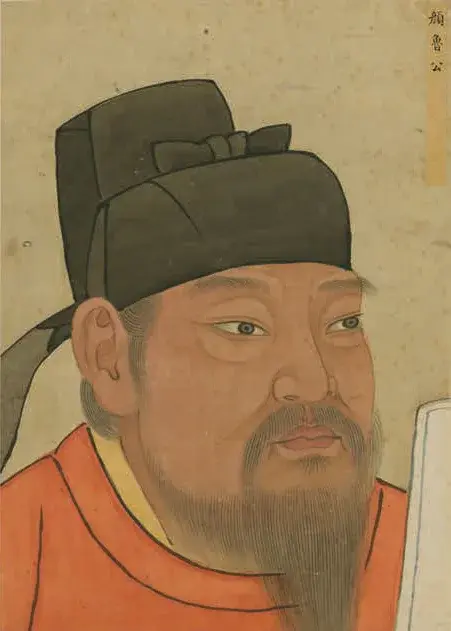
Historical portrait of Yan Zhenqing
Image creditsUnknown authorUnknown author · Public domainImage source

1295 CE–1340 CE

Powerful minister of the early reign of Emperor Shundi of YuanGrand Preceptorand Right Grand Councilor of the Central Secretariat

Merkit Bayan (蔑儿乞·伯颜)

蔑儿乞·伯颜

Merkit Bayan (蔑儿乞·伯颜, c. 1280 – 1340), a member of the Mongol Merkit clan (蔑儿乞氏), was a senior military and political figure of the mid-to-late Yuan dynasty and the autocratic chief minister during the early reign of Emperor Shundi (Toghon Temür). Born into a hereditary Mongol family of imperial bodyguards, he served Emperor Chengzong in his youth and accompanied Prince Qaishan of Huaining (later Emperor Wuzong) in…

1295 CE–1340 CEYuan Dynasty (元朝)

PROFILE

Merkit Bayan (蔑儿乞·伯颜, c. 1280 – 1340), a member of the Mongol Merkit clan (蔑儿乞氏), was a senior military and political figure of the mid-to-late Yuan dynasty and the autocratic chief minister during the early reign of Emperor Shundi (Toghon Temür). Born into a hereditary Mongol family of imperial bodyguards, he served Emperor Chengzong in his youth and accompanied Prince Qaishan of Huaining (later Emperor Wuzong) in campaigning across the northern steppe against Kaidu and Duwa in 1299 (3rd year of the Dade era), earning the title "Batur" ("Valiant Warrior") for his bravery in battle. From the reign of Emperor Wuzong through that of Emperor Taiding, he served successively as Minister of Personnel, Vice Censor-in-Chief, Censor-in-chief of the Jiangnan Branch Censorate, and Administrator of Political Affairs in the Jiangxi and Henan Branch Secretariats. During the War of the Two Capitals in 1328 (1st year of the Tianli era), he raised forces in Henan to support the enthronement of Emperor Wenzong (Tugh Temür), rising to Left Grand Councilor of the Central Secretariat, Administrator of the Bureau of Military Affairs, and Prince of Junning. After supporting the accession of Emperor Shundi in 1333 (1st year of the Yuantong era), he was appointed Grand Preceptor and Right Grand Councilor of the Central Secretariat and advanced to Prince of Qin; after crushing the rebellion of El Temür's son Tangqishi in 1335 (1st year of the Zhiyuan era), he ruled alone as Grand Councilor-in-Chief of the Central Secretariat. In power, he pursued conservative Mongol noble policies, abolishing the imperial civil service examinations, forbidding Northern and Southern Chinese from possessing weapons, and framing and executing the imperial prince Chechetu. In the second month of 1340 (6th year of the Zhiyuan era), Emperor Shundi and Bayan's own nephew Toqto'a staged a coup that stripped him of office and sent him into exile; he died of illness the following month at a post station in Longxing Circuit, Jiangxi.

Identity
Powerful minister of the early reign of Emperor Shundi of Yuan, Grand Preceptor, and Right Grand Councilor of the Central Secretariat
Era
Mid-to-late Yuan dynasty
Dynasty
Yuan dynasty (元朝)
Highest Office
Grand Preceptor (太师), Grand Councilor-in-Chief of the Central Secretariat (中书大丞相), Administrator of the Bureau of Military Affairs (知枢密院事), Grand Academician of the Kuizhang Pavilion (奎章阁大学士)
Principal Offices
Minister of Personnel (吏部尚书), Vice Censor-in-Chief (御史中丞), Censor-in-chief of the Jiangnan Branch Censorate (江南行台御史大夫), Administrator of Political Affairs of Henan Branch Secretariat (河南行省平章政事), Left Grand Councilor of the Central Secretariat (中书左丞相), Administrator of the Bureau of Military Affairs (知枢密院事), Right Grand Councilor of the Central Secretariat (中书右丞相), Grand Councilor-in-Chief (大丞相), Grand Preceptor (太师)
Noble Title
Prince of Junning (浚宁王), Prince of Qin (秦王)
Date of Death
1340 (3rd month, 6th year of the Zhiyuan era, Yuan dynasty)
Native Place
Merkit clan (蔑儿乞部) of the Mongols

LIFE TIMELINE

Relationship graph

BIOGRAPHY

Chronology

  • c. 1280 (17th year of the Zhiyuan era, Yuan) | Birth | Born into an aristocratic family of the Mongol Merkit clan whose grandfather Changhai and father Jinji'er served in the imperial bodyguard (keshig)
  • 1299 (3rd year of the Dade era, Yuan) | Steppe Campaigns | Assigned by Emperor Chengzong to the guard of Prince Qaishan of Huaining, distinguishing himself against Kaidu and receiving the title "Batur"
  • 1307 (11th year of the Dade era, Yuan) | Enthronement of Wuzong | Accompanied Qaishan at the steppe assembly of princes and helped suppress Prince Ananda of Anxi, receiving appointment as Minister of Personnel
  • 1316 (3rd year of the Yanyou era, Yuan) | Provincial Administration | Served successively as Vice Censor-in-Chief, Censor-in-chief of the Jiangnan Branch Censorate, and Administrator of Political Affairs in Jiangzhe and Jiangxi
  • 1328 (1st year of the Tianli era, Yuan) | Support for Wenzong | As Administrator of Political Affairs of Henan Branch Secretariat, joined El Temür in enthroning Emperor Wenzong, rising to Censor-in-chief and Left Grand Councilor
  • 1331 (2nd year of the Zhishun era, Yuan) | Enfeoffed as Prince | Appointed Administrator of the Bureau of Military Affairs and enfeoffed as Prince of Junning, commanding the imperial bodyguard and military affairs
  • 1333 (1st year of the Yuantong era, Yuan) | Right Grand Councilor | Upon Emperor Shundi's accession, appointed Grand Preceptor, Right Grand Councilor, and Supreme Pillar of State, and elevated to Prince of Qin
  • 1335 (1st year of the Zhiyuan era, Yuan) | Sole Grand Councilor | Ambushed and executed the rebel brothers Tangqishi and Talahai in the sixth month, becoming sole Grand Councilor-in-Chief; abolished the civil service examinations in the eleventh month
  • 1339 (5th year of the Zhiyuan era, Yuan) | Execution of Prince Chechetu | Executed Prince Chechetu of Tan on forged charges and took the title "Meritorious Minister of Primordial Virtue and Supreme Assistance," overshadowing the throne
  • 1340 (6th year of the Zhiyuan era, Yuan) | Overthrow and Death | Stripped of power by Emperor Shundi and Toqto'a in the second month while hunting at Liulin, and died in the third month at a post station in Longxing Circuit en route to exile

Biography

Steppe Campaigns and Provincial Service

Merkit Bayan was born into a prominent family of the Mongol Merkit clan: his grandfather Changhai had accompanied Möngke Khan on the campaign into Sichuan against the Southern Song, and his father Jinji'er commanded the imperial bodyguard (keshig) attached to Empress Dowager Longfu. Entering Emperor Chengzong's imperial guard in his youth, Bayan was assigned in 1299 (3rd year of the Dade era) to the retinue of Prince Qaishan of Huaining (later Emperor Wuzong), accompanying the prince to garrison the northern steppe against the rebel northwestern princes Kaidu and Duwa. At Qarqanatu along the Tuul River, Bayan charged into Kaidu's lines on horseback and slew an enemy commander with his own hand; in the great battle at Mount Tekelik in 1301 (5th year of the Dade era), he again led the assault to rout the enemy, earning from Qaishan the honorific title "Batur" ("Valiant Warrior").

When Emperor Chengzong died in 1307 (11th year of the Dade era) and Qaishan marched south from the steppe to claim the throne, Bayan accompanied him, assisting in convening the assembly of imperial princes and suppressing Prince Ananda of Anxi and Mingli Temür. Upon ascending the throne as Emperor Wuzong, Qaishan rewarded Bayan for his merit by appointing him Minister of Personnel (libu shangshu) and bestowing a tiger tally. Over the next twenty years spanning the reigns of Emperors Renzong, Yingzong, and Taiding, Bayan served successively as Commissioner of the Directorate for Imperial Apparel, Vice Censor-in-Chief, Route Commander of Shaoxing, Censor-in-chief of the Jiangnan Branch Censorate, and Administrator of Political Affairs in the Jiangzhe and Jiangxi Branch Secretariats, before being transferred in 1326 (3rd year of the Taiding era) to Administrator of Political Affairs of the Henan Branch Secretariat in command of the strategic Central Plains garrisons.

The War of the Two Capitals and Rise at the Central Court

When Emperor Taiding died at Shangdu in the seventh month of 1328 (1st year of the Zhihe era), Assistant Military Affairs Commissioner El Temür launched a coup in Dadu (Beijing) to enthrone Prince Tugh Temür of Huai (Emperor Wenzong), who had been living in exile at Jiangling. Stationed at the strategic crossroads of Henan, Bayan immediately resolved to join El Temür upon receiving his secret envoy. Convening his subordinate officials to declare support for Prince Tugh Temür, Bayan dispatched troops to seal Tong Pass and the Mengjin ford on the Yellow River, sent forces north to reinforce Dadu and intercept loyalist armies marching from Huguang and Shaanxi toward Shangdu, and personally led elite Henan troops to escort Tugh Temür across the Yellow River. After ascending the throne, Emperor Wenzong relied heavily on Bayan for his decisive support, promoting him in rapid succession to Censor-in-chief and Left Grand Councilor of the Central Secretariat.

Following the brief reign and sudden death of Emperor Mingzong (Qoshila) at Onggachatu in 1329 (2nd year of the Tianli era) and Emperor Wenzong's restoration, Bayan served as Administrator of the Bureau of Military Affairs and Commissioner of the Household Administration of the Heir Apparent, and during the Zhishun era was enfeoffed as Prince of Junning, sharing control of the court and the imperial guards with Grand Preceptor El Temür. After Emperor Wenzong and Emperor Ningzong died in rapid succession in 1332 and El Temür died in the fifth month of 1333, Toghon Temür (Emperor Shundi) ascended the throne at Shangdu in the sixth month of 1333 (1st year of the Yuantong era). Rewarded for his role in the enthronement, Bayan was appointed Grand Preceptor (taishi), Right Grand Councilor of the Central Secretariat (zhongshu you chengxiang), Supreme Pillar of State (shang zhuguo), Supervisor of the Compilation of State History, and Grand Academician of the Kuizhang Pavilion, while holding overall command of the Bureau of Military Affairs and the imperial bodyguard and advancing in noble title to Prince of Qin.

Crushing the El Temür Clan and Abolishing the Civil Examinations

At the start of Emperor Shundi's reign, El Temür's son Tangqishi inherited the title Prince of Taiping and served as Left Grand Councilor of the Central Secretariat. Resentful that Bayan ranked above him, Tangqishi declared angrily, "The empire is my family's empire—who is Bayan that he dares stand above me!" He consequently plotted a coup with his uncle Sadun and younger brother Talahai to overthrow Bayan and place Prince Quohuo Temür on the throne. Alerted to the conspiracy in the sixth month of 1335 (3rd year of the Yuantong era), Bayan struck first: stationing Kipchak and Alan imperial guards in ambush inside the palace gates, he seized and killed Tangqishi on the spot, dragged Talahai out from beneath the robes of Empress Danashiri (El Temür's daughter) to be beheaded, and subsequently forced Empress Danashiri to drink poison, eradicating the El Temür clan's power root and branch.

Following the elimination of Tangqishi, Bayan petitioned in the seventh month to abolish the post of Left Grand Councilor, ruling alone as "Grand Councilor-in-Chief of the Central Secretariat" (zhongshu da chengxiang) with supreme civil, military, and censorial authority concentrated in his hands. Throughout his administration, he aggressively reversed Confucian-oriented governance: in the eleventh month of 1335 (1st year of the Zhiyuan era), overriding the protests of Kuizhang Pavilion Academician Yu Ji and Censor Lü Sicheng, he abolished the imperial civil service examinations that had been restored under Emperor Renzong, diverting the paper-money endowment earmarked for printing examination papers to Wan'an Temple in Dadu for printing Buddhist scriptures. In 1337 (3rd year of the Zhiyuan era), following anti-Yuan uprisings led by Zhu Guangqing in Guangdong and Bang Hu in Henan, Bayan issued draconian decrees forbidding Northern and Southern Chinese (Hanren and Nanren) from learning Mongol or Semu scripts, confiscating all civilian weapons and even iron pitchforks across the empire, and going so far as to memorialize that all Chinese bearing the five common surnames Zhang, Wang, Liu, Li, and Zhao be put to death to prevent rebellion—a proposal halted only by Emperor Shundi's refusal.

Autocratic Excesses and the Liulin Coup

For six years Bayan wielded absolute power, drawing freely from state treasuries, dispensing titles and punishments at will, and receiving provincial tribute at his own residence before anything reached the imperial palace. Whenever he traveled, his armed escort stretched for dozens of li and carried nine-tiered golden dragon banners reserved for the emperor alone, until people across the empire knew only of Bayan and not of the sovereign. In the winter of 1339 (5th year of the Zhiyuan era), seeking to seize pastures and authority from the imperial clan, Bayan instigated Prince Arong of Chang to falsely accuse the respected imperial clansman Prince Chechetu of Tan of treason; without waiting for Emperor Shundi's authorization, Bayan had Chechetu executed and banished and killed Prince Temür Buqa of Gaochang. That same month, he coerced the emperor into granting him the grand honorific title "Meritorious Minister of Primordial Virtue and Supreme Assistance" (Yuande Shangfu Gongchen), engraved on a golden seal proclaimed throughout the realm.

Bayan's tyranny and unauthorized execution of an imperial prince drove Emperor Shundi past the limit of endurance, while Bayan's own nephew Toqto'a (son of Majartai), whom Bayan had appointed Censor-in-chief to control the court, feared that Bayan's inevitable downfall would bring annihilation upon their entire family. Encouraged by his Confucian mentor Wu Zhifang to place dynastic loyalty above kinship, Toqto'a secretly entered the palace to plan a counter-coup with Emperor Shundi and trusted palace attendants Shijieban and Alu. In the second month of 1340 (6th year of the Zhiyuan era), when Bayan rode out of Dadu with a large cavalry escort to hunt at Liulin (Willow Grove), Toqto'a acted on the emperor's secret edict to seal the capital gates, take command of the palace guards, and escort Emperor Shundi by night to Yude Hall. Summoning the court officials, the emperor proclaimed an edict enumerating Bayan's crimes of usurping authority, executing imperial princes, and oppressing the innocent, demoting him to Left Grand Councilor of the Henan Branch Secretariat. When Bayan rushed back from Liulin and sent riders to the city wall requesting an audience, Toqto'a stood atop the battlements and sternly refused him entry. In the third month, a second edict banished Bayan to Yangchun County in Nan'en Prefecture, Guangdong; consumed by rage and grief on the journey south, Bayan fell ill and died at a post station in Longxing Circuit (modern Nanchang, Jiangxi Province) at approximately sixty years of age.
Key Achievements

Role in the War of the Two Capitals and Crushing the El Temür Faction

Merkit Bayan was a central military powerbroker in the succession struggles of the mid-to-late Yuan dynasty. When the War of the Two Capitals erupted in 1328, his decision as Administrator of Political Affairs of Henan to commit the Central Plains garrisons in support of the Dadu faction of Tugh Temür (Emperor Wenzong)—sealing the Yellow River crossings and blocking loyalist armies from Shaanxi and Huguang—proved decisive in securing Wenzong's victory. In 1335, confronting the coup plot of El Temür's sons Tangqishi and Talahai, Bayan moved swiftly with the imperial bodyguard to crush the rebels, ending seven years of domination by the El Temür clan, though immediately replacing it with six years of his own autocratic rule.

Abolishing the Examinations and Enforcing Ethnic Restrictions

During his sole chancellorship from 1335 to 1340, Bayan dismantled the synthesis of Mongol rule and Confucian bureaucracy that had developed under Emperors Renzong and Wenzong. By abolishing the civil service examinations, he cut off the primary channel through which Confucian scholars of all four ethnic categories entered government; by confiscating civilian weapons and iron farm implements, barring Chinese from studying Mongol script, and proposing the massacre of the five major Chinese surnames, he gravely exacerbated ethnic and social tensions across the empire. Only after Toqto'a overthrew him at Liulin in 1340 was the court able to restore the examinations and initiate the "Toqto'a Reformation."

Personal Relationships

  • Grandfather: Changhai, a noble of the Merkit clan who distinguished himself accompanying Möngke Khan on the campaign into Sichuan against the Song.
  • Father: Jinji'er, an imperial bodyguard commander who led the keshig attached to Empress Dowager Longfu.
  • Younger Brother: Majartai, father of Toqto'a, who succeeded Bayan as Grand Preceptor and Right Grand Councilor of the Central Secretariat and was enfeoffed as Prince Zhong.
  • Nephew: Toqto'a, renowned late Yuan chief minister whom Bayan promoted to Censor-in-chief, and who joined Emperor Shundi in 1340 to overthrow Bayan at Liulin out of loyalty to the state.
  • Sovereigns: Qaishan (Emperor Wuzong), under whom Bayan fought on the steppe and received the title "Batur"; Tugh Temür (Emperor Wenzong), whom Bayan helped enthrone in 1328; and Toghon Temür (Emperor Shundi), whom Bayan enthroned and dominated for six years before being overthrown by him.
  • Political Enemies: El Temür and his sons Tangqishi and Talahai, whose faction Bayan destroyed in 1335; and the imperial princes Chechetu (Prince of Tan) and Temür Buqa (Prince of Gaochang), whom Bayan framed and killed.

Historical Evaluations

Yuan and Early Ming Evaluations

  • In the edict dismissing Bayan in the second month of 1340 (6th year of the Zhiyuan era), Emperor Shundi denounced him: "While serving as Grand Councilor, Bayan secretly harbored treasonous designs, monopolized power at will, took advantage of Our youth, slighted the Grand Empress Dowager and Our younger brother Kusala's son, overturned the established statutes of Our ancestors, and tyrannized the realm. Even the supreme penalty would accord with public opinion." (History of Yuan, Annals of Emperor Shundi)
  • Song Lian and the early Ming compilers of the History of Yuan (Yuan Shi, Biography of Bayan) recorded his autocracy: "After executing Tangqishi, Bayan held sole charge of the state, wielding power arbitrarily, overturning ancestral statutes, oppressing the empire, and gradually nursing treasonous plots... until the people of the realm knew only of Bayan."

Ming, Qing, and Modern Evaluations

  • In his Continuation of the History of Yuan (Yuanshi Xubian), the Ming historian Hu Cuizhong criticized Bayan for abolishing the civil service examinations out of narrow factionalism, murdering imperial princes, and absurdly proposing the slaughter of five Chinese surname groups, calling him a chief culprit in severing the lifeblood of the Yuan dynasty.
  • In Scroll 30 of his Notes on the Twenty-Two Histories (Nian'er Shi Zhaji, "Powerful Ministers of the Yuan"), the Qing historian Zhao Yi grouped Merkit Bayan alongside Temüder and El Temür, observing that amid the frequent succession crises of the mid-to-late Yuan, kingmaking ministers repeatedly used the credit of enthroning emperors to overshadow the throne.
  • Modern Yuan historians Hsiao Ch'i-ch'ing and Yao Dali have noted that Merkit Bayan represented the conservative steppe nobility that rejected Confucian bureaucratic institutionalization, and that his suspension of the examinations and discriminatory decrees alienated the literati and accelerated the collapse of Yuan rule.

Related Entries

  • Emperor Shundi of Yuan
  • Emperor Wenzong of Yuan
  • Toqto'a
  • El Temür
  • Tangqishi
  • War of the Two Capitals

FIGURES ASSOCIATED WITH THIS DYNASTY

Bibliography

  • Song Lian et al., History of Yuan (Yuan Shi), Scroll 138, "Biography of Bayan", Beijing: Zhonghua Book Company, 1976
  • Song Lian et al., History of Yuan (Yuan Shi), Scrolls 38–40, "Annals of Emperor Shundi", Beijing: Zhonghua Book Company, 1976
  • Ke Shaomin, New History of Yuan (Xin Yuan Shi), Scroll 224, "Biography of Bayan", Shanghai: Shanghai Classics Publishing House, 1986
  • Quan Heng, Unofficial History of the Gengshen Emperor (Gengshen Waishi), Scroll 1, Beijing: Zhonghua Book Company, 1985
  • Bi Yuan, Sequel to the Comprehensive Mirror in Aid of Governance (Xu Zizhi Tongjian), Scrolls 204–208, Beijing: Zhonghua Book Company, 1957