Born in Anci
Born into a distinguished aristocratic family in Anci, Youzhou; his father Lu Qi was an eminent minister of the Later Jin.
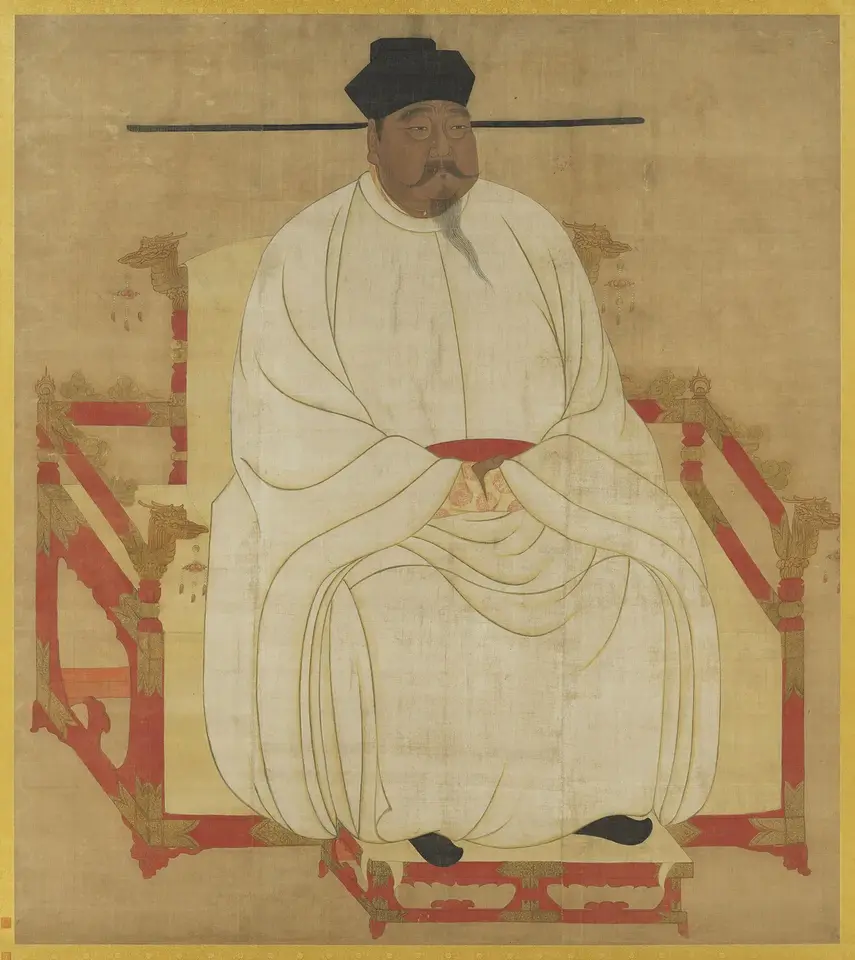
935 CE–1000 CE
吕端
Lu Duan (935–1000), courtesy name Yizhi, was a native of Anci in Youzhou (modern Anci District, Langfang, Hebei Province). He was an illustrious Grand Councilor and statesman of the Northern Song dynasty who served at the apex of imperial governance under both Emperor Taizong and Emperor Zhenzong. He was the son of Lu Qi, who served as Vice Minister of War during the Later Jin dynasty, and the younger brother of Lu Yuqing,…
Lu Duan (935–1000), courtesy name Yizhi, was a native of Anci in Youzhou (modern Anci District, Langfang, Hebei Province). He was an illustrious Grand Councilor and statesman of the Northern Song dynasty who served at the apex of imperial governance under both Emperor Taizong and Emperor Zhenzong. He was the son of Lu Qi, who served as Vice Minister of War during the Later Jin dynasty, and the younger brother of Lu Yuqing, who served as Left Assistant Director of State Affairs in the early Song. Entering officialdom through hereditary privilege (yin), Lu Duan served across three successive regimes: Later Jin, Later Zhou, and Northern Song. In the early Song, he held various regional posts including Magistrate of Junyi, Controller-General of Dingzhou, Deputy Envoy to the Khitan Liao, Prefect of Chengdu, and Administrative Assistant in Kaifeng, gaining widespread praise for his unpretentious administration, profound vision, and composure under pressure. Although demoted several times due to factional entanglements in princely households during the Taiping Xingguo era, he accepted misfortunes serenely. His unflinching integrity and profound loyalty deeply impressed Emperor Taizong, who famously praised him: "Lu Duan is muddle-headed in petty matters, but never muddle-headed on monumental affairs of state". In 995, Lu Duan succeeded Lu Mengzheng as Grand Councilor, being named Vice Minister of Revenue and Joint Manager of Affairs with the Secretariat-Chancellery, later advanced to Vice Director of the Chancellery concurrently Minister of War. Directing the central government with prudence, he proactively requested that his junior colleague Kou Zhun share daily signature and audience duties on alternating days, thereby forestalling ministerial friction. Confronting the rebellion of the Tangut chieftain Li Jiqian, he strongly opposed executing Li's captured mother, successfully urging the court to treat her kindly in Yanzhou to tether the insurgent's loyalty. In 997, upon the demise of Emperor Taizong, the eunuch Wang Ji'en and Empress Dowager Li plotted to alter the succession and depose the Crown Prince. Lu Duan acted with extraordinary courage: he lured Wang Ji'en into the Secretariat archives, locked him inside under armed guard, entered the inner palace to confront Empress Dowager Li, and decisively installed Crown Prince Zhao Heng (Emperor Zhenzong). When Zhenzong held court behind a lowered curtain, Lu Duan stood firmly before the imperial dais, demanding that the screen be rolled up so he could ascend and personally verify the prince's identity before leading the civil and military officials in formal prostrations. Passing away in 1000, he was posthumously granted the title Grand Minister of Works (Sikong) and bestowed the posthumous name Zhenghui.
Born into a distinguished aristocratic family in Anci, Youzhou; his father Lu Qi was an eminent minister of the Later Jin.
Entered officialdom through his father's privilege as Thousand-Ox Bodyguard; served successively as Registrar in the Directorate of Education, Palace Library Assistant, and Assistant Editorial Director.
Submitted to the newly established Song dynasty; appointed Court Consultant, Magistrate of Junyi, and Controller-General of Dingzhou, administering with mildness.
Promoted to Vice Minister of the Court of Imperial Sacrifices and dispatched as Deputy Envoy to the Khitan Liao dynasty; later assigned Prefect of Chengdu and bestowed imperial gold and purple robes.
Served as Administrative Assistant in Kaifeng; advised Prince Zhao Tianmei to accompany the imperial expedition against Northern Han; later demoted to Shangzhou due to illegal timber purchases by household clerks.
Appointed Prefect of Caizhou; his benevolent administration led local gentry and citizens to petition the throne to grant him an extended term.
Recovered from demotion over Prince Zhao Yuanxi's scandal; restored as Auxiliary Academician of the Bureau of Military Affairs and elevated to Participant in Determining Governmental Matters.
Appointed Grand Councilor succeeding Lu Mengzheng; granted titles of Vice Minister of Revenue, Joint Manager of Affairs, and later Vice Director of the Chancellery concurrently Minister of War.
Following Emperor Taizong's death, locked conspirator Wang Ji'en in the Secretariat archives, foiled the succession coup, rolled up the screen to verify Zhenzong, and secured imperial transition.
Promoted to Right Grand Councilor and retired as Grand Preceptor to the Crown Prince; passed away in Kaifeng at the age of sixty-six; posthumously honored as Grand Minister of Works with the name Zhenghui.
Lu Duan was born in the second year of Qingtai (935) during the Later Tang into an illustrious bureaucratic family of Anci in Youzhou. His grandfather Lu Yan had served as Administrative Assistant to the Regional Governor of Cangzhou at the end of the Tang dynasty, renowned for unyielding loyalty before dying tragically during local warlord turmoil. At that time, Lu Duan's father Lu Qi was still a child and survived solely because a fellow townsman named Zhao Yu risked his life, boldly declaring to enemy troops that the boy was his own brother. Lu Duan never forgot this generational debt of life; in later years, he treated Zhao Yu's grandson Zhao Shaozong like his own son and personally petitioned the throne to bestow an official rank upon him.
Endowed with a dignified bearing and eager intellect, Lu Duan entered government service under the Later Jin through his father's rank as Thousand-Ox Bodyguard. Amid the rapid shifts between the Later Han and Later Zhou regimes, he remained calm and diligent, holding positions such as Registrar in the Directorate of Education, Court Consultant in the Court of the Imperial Stud, Assistant in the Palace Library, and Assistant Editorial Director concurrently Compiler in the Institute of Historiography. He also regularly shared his official salary to support Feng Zhengzhi, the disabled and impoverished son of the former Grand Councilor Feng Dao, earning immense respect from fellow scholar-officials for his generosity and loyalty.
In the first year of Jianlong (960), Zhao Kuangyin established the Northern Song dynasty. Lu Duan pledged loyalty to the new dynasty and was appointed Court Consultant and Magistrate of Junyi County in Kaifeng Prefecture, later being transferred as Controller-General of Dingzhou. While his elder brother Lu Yuqing enjoyed the emperor's deep trust as a foundational minister and Left Assistant Director of State Affairs, Lu Duan contentedly fulfilled lower administrative responsibilities without complaint. In the eighth year of Kaibao (975), the court dispatched Palace Gate Commissioner Hao Chongxin on an embassy to the Khitan Liao dynasty, naming Lu Duan Vice Minister of the Court of Imperial Sacrifices to serve as deputy envoy. Unfazed by northern blizzards, he conducted diplomatic exchanges with exemplary poise. Upon his return, he was appointed Prefect of Chengdu and bestowed imperial gold and purple attire. In a recently pacified Sichuan, Lu Duan maintained simplified governance, eased legal punishments, and restrained tax extractions, winning heartfelt affection from local residents.
Upon Emperor Taizong's accession, Prince Zhao Tianmei was placed in charge of Kaifeng Prefecture, and Lu Duan was recruited as Administrative Assistant in the prefectural administration. In the fourth year of Taiping Xingguo (979), Emperor Taizong resolved to personally lead an expedition against Northern Han at Taiyuan, intending to leave Zhao Tianmei behind to manage the capital. Lu Duan astutely grasped the underlying political perils and privately counseled the prince: "His Majesty braves wind and rain to lead the imperial armies on a righteous campaign. As the closest imperial kinsman of venerable stature, Your Highness should take the lead in accompanying the imperial carriage. Remaining in charge of capital affairs could invite suspicion and misfortune." Enlightened by this insight, Zhao Tianmei immediately petitioned the emperor to join the expedition. When Zhao Tianmei later fell under suspicion of conspiracy, his household clerks were convicted of illicit timber transactions, and Lu Duan was demoted to Revenue Officer in Shangzhou, later moved to Ruzhou. Lu Duan endured his disgrace without a word of resentment.
Later restored to Court Consultant, Lu Duan was appointed Prefect of Caizhou. There he eliminated administrative burdens and promoted agrarian stability. When his term concluded, citizens and local officials crowded the roads to block his departure and jointly petitioned the throne to grant him a second term. The emperor consented, subsequently promoting him to Vice Director in the Ministry of Rites, Magistrate of Kaifeng County, and Vice Director in the Ministry of Evaluation concurrently Censor. Dispatched as an envoy across the Yellow Sea to Goryeo, his fleet encountered a ferocious storm that snapped the main mast. While sailors wept in terror, Lu Duan remained seated peacefully in his cabin reading classics as if resting in his private study. Returning safely, he rose to Vice Minister of the Court of Judicial Review and Right Policy Critic, serving as Administrative Assistant to Prince Zhao Yuanxi. When the prince died suddenly, imperial inquisitors Wu Yuanying and eunuch Wang Ji'en were dispatched to interrogate him. Lu Duan calmly removed his cap and descended the hall to answer inquiries respectfully, subsequently accepting a demotion to Vice Minister of the Court of the Imperial Insignia. At the imperial palace interview where disgraced officials wailed for clemency, Lu Duan stood composed and requested only an outer prefectural vice-post. Taizong remarked, "I understand your worth myself," soon appointing him Auxiliary Academician of Military Affairs and promoting him to Participant in Determining Governmental Matters.
In the first year of Zhidao (995), Emperor Taizong resolved to appoint Lu Duan as Grand Councilor. Several courtiers objected, suggesting that Lu Duan was too unassertive and seemingly muddle-headed. Taizong brushed aside the criticism, declaring firmly: "Lu Duan may appear muddle-headed in petty matters, but he is never muddle-headed on monumental affairs of state!" Taizong composed a poem during a palace banquet with the lines: "The golden hook is lowered deep without a bite; on the banks of Pan Stream, one must consult the master angler," signaling that the premiership was reserved for Lu Duan. Days later, Lu Mengzheng stepped down, and Lu Duan was formally invested as Vice Minister of Revenue and Joint Manager of Affairs, subsequently promoted to Vice Director of the Chancellery concurrently Minister of War. As Lu Duan was already over sixty, Taizong lamented having elevated him so late.
When Emperor Taizong consulted him regarding ancient Han and Tang precedents of conferring high noble titles on imperial wet nurses, Lu Duan replied prudently: "The Han and Tang dynasties operated under different historical exigencies. Institutions are not rigid, and rituals adapt to the times; Your Majesty may act in accordance with current imperial benevolence." Taizong was thoroughly pleased by his adaptive wisdom. In office, Lu Duan prioritized harmony in the high council. Knowing that his junior colleague Kou Zhun was fiercely ambitious and exceptionally gifted, Lu Duan proactively petitioned the emperor to permit Kou Zhun to ascend the Secretariat hall and alternate daily duties of signing documents and leading court audiences, effectively averting factional discord.
When Tangut leader Li Jiqian revolted in the northwest and Song forces in Bao'an Army captured Li's mother, Emperor Taizong contemplated executing her publicly at the northern frontier gate to intimidate the rebels, privately discussing the plan with Kou Zhun. Leaving the audience, Kou Zhun encountered Lu Duan, who remarked: "Ordinary frontier matters need not concern me, but how can a Grand Councilor remain ignorant of vital military strategy?" Informed of the execution plan, Lu Duan urgently addressed the throne: "In ancient times, when Xiang Yu captured Liu Bang's father and threatened to boil him alive, Emperor Gaozu nonchalantly asked for a bowl of soup. An audacious rebel like Li Jiqian will never surrender out of filial piety! Executing his mother today will not capture him tomorrow; it will only entrench hatred and harden his rebellious resolve. It is far better to place her comfortably in Yanzhou under benevolent custody, keeping his heart bound while her life and death remain firmly in our grasp." Taizong struck his thigh in admiration and adopted the strategy. Li's mother eventually died peacefully in Yanzhou, and upon Li Jiqian's death, his son Li Deming submitted tributary allegiance to the Song, bearing gratitude for the imperial preservation of his grandmother.
In the second month of Zhidao third year (997), Emperor Taizong fell critically ill. Palace Commissioner Wang Ji'en harbored deep enmity toward the capable Crown Prince Zhao Heng and secretly conspired with Participant Li Changling, Palace Guard Commander Li Jixun, and Drafter Hu Dan to depose the heir in favor of the demoted eldest prince Zhao Yuanzuo. When Lu Duan entered the inner chambers to inquire after the emperor's health, he noticed that the Crown Prince was absent while Wang Ji'en remained suspiciously hovering by the bed. Detecting treason, Lu Duan wrote the words "Critically Ill" (Da Jian) upon his court tablet (hu) and dispatched a trusted aide to summon Zhao Heng to the palace immediately. In the third month, Taizong passed away in Wansui Hall, and Empress Dowager Li dispatched Wang Ji'en to the Secretariat to summon Lu Duan for consultation.
Foreseeing a palace ambush, Lu Duan feigned willingness to confer, guiding Wang Ji'en into the Secretariat archives under the pretext of retrieving Taizong's handwritten decrees. The moment the eunuch entered, Lu Duan locked the archive doors from the outside, stationed armed guards, and hurried directly to Wansui Hall. Empress Dowager Li challenged him: "The emperor has departed; succession should naturally pass to the eldest. What is your counsel?" Lu Duan retorted sternly: "The late emperor established the Crown Prince precisely for this day! Now that His Majesty has passed, how can we violate his sacred mandate with treasonous deliberations?" Silenced by his resolve, the empress yielded and welcomed Crown Prince Zhao Heng to ascend the throne. Following the ceremony, Emperor Zhenzong received the court behind a lowered beaded curtain. While all officials prostrated themselves, Lu Duan stood unmoving below the dais, loudly requesting: "Roll up the curtain!" Once the curtain was raised, Lu Duan climbed the marble steps, closely inspected the monarch's face to verify it was indeed Zhao Heng, and only then descended to lead the assembly in shouts of "Long Live the Emperor!"
Following his accession, Emperor Zhenzong held profound gratitude and reverence for Lu Duan's decisive intervention. Whenever granting an audience, Zhenzong bowed respectfully with folded hands and never addressed him by his personal name. Because Lu Duan was portly and had difficulty ascending steep stone steps, Zhenzong commissioned palace carpenters to build gently sloping wooden steps for Chongzheng Hall. In dealing with the conspirators, Lu Duan prioritized imperial stability, avoiding broad purges by banishing Wang Ji'en to Junzhou for leaking palace secrets and demoting Li Changling to Militia Horse Commissioner of Zhongwu, thereby consolidating Zhenzong's rule without bloodshed.
In the summer of Xianping first year (998), suffering from lingering illness, Lu Duan petitioned to retire. Zhenzong exempted him from daily court audiences, allowing him to recuperate at home. In the tenth month of 999, he was made Right Grand Councilor and retired with the rank of Grand Preceptor to the Crown Prince. When palace accountants proposed suspending his salary during an extended sick leave of three hundred days, Zhenzong ordered his full stipend preserved. In the fourth month of Xianping third year (1000), Lu Duan passed away in Kaifeng at the age of sixty-six. Zhenzong mourned deeply, suspending court festivities, posthumously honoring him as Grand Minister of Works, and conferring the posthumous title Zhenghui.
During the succession crisis of 997 following Emperor Taizong's death, Lu Duan outmaneuvered the treacherous eunuch Wang Ji'en by locking him in the Secretariat archives, confronted Empress Dowager Li, and ensured the lawful enthronement of Emperor Zhenzong. His insistence on rolling up the curtain to verify the new sovereign remains one of the most famous acts of ministerial courage in Chinese history.
Recognizing the exceptional brilliance and fiery temper of his junior colleague Kou Zhun, Lu Duan proactively petitioned the throne to allow Kou Zhun to alternate signature authority and court leadership with him on alternating days, preventing factional strife and cementing executive solidarity.
When Song armies captured the mother of Tangut rebel leader Li Jiqian, Lu Duan successfully dissuaded Emperor Taizong from executing her, demonstrating that sparing and caring for her in Yanzhou would serve as a strategic tether over the insurgent dynasty, ultimately paving the way for Western Xia's tributary submission.
Throughout his life, Lu Duan exhibited remarkable generosity, repaying Zhao Yu's life-saving protection of his father by fostering and sponsoring Zhao's grandson into office, while dedicating portions of his own stipend to maintain the disabled descendant of former Grand Councilor Feng Dao.
FIGURES ASSOCIATED WITH THIS DYNASTY