Birth | Born in Ningling, Song Prefecture
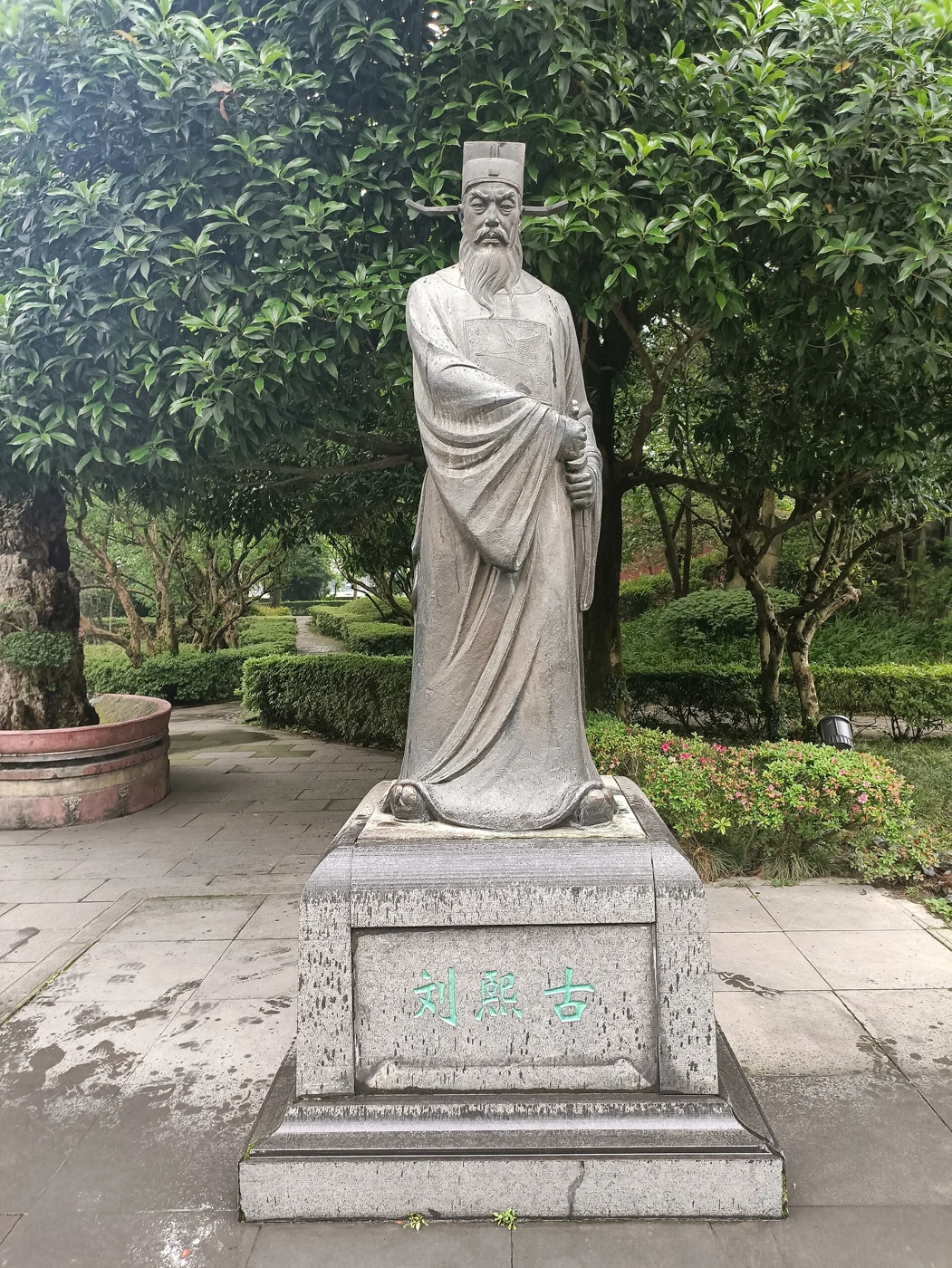
903 CE–976 CE
Chancellor
Liu Xigu
刘熙古
Liu Xigu was a senior official of Later Zhou and a chancellor in the early Northern Song who participated in establishing the new dynasty's ritual institutions and regulations.
903 CE–976 CENorthern Song
PROFILE
Liu Xigu was a senior official of Later Zhou and a chancellor in the early Northern Song who participated in establishing the new dynasty's ritual institutions and regulations.
- Courtesy name
- Yichun
- Era
- Northern Song
- Dynasty / polity
- Northern Song
- Identity
- Chancellor
- Ethnicity / people
- Not reliably confirmed by historical sources
- Native place
- Ningling, Song Prefecture (present-day Ningling County, Henan)
- Date of birth
- 903
- Place of birth
- Ningling, Song Prefecture
- Date of death
- 976
- Place of death
- Unknown
- Highest office
- See Biography and Major Deeds
- Major achievements
- Senior official of Later Zhou; chancellor in the early Song; participated in establishing ritual institutions and regulations
LIFE TIMELINE
Age fifteen | Mastered the Changes, Poetry, and Documents
Age nineteen | Mastered the Spring and Autumn Annals, the writings of the philosophers, and historical works
Around age thirty | Recommended for his learning in the Three Commentaries, submitted Chunqiu Jilun, won the appreciation of He Ning, and passed the jinshi examination
Around age thirty-two | Entered the staff of Sun Duo, Defense Commissioner of Jin Prefecture, as an aide
Around age thirty-four | Followed Sun Duo when he was transferred to Ru Prefecture; demonstrated his skill in mounted archery by shooting through a bird with one arrow
Around age thirty-six | After Sun Duo's death, appointed magistrate of Xiayi
Around age forty | Served as itinerant inspector under the Revenue Section of the Three Fiscal Commissions and supervised the storage and transport operations of granaries at Yongxing, Weiqiao, and Hua Prefecture
Around age forty-five | Served as magistrate of Lushi
Around age fifty | Transferred to be judicial officer under the defense command of Bo Prefecture and later served as staff officer at Chan Prefecture
Around age fifty-five | After Qin and Feng prefectures were pacified, appointed administrative assistant to the surveillance commissioner of Qin Prefecture
Age fifty-eight | After Zhao Kuangyin ascended the throne, summoned as Left Grand Master of Remonstrance and appointed to administer Qing Prefecture
Age fifty-nine | Ordered to reorganize the alum monopoly in Jin Prefecture, increasing revenue by more than 800,000 strings of cash
Age sixty-one | Promoted to Vice Minister of Justice and placed in charge of Fengxiang Prefecture; soon transferred to administer Qin Prefecture
Age sixty-four | Transferred to administer Chengdu Prefecture and supervised reconstruction of the Mizao Weir
Age sixty-six | Appointed Scholar of the Duanming Hall; soon entered mourning for his mother
Age seventy | Appointed Vice Director of State Affairs while retaining his existing office and received a fine horse and silver saddle
Age seventy-one | Requested relief from office because of a foot ailment; appointed Minister of Revenue and retired
Age seventy-four | Died and was posthumously awarded the office of Right Vice Director of the Department of State Affairs
BIOGRAPHY
Biography
Family Background and Early Life
Liu Xigu was born into a distinguished official family. His ancestor Liu Rengui was a famous Tang chancellor who rose to the office of Left Vice Director of the Department of State Affairs and served as an important minister under Emperor Gaozong of Tang. Liu Xigu was the eleventh-generation descendant of Liu Rengui and thus came from a prominent lineage. His grandfather Liu Shijin had served as magistrate of Ruyin. This family background provided Liu Xigu with favorable educational opportunities and a foundation for an official career.
From childhood Liu Xigu was intelligent and devoted to learning. At fifteen he had already mastered the Changes, Poetry, and Documents; by nineteen he had also become well versed in the Spring and Autumn Annals, the writings of the various philosophical schools, and historical texts. Because he had to avoid writing a character contained in his grandfather's personal name, however, he was unable to sit for the regular jinshi examination. This restriction did not prevent him from advancing. During the Changxing era of Later Tang (930–933), he was recommended on the basis of his knowledge of the Three Commentaries—the Zuo Commentary, Gongyang Commentary, and Guliang Commentary on the Spring and Autumn Annals. He submitted two essays entitled Chunqiu Jilun and three essays entitled Yanli. He Ning, then a Hanlin Academician overseeing the examinations, greatly admired the work, personally summoned Liu Xigu to take the jinshi examination, and accepted him after he passed.
Official Career under the Five Dynasties
After passing the examination, Liu Xigu entered official life during the political upheavals of the Five Dynasties. During the Qingtai era of Later Tang (934–936), the military commander Sun Duo was appointed Defense Commissioner of Jin Prefecture for his military achievements and recommended Liu Xigu as a staff aide. In the early Tianfu years of Later Jin (936–937), Sun Duo was transferred to Ru Prefecture, and Liu Xigu followed him. While serving on Sun Duo's staff, Liu Xigu distinguished himself not only for literary ability but also for exceptional skill in mounted archery. According to the History of Song, a bird of prey once perched in a locust tree more than one hundred feet high in front of the military headquarters. Sun Duo disliked it and had tiles and stones thrown at it, but the bird would not leave. Liu Xigu drew his bow and with a single arrow pierced the bird through the back and pinned it to the tree. Sun Duo was delighted and ordered that the arrow not be removed, as a display of Liu Xigu's skill.
After Sun Duo died in 938, the third year of Tianfu, Liu Xigu was transferred to serve as magistrate of Xiayi. He was soon promoted to itinerant inspector in the Revenue Section of the Three Fiscal Commissions and concurrently placed in charge of arrangements for storage and transport at the granaries of Yongxing, Weiqiao, and Hua Prefecture. Under Later Han he served as magistrate of Lushi. During the Guangshun era of Later Zhou (951–953), he became judicial officer under the defense command of Bo Prefecture and later served as staff officer at Chan Prefecture. During the reign of Chai Rong, Emperor Shizong of Later Zhou, after Qin and Feng prefectures had been pacified, Liu Xigu was appointed administrative assistant to the surveillance commissioner of Qin Prefecture. By this point he had served successively under Later Tang, Later Jin, Later Han, and Later Zhou and had accumulated extensive administrative experience.
Senior Official in the Early Song
Near the end of Later Zhou, Zhao Kuangyin exercised authority over Song Prefecture, in present-day Shangqiu, Henan, and Liu Xigu was appointed administrative assistant to the military governor, becoming a member of Zhao's staff. In 960, the first year of Jianlong, Zhao Kuangyin launched the Chenqiao Mutiny and established the Northern Song as Emperor Taizu. As a former subordinate of Taizu, Liu Xigu was summoned as Left Grand Master of Remonstrance and placed in charge of Qing Prefecture. When Emperor Taizu campaigned at Weiyang, present-day Yangzhou in Jiangsu, Liu Xigu went to the imperial field headquarters to serve him.
In 961, the second year of Jianlong, Liu Xigu was ordered to reorganize the government alum monopoly in Jin Prefecture, present-day Linfen in Shanxi. By reforming the monopoly administration, he increased state revenue by more than 800,000 strings of cash, demonstrating considerable financial ability. In 963, the first year of Qiande, he was promoted to Vice Minister of Justice and placed in charge of Fengxiang Prefecture, then soon transferred to administer Qin Prefecture. Qin Prefecture lay on the northwestern frontier and suffered repeated incursions. After taking office, Liu Xigu proclaimed the court's benevolence and good faith and adopted the strategy of taking the sons of non-Han tribal leaders as hostages, stabilizing the frontier. He was later transferred to Vice Minister of War and then to administer Chengdu Prefecture.
In 966, the fourth year of Qiande, while administering Chengdu, Liu Xigu saw that rising river waters had become a serious danger and supervised reconstruction of the Mizao Weir, now associated with Jiulidi, to control flooding. The people of Chengdu built a shrine to Liu Xigu on the embankment in recognition of his work; it was popularly known as the Shrine of Lord Liu or the Temple of Vice Minister Liu. In 968, the sixth year of Qiande, he was appointed Scholar of the Duanming Hall, but soon entered mourning following his mother's death.
Later Years and Posthumous Honors
In 972, the fifth year of Kaibao, Emperor Taizu ordered Liu Xigu to serve as Vice Director of State Affairs while retaining his existing office, making him a deputy chancellor, and presented him with a fine horse and silver saddle as a mark of favor. One year later, because of a foot disorder, Liu Xigu asked to be relieved of his duties. He was appointed Minister of Revenue and retired. He died in 976, the ninth year of Kaibao, at the age of seventy-four and was posthumously granted the office of Right Vice Director of the Department of State Affairs.
Liu Xigu held eighteen posts over the course of his life and served at court for more than thirty years. He was known for sincerity, caution, and simplicity, maintaining an austere way of life even after attaining high rank. He had two sons, Liu Mengzheng and Liu Mengsou, both of whom entered official service.
Major Activities
Literary and Scholarly Contributions
Liu Xigu was broadly learned and made contributions to historiography, phonology, and studies of cosmology and calendrical arts. He wrote fifteen juan of Lidai Jiyao—some accounts say fifty juan—a compilation of events from ancient and recent history. In phonology, he wrote two pieces called Qieyun Shiyu—some accounts say five juan—and had the text engraved and submitted to the court. An imperial order sent it to the Imperial University for circulation, giving it some influence on contemporary phonological studies. He also wrote one juan of Xu Yusi Ge and one juan of Liuren Shigua Xuli, works concerning cosmological and technical arts.
Political Activity
Liu Xigu's official career spanned the Five Dynasties and the early Song, giving him extensive experience under successive regimes. He made a notable contribution to reform of the alum monopoly in the early Song. In 961, the second year of Jianlong, he was ordered to reorganize the Jin Prefecture alum monopoly, and by restructuring the state monopoly system he increased state revenue by more than 800,000 strings of cash, contributing to the early Song fiscal system. While administering Qin Prefecture, he combined conciliatory and coercive methods, taking the sons of non-Han chieftains as hostages and stabilizing the frontier.
Hydraulic Works
In 966, the fourth year of Qiande, while administering Chengdu Prefecture, Liu Xigu saw that swollen river waters had become dangerous and supervised reconstruction of the Mizao Weir. The hydraulic project effectively controlled flooding and protected local people and property. The inhabitants built a shrine to him on the embankment to commemorate his work. The remains associated with Jiulidi in Chengdu continue to preserve the historical memory of Liu Xigu's local administration.
Relations with Contemporaries
Liu Xigu benefited from the recognition and support of the Later Tang Hanlin Academician He Ning. While administering the examinations, He Ning praised Liu Xigu's Chunqiu Jilun, summoned him to sit for the jinshi examination, accepted him after his success, and kept him among his protégés. This teacher-patron relationship played an important role in Liu Xigu's official advancement. In the disorder of the Five Dynasties, Liu Xigu also served on the staffs of military commanders such as Sun Duo and maintained effective patron-client relations with regional military authorities.
Personal Relations
Family
- Ancestor: Liu Rengui, Left Vice Director of the Department of State Affairs under the Tang
- Grandfather: Liu Shijin, former magistrate of Ruyin
- Son: Liu Mengzheng
- Son: Liu Mengsou
Teachers and Associates
- He Ning: Hanlin Academician under Later Tang, Liu Xigu's examiner and patron, who recognized his ability
- Sun Duo: military commander of the Five Dynasties and Defense Commissioner of Jin Prefecture; Liu Xigu served on his staff
Ruler and Official
- Zhao Kuangyin, Emperor Taizu of Song: Liu Xigu served as an administrative assistant when Zhao controlled Song Prefecture and was heavily employed after the establishment of the Song, eventually becoming Vice Director of State Affairs
Historical Assessment
Northern Song and Contemporary Accounts
- The History of Song states that Liu Xigu was sincere and cautious by nature and that, although he attained high rank, he did not change the austere habits of his earlier life. It records that he held eighteen offices and served at court for more than thirty years without committing a serious error.
- The History of Song also summarized his conduct by saying that, even while holding high responsibility, Liu Xigu lived as simply as when he had been poor.
- Emperor Taizu trusted Liu Xigu, gave him a fine horse and silver saddle, and appointed him Vice Director of State Affairs, indicating his recognition of Liu Xigu's ability and character.
Song and Yuan Periods
- The Yuan compilers of the History of Song, including Toqto'a, placed Liu Xigu in the biographical section and noted that he was also versed in the arts of yin-yang, celestial patterns, and related techniques, recognizing the breadth of his learning.
- The History of Song positively records Liu Xigu's pacification of frontier groups at Qin Prefecture and states that the border region thereby became peaceful.
- Song and Yuan anecdotal writings also mentioned his reconstruction of the Mizao Weir in Chengdu, and local people established a shrine in his memory.
Ming and Qing Periods
- Local gazetteer works such as Cao Xuequan's Ming-period Records of Famous Sites in Sichuan recorded the shrine to Liu Xigu at Jiulidi in Chengdu and praised him as an exemplary local administrator.
- Qing gazetteers such as the Henan Provincial Gazetteer listed Liu Xigu among worthy men of the locality and described him as serving five dynasties while being known for purity and caution.
- In discussions of early Song politics, Ming and Qing scholars often mentioned Liu Xigu together with Zhao Pu, Xue Juzheng, and other prominent ministers of the dynasty's founding period.
Modern Assessments
- Modern scholarship regards Liu Xigu as an important political figure in the transition from the Five Dynasties to the early Song, whose career illustrates the survival strategies and political choices of educated officials during an age of instability.
- The Jiulidi site in Chengdu has been protected as historical and cultural heritage, and Liu Xigu's reconstruction of the embankment has entered local historical interpretation as a case study in early Song regional administration.
- Scholars of Chinese phonology have also taken interest in the place of Qieyun Shiyu in the history of phonological study and consider it to have had some influence on Song-period scholarship.
FIGURES ASSOCIATED WITH THIS DYNASTY
Bibliography
- History of Song, vol. 263, Biography 22, “Liu Xigu,” compiled by Toqto'a and others under the Yuan
- Cao Xuequan, Records of Famous Sites in Sichuan, Ming period