Birth | Born into an official family in Xingzhou
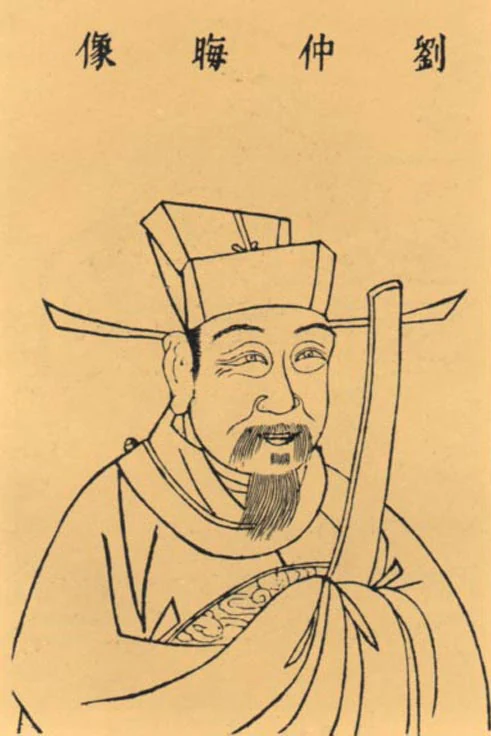
1216 CE–1274 CE
Statesman and writer
Liu Bingzhong
刘秉忠
Liu Bingzhong (1216–1274), originally named Liu Kan, Buddhist name Zicong, courtesy name Zhonghui, literary name Cangchunsanren, was a native of Xingzhou (present-day Xingtai, Hebei) whose ancestral home was Ruizhou (present-day Suizhong County, Liaoning). He was a prominent statesman and writer from the Great Mongol State into the early Yuan period. Born into a family with a long tradition of official service, Liu Bingzhong…
1216 CE–1274 CEYuan Dynasty
PROFILE
Liu Bingzhong (1216–1274), originally named Liu Kan, Buddhist name Zicong, courtesy name Zhonghui, literary name Cangchunsanren, was a native of Xingzhou (present-day Xingtai, Hebei) whose ancestral home was Ruizhou (present-day Suizhong County, Liaoning). He was a prominent statesman and writer from the Great Mongol State into the early Yuan period. Born into a family with a long tradition of official service, Liu Bingzhong was intelligent from childhood. At thirteen he entered the metropolitan commandery headquarters as a hostage, and at seventeen became a clerk in the Xingzhou military commissioner’s office. He later abandoned office and lived in seclusion, becoming a disciple of the Chan master Xuzhao. He subsequently joined Kublai Khan’s staff and, although initially without formal official status, participated in major military and civil decisions and was known as “Secretary Cong.” In 1264, the first year of Zhiyuan, he was appointed Grand Master for Splendid Happiness and Grand Guardian and took part in directing the Secretariat. In 1271, the eighth year of Zhiyuan, he advised Kublai Khan to take the phrase “Great indeed is Qian, the Origin” from the Book of Changes and rename the Mongol state “Great Yuan.” Liu Bingzhong died in 1274, the eleventh year of Zhiyuan, aged fifty-nine. He was posthumously awarded a long series of honors, including Grand Preceptor, the Three Ducal Offices, Supreme Pillar of State, and Prince of Changshan, and ultimately received the posthumous name Wenzheng. The source describes him as the only Han Chinese under the Yuan to attain the rank of the Three Ducal Offices. Learned in Buddhism, Daoism, and Confucianism, Liu Bingzhong was active in the politics of the early Mongol-Yuan transition and played a major role in establishing Yuan political institutions and state ceremonial. His planning of Yuan Dadu helped shape the earliest urban form of Beijing.
- Also known as
- Zhonghui
- Courtesy name
- Zhonghui
- Literary name
- Cangchunsanren
- Period
- Yuan
- Date of Birth
- 1216
- Date of Death
- September 20 1274
- Dynasty / polity
- Yuan
- Identity
- Statesman and writer
- Ethnicity / ethnic affiliation
- Not recorded in historical sources
- Ancestral home
- Xingzhou (present-day Xingtai, Hebei)
- Place of birth
- An official family in Xingzhou
- Place of death
- Not recorded in historical sources
- Highest office
- See “Life and Major Deeds”
- Major achievements
- Served Kublai Khan while living as a Buddhist and Daoist recluse; directed construction of Dadu and proposed the dynastic name “Great Yuan.”
LIFE TIMELINE
Age five | Muqali took Xingzhou, and Liu Bingzhong’s father Liu Run entered Mongol service
Age eight | Began schooling and was said to memorize several hundred characters of text each day
Age thirteen | Entered the metropolitan commandery headquarters as a hostage
Age seventeen | Became a clerk in the Xingzhou military commissioner’s office, then abandoned office and withdrew to Mount Wu'an
Age twenty | Recruited as a monk by Chan master Xuzhao of Tianning Temple and given the Buddhist name Zicong
Age twenty-six | Accompanied Chan master Haiyun into Kublai Khan’s service and became an important adviser
Age thirty-three | Returned to Xingzhou for his father’s funeral; Kublai Khan gave him one hundred liang of gold
Age thirty-four | Went to Karakorum and submitted a lengthy memorial setting out fourteen proposals for government
Age thirty-seven | Accompanied Kublai Khan in the campaign against the Dali Kingdom and strongly urged restraint in killing
Age thirty-eight | Accompanied Kublai Khan in the Yunnan campaign and was credited with saving many lives
Age forty | Ordered to build Kaiping north of the Luan River east of Huanzhou; it later became Shangdu
Age forty-three | Accompanied Kublai Khan in the campaign against the Song and again urged the avoidance of unnecessary killing
Age forty-four | Kublai Khan took the throne, adopted era-based dating on Liu Bingzhong’s advice, and established the Secretariat
Age forty-eight | Appointed Grand Master for Splendid Happiness and Grand Guardian, took part in directing the Secretariat, and was given the daughter of Dou Mo in marriage
Age fifty | Ordered to plan Yuan Dadu northeast of the former city of Yanjing
Age fifty-three | Helped establish court ritual, the official system, court dress, and official stipends
Age fifty-five | Proposed deriving the dynastic name “Great Yuan” from the phrase “Great indeed is Qian, the Origin” in the Book of Changes
Age fifty-nine | The palace complex at Dadu was completed; in the eighth lunar month he died suddenly while sitting at Nanping Mountain near Shangdu
BIOGRAPHY
Biography
Family Background and Early Years
Liu Bingzhong, courtesy name Zhonghui, was originally named Liu Kan. After becoming a Buddhist he took the name Zicong, and after entering formal office he became known as Bingzhong. He was born in 1216, the fourth year of Zhenyou under Emperor Xuanzong of Jin. His ancestral home was Ruizhou, present-day Suizhong County in Liaoning, and his family had been a prominent official lineage under the Liao. His unnamed great-grandfather served under the Jin as deputy military commissioner of Xingzhou and settled there, so from his grandfather Liu Ze onward the family was regarded as being from Xingzhou. His father Liu Run entered service under Muqali after the latter captured Xingzhou for the Great Mongol State. The History of Yuan, vol. 157, “Biography of Liu Bingzhong,” states that the family originally came from Ruizhou and had served the Liao for generations, that his great-grandfather served the Jin and settled in Xingzhou, and that after Muqali took Xingzhou, Liu Run was appointed to military and then local administrative posts.
Liu Bingzhong was intelligent from childhood and, after beginning school at eight, was said to memorize several hundred characters of text each day. At thirteen he became a hostage in the commandery headquarters, and at seventeen served as a clerk in the Xingzhou military commissioner’s office so that he could remain near his parents. He was often unhappy in the post and once lamented that his family had served as officials for generations and asked why he should sink to being a mere clerical functionary. Believing that a great man born at the wrong time should withdraw until an opportunity arose, he abandoned office and lived in seclusion in the Wu'an Mountains. Some years later, Chan master Xuzhao of Tianning Temple accepted him as a disciple. Liu Bingzhong later traveled through Yunzhong and resided at Nantang Temple.
Entering Kublai Khan’s Service
In 1242, the first year of Töregene Khatun’s regency, the northern Linji Chan leader Haiyun traveled to Karakorum in response to a summons from the Mongol prince Kublai. While passing through Yunzhong, Haiyun heard of Liu Bingzhong’s broad learning and talent and invited him to accompany him. After meeting Kublai, Liu Bingzhong explained the essentials of Buddhism and was repeatedly consulted. He was widely read, with particular interest in the Book of Changes and Shao Yong’s Book of Ordering the World, and was said to be proficient in astronomy, geography, calendrical studies, and divination. Kublai valued him highly, and after Haiyun returned south Liu Bingzhong remained in Kublai’s household.
In 1249, the first year of Güyük, Liu Bingzhong returned home for his father’s funeral. Kublai gave him one hundred liang of gold for the burial and sent an envoy with him to Xingzhou. After completing mourning, Liu Bingzhong was recalled to Karakorum. In 1250 he submitted an extremely long memorial, broadly organized into fourteen proposals. These included advising Kublai to assist Möngke in governing the realm as the Duke of Zhou had assisted King Wu; sending descendants of founding meritorious officials to supervise and evaluate local officials and reward or punish them accordingly; fixing taxes according to actual households and encouraging displaced people to return; standardizing ranks and stipends and regulating official conduct; educating the people and preventing lower officials from imposing arbitrary sentences, with death penalties reported upward for decision; auditing government debts and remitting improper or usurious obligations; requiring grain taxes to be delivered to the nearest storehouse, standardizing transit and market taxation, restraining predatory commercial practices and luxury, regulating dress by rank, reducing taxes, and appointing agricultural encouragement officials; establishing schools and an examination system and educating descendants of founding elites; carefully selecting county officials, resettling refugees, aiding widows, orphans, the disabled, and the poor, and preventing court envoys from harassing local populations; establishing temples to Confucius and identifying learned local scholars to conduct rites; asking Möngke to promulgate a new calendar while beginning compilation of a History of Jin; supporting impoverished scholars with state funds and granting exemptions to those with property so they could serve the state; opening channels for remonstrance and distinguishing worthy men from petty men so that the virtuous held rank and the capable held office; placing essential salt works and mines under regular fiscal administration while preventing profiteers from harming the population; and prohibiting private prisons and whipping across the back. The source states that Liu Bingzhong urged restoration of discipline and law so the realm could be governed without needless disturbance and that Kublai approved and adopted his proposals.
Liu Bingzhong also argued that Xingzhou had originally contained more than ten thousand households but had fallen to only a few hundred after years of warfare. He suggested appointing capable administrators such as Zhang Geng of Zhending and Liu Su of Mingshui, predicting that the region could recover. Zhang Geng was accordingly made pacification commissioner of Xingzhou and Liu Su his deputy. Displaced households soon returned to production, and Xingzhou was later elevated to Shunde Prefecture.
Campaigns and City Building
In 1253 and 1254, and again in 1259, Liu Bingzhong accompanied Kublai in campaigns against the Dali Kingdom and the Southern Song. Kublai accepted Liu Bingzhong’s argument that Heaven and Earth cherish life and that the martial power of a true ruler does not depend on killing. Kublai ordered silk torn into flags bearing the words “Stop Killing” and instructed the armies not to engage in indiscriminate slaughter after entering Dali. The source states that, as a result, the Mongol army did not engage in indiscriminate killing when it took cities in that campaign. During the campaign against the Southern Song, it similarly credits the policy with preserving countless lives.
Even during Möngke’s reign, Kublai had begun to recognize the strategic importance of a capital in the Central Plains. He therefore ordered Liu Bingzhong to build Kaiping at Longgang, east of Fuzhou and north of the Luan River; after Kublai’s accession the city was elevated to Shangdu. The project marked an early stage in shifting the Mongol center of government toward Yanjing. During the Zhiyuan era, Yanjing was renamed Zhongdu and a two-capital system was developed, while the larger objective was eventually to move the principal capital into the Yan region. Responsibility for planning and building Dadu fell to Liu Bingzhong. In 1266, the third year of Zhiyuan, after examining the former Liao and Jin capitals, he designed a new city northeast of old Yanjing: Yuan Dadu, in present-day Beijing. Construction proceeded rapidly under Liu Bingzhong together with Zhang Rou, Duan Zhen, and others. In the first lunar month of 1274, the palace complex was completed. In addition to Dadu, Liu Bingzhong also participated in building the secondary capital Shangdu, in present-day Zhenglan Banner, Xilingol League, Inner Mongolia.
Assisting Government
In 1260, the first year of Zhongtong, Kublai proclaimed himself khan, later known as Emperor Shizu of Yuan. Following Liu Bingzhong’s advice, he adopted an era name, established the Secretariat and regional pacification offices, and recruited both former court officials and scholars living in seclusion. Although Liu Bingzhong remained at Kublai’s side, he continued to wear his old dress and was called “Secretary Cong.”
In 1264, the first year of Zhiyuan, Wang E, Chief Academician of the Hanlin Academy, submitted a memorial arguing that Liu Bingzhong had taken part in vital military and state affairs even before Kublai’s accession and had accumulated substantial merit. Now that the ruler had ascended the throne and the political order had been renewed, Wang E considered it inappropriate for Liu Bingzhong still to wear his old clothing and urged that he receive formal dress and high rank. Kublai accepted the memorial and the same day appointed Liu Bingzhong Grand Master for Splendid Happiness and Grand Guardian, with responsibility for participating in the affairs of the Secretariat. He also gave Liu Bingzhong the daughter of Hanlin scholar Dou Mo in marriage and granted him a residence in Fengxian Ward.
After receiving office, Liu Bingzhong treated the affairs of the realm as his responsibility. The source says that on matters great and small he spoke without concealment and enjoyed Kublai’s deep trust. Many of the men he recommended later became prominent ministers. He attended Kublai for more than thirty years and accompanied him on campaigns and on journeys between the two capitals. The History of Yuan, in the biographies of empresses, records that members of the keshig once obtained approval to use land near the capital for pasturing horses. Empress Chabi wanted the proposal stopped and deliberately reproached Liu Bingzhong, saying that because he was a clever Han man whose words the emperor listened to, he ought to remonstrate. The episode was used to illustrate how strongly Kublai trusted his advice.
In 1269, the sixth year of Zhiyuan, Liu Bingzhong helped establish court ceremonial, the official system, audience protocol, official dress, and salary regulations. These became established Yuan practices.
Later Years and Death
In 1268, the fifth year of Zhiyuan, Liu Bingzhong resigned from his important position in the Secretariat and returned to a more reclusive way of life. In the spring of 1274, the eleventh year of Zhiyuan, he accompanied Kublai back to Shangdu, or Kaiping, and planned to build a thatched retreat on nearby Nanping Mountain. On the night of the nineteenth day of the eighth lunar month of Zhiyuan 11, September 20, 1274, he died suddenly while sitting, without prior illness, in a manner described in Buddhist terms as a seated passing. He was fifty-nine. Kublai mourned deeply and told those around him that Bingzhong had served him for more than thirty years, had been careful and discreet, had not avoided hardship or danger, and had never concealed his views. Kublai sent Vice Minister of Rites Zhao Bingwen to escort the coffin back to Dadu. Liu Bingzhong was buried on the thirtieth day of the tenth lunar month, November 29, 1274, with the costs paid from the imperial treasury.
In the first lunar month of 1275, the twelfth year of Zhiyuan, Kublai posthumously appointed Liu Bingzhong Grand Tutor and Duke of Zhao and gave him the posthumous name Wenzhen. Under Emperor Chengzong of Yuan, he was further granted an elaborate meritorious title, appointed Grand Preceptor, awarded the Three Ducal Offices and the rank Supreme Pillar of State, and his posthumous name was changed to Wenzheng. Under Emperor Renzong, he was additionally enfeoffed as Prince of Changshan. The source states that he was the only Han Chinese under the Yuan to receive the rank of the Three Ducal Offices.
Major Activities
Political Activity
After joining Kublai’s household in the Great Mongol State, Liu Bingzhong participated in major military and civil decisions while initially remaining outside the formal bureaucracy. In 1250, the second year of Oghul Qaimish’s regency, he submitted a long memorial explaining the principle that a realm could be conquered on horseback but could not be governed on horseback. He then set out proposals concerning household registration, refugees, taxation, officials, criminal law, and education. The source presents these arguments as laying foundations for Kublai’s later adoption of Chinese-style institutions.
Kublai’s rule of the Central Plains required large numbers of Han Chinese scholars and administrators. Liu Bingzhong therefore strongly recommended Zhang Wenqian, Zhang Yi, Guo Shoujing, Wang Xun, Wang Wentong, Zhang Geng, and other learned and capable men. The source credits him with helping Kublai win the support of Han Chinese intellectuals.
At the beginning of the Yuan dynasty, Liu Bingzhong played an important role in establishing the Secretariat and pacification offices and in selecting officials. State ritual and institutional arrangements were also reorganized. In 1269, the sixth year of Zhiyuan, he helped establish court ceremonial, the official system, audience etiquette, official dress, and salaries, which became standard Yuan practice.
Planning the Two Capitals
Liu Bingzhong is presented as a specialist in the planning and construction of ancient cities. In 1256, the sixth year of Möngke, he was ordered to design and build the city of Shangdu on the Jinlianchuan grasslands south of the Gobi. Construction took three years, and Kublai later ascended the throne there. In 1266, the third year of Zhiyuan, he was ordered to plan and begin construction of a large new capital northeast of old Yanjing, Yuan Dadu. Liu Bingzhong identified water sources, fixed the position of the imperial palace and the city’s central axis, and even determined the location of a city-god temple. By early 1274, the eleventh year of Zhiyuan, Dadu’s palace complex was complete. The source praises Yuan Dadu for adapting to local conditions while combining older traditions with innovation and treats Liu Bingzhong’s planning as foundational to the early urban form of Beijing.
Establishing the Dynastic Name
In 1271, the eighth year of Zhiyuan, Liu Bingzhong recommended that Kublai derive the name “Great Yuan” from the phrase “Great indeed is Qian, the Origin” in the Book of Changes. Kublai adopted the proposal, and the source identifies this as the origin of the Yuan dynastic name.
Literature and Scholarship
Liu Bingzhong was said to read widely, with particular expertise in the Book of Changes and Shao Yong’s Book of Ordering the World. He was also described as knowledgeable in astronomy, geography, calendrical studies, and various forms of technical and divinatory learning. The source lists numerous works attributed to him, including the six-juan Cangchun Collection, the one-juan Cangchun Ci, a twenty-two-juan poetry collection, a ten-juan prose collection, the four-juan Pingsha Yuchi, and the two-juan Yuchi Xinjing.
Relations with Contemporaries
After entering public life, Liu Bingzhong and Yao Shu advocated a policy of broadly recruiting outstanding men from across the realm and discussing principles of government with them. Scholars such as Xu Heng, Wang Xun, and Zhang Yi entered Kublai’s service while he was still a princely ruler and offered political advice. Liu Bingzhong and his fellow townsman Guo Shoujing worked together on the Shoushi Calendar. While serving as Grand Guardian of the Heir Apparent, Liu Bingzhong also established Zishan Academy at the place where he had once become a monk. He taught there, transmitting not only Confucian classics but also natural sciences, and the academy became a center for study of science and technology.
His career in the early Yuan can be set out by year: in 1266 (third year of Zhiyuan), at fifty, he was ordered to plan and design the Yuan capital at the northeast of the old Yanjing; in 1269 (sixth year), at fifty-three, he was responsible for settling court ceremonial, drawing up the official system, issuing robes of rank and fixing salaries; in 1271 (eighth year), at fifty-five, he proposed taking the phrase "how great is the primal beginning" from the Book of Changes to make the dynastic title "Great Yuan"; and in 1274 (eleventh year), at fifty-nine, with the palaces of the capital completed, he died in the eighth month, sitting upright without illness, at Nanping Mountain in Shangdu. His passage from monk to member of Kublai's staff and from staff officer to director of the capital plan and the settling of institutions shows how far the founding of the Yuan drew on Central Plain tradition in ceremonial and in the form of the capital.
His planning of the capital and his settling of institutions show how far the early Yuan capital and ceremonial were drawn up with the participation of Chinese scholars.
His proposal of the dynastic title shows the early Yuan's use of Central Plain classics.
The institutions he helped settle covered court ceremonial, the official system, robes of rank and salaries.
He died at Nanping Mountain in Shangdu at the age of fifty-nine.
His offices and posthumous grants in the early Yuan appear in his biography in the History of Yuan.
In planning the capital he took the form described in the "Records of Trades and Crafts" in the Rites of Zhou as a model.
His plan for the capital established the basic layout of Beijing in later Ming and Qing times.
Before entering Kublai's staff he had been a monk with the religious name Zicong.
His proposal of a dynastic title accords with the early Yuan adoption of Central Plain ceremonial.
His offices in the Zhiyuan years, among them grand guardian and associate director of the Secretariat, appear in the History of Yuan.
His career appears in his biography in the History of Yuan and in the treatises besides.
After his death he was granted posthumously the titles of grand tutor and Duke of Zhao with the posthumous name Wenzhen.
His collected works, the Cangchun ji, show both Buddhist and Confucian strains.
His plan for the capital settled its central axis and palace layout for later ages.
His proposal of the dynastic title appears in his biography in the History of Yuan.
The court ceremonial he settled in the early Yuan established the basic forms of relations between sovereign and minister.
His planning and institutional work gave the early Yuan a framework for politics.
His Cangchun ji preserves his poems and memorials.
His advice to establish the capital at Yanjing provided the basis for the Yuan two-capital system.
The institutions he helped settle in the Zhiyuan years concerned the official system, robes of rank and salaries.
His planning of the capital and his institutional work together form the institutional basis of the early Yuan founding.
His offices in the early Yuan were chiefly those of grand master of the palace and grand guardian.
His institutional proposals in the early Yuan were practical, concerning ritual, the capital and official salaries.
The capital planning he took part in gave the Yuan capital a form inherited from Central Plain tradition.
His institutional proposals in the early Yuan referred to the experience of the Chinese lands.
His plan for the capital placed the palace at the centre with the ancestral temple to the left and the altars to the right.
His plan for the capital resembles the royal city described in the Rites of Zhou.
Liu Bingzhong, originally named Kan, was a native of Xingzhou. He began as a clerk in the office of the Xingzhou military commissioner, then withdrew to Mount Wu'an and took monastic vows under the name Zicong. Summoned by Kublai while the latter was still a prince, his answers pleased so well that he was kept in attendance to advise on strategy. When Möngke died he urged Kublai to march north and contend for the throne. In 1260, upon Kublai's accession, he proposed reckoning the reign by era names, founding the Central Secretariat and fixing the official establishment. In 1264 he was charged with Wang E to settle the dynastic name, and from the phrase "how great is the primal yuan" in the Book of Changes came the name Yuan. From 1267 he directed the building of Dadu, laying out walls, palaces and wards after the royal city of the Rites of Zhou, the pattern of later capitals. He also helped draft court ceremonial, salaries and insignia, and recommended men such as Zhang Wenqian, Guo Shoujing and Wang Xun. He died in 1274 at fifty-nine, honored as Grand Tutor, Duke of Zhao, posthumously Wen Zhen, and left the Cangchun collection.
Personal Relations
- Great-grandfather: served the Jin as deputy military commissioner of Xingzhou
- Grandfather: Liu Ze
- Father: Liu Run, appointed a military commander after Muqali captured Xingzhou and later served in local administration in Julu and Neiqiu counties
- Wife: Lady Dou, daughter of Hanlin Reader-in-waiting Dou Mo
- Chan master Xuzhao: eminent monk of Tianning Temple who accepted Liu Bingzhong as a disciple
- Chan master Haiyun: leader of northern Linji Chan who introduced Liu Bingzhong to Kublai Khan’s staff
- Zhang Wenqian: prominent minister recommended by Liu Bingzhong
- Zhang Yi: prominent minister recommended by Liu Bingzhong
- Guo Shoujing: fellow townsman who worked with him on the Shoushi Calendar
- Wang Xun: prominent minister recommended by Liu Bingzhong
- Yao Shu: colleague who helped formulate a policy of recruiting talent
- Xu Heng: eminent scholar recruited through Liu Bingzhong and his associates
- Kublai Khan (Emperor Shizu of Yuan): ruler whom Liu Bingzhong served for more than thirty years and who relied heavily on his advice
- Wang E: Chief Academician of the Hanlin Academy who urged Kublai to grant Liu Bingzhong formal dress and high rank
Historical Assessment
Yuan / Contemporary
- Kublai Khan praised Liu Bingzhong for serving him for more than thirty years with care and discretion, for not avoiding hardship and danger, and for speaking without concealment. He also praised his skill in cosmological and technical calculations. — History of Yuan, vol. 157, “Biography of Liu Bingzhong”
- Xu Shilong, in a sacrificial text for Liu Bingzhong, compared his achievements in selecting sites and constructing the two capitals to the work of the Duke of Shao of Zhou.
- Wang E argued that Liu Bingzhong had long served Kublai’s princely household, participated in confidential planning, and helped determine great affairs of state, and therefore deserved high honors. — History of Yuan, vol. 157, “Biography of Liu Bingzhong”
Song and Yuan Periods
- The History of Yuan, vol. 157, “Biography of Liu Bingzhong,” praised him for taking the realm as his responsibility, speaking on all matters connected with the fundamentals of state, and having his advice consistently heard.
- The New History of Yuan interpreted later Yuan coinage under Emperors Wuzong and Huizong as confirming an earlier prediction attributed to Liu Bingzhong concerning the relationship between coin and paper currency.
- The source notes that Liu Bingzhong was the only Han Chinese of the Yuan to receive the rank of the Three Ducal Offices, highlighting his exceptional political status.
Ming and Qing Periods
- Ming writers described Liu Bingzhong as learned in Buddhism, Daoism, and Confucianism and as an important figure in introducing Chinese-style institutions during the early Mongol-Yuan period.
- Qing scholars often focused on his planning of Yuan Dadu and regarded it as foundational to Beijing’s later urban layout.
- Ming and Qing discussions also praised his advice to restrain killing during military campaigns and credited it with saving many lives.
Modern Period
- Modern scholarship described in the source regards Liu Bingzhong as an important founder of Yuan political institutions and ceremonial systems and as a major contributor to Kublai’s adoption of Chinese-style governance.
- Urban-planning scholarship has highly valued his role in designing Yuan Dadu and regards his work as foundational to the earliest urban form of Beijing.
- Contemporary researchers cited by the source emphasize Liu Bingzhong’s combined learning in Buddhism, Daoism, and Confucianism and his importance in the transmission of Han Chinese culture during the Mongol-Yuan transition.
FIGURES ASSOCIATED WITH THIS DYNASTY
Bibliography
- History of Yuan, vol. 157, “Biography of Liu Bingzhong”
- New History of Yuan, vol. 157, “Biography of Liu Bingzhong”