Birth
Li Di was born into a distinguished scholar-official household in Puzhou.
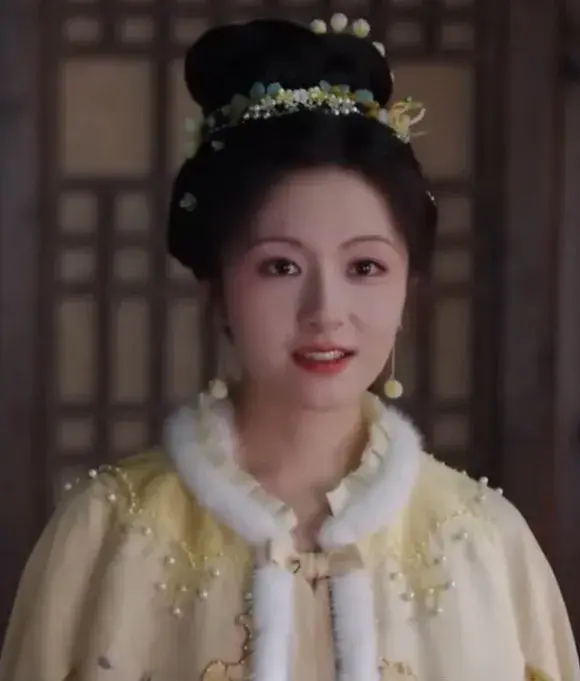
李迪
Li Di (李迪, 971–1047), courtesy name Fugu, posthumously canonized as Wending, was a prominent chancellor, outspoken remonstrator, and poet of the Northern Song (北宋) during the reigns of Emperor Zhenzong of Song (宋真宗) and Emperor Renzong (宋仁宗). Tracing his ancestral roots to Zanhuang in Zhao Commandery and born in Puzhou (modern Juancheng, Shandong), he achieved First Place in the Palace Examination in 1005. Throughout his…
Li Di (李迪, 971–1047), courtesy name Fugu, posthumously canonized as Wending, was a prominent chancellor, outspoken remonstrator, and poet of the Northern Song (北宋) during the reigns of Emperor Zhenzong of Song (宋真宗) and Emperor Renzong (宋仁宗). Tracing his ancestral roots to Zanhuang in Zhao Commandery and born in Puzhou (modern Juancheng, Shandong), he achieved First Place in the Palace Examination in 1005. Throughout his extensive administrative career, he served with distinction across local and central offices, demonstrating exceptional decisiveness and probity as prefect of Bozhou and Yongxing Circuit. Li Di was renowned for his unyielding integrity and political steadfastness, serving twice as Chief Councilor. During the critical border crisis in Shaanxi, he successfully advocated for the veteran general Cao Wei, facilitating the decisive victory at the Battle of Sandugu Valley. In the late Zhenzong and early Renzong reigns, he boldly confronted the corrupt and authoritarian chancellor Ding Wei, suffering demotion rather than compromising his principles. Following Emperor Renzong's assumption of personal rule, Li Di was recalled to the premiership. He retired as Grand Tutor of the Heir Apparent and passed away at age seventy-seven, posthumously honored as Minister of Works and Minister of State, with Emperor Renzong personally inscribing his spirit tablet as the "Monument of Bequeathed Rectitude."
Li Di was born into a distinguished scholar-official household in Puzhou.
Placed first in the imperial palace examination, appointed Assistant Director of the Directorate for Palace Buildings, and served as Assistant Prefect of Xuzhou.
Served successively in financial and remonstrance posts, including supervisor of taxes in Haizhou, Right Remonstrant, and Drafter of Imperial Edicts.
Appointed Prefect of Bozhou, where he conducted covert investigations and eradicated entrenched bandit networks.
Secured imperial backing for general Cao Wei against Tibetan incursions, ensuring triumph at the Battle of Sandugu Valley.
Appointed Vice Minister of Personnel and Chief Councilor following Kou Zhun's dismissal.
Clashed fiercely with the autocratic minister Ding Wei, resulting in demotion and multiple regional exiles.
Following Ding Wei's disgrace, Li Di was reinstated and assigned to govern key regions, including Jiangning and Qingzhou.
Following Empress Dowager Liu's death and Emperor Renzong's assumption of personal rule, recalled as Chief Councilor and Grand Academician of the Hall of Scholarly Worthies.
Replaced following sharp policy disputes with Lü Yijian, subsequently administering Bozhou, Xiangzhou, and Xuzhou.
Retired to his native residence with the rank of Grand Tutor of the Heir Apparent.
Died on November 1 at age seventy-seven; posthumously elevated to Minister of Works and Minister of State, with Emperor Renzong dedicating the "Monument of Bequeathed Rectitude."
Li Di was born in 971 during the Kaibao reign of Emperor Taizu. His ancestral family originated in Zhao Commandery and later settled in Youzhou before his great-grandfather moved to Puzhou to escape the Five Dynasties conflicts. From his youth, Li Di was noted for his composed demeanor, broad vision, and dedication to classical learning. He studied under the celebrated recluse scholar Chong Fang, who introduced him to the literary master Liu Kai. Impressed by Li Di's writings, Liu Kai declared him a rare talent destined for the highest offices of state.
In 1005, Li Di achieved First Place in the Palace Examination under Emperor Zhenzong. He commenced his career as Assistant Director of the Directorate for Palace Buildings and served as assistant prefect in Xuzhou and Yanzhou, demonstrating exceptional administrative competence. In 1008, following the imperial Mount Tai sacrifices, he was briefly reassigned to oversee maritime taxes in Haizhou due to an administrative irregularity regarding examination candidates. Bearing the demotion without grievance, he was subsequently promoted to Right Remonstrant, dispatched to comfort disaster-stricken populations in Jiangnan, and elevated to Drafter of Imperial Edicts.
During Emperor Zhenzong's imperial journey to Bozhou, Li Di served as an administrative assistant. Bozhou had long suffered from bands of deserters turned bandits whom previous local commanders could not suppress. Upon being appointed Prefect of Bozhou, Li Di disbanded the conventional hunting patrols and conducted meticulous covert reconnaissance. Identifying the outlaws' concealed redoubts, he deployed elite shock troops to capture the leaders, promptly restoring civilian order throughout the prefecture.
In 1016, large Tibetan tribal forces under Li Lizun launched an invasion toward the strategic Shaanxi passes. Emperor Zhenzong summoned Li Di to the Changchun Hall for advice, appointing him Right Admonition Official, Academician of the Academy of Scholarly Worthies, and Prefect of Yongxing Circuit. In Chang'an, Li Di pacified unrest by arresting lawless agitators and dispatching them to the capital, before being promoted to Chief Transport Commissioner of Shaanxi and subsequently Hanlin Academician.
During an imperial audience, Emperor Zhenzong displayed annual state budget deficits caused by severe droughts and locust infestations, seeking solutions. Li Di urged the emperor to disburse funds directly from the inner palace treasuries to ease the tax burdens on the populace. When Zhenzong suggested lending the funds to the State Finance Commission, Li Di remonstrated that an emperor's wealth belongs to all under heaven and should be bestowed as an imperial grace rather than loaned. He further cautioned the monarch against extravagant construction projects, which Zhenzong accepted.
Shortly thereafter, the frontier commander Cao Wei repeatedly requested reinforcements against invading forces. Sensing delay, Cao Wei submitted his resignation. Emperor Zhenzong suspected him of cowardice and contemplated replacing and executing him. Li Di intervened decisively at the Longtu Pavilion, arguing that Cao Wei's caution was a calculated strategy and insisting that no general equaled his tactical acumen. Drawing from a miniature ledger kept in his belt pouch that detailed troop numbers and grain stores throughout Shaanxi, Li Di mapped out the precise redeployment of garrisons on the spot. Zhenzong was astounded, comparing him to the legendary ancient commanders Lian Po and Li Mu. Days later, Cao Wei crushed the enemy at the Battle of Sandugu Valley, completely vindicating Li Di's judgment.
In 1018, Emperor Zhenzong invested Zhao Zhen (the future Emperor Renzong) as crown prince. When chancellor Kou Zhun was ousted through court intrigue, Zhenzong pressed Li Di to accept the premiership. Despite his humble declinations, Li Di was officially appointed Vice Minister of Personnel and Chief Councilor.
During his first premiership, Li Di found himself in direct opposition to Ding Wei, who had forged alliances with influential palace eunuchs to monopolize court authority. Li Di rigorously defended dynastic precedents and public propriety, openly castigating Ding Wei during imperial councils. Vindictive and threatened, Ding Wei orchestrated trumped-up charges against him. In 1020, Li Di was stripped of his premiership and demoted to prefectural posts across the south, narrowly escaping mortal peril while upright officials were systematically purged from court.
In 1022, Emperor Zhenzong passed away, and the young Emperor Renzong took the throne under the regency of Empress Dowager Liu. Following Ding Wei's political demise, senior statesman Wang Zeng took office and rehabilitated Li Di, reappointing him as Director of the Palace Library and subsequently Governor of Jiangning and Prefect of Qingzhou. During an imperial audience, Empress Dowager Liu commented on his past opposition to female regency, to which Li Di gracefully replied that witnessing the young emperor's wisdom revealed the immense virtue of the empress dowager, earning her genuine respect.
In 1033, upon the death of Empress Dowager Liu and the beginning of Emperor Renzong's personal rule, Li Di was recalled to the capital and reappointed Chief Councilor and Grand Academician of the Hall of Scholarly Worthies. During his second premiership, he clashed sharply with fellow chancellor Lü Yijian over administrative appointments and political ethics. Unwilling to compromise, Li Di was eventually reassigned to govern Bozhou, Xiangzhou, and Xuzhou.
In 1042, recognizing his advanced age, Li Di resigned his official posts and retired to his family estate in Puzhou with the rank of Grand Tutor of the Heir Apparent. He lived quietly, receiving close companions and composing poetry until his death on November 1, 1047, at the age of seventy-seven.
Emperor Renzong was deeply grieved by his passing, suspended court audiences for two days, and posthumously conferred upon him the offices of Minister of Works and Minister of State alongside the posthumous title Wending. The emperor personally inscribed the header of his sacred monument as the "Monument of Bequeathed Rectitude," honoring his lifelong defense of righteous governance.
Li Di demonstrated masterly military comprehension during the border crisis of 1016. By risking imperial displeasure to vouch for Cao Wei's loyalty and tactical prowess, he prevented an impulsive court intervention that would have crippled frontier defense.
His rapid tactical redeployment of Shaanxi garrisons utilizing precise personal ledgers directly enabled the monumental victory at the Battle of Sandugu Valley, stabilizing the northwestern borders of the Song Empire for years to come.
During the perilous transition of power in the late Zhenzong era, Li Di stood as an immovable pillar of bureaucratic rectitude. His refusal to yield to Ding Wei's usurping ambitions preserved the moral cohesion of the scholar-official class.
Even through years of harsh exile, his unwavering defense of the public good earned him the enduring veneration of subsequent generations, establishing a model of the principled Confucian statesman who places the realm above personal survival.
FIGURES ASSOCIATED WITH THIS DYNASTY